
Top five white Burgundy vintages ready to drink now
If you have any old bottles of white Burgundy in your cellar, now may be the right time to uncork them. Here Charles Curtis MW highlights some of the best vintages to drink right now, with a selection of recommendations from 1992 to 2017 and wines from some of the most famous producers in the region.

White Burgundy vintages can be a bit of a minefield, and with prices spiraling ever higher, it’s essential to get it right.
Success requires assessing several different factors, but with a bit of thought, disaster is easily avoided.
Scroll down for wine tasting notes and scores from the best white Burgundy vintages to drink now
White Burgundy is capable of aging for decades. The oldest bottle I have enjoyed was an 1890 Montrachet from the cellar at Bouchard Père et Fils. It was delicious, but it was a wine from a different time, with an exquisite bouquet that ranged from dried apricot to walnut to truffle and caramel, but there was also enough volatile acidity and residual sugar to raise an eyebrow or two today.
Even wines a fraction of this age can be marked by aromas of smoke, toffee, caramel, and forest floor. Today, many drinkers do not enjoy that spectrum of flavours, and thus I do not recommend any of these venerable bottles, as delicious as they might be.
Mature white Burgundy
It is nonetheless undeniable that a mature vintage of white Burgundy can be a sublime experience. Here, however, we must acknowledge the elephant in the room: since the mid-1990s, white Burgundy has been sporadically plagued by premature oxidation.
This phenomenon, known as pre-mox or simply ‘pox’, is tricky since not everyone agrees on the extent or severity of the problem.
This spring, I was in Burgundy with an experienced collector and we opened a bottle of 2000 Leflaive Chevalier-Montrachet. I was delighted with the bouquet of toasted hazelnut and a touch of caramel.
The collector, however, was bitterly disappointed by what he saw as lack of freshness.
A follow up bottle of 2016 Chassagne Caillerets from Pierre-Yves Colin-Morey, delighted him, however.
Understanding the pre-mox and knowing your own taste is the key to fully appreciating white Burgundy since these are wines that can be enjoyed at any age.
Best white Burgundy vintages to drink now
2017
In 2016, vines were damaged by severe frost on the 27th of April, and in many sectors (particularly in Chablis) also suffered hail damage.
As a result, some vineyards saw production drop by 50-80% in 2016. Grapevines, however, will naturally compensate after a low-yielding year such as 2016.
In 2017, weather conditions favoured this higher yield as well. After a warm spring (and dodging potential frost damage in April), a large crop of grapes was set on the vines.
A dry, warm summer followed flowering, but there were no excessive heat spikes. Although there was little rain, the drought was never so severe as to cause the vines to shut down.
A spot of rain before harvest helped the vines ripen the fruit particularly well, while cool evenings helped retain acidity. Harvest began at the end of August. 2017 is a warm, sunny vintage that provided to a crop of forward, early-drinking wines.
The best of these wines have great aging potential, but it is not too early to start pulling corks on the regional – and village-level – wines if you enjoy young white Burgundy. Even some of the premier cru wines are beginning to show well now.
2010
After the warm and sunny vintage that preceded it, the winter of 2009/2010 was icy, driving the sap deep into the vines’ roots. April turned warm, however, provoking an early bud break, but conditions deteriorated in May with cool, rainy weather that continued off and on throughout flowering—a ‘temps de chien’ according to Vincent Dauvissat.
The poor weather disrupted flowering, leading to coulure and millerandage that lowered yields. During the growing season, warm weather alternated with cool, rainy periods as growers began to worry about rot, mildew, and uneven ripening.
Finally, temperatures warmed up enough in September to finish ripening the grapes, although a storm on the 6th raised fresh worries of rot. It was essential to sort thoroughly in 2010, but conscientious vintners who did so produced superb results.
Restricted yields due to the poor flowering and crisp acidity from the cool, rainy season combined to produce racy whites that still had ripe, concentrated fruit and plenty of structure. These wines will age for years to come.
It is still too early to drink the top wines, but the wines at the premier cru level are starting to open up wonderfully at this point.
2002
The 2002 vintage was preceded by a frigid winter, with temperatures dipping below -8.5° C in February. March and early April were considerably warmer, and bud break occurred ahead of schedule.
The flowering was slowed by cool weather in May, but the warm temperature had returned by mid-June and continued through the summer, rarely punctuated with rain. The drought caused the ripening of the grapes to stall and August provided cool winds from the north and cold nights that helped retain acidity and further slowed ripening.
Warmer temperatures returned in September, along with enough rain to allow the vines to complete their ripening. Picking took place during the last two weeks of September. These are textbook conditions for white Burgundy, with enough sun to fully ripen the fruit.
The concentration from millerandage and crisp acidity from cool nights combined to produce powerful wines with plenty of extract and structure enough to last for decades.
The common objection to the quality of the 2002 vintage is premature oxidation. This otherwise very fine vintage was arguably the ‘peak of the pox’.
The best solution, in this case, is to look at the colour closely before opening, as wines affected by this condition will have grown a distinctive amber shade more appropriate to mature Sauternes than to white Burgundy.
Significant strides have been made to combat this problem, which has been waning in recent years. However, one must remember that wines from the 2002 vintage are nearly twenty years of age and should be expected to show developed character at this point.
1996
The winter preceding the 1996 vintage was cold, and these conditions continued through April. Showers in early May replenished the water table, and by the end of the month, the sun had reappeared, and warm temperatures encouraged an early and thorough flowering.
The successful flowering set a large crop of grapes on the vines, and the summer was sunny for the most part but relatively cool. As in 2002, cool winds blew from the north during August, keeping the acidity high and concentrating the flavours.
There was enough sun to ripen the grapes fully, however, and the key in 1996 was waiting for full physiological ripeness. Sunny but cold weather allowed growers to choose their harvest date, and those who picked late produced exceptional results.
White wines from 1996 have immense potential, one should remember that this vintage marked the onset of widespread premature oxidation, and caution is thus warranted.
Given the potential pitfalls, one may wonder why it is included. Easy: two of the greatest white wines I have ever had were produced in 1996: the Montrachets from Domaine Ramonet and Domaine Leflaive.
Both producers have had brushes with prematurely oxidised wines during this period, but I was fortunate that the bottle I had exhibited no trace whatsoever.
I recommend that if the opportunity arises and the color looks good that you roll the dice – you may be in for the wine of your life.
1992
If the ‘pox’ is a concern, one might well want to know when it started and how far back to go to avoid it.
Discussions of the issue frequently cite the 1995 vintage as the beginning. Since the 1994 vintage is considered inferior and 1993 is better for reds than for white, it is logical to focus on 1992, which has always enjoyed a marvelous reputation for white Burgundy.
After a fairly warm winter and early spring, bud break began on the early side. The weather turned poor in May, however, and the flowering was disrupted. Poor flowering led to millerandage, producing many small grapes, lower yields, and concentrated wines.
The growing season after bud break was quite warm and dry, and the grapes ripened well.
1992 has been knocked for being excessively ‘ripe and friendly’, but it is certainly less so than 1990 or 1989 in my view.
Most of the premier crus are now perhaps slightly past their peak, but the top grand crus can be surprisingly fresh.
Grand crus, both from the Côte de Beaune and from Chablis, can still be superb.
1992 represents a bit of a turning point, where the best still show a lovely, rich primary fruit and a great aromatic depth and have yet to turn the corner into a distinctly mature phase when developed aromas come firmly to the fore.
See wine tasting notes and scores from the best white Burgundy vintages to drink now
You may also like
Top five red Burgundy vintages ready to drink nowFive Burgundy micro-négociants to know and wines to tryBurgundy: a complete guide to CortonBurgundy: a complete guide to Clos de VougeotDomaine de la Romanée-Conti 2019: wines rated and reviewed
Domaine Roulot, Meursault, 1er Cru Clos des Bouchères, Burgundy, France, 2017
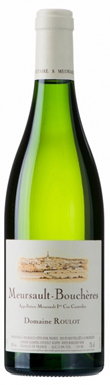

From the 0.50-hectare monopole acquired in 2010 from the estate of René Manuel. Despite the 260m altitude, the old vines ripen early and are among...
2017
Domaine RoulotMeursault

Domaine Thibert Père & Fils, Les Ménétrières, Mâconnais, Pouilly-Fuissé, Burgundy, France, 2017
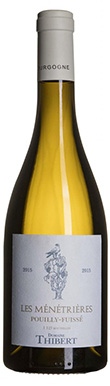
Domaine Thibert has 0.16 hectares of this superb site - about enough for three barrels. The vines (planted in 1970) face south and are located...
2017
Domaine Thibert Père & FilsMâconnais
Domaine Jean-Noël Gagnard, Chassagne-Montrachet, 1er Cru Morgeot, Burgundy, France, 2010
Although labeled Morgeot, this comes exclusively from a subsection called Les Petits Clos, downslope from La Romanée. There is a bit more clay at the...
2010
Domaine Jean-Noël GagnardChassagne-Montrachet
Domaine Jean-Claude Bachelet, Chassagne-Montrachet, 1er Cru Les Encégnières, Burgundy, France, 2010
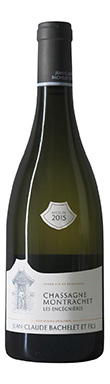
Although village level, this parcel is right under Bâtard-Montrachet on the border with Puligny (where the same terroir is spelled 'Enseignères'). The 2010 harvest was...
2010
Domaine Jean-Claude BacheletChassagne-Montrachet
Bouchard Père & Fils, Chevalier-Montrachet Grand Cru, Burgundy, France, 2002
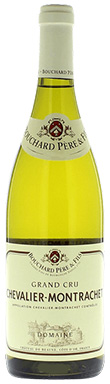
Bouchard owns 2.3 hectares of terraced vineyards in Chevalier-Montrachet - it is among the greatest jewels of their domaine holdings. The restrained use of oak...
2002
Bouchard Père & FilsChevalier-Montrachet Grand Cru
Domaine William Fèvre, Chablis, Les Clos Grand Cru, Burgundy, France, 2002
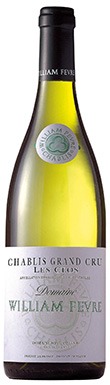
Earlier this spring, the 2002 Les Clos from William Fèvre was showing at its peak. The wine is produced from the domaine-owned parcels that total...
2002
Domaine William FèvreChablis
Domaine Ramonet, Montrachet Grand Cru, Burgundy, France, 1996
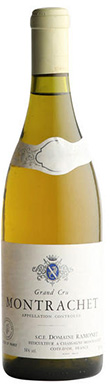
Domaine Ramonet owns just over a quarter-hectare of Montrachet on the Puligny side of the vineyard, just north of the Bouchard parcel. It consistently delivers...
1996
Domaine RamonetMontrachet Grand Cru
Domaine François Raveneau, Chablis, 1er Cru Montée de Tonnerre, Burgundy, France, 1996
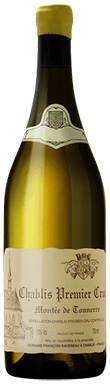
Located just opposite the grand cru slopes, Raveneau's 2.5-hectare holding of premier cru Montée de Tonnerre produces wines often at the same level as the...
1996
Domaine François RaveneauChablis
Louis Jadot, Domaine des Héritiers, Les Demoiselles, Chevalier-Montrachet Grand Cru, Burgundy, France, 1996
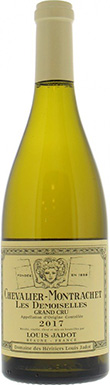
The Jadot parcel of Chevalier is located at the northern extremity of the appellation, above premier cru Caillerets. This later addition to the Chevalier appellation...
1996
Louis JadotChevalier-Montrachet Grand Cru
Domaine Vincent Dauvissat, Chablis, Les Preuses Grand Cru, Burgundy, France, 1992
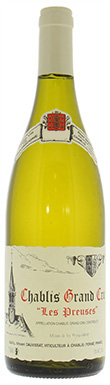
The Dauvissat bottling of grand cru Les Preuses from their holdings of more than a hectare is consistently at the pinnacle of the appellation. A...
1992
Domaine Vincent DauvissatChablis
Domaine Joseph Drouhin, Marquis de Laguiche, Montrachet Grand Cru, Burgundy, France, 1992
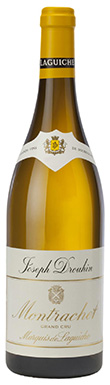
Drouhin's work with the 2.06-hectare parcel of Montrachet from Marquis de Laguiche is consistently among the best value wines of the appellation. A recent bottle...
1992
Domaine Joseph DrouhinMontrachet Grand Cru