
Tua Rita: producer profile plus latest releases tasted
Susan Hulme MW explores the history of this Super Tuscan estate, and tastes Tua Rita's latest-release wines including Redigaffi and Per Sempre 2018 and Keir 2019.


Tua Rita: history
Tua Rita makes some of Italy’s most exciting and collectable red wines. Its story began in 1984, when Virgilio Bisti and his wife Rita Tua purchased a small two-hectare property in Suvereto in the Alta Maremma, with just half a hectare of Sangiovese.
Scroll down for Susan Hulme’s tasting notes and scores for the Tua Rita latest releases
In 1988 two more hectares were added, planted – against the local trend – with Merlot and Cabernet Sauvignon which they felt suited the site, and some of which found its way into nearby Tenuta San Guido’s Sassicaia.
In 1992, Virgilio and Rita took on one of Italy’s best consultant oenologists, Luca D’Attoma, and started bottling their own wine, the first of which they called Giusto di Notri.
1994 saw the first vintage of Redigaffi, a 100% Merlot, but it was when Robert Parker awarded 100 points to the 2000 vintage that Tua Rita really came to the attention of the wine world: Redigaffi became the first Italian wine to receive a perfect score from the American wine critic.
Since Virgilio’s death in 2010, daughter Simena and her husband Stefano Frascolla have been running the estate, more recently with the help of their son Giovanni, now a trained oenologist.
From an early stage there was also a fortuitous collaboration with winemaker Luca d’Attoma, who has since become one of Italy’s leading oenologists and wine consultants. As Stefano tells it, they were both new to wine and were learning together.
Fact box
Owners: Rita Tua, daughter Simena and her husband Stefano Frascolla
Founded: 1984 in Suvereto near Bolgheri, Tuscany
Hectares under vine: 57 (2021)
Total annual production: 350,000 bottles
Vineyards: Located in Upper Maremma in the Colline Metallifere
Tua Rita: wines to know
Redigaffi (100% Merlot)
Giusto dei Notri (Cabernet, Merlot, Cabernet Franc) – Flagship
Rosso dei Notri (Cabernet Sauvignon, Merlot, Syrah) – Best Value
Per Sempre (100% Syrah)
Keir (100% Syrah fermented in amphora) – Must Try
Keir Ansonica (100% Ansonica fermented in amphora)
Lodano (Petit Verdot, Merlot)
Lodano White (Traminer, Chardonnay and Riesling)
Sese Passito di Pantelleria (Muscat)
The organically farmed Tua Rita estate has now expanded to 57ha of vines. In addition to the original Bordeaux varieties (Cabernet Sauvignon, Merlot, Cabernet Franc and Petit Verdot) you can find Syrah and some Sangiovese, plus Vermentino, Traminer, Riesling, and more recently Ansonica.
Despite the attention given to Redigaffi, the wine the family regard as their flagship is Giusto dei Notri, a blend of Cabernet Sauvignon, Merlot and Cabernet Franc.
Meanwhile, Virgilio’s favourite was the charmingly named Per Sempre (‘Forever’): when asked what his favourite wine was, he would say ‘Syrah – per sempre’. This is a powerful, world-class 100% Syrah which seems to go from strength to strength.
Introducing amphorae
One of the wines which really captured my heart is the Keir 2016. I was lucky enough to taste this first vintage at Tua Rita with Stefano. It is a 100% Syrah fermented on skins in clay amphorae.
Stefano seemed a little reticent at the time of this new stylistic departure, but I was so excited by the finesse and elegance of the tannins and the purity of the fruit. In my note at the time, I called it a ‘rising star’.
Having just tasted both the Keir 2018 and 2019 (note below), I am delighted that they confirm my first impression.
The latest addition to Tua Rita’s portfolio is the Keir Ansonica. This white is made from the traditional Tuscan variety, Ansonica and, like its red counterpart, is vinified in clay amphorae to produce a complex, slightly tannic wine.
Lodano, named after a local stream, is a smooth, satiny Petit Verdot with some added Merlot and is one of the most refined versions of what is an intriguing but often more robustly structured variety.
See all Tua Rita wine tasting notes and scores in the Decanter database
Innovation
The great thing about Tua Rita is that it does not sit back and rest on its success; instead, it never stops innovating and refining.
As Stefano says, ‘We believe that great quality is a set of small improvements and fine-tuning of details’.
In the vineyard, the estate was one of the first in Tuscany to use high density planting. A pre-harvest as well as a green harvest helps to reduce the yield per vine even further. An Enjambeur tractor – which does not compact the soil and maintains the oxygenation of the roots – has been used here since 1997. And in the winery, Oxoline supports enable the team to move the lees without disturbing the cap which is submerged in the barrique.
In 2020, Tua Rita ranked 88th in the Liv-ex Power 100 list of the most powerful fine wine brands, a jump of 153 places on the previous year.
It is a pretty incredible achievement to have risen from a 2ha property in an unknown location in 1984 to being producers of some of Italy’s most sought after and highly regarded wines today.
Stefano puts this success down to a combination of luck and a few good, brave decisions. But going forward, ‘the greatest fortune is to do a wonderful job still guided by the passion of the past and to have my son Giovanni follow our path. This is the greatest stimulus’.
Tasting Tua Rita wines:
You may also like:
Finding value: smart picks from Italy’s top producers
Super Tuscan evolution: Comparing Tignanello and Solaia
Brunello di Montalcino 2004: a retrospective
Tua Rita, Keir Ansonica, Toscana, Tuscany, Italy, 2019
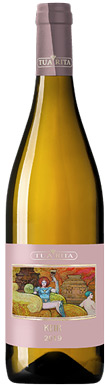

This is the first vintage of a Keir white wine, made from Ansonica macerated on the skins in amphorae for two months. Unclarified and unfiltered,...
2019
Tua RitaToscana

Tua Rita, Keir, Toscana, Tuscany, Italy, 2019
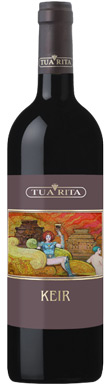
2019 is for Stefano Frascolla an exceptional vintage - one of the best vintages of the last two decades. Bright magenta in colour with an...
2019
Tua RitaToscana
Tua Rita, Redigaffi, Toscana, Tuscany, Italy, 2018
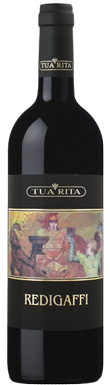
This Redigaffi reflects beautifully the 2018 vintage with its cool spring, mild summer and slower, well-balanced, late ripening season. It's a lithe and lively wine,...
2018
Tua RitaToscana
Tua Rita, Per Sempre, Toscana, Tuscany, Italy, 2018
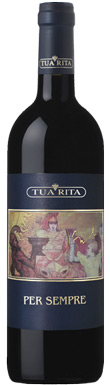
The 2018 Per Sempre is one of the best examples of this wine I have tasted. The combination of freshness and elegance of the 2018...
2018
Tua RitaToscana
Tua Rita, Giusto Dei Notri, Toscana, Tuscany, Italy, 2018
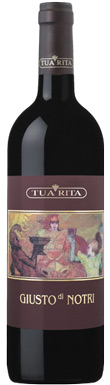
This 2018 Giusto dei Notri seems delightfully Cabernet Franc-like, although that variety is usually the minor player in the blend. Intense cassis and leafy notes...
2018
Tua RitaToscana
Tua Rita, Lodano, Toscana, Tuscany, Italy, 2018
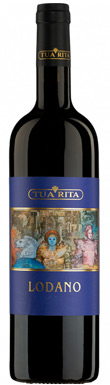
This is one of the best expressions of Petit Verdot I have tasted in a long time. While always intriguing, the variety is often very...
2018
Tua RitaToscana
Tua Rita, Rosso dei Notri, Toscana, Tuscany, Italy, 2019
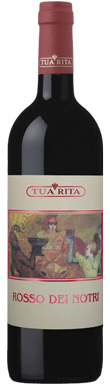
Rosso dei Notri is the more accessible, affordable version of Gusto dei Notri, with Syrah replacing Cabernet Franc in the Cabernet/Merlot blend. In the exceptional...
2019
Tua RitaToscana
Tua Rita, Sese, Passito di Pantelleria, Sicily, Italy, 2017
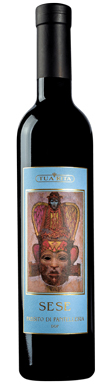
A gorgeous sweet wine from the tiny island of Pantelleria, south west of Sicily, this balances a rich, syrupy body with freshness and lift. Bright...
2017
Tua RitaPassito di Pantelleria
