
Virginia: Regional Profile plus the 10 best wines to seek out
Virginia is a wine region starting to see the fruits of its perseverance. Adventurous winemakers in this eastern state, close to Washington DC, have learned to adapt, and the proof is in a smartly deployed array of grapes and styles. Jason Tesauro takes a tour and highlights producers to watch and a selection of its distinctive wines to try


Virginia wine-growers, already suffering Covid-related tourism and restaurant losses in April 2020, were dealt a further blow when frost hit in May. Workers battled an extended cold snap with bonfires, smudge pots, wind machines and helicopters. The result was minor frost damage for all and major devastation for some.
Any remaining optimism withered like so many young buds when freezing temperatures a week later cost vulnerable sites their entire 2020 vintage. As of early September, those who survived had the possibility of an otherwise solid harvest.
Scroll down to see Jason Tesauro’s 10 best wines from Virginia
It’s an apt case study in topsy-turvy perseverance: hope for the best, prepare for the worst. Or, as Virginia’s longest-tenured viticulturist, Barboursville Vineyards’ Fernando Franco, put it: ‘Just another challenging, beautiful Virginia vintage.’
‘Emerging’, ‘up and coming’, ‘under the radar’ – each term has found its way into a trendy headline about Virginia – a tourist draw state that lies in the heart of America’s Atlantic east, sharing borders with North Carolina to the south, Maryland to the north, and Washington DC across the Potomac river. Some 18 years after the late Michael Broadbent MW first touted Virginia in his column in this magazine, and 10 years after making countless ‘rising star’ and ‘regions to watch’ lists, Virginia is betting on something more bankable than transient novelty: transportive quality.
Slow burner
Even if you’ve never visited central Virginia, smooth Cabernet Francs convey in their warm, earthy cassis the iron-rich red clay from ancient Blue Ridge foothills of oxidised greenstone; in northern Virginia, elegant Chardonnays and Bordeaux blends whisk you along steep granite slopes and well-drained sandstone; and Shenandoah Valley, protected from wind and rain by Allegheny mountain ranges to the west, impel you up to cooler climate varieties thriving in limestone at elevations that bolster acidity and minerality.
Virginia’s wine timeline stretches back to when colonists planted vines in the early 1600s. But it’s a chronology of fits and starts, wars and pestilence, native varieties and hybrids, tobacco and teetotalling, until the 1970s. That’s when an idea first hatched by Thomas Jefferson in 1807 – Vitis vinifera flourishing in Virginia – at last reached commercial viability.
Yet it wasn’t until the late 1990s that anyone outside the region really knew or rightly cared. By the mid-2000s, serious critics were noting legitimate standouts; then came the 2010s, a decade that saw Virginia’s popularity explode – the new darling of sommeliers, critics and tourists.

Virginia at a glance
Producers: More than 300 wineries and 400 vineyards
Area under vine: 1,515.5ha (average vineyard size 6ha)
Annual production: 90,840hl (2019)
AVAs (in descending order of importance): Monticello, Middleburg, Shenandoah Valley, Northern Neck, Williamsburg, Virginia’s Eastern Shore, Rocky Knob, North Fork of Roanoke
Key varieties (in descending order of vineyard area): Chardonnay, Cabernet Franc, Merlot, Vidal Blanc, Petit Verdot, Viognier, Cabernet Sauvignon, Norton, Petit Manseng, Sauvignon Blanc, Tannat
Key soils: Clay (central VA), granite (northern VA), limestone (Shenandoah Valley) Climate Humid, warm to hot climate, 8cm-10cm average monthly rainfall, notable vintage variation
Source: Virginia Wine Board
In 2013, Virginia’s stars were Bordeaux blends. Eight years on, it’s a far more varied slate: delicate sparklers, adventurous whites, a panoply of rosés, beguiling reds and terrific sweets. Tannat and Petit Verdot shine here. So does Viognier: ‘It’s the one Virginia wine that I can pick out blind,’ says Nadine Brown, an influential sommelier who ‘turned to Virginia for more Old World-style wines than you find in California’.
Quiet confidence
There’s daring in the air. It’s not youthful arrogance, but a quiet confidence born of trial and error. Even outlier vintages such as 2020 have historic comparisons from which growers and makers draw wisdom and technical cues. That it has taken decades instead of centuries speaks to the collegial spirit of collaboration. There is still surprise, but veterans here are too smart to be flummoxed, too grounded to be cocky and too much in love with their land to be dispirited by the weather.
Emily Pelton, head winemaker at Veritas Vineyard & Winery, says: ‘I love seeing the progression of our winemakers in reacting beautifully from one drastically different vintage to the next. Hot-dry, cool-wet, cool-dry – you name it. We’re rolling with it and showing off our vintages unabashedly.’

Virginia is a constellation of tiny viticultural areas; in part, because varied topography, soil composition and microclimate deter mega-vineyards. There are eight recognised AVAs (American Viticultural Areas), but three main geographic regions: northern Virginia, central Virginia and Shenandoah Valley. At 110,780km2, the state comprises almost the same surface area as Bulgaria, yet produces only about one-tenth of the wine (total Bulgarian wine production was 1.04m hl in 2018, according to international wine industry body the OIV).
Total output in 2019 reached 90,840hl – less than half of Greece’s total of about 2m hl (according to EU Commission estimates). The number of wineries has doubled to more than 300 in the past decade, though the area under vine increased only by about 20%, the Virginia Wine Board says, while yield averages remain below 49hl/ha.
A rich mix
Virginia is too heterogenous to be a two-grape champion like Burgundy. Instead, there’s an A-Z spice rack of pure vinifera and hybrids available for fine-tuning to site, like a game of rock-paper-scissors: earlier-ripening varieties beat autumn chill, thicker-skinned varieties trump the rains, and hybrids best most pests. In the cellar, creative blends (red and white) are coping mechanisms in the face of vintage variance. ‘Look at the region as the many different microclimates it is,’ says Swati Bose, co-owner of Flight Wine Bar in Washington DC. ‘Virginia is experimenting and discovering its potential. I’m excited to see focus on vineyards and varied terroir, not one defining variety and style.’
This is all driven by a shift toward understanding wine from the ground up. Jim Law, wine-grower behind Linden Vineyards, explains: ‘Rather than the old “hail Mary” approach of site selection, people are talking about the soil/site/vine/quality relationship. It took the Europeans hundreds of years, but I’m hoping that in the information age we can move faster. The key to progress is not cleverness in the cellar, but wise vineyard establishment decisions.’

Giant leap
Fly into Dulles International Airport and you can go from tarmac to Tannat in under an hour. Northern Virginia’s Loudoun County is touted as ‘DC’s wine country’: with binoculars, to the southeast you can see the Washington Monument from Bluemont Vineyard’s panoramic terrace. Given the proximity and variety of new wineries and experiences, this is the most exciting corner of Virginia and among the most intriguing in US wine.
‘Over the past five years, Virginia wine has taken a giant leap in quality, more than any other span in history,’ says Christine Vrooman, owner of Ankida Ridge Vineyards. She points to ‘improved viticulture, new varieties, recognition of place, more sophisticated winemaking, and plantings in higher elevations’.
‘I’m really optimistic about the potential in Shenandoah Valley,’ says winemaker Michael Shaps. ‘Great dirt, climate, value – and people!’ Vrooman agrees: ‘Climate change is driving growers to high-elevation viticulture – cooler climates, slopes and porous, rocky soils. The desire for mountain fruit has become a “thing”. Varieties thought not to grow in Virginia are now gaining recognition for high quality when grown at elevation.’ Ankida Ridge’s Pinot Noir, which is grown at 550m, is a prime example.
Where else can you start an evening with crisp blanc de blancs, shift to unctuous Petit Manseng and finish with a heady Tannat? During the Covid-19 pandemic, Virginia’s wine industry was deemed ‘essential business’. Now, gourmands and would-be world travellers who once pooh-poohed wineries in their own backyard are curing cabin fever with day-trips into Virginia wine country. East Coast Americans who envy their counterparts in the Mediterranean are – at last – embracing their own Blue Ridge bounty, and this wine culture is hitting stride in synchrony.
Some say that the best Virginia can do hasn’t even been planted yet. Until then, there are already so many things producers can count on while being adventurous. Vineyards mature, growers wisen, winemakers innovate, wines improve – this makes it a golden time to drink Virginia wine.
Virginia wine: 10 names to know
Ankida Ridge Vineyards
From the moment the Vrooman family staked out a tiny vineyard in Amherst in central Virginia (far from the proven soils of the Monticello AVA and higher in altitude than anyone thought wise), friends and lovers of Pinot Noir alike had fingers crossed. It might be a quest to track down their wines, but it’s worth it if you succeed.
Barboursville Vineyards
This pioneer of modern Virginia winemaking is the New World outpost of an Old World stalwart – Italy’s Zonin family. Piedmont-born Luca Paschina, the winemaker for more than 30 years, blends a farmer’s humility, a chef’s palate and a winemaking acumen in full artistry. Octagon is the flagship red blend of this central Virginia estate, but a litany of Italian varieties shine.
King Family Vineyards
Crozes-Hermitage-born winemaker Matthieu Finot brings authenticity, expertise and character to one of central Virginia’s most esteemed wineries. He’s won the big awards and earned the industry’s respect with charm, a consistently excellent portfolio and no hubris. Don’t miss his Cabernet Franc, Meritage, Crosé rosé and a standardbearer Viognier.
Lightwell Survey Wines
In partnership with sommelier/ restaurateur Sebastian Zutant and winemaker Ben Jordan of Early Mountain Vineyards (a next-wave gem in its own right), this hip winery in Shenandoah Valley is unapologetic in its use of curious varieties from high elevations in provocative blends. Cool, raw wines with great labels and real personality.
Linden Vineyards
In Virginia, any fanatical devotion to vineyard sites might as well be nicknamed ‘the Jim Law of the Land’. When other wineries welcomed buses, concerts and weddings, Linden doubled down on soil care and meticulous plant material selection. It shows in a precise line-up of vineyard-designated wines that express the undeniable promise of northern Virginia.
Stinson Vineyards
Many central Virginia producers are family-based, but this one is next-level. Winemaker Rachel Stinson is married to Ankida Ridge’s Nathan Vrooman. She makes quirky, fun, garagiste-style wines in her dad’s reclaimed three-car garage. Try her terrific Tannat and some bold experiments: Mourvèdre rosé, Rkatsitelli orange wine, and Sauvignon Blanc fermented in a concrete egg.
The Vineyards & Winery at Lost Creek
Aimee and Todd Henkle bought this northern Virginia property in 2012. Their wine immediately burst onto the scene as a showcase of Loudoun County fruit grown with sustainable practices and kid-glove treatment in the cellar: Linden Vineyards whole-cluster pressing, extended macerations and slow fermentations. The reds show tremendous depth and restraint where it counts.
Veritas Vineyard & Winery
A true family affair, started by two Brits: former neurologist Andrew Hodson and his wife, Patricia. Their daughter Emily is the winemaker and son George the general manager. Besides a killer sparkler, dynamic Viognier and sleek reds, the central Virginia estate has a gorgeous inn boasting fine English hospitality and a terrific chef.
Virginia Wineworks
Winemaker Michael Shaps has one foot in central Virginia and another in Burgundy (Maison Shaps). Two continents, but one style: finesse. Look for Petit Manseng, Petit Verdot, Cabernet Franc, an excellent Meritage and his late-harvest Raison d’Etre. He also produces solid quaffers under the Wineworks label and consults for scores of other Virginia producers.
Walsh Family Wine
Arguably the most exciting wines in northern Virginia right now. Wine-grower husband Nathan and wine-educator wife Sarah make outstanding modern wines with real passion and a minimalist approach in Loudoun County. Unlike boutique producers whose wines can only be found at the cellar door, Walsh ensures theirs get a place on restaurant wine lists and in the wider marketplace.
Scroll down to see Jason Tesauro’s 10 best Virginia wines
You may also like
Ramiiisol Vineyards’ debut releases reviewedQuilceda Creek: A Washington Cabernet iconNapa Valley Cabernet: 2018 vintage report
Slater Run Vineyards, Blanc de Blancs Brut, Middleburg, Virginia, USA, 2017
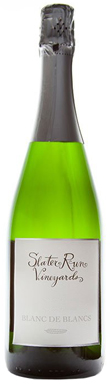

Slater Run's estate – densely planted with proper rootstocks and high-end clones – was designed by ampelographer Lucie Morton, the first American woman to attend...
2017
Slater Run VineyardsMiddleburg

Linden Vineyards, Hardscrabble Chardonnay, Virginia, USA, 2017
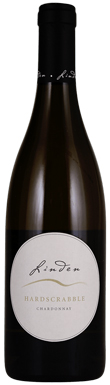
A titan of Virginia’s 20th-century rebirth, Linden is still a stalwart today. This lovely Chardonnay has aromas of ripe pear, hints of citrus pith and...
2017
Linden Vineyards
Walsh Family Wine, Petit Manseng, Loudoun County, Virginia, USA, 2018
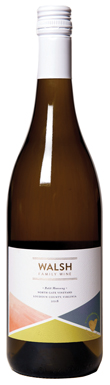
Petit Manseng is more commonly seen in Jurançon, southwest France, but here winemaker Sarah Bryant Walsh has produced an exciting, generous wine of lovely complexity...
2018
Walsh Family WineLoudoun County
Veritas Vineyard, Viognier, Monticello, Virginia, USA, 2017
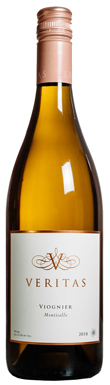
After more than 15 vintages, winemaker Emily Pelton – eldest daughter of founders Andrew and Patricia Hodson – is today one of Virginia's leading wine ambassadors,...
2017
Veritas VineyardMonticello
Michael Shaps, Petit Manseng, Monticello, Virginia, USA, 2016
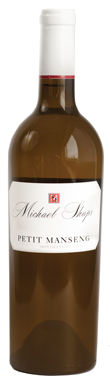
Michael Shaps also makes wine in Burgundy and here has crafted a serious Petit Manseng with the structure of a bold, showy Chardonnay: an enticing...
2016
Michael ShapsMonticello
Ankida Ridge Vineyards, Pinot Noir, Virginia, USA, 2017
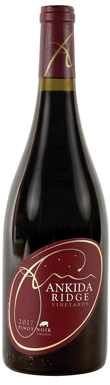
To date, Ankida Ridge is the only producer to have cracked the code on Pinot Noir in Virginia. From a stunning vintage, this example is...
2017
Ankida Ridge Vineyards
The Vineyards & Winery at Lost Creek, Cabernet Franc, Loudoun County, Virginia, USA, 2017
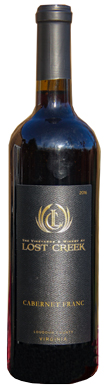
From an estate that practices sustainable, minimal-intervention farming, using organic methods, this is an excellent example of what Cabernet Franc can do in Virginia. It...
2017
The Vineyards & Winery at Lost CreekLoudoun County
Barboursville Vineyards, Octagon, Monticello, Virginia, USA, 2015
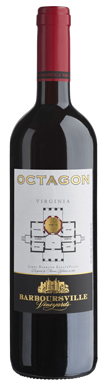
Made since 1991, and only in standout vintages, Octagon is arguably the wine that put Virginia on the map. Based on Merlot (the 2015 being...
2015
Barboursville VineyardsMonticello
Lightwell Survey, The Weird Ones are Wolves, Shenandoah Valley, Virginia, USA, 2017
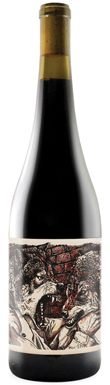
This irreverent collaborative includes a sommelier/restaurateur, a winemaker, a former craft beer salesman, a creative director and a label-artist. Their on-the-fringe wines are provocative showcases...
2017
Lightwell SurveyShenandoah Valley
Stinson Vineyards, Tannat, Monticello, Virginia, USA, 2017
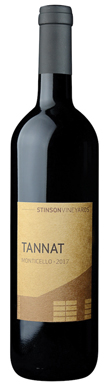
A vivid wine with a big personality. Despite 27 months in French oak (50% new), the brightness of this 88% Tannat, 12% Merlot blend makes...
2017
Stinson VineyardsMonticello
