
Walls: Counoise spreads its wings
One of the Rhône’s lesser known grape varieties is seeing a revival not just in its native region, but also much further afield. Matt Walls explores how more and more winemakers might be calling on Counoise in a changing climate.


It’s easy to forget that the southern Rhône’s four most prevalent red varieties aren’t indigenous. Grenache, Carignan and Mourvèdre all appear to originate from Spain; Syrah made its way down the river from the northern Rhône.
Of the long tail of other grapes, most have their roots closer to home. Plantings have dwindled in recent years, but today local varieties are experiencing renewed interest. One that’s finding a lot of fans – both in the Rhône and further afield – is Counoise.
Scroll down to see tasting notes and scores for four pure Counoise wines to seek out
Rhône origins
Before 1990, Counoise was found only in the south of France, almost entirely in the southern Rhône, where it has been grown for centuries.
Counoise plantings in the southern Rhône make up just 142ha, so less than 0.5% of the total vineyard area. But interest is increasing once again – thanks to some of the characteristics that originally made it unpopular.
Jean-Etienne Alary, of Domaine Alary in Cairanne, is one of the few Rhône producers to bottle a pure Counoise. ‘I really like Counoise, which is also called Pinot de la Vallée du Rhône, as it produces fine and elegant wines; light in colour, with fruity but also spicy aromatics like white pepper, and a tobacco side I really enjoy,’ says Alary.
Counoise might produce elegant wines, but it’s a difficult variety to work with, as it’s susceptible to powdery mildew, grey rot and esca. It’s also a late-maturing variety, so in cold years it can be difficult to fully ripen the grapes.
Because of this – and also because of its low alcohol content and very pale colour – it was abandoned in the 1970s. But today, ‘it’s really interesting to have some Counoise as we are looking for finesse, lightness and freshness,’ says Alary.
Jean-Marc Autran, of Domaine de Piaugier in Sablet, also makes a pure Counoise. His father originally planted it for its low alcohol levels and high acidity: a useful counterpoint to Grenache.
These characteristics are becoming increasingly attractive in a warming climate, which is why he thinks more and more winemakers are planting Counoise, even if overall volumes remain small.
Other Counoise fans in the Rhône include Domaine de la Solitude in Châteauneuf-du-Pape, Domaine Richaud in Cairanne, Domaine de la Monardière in Vacqueyras, Domaine La Ferme St-Martin in Beaumes de Venise, Château de Manissy in Tavel, Mas de Libian in the Ardèche, and Domaine Jean David in Séguret.
The Beaucastel connection
Autran says he was inspired to produce a pure Counoise after tasting the Counoise of Château de Beaucastel in Châteauneuf-du-Pape. For its classic Châteauneuf-du-Pape, Counoise is the fourth largest component at 10% of the blend, after Mourvèdre (30%), Grenache (30%) and Syrah (15%).
A little while ago, César Perrin sent me bottles of his Mourvèdre, Syrah and Counoise blending components for the 2020 vintage to compare. It was instructive for me too.

The Mourvèdre was the most complete wine, delivering great amplitude and generosity of flavour, compared to the fat and concentration of Grenache.
The Syrah was the metal rebar, the tensile core. It was straight and focused, more tannic and directional, and will increase the wine’s longevity and future complexity.
The Counoise wasn’t terribly distinctive aromatically; I found it spicy rather than peppery, with a note of cigar tobacco and a touch of violet to its bright black cherry fruit. This component was deliciously drinkable and approachable, with discrete tannins and good acidity. It delivered fluidity, freshness and moderate alcohol – valuable traits in any modern Châteauneuf blend.
Further afield
Tablas Creek in Paso Robles, part-owned by the Perrin family, was the first domaine to grow Counoise in the US. Importing it in 1990, plantings have since spread as far as Washington State. A brief online search turned up an impressive 15 pure examples, mostly from around the Central Coast.
Benevolent Neglect in Napa has featured a pure Counoise in its range since 2015. Winemaker Matt Nagy points out that ‘the Old World has hundreds of years of tradition but it’s much more rigid. We can do whatever we want.’
All the pure French Counoise I’ve encountered to date has undergone traditional vinification, but approaches in the US vary. Some, such as Keep Wines, opt for carbonic maceration. Benevolent Neglect chooses traditional vinification for its low alcohol, chillable red, but it also makes a Counoise rosado. For Nagy, ‘it’s a shapeshifter of a grape, it fits a lot of styles.’
And according to Nagy, it’s well-adapted to their increasingly challenging climate. ‘It’s drought tolerant, it’s used to hot weather and poor soils… and you can adapt on the fly to the climate conditions you have.’
Ben Brenner is another co-owner of Benevolent Neglect, and he says ‘in Napa, everybody makes a Cabernet or a Chardonnay, but they’re not really all that different in the end.’
Nagy agrees, ‘it’s rare in 2022 to have a grape we’re still figuring out,’ he says.
‘We’ve found a little community of really cool winemakers also making Counoise,’ says Brenner – so many that they’re planning a Counoise festival at their tasting room in downtown Napa this winter.
Compared to the famous names of Napa, Counoise is still very much a niche grape. ‘We always joke that the future is Counoise,’ says Brenner.
But as many wine regions are being forced to adapt to an increasingly hot, dry climate, Counoise is a grape that winemakers around the world are taking more seriously.
Matt’s tasting notes and scores for four pure Counoise wines
Related content
Walls’ hidden gems: Domaine Richaud, Cairanne
Walls’ hidden gems: Domaine La Ferme St-Martin, Beaumes de Venise
Climate change: rethinking your drinking
Napa Valley Grapegrowers to receive climate change funding
Benevolent Neglect, Counoise, North Coast, California, USA, 2019
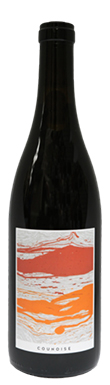

Pure black cherry with some dusky tobacco notes over the top. There’s a lovely sense of purity and clarity to the aromas. Light-bodied and fresh,...
2019
Benevolent NeglectNorth Coast

Domaine de Piaugier, Ténébi, Côtes du Rhône Villages, Sablet, Rhône, France, 2020
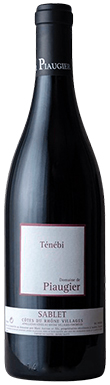
Showing a good deep colour for a Counoise. Fresh and vibrant blackberry and black cherry. There’s a gentle sweetness to the fruit here, and it...
2020
Domaine de PiaugierCôtes du Rhône Villages
Keep Wines, David Girard Vineyard Counoise, Sierra Foothills, California, USA, 2019
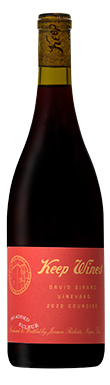
Slightly reductive nose, spicy and flinty with a touch of thyme. Light-bodied, with bright acidity and very discrete, wet-clay tannins. This is really fresh and...
2019
Keep WinesSierra Foothills
Domaine Jean David, Tapatara, Vin de France, Rhône, France, 2019
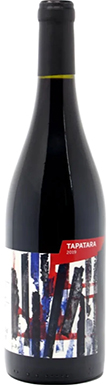
Light- to medium-bodied, it's quite extracted but still quite light in body. Perfumed black cherry and blackberry, this is very drinkable but still has good...
2019
Domaine Jean DavidVin de France
