
Walls’ hidden gems: Domaine Font de Courtedune, Châteauneuf-du-Pape
Matt Walls explores a domaine whose techniques have developed and evolved not through philosophy or ideals, but through local knowledge and practicality, whose processes were adapted to what equipment, grape varieties or soils were available at the time. The results are worth seeking out.


Establishing a vineyard isn’t something you just rush into these days. Identifying the right site, carrying out soil analysis, selecting suitable rootstocks and varieties, procuring equipment… We’ve made a lot of progress in the past 80 years.
But perhaps we overthink such things. Some estates, such as Domaine Font de Courtedune, have grown organically, with major decisions often being made for practical, rather than stylistic, reasons. And the results, from Côtes-du-Rhône to Châteauneuf-du-Pape, could barely be improved upon.
Scroll down for tasting notes and scores for eight wines to seek out from Domaine Font de Courtedune
Caroline Charrier’s grandparents were both from Courthézon (one of the five communes that have land within the AP Châteauneuf-du-Pape) and they bought a farm in 1943 just within the eastern boundary of the appellation. It was mixed farming to begin with, but gradually the vines took over.
Grenache on sand
Courtedune is an old name for Courthézon – ‘dune’ as in sand dune. The area is known for this type of soil. Today Caroline makes the wine and her brother Frédéric tends the vines.
Caroline’s grandparents planted their first vineyard in lieu-dit Cristia. Other sandy vineyards followed: La Guigasse, Le Pointu, Saint-George, La Crau Est. What inspired them to work with sandy soils, I wondered?
‘Just because they were close to the farm,’ says Caroline. ‘Back then, people didn’t used to think about it too much.’

They’ve since added a stony vineyard located in lieu-dit Font de Michelle, but the predominantly sandy soils give these wines a particularly refined texture.
‘Grenache and sand are two things that go together very well,’ says Caroline, ‘because Grenache is a very fine variety, and sand gives it even greater finesse.’
Bush vine Grenache makes up 99% of their Châteauneuf-du-Pape blend; the remaining 1% is Mourvèdre, Cinsault, Terret Noir and Counoise.
I asked Caroline why they chose these varieties. Again, it wasn’t by design; varieties other than Grenache have snuck into their vineyards uninvited over the decades – vine nurseries can make mistakes when supplying young plants. But what survived was ‘anything that stands up by itself,’ says Caroline – unlike droopy Syrah, for example, that needs to be supported on wires or stakes.
No need to change for change’s sake
The domaine’s Châteauneuf-du-Pape, Côtes-du-Rhône Villages and Côtes-du-Rhône reds are all whole-bunch fermented. Originally this was simply because they didn’t have a destemmer – nobody did in the 1940s.
But they’ve kept it this way for a reason. ‘The stems give woody flavours even though we don’t have any barrels,’ says Caroline, ‘and they guard the freshness.’

The wines are all fermented and matured in concrete tanks. The reds have a certain fleet-footedness and precision that makes them easy to enjoy – they build complexity over time, but don’t rely on concentration or muscle. So it’s no surprise that Caroline opts for gentle extraction by pumping over.
But once more, this wasn’t just a stylistic choice, it was also partly born of practicality. When Caroline took over the winemaking from her father René, she found certain cellar tasks – such as repeatedly punching down all the tanks – were physically too demanding. So she adapted her way of working to fit the space.
‘Led by terroir’
On the surface, being led by practical concerns, rather than an individual’s grand ideology, might appear prosaic. But I don’t see it that way. Rather than imposing their own designs, they’ve let themselves be led by terroir and ancient local practices.
Tradition is the wisdom of the many. In following it, the Charriers craft wines with a very specific sense of place – the singular sands of Courthézon.
Matt Walls’ tasting notes and scores for eight Domaine Font de Courtedune wines
Related content:
Châteauneuf-du-Pape 2019 & 2009: panel tasting results
Walls: Gigondas 2013 and 2014 – time to drink up?
Walls: Discovering St-Joseph estate Martine & Christian Rouchier
Domaine Font de Courtedune, Châteauneuf-du-Pape, Rhône, France, 2016
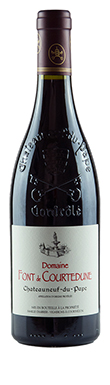

‘A very hot vintage. We had quality, quantity, colour, everything - it was THE vintage!’ says Caroline Charrier. Still young at six years of age,...
2016
Domaine Font de CourteduneChâteauneuf-du-Pape

Domaine Font de Courtedune, Châteauneuf-du-Pape, Rhône, France, 2019
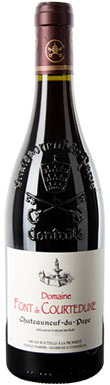
Lovely sense of finesse on the nose, very pure, great fruit. Plum and strawberry with a noticeable spicy kick to the aromatics. Rounded but with...
2019
Domaine Font de CourteduneChâteauneuf-du-Pape
Domaine Font de Courtedune, Châteauneuf-du-Pape, Rhône, France, 2013
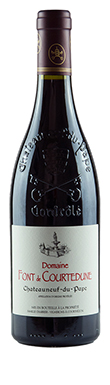
Decidedly spicy, woody nose - not oaky, but woody. Fresh on the palate, this has good energy still. There’s real grip, the tannins are still...
2013
Domaine Font de CourteduneChâteauneuf-du-Pape
Domaine Font de Courtedune, Châteauneuf-du-Pape, Rhône, France, 2020
White pepper from the stems accentuates the fresh aromatics. Full-bodied, but again great freshness on the palate, with is underlined by the piercing acidity. Texturally...
2020
Domaine Font de CourteduneChâteauneuf-du-Pape
Domaine Font de Courtedune, Châteauneuf-du-Pape, Rhône, France, 2018
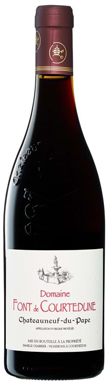
A soft and yielding style of Châteauneuf-du-Pape, relatively medium-bodied with no excess alcohol, body or alcohol. The herbal stemmy element is well integrated now. On...
2018
Domaine Font de CourteduneChâteauneuf-du-Pape
Domaine Font de Courtedune, Vieilles Vignes, Côtes du Rhône, Rhône, France, 2019
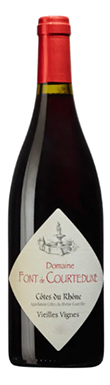
Light, fresh raspberry aromas, with a touch of cherry. Fresh and precise. Only medium-bodied, this is very drinkable. A light mineral touch brings further freshness...
2019
Domaine Font de CourteduneCôtes du Rhône
Domaine Font de Courtedune, Vieilles Vignes, Côtes du Rhône Villages, Rhône, France, 2019
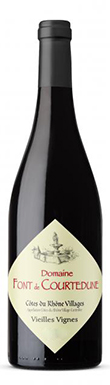
A fruity, open and expressive style. Supple, rounded, full-bodied, more generous and tannic than the Côtes-du-Rhône but the alcohol is more evident. 40-year-old vines grown...
2019
Domaine Font de CourteduneCôtes du Rhône Villages
Domaine Font de Courtedune, Vin de Pays de Vaucluse, Rhône, France, 2019
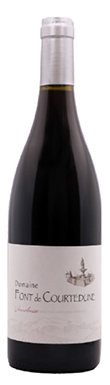
Delightfully fruity, raspberry-tinged nose. Medium-bodied and rounded. The alcohol rises up a bit on the finish, and the tannins are a little green. But it's...
2019
Domaine Font de CourteduneVin de Pays de Vaucluse
