Walls: Rhône reds lighten up
Deep colour was once a guarantee of quality and is still demanded of wines in appellation rules. But, says Matt Walls, changing tastes and a preference for less intense varieties is leading to a growing wave of lighter Rhône reds.


Château des Tours Côtes du Rhône Grande Réserve 2015 is one of the most memorable bottles I’ve drunk in the last 12 months.
It would have been bottled as a Vacqueyras where it was grown, but it had to be declassified to a lowly Côtes du Rhône.
Notes for lighter Rhône reds below
Is the colour of a wine important to you? I care more about how it smells, how it tastes and how it makes me feel.
And this wine made me feel elated. It would have been a credit to its appellation.
But all Southern Rhône AOCs state that their red wines must have a certain depth of colour.
If a producer’s wine isn’t dark enough, it won’t be granted the appellation – and declassifying their wines usually means having to drop their prices too.
Many winemakers are frustrated with this increasingly outdated regulation.
Fortunately, a change in the rules might be on the horizon – bringing with it an entirely new category of wine.
Dark arts
Each appellation has its own rules regarding depth of colour and wines are analysed using a spectrophotometer.
The cahier des charges (official production rules) for AOC Côtes du Rhône wines, for example, stipulates an optical density of 3.5; AOC Châteauneuf-du-Pape reds must be slightly darker, at least 4; for AOC Vacqueyras it’s 5; Lirac is 6.
Initially, this regulation was useful.
‘Originally, this colour intensity threshold was intended to prevent overly diluted wines from being released onto the market,’ says Damien Gilles, president of the Syndicat des Vignerons des Côtes du Rhône.
‘Given the climatic conditions of the time, it was a form of guarantee.’
Today, diluted or unripe reds are rare in the Southern Rhône – thanks in part to the heating climate – which is rendering these rules obsolete.
‘In the past, the darker it was, the more alcoholic it was, the better it was,’ says Jean-Etienne Alary of Domaine Alary in Cairanne.
Today’s tastes are more refined.
Turning to the light
A red wine that’s pale is not necessarily dilute.
There are certain practices in the vineyard and cellar that have strongly advantageous effects on the finished wine but also happen to reduce colour density.
Whole bunch vinification, for example, can add freshness and structure – but often results in a lighter colour.
Wines grown on sand can be beautifully elegant, but are rarely dark. In the right hands, carbonic maceration of Grenache can make lovely pale-coloured wines.
Amélie Barrot, president of the Châteauneuf-du-Pape appellation regulation committee (ODG), lists three more factors that are resulting in ‘a natural decline in colour density in our red wines’.
Firstly, the increasing interest in lesser-known grape varieties with lighter pigmentation such as Cinsault, Vaccarèse and Terret Noir.
Secondly, a growing interest in blending white grapes into red wines, which can bring freshness and acidity.
And thirdly, ‘the narrowing gap between day and night temperatures in summer, which negatively affects anthocyanin concentration in grapes, and thus colour intensity in wines,’ she says.
Stuck with Syrah
One, perhaps unintended, effect of the rules around colour density in the Southern Rhône has been the proliferation of Syrah, which is now the second most planted variety after Grenache.
Originally from the Northern Rhône, Syrah arrived relatively recently in the south.
Domaine Condorcet claims it was first to plant Syrah in Châteauneuf-du-Pape in 1830, and it spread to the rest of the Southern Rhône much later.
It can be highly beneficial in a blend, bringing structure and spice, but primarily, according to Maxime-François Laurent of Domaine Gramenon, ‘Syrah was brought here to add a bit of colour’.
Syrah is naturally much darker than Grenache, so it can be a useful grape for reaching the required colour levels.
But its flavours can easily dominate a blend. And more and more winemakers believe it’s now ill-adapted to the hot Southern Rhône.
‘It’s not a typical variety here,’ says Maurice Goetschy of Château Boucarut in Lirac, ‘and sometimes it suffers in the heat.’
But winemakers are stuck with Syrah for the colour it provides – whether they like it or not.
A new category is born
Fortunately, change is afoot. Gilles says the Syndicat des Vignerons des Côtes du Rhône has initiated a revision of the rules, and a request has already been submitted to the French appellation authorities, the Institut National de l’Origine et de la Qualité (INAO).
Barrot confirms that AOC Châteauneuf-du-Pape is considering a similar revision, ‘with a decision expected in the coming months’.
Gilles says that the changes have been requested for several reasons: to simplify the cahier des charges, to adapt to climate change and to be able to bring new products to a changing market.
Gilles says: ‘Among the areas of market adaptation, we have submitted to the INAO the creation of a new Côtes du Rhône segment reserved for fresh, fruity and light wines where colour would no longer be a limiting factor.’
This could bring about a new category of pale red, clairet-style Côtes du Rhône wines.
Chapoutier’s Vin de France ‘Rouge Clair’ might give us an idea of what to expect: a pale-coloured, commercial, chillable red that’s all about juicy red fruit flavour.
‘We were surprised by how well it sold,’ says Maxime Chapoutier, proving there’s a market for this kind of product.
I’m not sure how exciting this new category will be, but I’m keeping an open mind.
If other appellations follow suit and relax their regulations around colour, this will be a welcome development, giving producers more freedom to create brilliant, characterful wines without being penalised for it.
The future’s bright.
Lighter Rhône reds:
Related articles
- Walls: The joy of sand
- Walls’ hidden gems: Domaine Verzier, a new future for the northern Rhône
- Walls: Reflections on what makes cuvée Boisrenard so spéciale
Château des Tours, Grande Réserve, Côtes du Rhône, Rhône, France, 2015
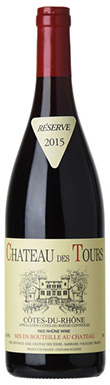

Like the 2014, the 2015 Vacqueyras at Château des Tours was deemed too pale to be granted the appellation, so it was bottled as a Côtes du Rhône ‘Grande Réserve’. (The white Grande Réserve does exist by the way, but is considerably less common than the red.) This is a very classic Château des Tours Vacqueyras in style, not quite as full and generous in body as you might expect for a 2015, but nonetheless rich in body. While not saturated in colour, it’s a fairly dark shade of red, I can't see any problem with the tint that would mean it failed to get the appellation. Still young, vibrantly fruity, with ample raspberry as well as strawberry and some woody nutmeg hints. Lovely firm acidity and softly chewy tannins – more tannic than a typical vintage, more structured. Harmonious and well balanced, this is an excellent Grande Réserve/Vacqueyras, highly recommended, and will be very long lived.
2015
Château des ToursCôtes du Rhône

Julien Masquin, Lieu-dit Les Cassanets, Châteauneuf-du-Pape, Rhône, France, 2022
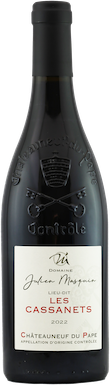
An appealingly pure, red-fruited style of Châteauneuf, combining strawberry, raspberry, redcurrant with bright spicing. Pale in colour, with light extraction and good acidity. The alcohol is fairly high, but the energy, brightness and focus help bring balance. No great depth but plenty of youthful vibrancy and impact. Sandy terroir.
2022
Julien MasquinChâteauneuf-du-Pape
Domaine l'Anglore, La Montagne, Vin de France, Rhône, France, 2021
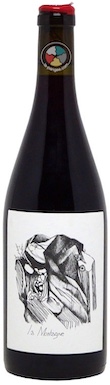
Cloudy ruby in the glass. Blood orange, blood and balsamic notes on the nose with a discrete touch of VA. Light-bodied, super fresh and dynamic with firm acid lines and light tannins. Cherry freshness and hints of spice. Brisk, crisp, snappy.
2021
Domaine l'AngloreVin de France
Terre des Chardons, Le Chardon Masqué, Vin de France, Rhône, France, 2023
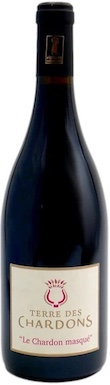
Raspberry and redcurrant, has a certainly lightness, but no lack of body or generosity. Very fresh, very well balanced, very drinkable. Not complex, but utterly delicious. One of the finest pure Cinsaults of France.
2023
Terre des ChardonsVin de France
Domaine Féraud et Fils, Châteauneuf-du-Pape, Rhône, France, 2022
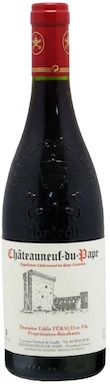
Fairly pale in colour for a 2022. Raspberry, violet and cedar; a perfumed style of 2022 Châteauneuf. Medium-bodied, with remarkably bright acidity. If you're looking for extraction and depth, this isn't for you, but if you want drinkability and vibrancy, you'll like it. Ageability is hard to judge; I would drink young, but it could surprise. Co-planted and co-fermented.
2022
Domaine Féraud et FilsChâteauneuf-du-Pape
Atelier des Sources, Le Retour Cinsault, Vin de France, Rhône, France, 2023
Fairly pale in colour with a purple tint. Sweet raspberry and wild strawberry notes, it has some generosity and roundness on the palate. Good acidity, no overextraction, good freshness and vibrancy. Light-bodied, with fine tannins; very smashable. A very good example of a French pure Cinsault.
2023
Atelier des SourcesVin de France
Domaine Alary, Les 3 G, Vin de France, Rhône, France, 2022
An experimental one-off blend of all three Grenache colour variants, one-third of each, grown around Cairanne. Very pale in colour, akin to a Tavel. Full-bodied however, with very fine tannins and good acidity. A very contemporary style, bright and enjoyable. Spent 12 months in a demi-muid.
2022
Domaine AlaryVin de France
M Chapoutier, Rouge Clair, Vin de France, Rhône, France, 2023
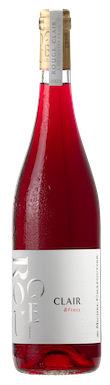
Raspberry, black cherry, pomegranate – summer pudding aromas and flavours. All about the fruit. Fuller in body than expected, but enjoyably generous rather than full, with a sour, tangy, cherryish acidity. Does have a discrete tannic base that distinguishes it from a white (and the upfront berry fruit and lower acidity). It works, it's smashable, still a proper wine (if not complex, or a wine of place). A sound commercial proposition. The label lights up '& frais' when it's cool enough – 10°C is the suggested serving temperture.
2023
M ChapoutierVin de France
