Walls: Tavel and its unexpected revolution
Matt Walls visits the renowned rosé-only appellation to discover a wave of dynamic, quality-focused producers who have returned Tavel to its roots with startling results.


When asked which is the most exciting appellation in the Rhône, there’s one that currently springs to mind before all others: Tavel.
I have to be honest with you: I don’t buy much rosé. So, given that Tavel is, according to The Oxford Companion to Wine, ‘one of France’s few all-rosé appellations,’ my response might be unexpected.
The Oxford Companion is technically correct, of course – the wines made here are paler than a typical red wine. But compared to other rosés, that’s where the comparison ends.
First and foremost, Tavel is a great terroir, and great terroirs make profound wines, no matter the colour.
That’s not to say that all Tavel is great – far from it. But there’s a growing band of winemakers, led by a visionary by the name of Eric Pfifferling, which is dragging Tavel out of the blind alley in which it had found itself.
Scroll down for tasting notes and scores of 12 fabulous Tavel wines
From fame to obscurity
While Châteauneuf-du-Pape lies on the east bank of the Rhône, Tavel is located on the opposite side of the river. Considering their proximity, it’s surprising they were both among the five original wine appellations of France declared in May 1936 (along with Arbois, Cassis and Monbazillac).
Châteauneuf might have long left Tavel in its wake, but the wines of the west bank were once more highly esteemed than those of the east. So what happened?
It was Baron Pierre le Roy de Boiseaumarié who led the charge to establish France’s appellation system. He was the owner of Château Fortia in Châteauneuf-du-Pape. Châteauneuf was given the appellation for making white and red wine; Tavel was allowed to make rosé.
Was this a historical stitch-up? Not entirely. Tavel was always known for making lighter-coloured reds, so this did make sense. Grow Grenache and Cinsault on sand and you’re bound to get a pale hue.
And back then, rosé was a much broader church than it is today. Dark rosés, or clairets, were more popular (and Tavel, according to the appellation’s production regulations, must stick to its traditionally dark colour). But lately, only the palest of rosés have been commercially viable. So Tavel has been languishing in the doldrums, as fashionable as leather trousers with matching leather Crocs.
Over time, winemakers relied on modern methods to force what was a great pale red into a mass-produced rosé, and Tavel became a wine that reflected its high-tech process more than its terroir.
In the words of Thibault Pfifferling, Tavel ‘chose the way of quantity.’ His domaine, L’Anglore, has helped to lead an ever-growing number of winemakers in a new direction – the way of quality.
Domaine L’Anglore

I’ve written about the glory of Anglore before, but no article on the Tavel revolution would be complete without mentioning the name of Thibault’s father, Eric Pfifferling.
Until 1988, Eric took his crop to the local cooperative, but increasingly he found he couldn’t stomach the resulting wines. So, in 2002, after spending time with some leading lights of the natural wine scene, he decided to go back to basics and make wines himself.
After speaking with some of the oldest winemakers in the village, he decided to return to the old ways: no synthetic chemicals, no machine harvesting, no destemming, no filtration, no blocked malolactic. The results were atypical – and a vast improvement on the status quo.
When I visited in February of this year, I spent the afternoon with Thibault, who recently rejoined the domaine after studying philosophy in Paris. He took me to see their spacious new cellar. Until now, they had been making wine in the garage under their house, which they outgrew years ago.
When it comes to their winemaking, ‘there are no rules,’ he says. That said, their typical approach is to use carbonic maceration in stainless steel and cement tanks, then use large foudres to mature the wines. They don’t use pumps, add yeasts or add sulphites before bottling, and only then to help avoid developing mousiness, the bane of some natural wines.

They make both their rosés and their reds (from other appellations) the same way – if indeed there is any real distinction. Their reds and rosés are often very similar in colour.
When they have to replant, he favours Grenache, Cinsault and Clairette: ‘for me it’s the triptych of Tavel,’ he says.
‘Cinsault is one of my favourite grapes. It’s Provençal – it’s really from here – and it brings fluidity and freshness… I don’t want super full-bodied, 15% wines.’
Their Tavels are quite the opposite. They have a great purity of expression, a silkiness combined with a fine, sandy tannic precision, and layers of flavour combining red berries, spices, flowers and herbs. No wonder so many other winemakers are finding inspiration in the wines of L’Anglore.
Domaine Moulin-La-Viguerie
‘Without Eric, I might have stopped making wine in Tavel,’ says Gaël Petit. This would have been a tragedy. Today Petit is making some of the most interesting wines in the appellation, indeed some of the most distinctive wines in the southern Rhône.
To put Petit’s comment in context, he’s no newcomer to Tavel. His family estate was established in the 16th century. He was the president of the AOC. It was his great-grandfather who first established the appellation.
It takes a lot to push someone this deep-rooted out of their land.

But like Eric Pfifferling, Petit became disillusioned with Tavel, and felt in his bones that something had been lost. ‘We were capsized by technology and science,’ says Petit, ‘we lost the understanding and savoir-faire.’
This loss of identity began in the 1970s and accelerated in the 1980s. Petit believes this reliance on new technology led to a kind of ‘collective amnesia’ among Tavel’s winemaking community.
On tasting Pfifferling’s wines, Petit’s eyes were opened; he immediately changed direction. Since then, with the mentorship of Pfifferling, Petit has transformed the way he makes wine, and now uses semi-carbonic maceration, indigenous yeasts and matures his wines in barrels.
Since undergoing this conversion, in the space of just a few vintages Petit is now making unique, unforgettable, resonant wines – true wines of terroir. ‘I feel like I’ve discovered what my grandfather used to make. It’s a start,’ says Petit, ‘a beginning.’
Le Clos des Grillons
The winemakers of Tavel are a varied bunch. Gaël Petit is a man of letters who you might guess was a lecturer or librarian. Nicolas Renaud of Le Clos des Grillons has a very different vibe; meet him in a bar and you might guess that he’s a mechanic or football coach.
In fact, he used to be a history teacher. But winemaking was a dream he wanted to follow. ‘I always loved wine,’ says Renaud, ‘and I thought – if I don’t do it now, I never will.’ So he took the plunge and retrained.
I asked whether there were any wines that inspired him to make the change.
‘Eric Pfifferling is responsible,’ he replied with a smile. A two-year stint working at Domaine de la Vieille Julienne in Châteauneuf was influential, too.

He bought 4.5ha of vineyards in 2007, mostly in Côtes-du-Rhône and Côtes-du-Rhône Villages Signargues, and struck out alone. He now works 15ha, including some plots in Tavel, which he describes as ‘an insane terroir’.
Like Pfifferling and Petit, he also works organically and uses carbonic maceration. ‘We’re making light-coloured reds, which was the original style of Tavel wines. Tavel isn’t a rosé as far as I’m concerned, it’s a clairet.’
‘I like to see light-coloured wines,’ says Renaud, ‘they make me think of lightness, freshness and elegance.’ All qualities that are common in his wines. Whether red or rosé, they are always light, crisp and highly drinkable, and stylistically original.
His whites see a week or two of skin contact so they don’t taste like traditional southern Rhône whites – lovers of orange wines in particular should seek them out.
Romain Le Bars
Tavel isn’t just drawing in winemakers from different professional backgrounds, but also from other parts of France. Romain Le Bars is originally from Paris, but came to Tavel to work with Eric Pfifferling in 2012. In 2018, he started making wine in his garage. The following year, he rented more vineyards and left to go it alone.
He now leases some cellar space just outside Tavel. Le Bars works 1ha in Tavel and 10ha in Lirac, all rented for now and being converted to organics.
Like the other luminaries of the appellation, he works mostly with carbonic maceration, with little or no added sulphites. He picks some plots early to retain acidity and freshness. ‘I don’t want that rich side,’ he says of his wines, ’I want them to finish straight.’
He makes wines under both Lirac and Tavel, but occasionally blends across the two if he believes it will result in a better wine, even if it means he can’t use the appellations on the label. Being led by the fruit, rather than slavishly adhering to appellation guidelines, is something all these producers have in common.
Expect the Liracs and Tavels of Romain Le Bars to be light, crisp and transparent, with more stylistic diversity than classic expressions, all with a sense of energy and drinkability.

A growing movement
These are some of the most distinctive producers in the new Tavel winemaking scene, but they’re not the only ones who are moving in this direction.
The incoming twenty-something brothers Jean-Baptiste and François Lafond, at Domaine Lafond Roc-Epine, are experimenting with new wines such as their excellent Tavel La Relève, an earlier-picked cuvée made without fining, filtration or added sulphites.
And the attraction of carbonic maceration is spreading. Florian André at the biodynamic Château de Manissy is now a fan; he appreciates the different aromatic profiles it can produce and says it brings out a saline effect in the wines.
Domaine des Carabiniers, Château de Trinquevedel and Domaine Maby are three other estates who are reverting to more sustainable viticulture, hand-harvesting and using natural yeasts in order to find a more authentic expression of Tavel.
Not everybody shares this new vision. It’s a more expensive way of working, and some producers feel they can’t risk raising prices. Others simply don’t enjoy the flavour profiles produced by carbonic maceration.
But for me the superior style is clear. The pale reds of Tavel are among the most exciting wines in the Rhône Valley. Forward the revolution.
See Matt Walls’ tasting notes and scores for 12 top Tavel wines:
Related content
Exploring the Southern Rhône with Matt Walls
Rhône 2020: best-value wines
Lirac & Tavel 2020: report and top-scoring wines
Domaine l'Anglore, Vintage, Tavel, Rhône, France, 2018
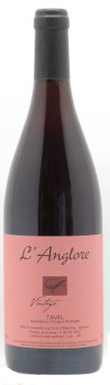

With cinnamon, orange, nutmeg characters, this is full-bodied but still fresh, with a real depth on the palate. It finishes dry and savoury, with dry spices, rose and a touch of meatiness. There’s some tannin on the tongue on the finish, too. A deeply complex rosé that could only be from Tavel. 24 months in foudres, then 24 months in bottle before release. Gently cloudy, and taking on a slightly orange note to the colour - showing some age.
2018
Domaine l'AngloreTavel

Domaine Moulin-la-Viguerie, La Combe des Rieu, Tavel, Rhône, France, 2020
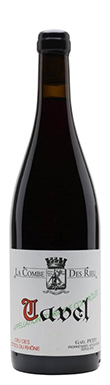
Even with a good amount of white grape varieties in the blend, this wine is full of juicy raspberries, cherries, strawberries, with supple, intense black tannins and sour red berry acidity, complex notes from the oak of toast and coffee coming through on the finish. Lovely balance, starts off with one or two notes and builds up in complexity and concentration. Promises great ageing potential.
2020
Domaine Moulin-la-ViguerieTavel
Domaine l'Anglore, Tavel, Rhône, France, 2021
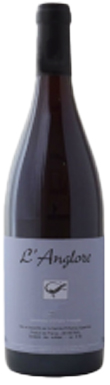
A tasting of eight foudres and tanks reveals a very bright style of Tavel - light, transparent with good freshness. The acidity is good but not high. Great freshness and purity.
2021
Domaine l'AngloreTavel
Domaine l'Anglore, Prima, Tavel, Rhône, France, 2021
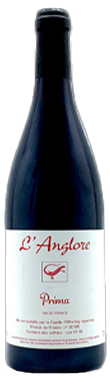
Between a red and rosé in colour, showing red cherry, black cherry and raspberry notes. Medium-bodied, full of juice and energy. Not hugely complex, but so full of life and vibrancy. A crisp, floral finish with a touch of cassis. Comes from a parcel of vines bought in 2018. En Primeur style - bottled early in spring.
2021
Domaine l'AngloreTavel
Le Clos des Grillons, Tavel, Rhône, France, 2019
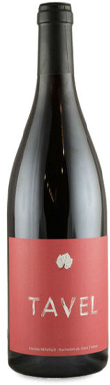
A peculiar wine in all the best ways. To start with, it's pale pink, paler than you'd expect for a Tavel (which isn't always a good sign), but there's a darkness to the tint and it's lightly cloudy. There's raspberry and redcurrant, but on the nose the main impression is tobacco leaf and red apple. It's almost austerely dry, with plenty of glycerol, and is intensely savoury for a rosé. It's an extremely individual wine, beguiling, but so strict in its dryness. Memorable.
2019
Le Clos des GrillonsTavel
Romain Le Bars, Tavel, Rhône, France, 2019
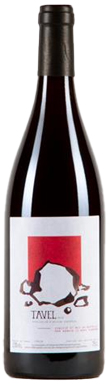
Not overtly fruity on the nose, some subtle berry fruit, but not an aromatic wine. Good acidity, it has a little grip on the finish, very much a structural style and less full-bodied than many Tavels, but it still has that chalky edge and freshness. Very good and I would drink this above most Tavels. Relatively pale for its type.
2019
Romain Le BarsTavel
Domaine Lafond Roc-Epine, La Relève, Tavel, Rhône, France, 2021
A full-bodied and fairly rich, dry style. Raspberry scented, with good acid balance. Powerful but vibrant, with a gently mineral finish. A new cuvée from a parcel grown on limestone and sand, picked a little earlier than usual for them. No fining, filtration or added sulphites before bottling. Harvested by hand, malolactic completed.
2021
Domaine Lafond Roc-EpineTavel
Domaine Lafond Roc-Epine, La Vau et Clos, Tavel, Rhône, France, 2021
Good acidity, and a cleansing mineral line to what is a fairly rich, round and weighty style of dry rosé. Plenty of fresh English strawberry fruit. Grown on ‘lauzes’ limestone soils, fermented in a concrete egg with no temperature control and with natural yeasts. No filtration, no fining, no added sulphites. There's a little dissolved CO2 on opening, so decant if you don't like a little spritz.
2021
Domaine Lafond Roc-EpineTavel
Château Trinquevedel, Vignes d'Eugène, Tavel, Rhône, France, 2020
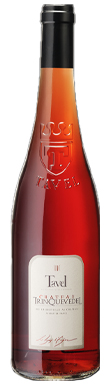
A subtle, elegant style with a lovely sense of drinkability. Slim, dry and gently mineral. Made from a plot selection of their oldest vines on silty limestone soils. Fermented and aged in six-year-old demi-muids. Cold maceration for 48 hours with natural yeasts and completed malolactic. Fairly light in colour for a Tavel.
2020
Château TrinquevedelTavel
Domaine Maby, Libiamo, Tavel, Rhône, France, 2019
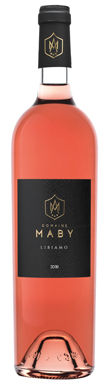
From grapes grown on the hotter galet roulé soils, the use of Cinsault and white Grenache keeps this wine at the paler end of the Tavel spectrum, while fermentation and ageing in barrel gives added weight – Maby aims for flavour rather than colour. A deep golden amber colour with delicate smoky chestnut aromas, the wine opens up to rich white chocolate, bitter orange and honeyed red fruits. It is powerful, complex, atypical, and rather gorgeous. The tannins are delicately integrated and sweet.
2019
Domaine MabyTavel
Domaine Maby, Prima Dona, Tavel, Rhône, France, 2021
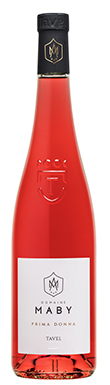
Richard Maby says 'I love difficult vintages,' and this 2021 shows he can make a success of them. This has bright, crunchy redcurrant fruit and lovely piercing acidity. The Grenache is vinified in concrete, the Cinsault in stainless steel. Three passes through the vineyard this year to ensure top quality fruit, all picked by hand.
2021
Domaine MabyTavel
Château de Manissy, La Langoustière, Tavel, Rhône, France, 2021
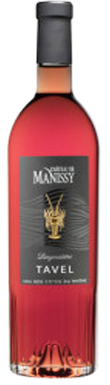
A biodynamic Tavel in a slightly reductive style. Good weight on the palate, fairly low acidity, a very generous and rounded style this year. Mouth-filling, dry but rich. From a 1.5ha parcel grown on sand once owned by the local monastery. Semi-carbonic maceration, the Syrah is destemmed but the Grenache is whole-bunch. Three and a half days' maceration, natural yeasts, very low sulphites and completed malolactic. Dark in colour for a rosé.
2021
Château de ManissyTavel
