
Walls: The joy of sand
Sand is considered the poor cousin of the Southern Rhône's famous pudding stones, but, says Matt Walls, it brings a unique finesse to wines.


Rounded galets roulés, or pudding stones as they’re sometimes called, are the most emblematic soil of the Southern Rhône.
They’re the same size, shape – and sometimes colour – of bodybuilders’ biceps, which gives you a hint of what to expect from this powerful terroir.
There’s another type of soil however, little discussed and undervalued, that instead makes wines that emphasise finesse.
As tastes change – and the climate gets hotter – it’s time to seek out wines born of sand.
Scroll down for Matt’s choice of 11 Rhône wines from sandy soils
Rhône on Sea
Northern Rhône vineyards are largely built on an igneous rock – granite. In the Southern Rhône, various types of sedimentary bedrock are more common.
There are several types of sand here, some brought by rivers, others by wind – but the most interesting sand for viticultural purposes is that brought by the sea.
It’s incredible to imagine today, but the Mediterranean Sea marauded up the Rhône Valley not once but twice – during the Miocene era (23 to 5 million years ago) and the Pliocene (5 to 2 million years ago) – and while there, it deposited layer upon layer of sand that was gradually compressed into sandstone.
This rock is known in the local Provençal dialect as safre.
It’s a particularly compact type of sandstone. Philippe Lambert of Domaine des Pasquiers in Sablet says, ‘it’s almost harder than rock’.
Some vineyards here have slabs of it discarded around the edges, dredged out of the soil to allow the roots downward passage.
It weathers down naturally to produce a fine sandy topsoil. When the sun’s out, you could be sitting on the beach.

Where it’s found
Inconveniently for us, the sandy soils of the Southern Rhône don’t follow appellation boundaries.
Deposits can be found in varying amounts all over the region, including:
- The northeastern quarter of Châteauneuf-du-Pape around Courthézon.
- A band that skirts the western edge of the Dentelles de Montmirail passing through Séguret, Sablet and Gigondas.
- Huge deposits at the south of the Dentelles in Beaumes de Venise (Muscat loves sand) and smaller ones around Vacqueyras.
- To the north of the Dentelles, in the flatter parts of Roaix, Vaison la Romaine and Puyméras.
- At the base of the Lance massif in the far north east, around Rousset-les-Vignes, Saint-Pantaléon-les-Vignes and Valréas.
- A band that runs through the Massif d’Uchaux, Rochegude and Suze-la-Rousse.
- Important deposits are on the west bank too, in Laudun, Chusclan, Lirac and Tavel.
As such, when looking for wines grown on sand, you’ll have to search by producer rather than appellation; sometimes by individual cuvée.
Growing on sand
Sand is a poorer soil compared to, say, clay; it offers less in the way of nutrients to vines.
But one benefit – when not blocked by plates of hard safre – is that roots are free to delve down deeply.
Though water readily drains through sand, it’s not necessarily an arid terroir in dry climates.
Georges Truc, the renowned ‘oeno-geologist’, explains that water can percolate upwards by capillarity as long as there’s proximity to a water source.
‘Sand is very favourable to all varieties,’ he says, but it gives particularly interesting results with Grenache and Cinsault in red, and Grenache Blanc and Clairette in white.
Maurice Goetschy of Château Boucarut in Lirac says cultivars that prefer a more moderate heat, such as Roussanne and Viognier, can ripen very quickly on these terroirs.
Fine sand, fine wines
‘There’s a finesse you find from the sands of Lirac,’ says Edouard Guérin of Ogier.
By comparison, his says wines on nearby clay soils have sweeter, jammier fruit flavours. Truc agrees that ‘sand gives very fine tannins’.
Reds from vineyards composed of galets roulés tend to have muscular, rounded profiles.
Those from sand have lighter tannic textures reminiscent of fine, cooling sand flowing through your fingers.
Sand typically produces wines with a slightly paler colour, that are approachable young but can age well too.
They are usually less powerful and concentrated than wines from galets roulés – which can be a good or bad thing, depending on what you’re looking for.
Historically, sand has been less lauded than galets roulés, particularly in Châteauneuf.
But as more winemakers, and wine drinkers, seek elegance over strength, this is beginning to change.
That Château Rayas comes from sand is evidence enough that these soils can make the very finest wines.
Rhône wines made from sandy soils
Related articles
- Walls’ hidden gems: Domaine Verzier
- Walls: Reflections on what makes Cuvée Boisrenard so great
- Walls: Revisiting St-Joseph 2022 in bottle
Domaine Le Sang des Cailloux, Un Sang Blanc, Vacqueyras, Rhône, France, 2021
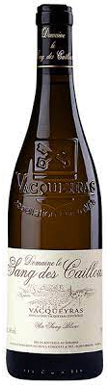

Tasted from magnum. I adore this wine! It's one of the finest whites of the Vaucluse. Fresh poached Williams pear and white flowers, but it’s...
2021
Domaine Le Sang des CaillouxVacqueyras

Le Clos du Caillou, Les Safres, Châteauneuf-du-Pape, Rhône, France, 2023
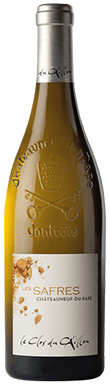
Such a lovely nose, really fresh, with disarming aromas of apricot, lemon thyme and pear. Great freshness and vibrancy on the palate, with quite marked...
2023
Le Clos du CaillouChâteauneuf-du-Pape
Château Boucarut, D'Schlanga, Lirac, Rhône, France, 2023
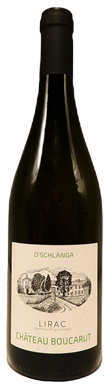
D'Schlanga means snake in the Alsatian dialect – and they often find snakes in this vineyard. Medium-bodied, very fresh with good acidity. A brisk and...
2023
Château BoucarutLirac
Famille Perrin, L'Argnée, Gigondas, Rhône, France, 2016
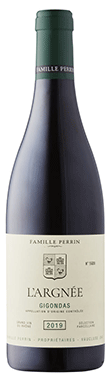
This is a fantastic Gigondas, it really has everything you can wish for – beautifully concentrated but not overextracted fruit; full, thick and creamy but...
2016
Famille PerrinGigondas
Château de Fonsalette, Côtes du Rhône, Rhône, France, 2011
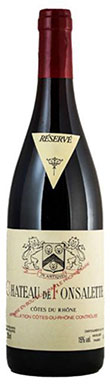
On opening: a touch of orange or brick to the colour now. Gorgeous nose – the smoky, gamey Syrah to the fore, with raspberry, strawberry...
2011
Château de FonsaletteCôtes du Rhône
Domaine de Cristia, Chapelle Saint Théodoric Le Grand Pin, Châteauneuf-du-Pape, Rhône, France, 2021
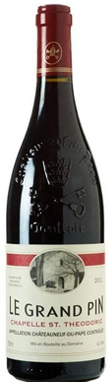
Transparent ruby purple with an orange tint. Orange peel, thyme and iodine, with some resinous notes from the forthright whole bunch influence. Not terribly full,...
2021
Domaine de CristiaChâteauneuf-du-Pape
Château des Tours, Grande Réserve, Côtes du Rhône, Rhône, France, 2015
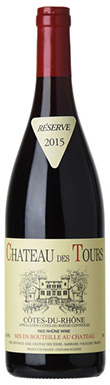
Like the 2014, the 2015 Vacqueyras at Château des Tours was deemed too pale to be granted the appellation, so it was bottled as a...
2015
Château des ToursCôtes du Rhône
Domaine Galevan, Saint-Georges, Châteauneuf-du-Pape, Rhône, France, 2017
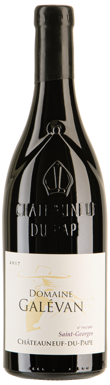
97-year-old Grenache vines grown in sandy soil, aged for 36 months in 500l barrels, only made in the best vintages. Remarkably dark for a pure...
2017
Domaine GalevanChâteauneuf-du-Pape
Domaine Julien Masquin, Lieu-dit Pignan, Châteauneuf-du-Pape, Rhône, France, 2021
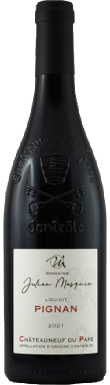
Has good weight and balance, the tannins are fairly discreet and gently chewy. Strawberry and damson fruit. It's so young, and shows little interest/complexity for...
2021
Domaine Julien MasquinChâteauneuf-du-Pape
Domaine la Monardière, C945, Vacqueyras, Rhône, France, 2022
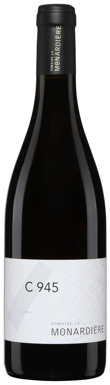
<p>Grown on pure safre sandstone. Pale red, very fine tannic texture – quite low in tannin in fact – which lends this new cuvée a...
2022
Domaine la MonardièreVacqueyras
Mouriesse Vinum, Tour d'Ambre, Châteauneuf-du-Pape, Rhône, France, 2020
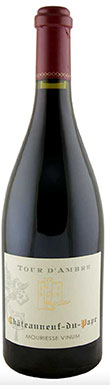
A little closed on the nose for now, with menthol and lavender notes over blackberry and blueberry. Fulsome and velvety textured, this has relief and...
2020
Mouriesse VinumChâteauneuf-du-Pape
