
What is a field blend?
These days most of the world’s vineyards are planted with just a single variety, but what happens when multiple varieties are planted, harvested and blended together?

What is a field blend? How is it different from a blended wine?
Imagine a meadow of wildflowers picked all at once and made into perfume. Field blends are wines made from different grape varieties that are grown together in one vineyard and then co-fermented. Traditional wine blends, on the other hand, use grapes from different plots, fermented separately by variety and blended later.
The idea of mixed-grape vineyards can be traced to Roman agricultural practices, as documented by writer-farmer Columella in the 1st century CE. It didn’t happen overnight and certainly not for romantic reasons, but rather for yield.
Grapevines were likely sparse and scattered back in the day. Farmers harvested existing wild and native grapes together, and if a grape didn’t perform, it would be replaced with something that might work better.
They would propagate, trade, select and cultivate for desirable traits, such as productivity and resistance to pests and diseases. So, it makes sense that field blends are typically found in the Old World and are associated with older vines, because they pre-date modern varietal planting.
Four examples of field blends listed below
So none in the New World?
Not quite. There are centenarian vines producing field blends outside of Europe. Known for its pre-industrial agricultural approach, California’s Ridge Vineyards produces estate-grown field blends starring Zinfandel.
Also, its Pagani Ranch wine is a field blend from vines planted from the late 1800s. In neighbouring Lake County, Dancing Crow Vineyards makes a wine from co-planted vines in the ground since 1901.
These are among the few surviving field blend vineyards aged 100 years or more in California, as recognised by the Historical Vineyard Society.
Beyond California there are handfuls of other producers who are intentionally planting vineyards to produce field blends, such as South Africa’s Alheit Vineyards.
Which areas of the world are known for field blends?
Austria’s history with field blends is now seeing a revival. Gemischter Satz is a wine that showcases co-fermented grapes cultivated in and around Vienna. Producer Fritz Wieninger describes the perfect Gemischter Satz as a wine in which individual varieties are indiscernible.
‘One variety is like an instrument and the Gemischter Satz is the whole orchestra,’ he explains.
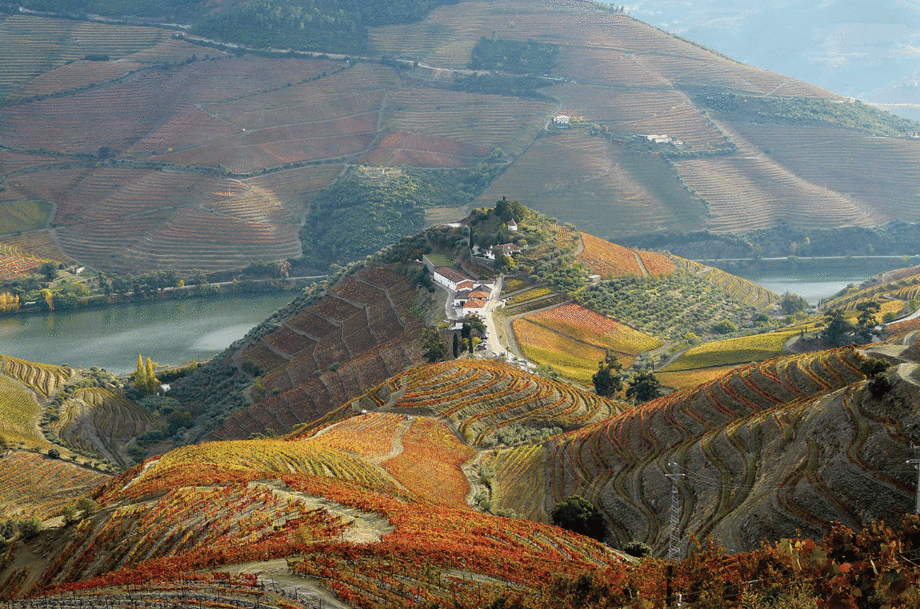
In Portugal’s Douro valley, co-planting has been a tradition for centuries, initially for Port production and more recently also for dry wines. Quinta do Crasto’s Maria Teresa comes from a plot of 54 grape varieties from heritage vines, according to Miguel Roquette, who says ‘the recipe is in the field’.
Exceptionally varied microclimates dictate precise harvest times of specific sections within the vineyard to best illuminate the terroir, and maintain the integrity and complexity of the wine.
Any other names to look out for?
Also in Portugal, Antonio Madeira seeks the ethereal side of the Dão and shares his love of rescuing old forgotten vines to make a palhete, in which black and white grapes are ‘mixed joyfully’ to create easy-drinking ‘farmer’s style’ wines.
The long-ageing ‘complantation’ wines of Domaine Marcel Deiss in Alsace are both traditional and visionary, highlighting soil specificity through 13 Alsace varieties. With great respect for tradition, Scarbolo in Friuli, northeast Italy, appreciates field blends for their ‘fascinating’ complexity.
Second-generation Mattia Scarbolo says it’s about the ‘cooperation of cultivars, with each year being a different love story’.
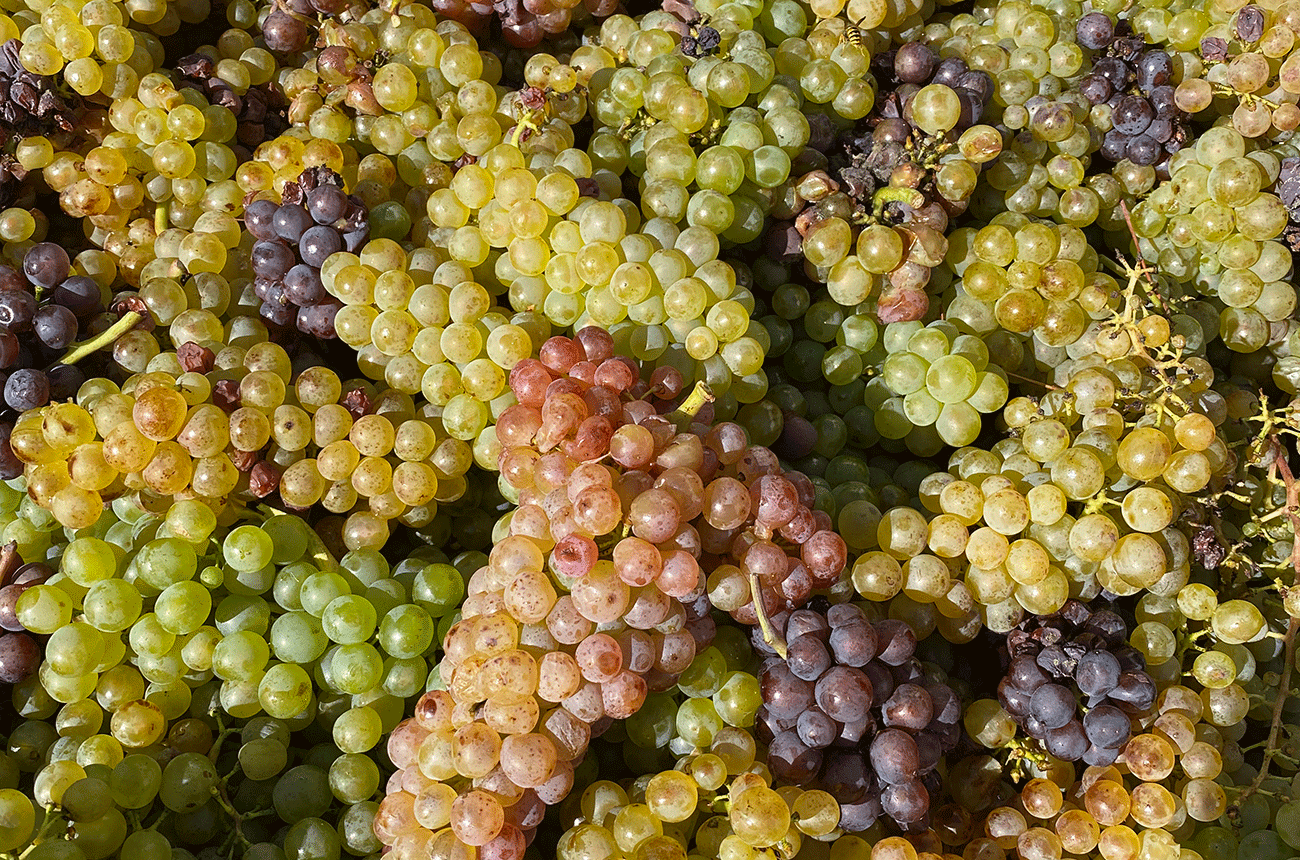
It’s said that wines of quality come from fruit picked at optimal ripeness. As field blend grape varieties have different ripening times, does this still apply?
Good question! Of course, the dream vineyard consists of vines with similar ripening times, but it’s not always the case – even in a monovarietal vineyard. Factoring in such variables as soil and microclimate, optimal ripeness is not achieved across all grape varieties.
Proponents of field blends strive to find that sweet spot, in which underripe berries contribute nerve and acidity, and overripe ones add complexity and body. Yet, while there are many high-quality field blends being made, this is one aspect of them that deserves further exploration.
Do field blend wines help environmental resilience?
Yes. Historically, field blend vineyards came about in part because farmers were hedging their bets against disease and adverse vintage conditions. This is still an important consideration for producers of field blends today.
David Gates of Ridge Vineyards notes that diversity in the vineyard fosters resilience because different varieties contribute different strengths.
So we should seek out field blends?
These wines tell the story of a unique vineyard, through a kaleidoscope of different grapes. This diversity can offer a wine of unexpected thrill and complexity, balance and regional character.
It’s a great one to add to your wine discovery list.
Marisa Finetti selects four field blends worth seeking out
Related articles
- Sustainability: How green is your wine?
- Why are there crystals in my wine?
- Malu Lambert’s favourite South African white blends
Weingut Wieninger, Ried Ulm, Gemischter Satz DAC, Wien, Austria, 2021

Biodynamically farmed alongside the Danube River on an ancient marine terrace, Fritz Wieninger composes this classic Gemischter Satz blend with grapes, including Pinot Blanc, Neuburger,...
2021
Weingut WieningerGemischter Satz DAC

Quinta do Crasto, Maria Teresa, Douro, Douro Valley, Portugal, 2017
Made only in exceptional years, the Maria Teresa vineyard is composed of low-yielding centenarian vines situated close to the Douro River. The dominant grape is...
2017
Quinta do CrastoDouro
Alheit Vineyards, Hemelrand Vine Garden, Hemel-en-Aarde Ridge, Hemel-en-Aarde, South Africa, 2022
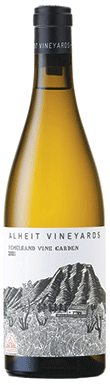
Chris and Suzaan Alheit believe in 'clean and simple winemaking' to honour the Cape's identity. Planted in 2010 on a cool and breezy ridge, this...
2022
Alheit VineyardsHemel-en-Aarde Ridge
Ridge Vineyards, Lytton Springs, Sonoma County, California, USA, 2022
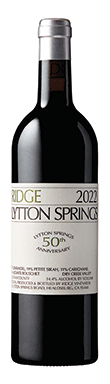
Committed to both sustainable and organic farming practices, Ridge’s pre-industrial approach lends its sensibility to field blends made from old, time-honored vines. Leading the Sonoma...
2022
Ridge VineyardsSonoma County
