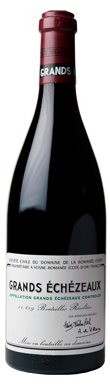
Why Echézeaux is the grand cru to have in your cellar
Charles Curtis MW takes a look at the Burgundian grand cru of Echézeaux, which he thinks sits at a sweet spot for terroir, winemaking and price.
Get our daily fine wine reviews, latest wine ratings, news and travel guides delivered straight to your inbox.
You are now subscribed
Your newsletter sign-up was successful
‘Maximum quality for minimum cost’ is my mantra when it comes to Burgundy, particularly as prices spiral and the economy seems less certain.
Searching for value seems a safe proposition, but value as a sole proposition can lead a wine lover to overlook wines of compelling beauty, and the sweet spot is the intersection of terroir, winemaking savvy, and price.
Over the past year I have been thrilled with wines that cover the broad spectrum of Echézeaux, an appellation that is often misunderstood.
Misunderstandings (and underestimations) occur because Echézeaux is a complicated appellation and the history is not exactly straightforward.
A splintered history
The vineyard was originally the property of the monks of Cîteaux Abbey. The Abbey’s 1718 Grand Atlas showing its holdings refers to a ‘Vigne des Echézeaux’.
This included Les Echézeaux Hauts (today’s Echézeaux du Dessus), Les Echézeaux Bas (our Grands Echézeaux), and several other vineyards in the vicinity, including parts of the Combe d’Orveaux that are today included in Echézeaux.
Other vines in the area were not yet planted or did not belong to the Abbey.
Get our daily fine wine reviews, latest wine ratings, news and travel guides delivered straight to your inbox.
Historian Jean-François Bazin tells us that the monks did not work these vines themselves (unlike the Clos de Vougeot and Richebourg), and at the time of the French Revolution, much of this land was rented to the growers tending the vines. For this reason, the Vignes des Echézeaux was not confiscated as other holdings were.
In the early years of the 19th century, Napoleon’s government drew up the cadastre, or land registry, and each of these areas was given a different name or lieu-dit, but the growers continued to sell their produce as ‘Echézeaux’.
The practice was challenged in court in 1925 by Etienne Camuzet and Eugène Mongeard-Mugneret. The pair lost their case, however, and when the appellation was created in 1936, the surrounding vines were all included in Echézeaux.
Today Echézeaux includes some or all of no fewer than 11 lieux-dits (see below).
The central kernel of the Echézeaux Hauts had expanded from 2.63ha to 3.55ha by 1855, and following the decision of the judges in Beaune, a total of 36.27ha was included in the appellation, according to the BIVB.
A close reading of the regulations gives an even higher total, however, and local expert Laurent Gotti places the figure at 38.14ha.
Location and aspect
Echézeaux is at the centre of the stretch of contiguous grand cru slope that begins with Musigny and includes the Clos de Vougeot.
The vineyard is located entirely within the village of Flagey-Echézeaux, although Flagey itself seldom appears on a wine label since the wines are sold as Vosne-Romanée.
Echézeaux du Dessus is the historic heart of the appellation, located in the middle of the slope and surrounded by other grands crus.
It is sheltered from the cooling influence of the Combe d’Orveaux and located at the base of the slope on a healthy depth of Jurassic marls. The ownership here is split between eight domaines.
Immediately north of Echézeaux du Dessus is Les Poulaillères. This lieu-dit is located more directly on the rocky alluvial cone of the Combe. It is almost exclusively the property of Domaine de la Romanée-Conti.
Bordering Echézeaux du Dessus is Les Loächausses, a monopole of the Gros family, with holdings from Anne Gros, AF Gros, and Gros Frère et Sœur.
Bordering Les Loächausses to the south is Les Cruots ou Vignes Blanches, made famous by Henri Jayer, who said it was the best terroir of the appellation.
Further up the slope lies the 3ha Rouges du Bas, planted on steeper slopes with a thinner layer of marl atop the limestone. The most famous Echézeaux produced here was that of Domaine Méo-Camuzet, whose label until 2021 featured the name of the lieu-dit.
Les Beaux Monts Bas borders Rouges du Bas to the south, but only a small portion of the bottom of this appellation is included in Echézeaux; the rest of the climat is classified in premier cru.
North of Rouges de Bas one finds Les Champs Traversins, whose vines are planted north-south across the slope to limit erosion.
South of Grands Echézeaux and further down the slope lie three lieux-dits that were regarded in the 19th century classification of Dr Lavalle as a step lower in quality than the rest of today’s appellation.
These include Les Treux, immediately south of Grands Echézeaux, the Clos-St-Denis (not to be confused with the grand cru of the same name in Morey-Saint-Denis), and Les Quartiers de Nuits, located between the southern end of the Clos de Vougeot and the village-level Vosne vineyard of Mazières-Hautes.
At the northern extremity of the appellation lies an 8ha section of the vineyard called En Orveaux. These vines formed part of the estate of the monks of Cîteaux.
This lieu-dit lies squarely in the Combe d’Orveaux. The combe makes it a very cool terroir, but even if the northern portion faces due south and the alluvial soils here are very well-drained, it ripens late.
Terroir
The terroir of the appellation is far from consistent. At the base of the slope, the vineyard is nearly flat (as are the nearby Grands Echézeaux and Clos de Vougeot), but the grade is nearly 15% at the top in Les Beax Monts Bas.
The soil is Jurassic-era marl mixed with clay, but it varies from 80 cm deep at the bottom and less than half of that at the top.
The soil sits over a limestone bedrock that also varies, from oolitic limestone at the top to Prémeaux and Comblanchien, with notable quantities of pebbles, stones and larger rocks in the valley called the Combe d’Orveaux.
Much of the vineyard faces east, but the sections in the Combe d’Orveaux are more varied.
The lieux-dits
Echézeaux du Dessus 4.48ha
Les Poulaillères 5.24ha
Les Loächausses 2.22ha
Les Cruots ou Vignes Blanches 3.16ha
Les Rouges du Bas 3.09ha
Les Beaux Monts Bas 0.77ha
Les Champs Traversins 3.58ha
Les Treux 4.76ha
Clos-St-Denis 1.66ha
Les Quartiers de Nuits 1.15ha
En Orveaux 8.03ha
Ten wines from Echézeaux:
Related articles
- Richebourg vs Romanée-St-Vivant: Comparing two of Burgundy’s famous grands crus
- Montrachet 2014: When is the right time to drink up?
- Domaine Dugat-Py: A legacy of evolution and elegance in Gevrey-Chambertin
Domaine Mugneret-Gibourg, Echézeaux Grand Cru, Burgundy, France, 1991
Showing developed aromas that range from baked red fruit to earth, truffle, smoke and leather. The once-fierce tannins are now completely resolved, yet the wine...
1991
BurgundyFrance
Domaine Mugneret-GibourgEchézeaux Grand Cru
Domaine de la Romanée-Conti, Echézeaux Grand Cru, Burgundy, France, 2022

The initial attack of the 2022 Echézeaux charms with forward, high-toned aromas of cherry fruit and violets. The wine has less weight than some in...
2022
BurgundyFrance
Domaine de la Romanée-ContiEchézeaux Grand Cru
Domaine Berthaut-Gerbet, Echézeaux Grand Cru, Burgundy, France, 2023
A wine of enormous energy and verve, with a spicy, briary edge to the ripe mulberry fruit that attests to the 70% whole-bunch treatment of...
2023
BurgundyFrance
Domaine Berthaut-GerbetEchézeaux Grand Cru
Domaine d'Eugénie, Echézeaux Grand Cru, Burgundy, France, 2023
This wine is a brilliant success. The initial impression is of floral notes and ripe black cherry fruit, but the wine takes on depth with...
2023
BurgundyFrance
Domaine d'EugénieEchézeaux Grand Cru
Domaine du Comte Liger-Belair, Echézeaux Grand Cru, Burgundy, France, 2016
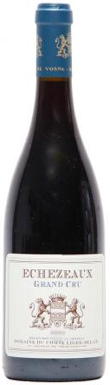
This was remarkably accessible, boasting aromas of ripe blackberry and plum and hints of rose petals and spice. The texture was fresh and lively, more...
2016
BurgundyFrance
Domaine du Comte Liger-BelairEchézeaux Grand Cru
Domaine Emmanuel Rouget, Echézeaux Grand Cru, Burgundy, France, 2017
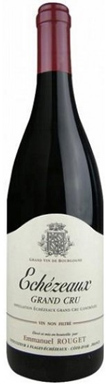
A powerful wine with a lovely dark, plummy black fruit aroma that is beginning to show its complexity, with a pronounced saline minerality, a savoury...
2017
BurgundyFrance
Domaine Emmanuel RougetEchézeaux Grand Cru
Domaine des Perdrix, Du Dessus, Echézeaux Grand Cru, Burgundy, France, 2022
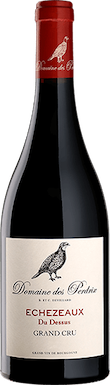
The 2022 vintage stood out in a recent vertical tasting at the domaine with owner Amaury Devillard. It features ripe blackberry and blueberry fruit that...
2022
BurgundyFrance
Domaine des PerdrixEchézeaux Grand Cru
Domaine Faiveley, En Orveaux, Echézeaux Grand Cru, Burgundy, France, 2023
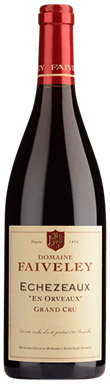
Tasted shortly after bottling, this is notable for its purity of fruit, with expressive notes of black cherry, peony and liquorice. The texture is lively...
2023
BurgundyFrance
Domaine FaiveleyEchézeaux Grand Cru
Domaine Hoffmann-Jayer, Du Dessus, Echézeaux Grand Cru, Burgundy, France, 2020
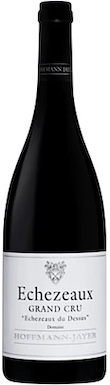
Tasted with a few years of bottle age, the 2020 Échézeaux du Dessus from Hoffmann-Jayer is beginning to show its complexity, with a savoury, slightly...
2020
BurgundyFrance
Domaine Hoffmann-JayerEchézeaux Grand Cru
Domaine Mongeard-Mugneret, Echézeaux Grand Cru, Burgundy, France, 2019
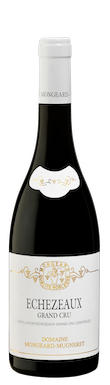
An almost deceptively powerful wine. There are concentrated, super-ripe aromas of blackberry and fig and a hint of earthy complexity. The texture is dense and...
2019
BurgundyFrance
Domaine Mongeard-MugneretEchézeaux Grand Cru