

This article is part of a Decanter guide produced in cooperation with Vinistra, association of winegrowers and winemakers of Istria, and the Croatian National Tourist Board.
Combining a blissful rugged coast and a lush green interior, the Istrian peninsula offers views of the towering mountains of Slovenia and Italy to the north, and the glistening blue Adriatic to the east and west.
This is where Central Europe meets the Mediterranean. The industrial port city of Pula, founded by the Romans, sits on Istria’s southern tip, while the cheerful seaside resorts of Rovinj and Poreč lie on the west coast.
Inland you’ll find undulating hills carpeted with vineyards, olive groves and oak forests (concealing pungent truffles), overlooked by medieval-walled hilltowns such as Motovun and Grožnjan in the north.
Culturally, the Illyrians, Romans, Byzantines, Venetians and Austro-Hungarians have all left their marks here.
Much of Istria came under Venice from the 13th century until the fall of the Venetian Republic in 1798, and the Italian influence is apparent in the centuries-old fortifications, churches and loggias, in the local cuisine (lots of pasta, gnocchi and risotto dishes, as well as fresh Adriatic seafood) and the dialect.
Whether you are a keen wine enthusiast after new discoveries or just looking for the perfect weekend getaway, Istria has plenty to offer.

The Roman amphitheatre in Pula.
Pula
The skyline of Pula is dominated by an impressive Roman amphitheatre, while the site of the forum is now the main square, overlooked by the proud temple of Augustus. Roman relics are displayed in the Archaeological Museum of Istria.
Explore the covered market for deliciously fresh seafood in the morning and in the evening enjoy he sunset, followed by the multi-coloured illumination of the industrial port zone.
Winery to visit: Benazić
Bale
On the road from Pula to Rovinj, surrounded by flat fertile land supporting olive groves, Bale has a sleepy old town with cobbled alleys leading to the 16th-century Soardo- Bembo castle.
Winery to visit: Meneghetti
Rovinj
Built around a sheltered fishing harbour and overlooked by a hilltop church with an elegant bell tower (pictured), Rovinj is for many Istria’s most-loved seaside town. You can clearly see the Venetian influence in its pastel-coloured facades. The town has two one-star Michelin restaurants and a handful of big, modern five-star waterside hotels.
Motovun

Tomaz vines below the hilltown of Motovun.
The medieval-walled hilltown of Motovun is central Istria’s most popular destination. From the town’s fortifications, you have spectacular views over the Mirna valley, with its lush vineyards and oak forests loved by truffle hunters.
Wineries to visit:
Buje & Momjan
Lying close to the Slovenian border, hilltop Buje has a medieval-walled old town with an imposing late-Baroque church on the main square.
And amid lush green, undulating hills 6km northeast of Buje, tiny Momjan is famed for Muškat Momjanski (a protected label of origin since 2021). Just five wineries, within a 5km radius of the village, produce this aromatic dessert wine.
Wineries to visit:
My perfect weekend in Rovinj
My favourite base in Istria, Rovinj offers a choice of classy waterside hotels. Of these, I’d suggest the newest, the Grand Hotel Park, enjoying magnificent views of the old town across the bay, plus contemporary design, gourmet dining and a rooftop spa.
Friday
Afternoon
Arriving in the afternoon, book in and take a stroll along the seafront to Rovinj’s lovely old town.
Walk around the fishing harbour, rimmed by pastel-coloured houses hosting seafood restaurants and ice cream parlours, then around the peninsula. Originally a tiny island, Rovinj was connected to the mainland coast in 1763, when the sea channel was filled in.
Evening
From the harbour, take an early-evening ride in a traditional flat-bottomed batana rowing boat, lit by a fishing lantern. Then return to the hotel for a spectacular dinner at the Cap Aureo.
Saturday
Morning
Take breakfast on the hotel’s Laurel & Berry restaurant terrace – the eggs florentine are divine.
Walk to the old town and up to the hilltop church of St Euphemia, climbing the bell tower for fantastic views. Then head east of the centre to visit two wineries, Dobravac and Vivoda.
Returning to town, near the port, take a look at the colourful open-air market. Have lunch at the waterside restaurant Puntulina – I can recommend the sea bream carpaccio followed by ravioli with truffles.
Afternoon
Cycle (the hotel has bikes) south along the coast, through the parkland of Zlatni Rt peninsula, then inland to the Stancija Collis estate, which makes its own wine and olive oil. On the way back, stop for a swim at a pebble cove shaded by pine trees on Zlatni Rt.
Evening
Enjoy your hotel operator Maistra’s Kozlović Dinner & Wine Tasting package, which includes transfer from the Grand Hotel Park to Momjan for a tour of the Kozlović winery with tasting, followed by a private dinner on the winery rooftop with wine pairing.
Sunday
Morning
After breakfast, drive to Paladini, near Buzet, for truffle hunting in the Mirna valley with Karlić Tartufi. You’ll walk through oak forests with dogs, after which you can enjoy a truffle cooking demonstration and light lunch.
If you forgo lunch, head up to the hilltop town of Motovun to eat at Konoba Fakin.
Afternoon
If you have the time, visit the Fakin and Tomaz wineries, both open on Sundays, below Motovun. Depart via Pula airport.
Jane Foster is a travel writer specialising in Croatia, Montenegro and Greece, with a particular interest in vineyards, wineries, restaurants and bars. Her work has appeared in titles including The Guardian, The Telegraph and Condé Nast traveller.
Related articles
- A taste of Croatia: 15 exciting wines to seek out
- Croatia wine guide: Istria and its key grape varieties
- Croatia guide: wine regions beyond Istria
- Back to the Croatia wines hub page

-
 Meet the new technical manager of Château-Grillet on its 90th anniversary
One appellation, one estate, one grape variety, 3.5ha. Matt Walls checks in on this legendary Rhône white, 90 years after it gained appellation status.
-
 Gen Z Wine Challenge: Amelia, 21
In a new Decanter series, 18- to 29-year olds around the world give their honest opinion about a wine they've splashed out on – and if it was worth the cash.


-
 Dalmatia: The crimson coast
Sponsored Content Sun-kissed by the shores of the Adriatic, Dalmatia’s vineyards are home to bold and inviting red wines with plenty of potential.
-
 Azienda Agricola Cortese: Championing sustainability in the heart of Sicily
Sponsored Content Meet the winemakers using ancient techniques and sustainable practices to create fresh, modern interpretations of Sicilian varieties
-
 Monemvasia Winery – Tsimbidi: Bringing an ancient wine into the modern age
Sponsored Content George and Elli Tsimbidi’s winery not only revived one of history's most famous wines but is now breathing fresh life into other native Greek varieties.
-
 Marenda – A Dalmatian ritual
Sponsored Content What started as a work break has become a well-observed tradition in Dalmatia – one that pairs perfectly with local wine.
-
 Dalmatia's hall of fame: DWWA winners
Sponsored Content Discover a selection of medal-winning Dalmatian wines from the Decanter World Wine Awards.
-
 Pomalo: Dalmatia's answer to hustle culture
Sponsored Content A state of mind in Dalmatia, pomalo, which roughly translates as ‘take it easy’, sets the pace of life in this scenic region of Croatia.
-
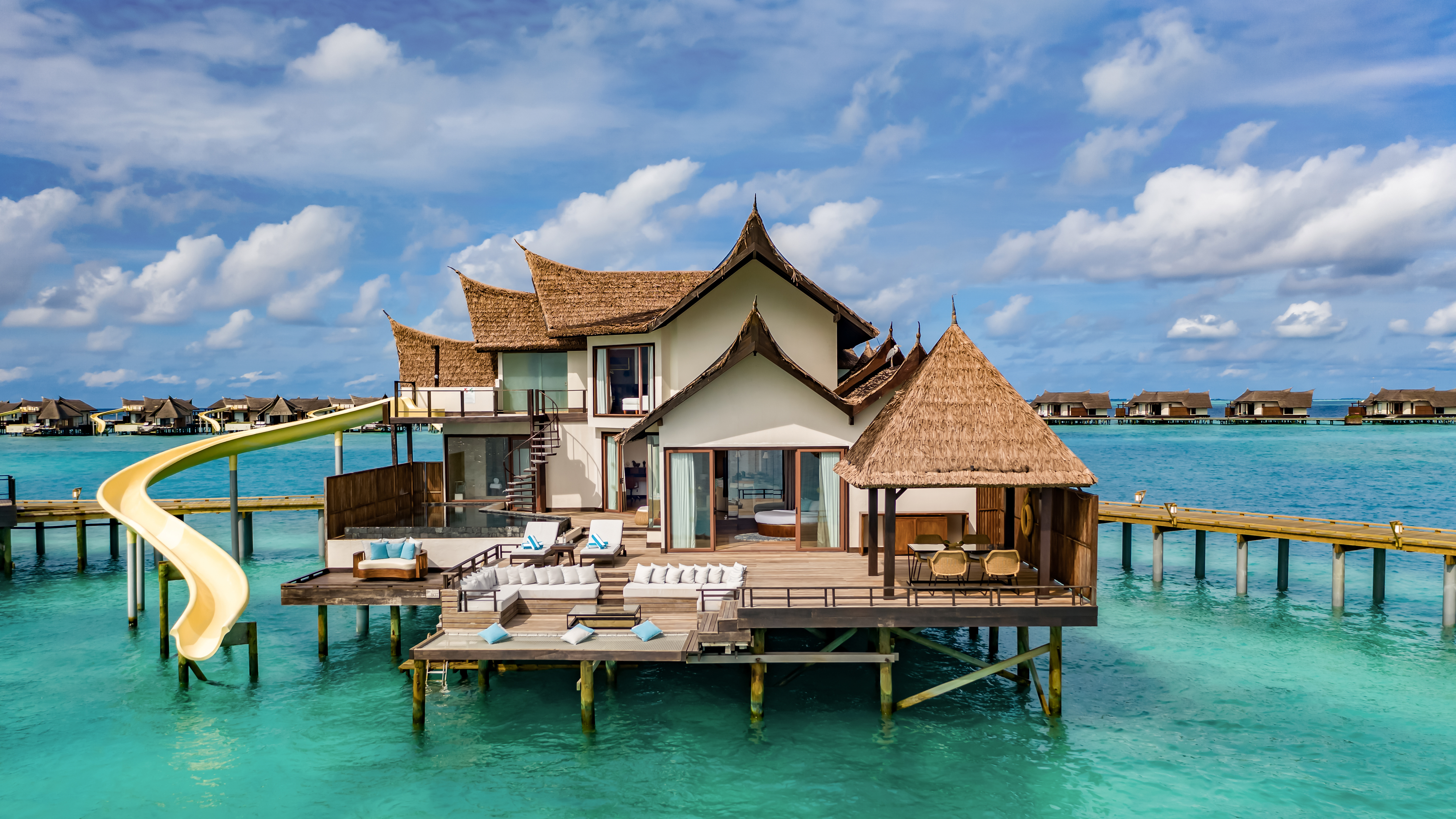 A Maldives paradise for wine lovers
Sponsored Content The unique wine culture at OZEN RESERVE BOLIFUSHI extends well beyond its carefully curated list with expert tastings, creative pairings and unexpected discoveries to make lasting holiday memories.
-
 Shaping the future of wine & spirits: What’s new at ProWein Düsseldorf?
Sponsored content Returning on 15 – 17 March in Düsseldorf – discover what's new at ProWein in 2026...


