Anson: 30 years of Pessac Léognan


Jane Anson reports from the 30th anniversary tasting of Pessac Léognan at Latour Martillac...
Anson: Pessac Léognan 30 years on
Premières Graves. Hautes Graves de Bordeaux. Graves Supérieur. Graves de Bordeaux.
They tried all of these names, but none seemed to stick. Either they were already in use for something else, or they caused too big of a political argument. French bureaucracy is as mind-numbingly slow as in any other country, and the change might have been put off indefinitely, if it hadn’t been for the stubborn persistency of André Lurton, owner of Châteaux La Louvière, de Rochemorin and Couhins-Lurton, and today pushing 94 years old.
But finally, on September 9, 1987, Bordeaux saw the creation of a new appellation in the form of Pessac Léognan – with a production area covering the 10 communes of Mérignac, Villenave d’Ornon, Pessac, Cadaujac, Talence, Léognan, Gradignan, Martillac, Canéjan and St Médard d’Eyrans, following a geological study by Pierre Becheler and ten years of lobbying. The eventual appellation simply took the names of the two biggest communes and put them together, and the first dinner of the new AOC was held at Château La Mission Haut-Brion.
I know I’m missing the anniversary proper by a few days with this story, but I only attended the anniversary tasting in late December, just before Christmas, and rather poignantly the day after the death of one of Pessac Léognan’s most recently-anointed sons; Bob Wilmers of Château Haut-Bailly – a man who deserves to be celebrated right up alongside André Lurton in terms of his contribution to the international renown of Pessac Léognan’s name.
It’s not easy to create a new appellation to catch the imagination of the public, even when it is nudged right up against the city itself, and when it is the only one in Bordeaux to contain classified white as well as red wines. To make it even more challenging, this one has a contradiction at its very heart; it was created to mark a section of the Graves region that has different terroir to the more southerly section that stretches down to the market town of Langon, and that contains all of the 14 classified estates named in a ranking of 1953 and 1959. But these châteaux were all named Cru Classés de Graves – and would now no longer be in AOC Graves.
‘It had been a long war between the north and south sides of the Graves,’ Tristan Kressman of Château Latour Martillac remembered, as we discussed the appellation’s origins after the tasting. When the classification had taken place in the 1950s, estates across the whole of Graves had asked to be included, but in the end only the ones in the northern stretches had made the cut.
‘A divorce became inevitable,’ is how Kressman put it.
Back in 1987, Pessac Léognan comprised of 55 châteaux, over 813 hectares of vines, with 75% red and 25% white wine. Part of the logic for its birth was to fight against the urbanisation that had seen the loss of 4,500 hectares of vines over the previous century, as the city of Bordeaux grew ever bigger. In Mérignac alone, for example, where Bordeaux airport is now found, there was 700 hectares of vines in 1870 – and just 30 in 1987. Today, the appellation’s vineyards cover 1,791ha, so doubling over three decades (much of it extending into former forest rather than urban land), and 72 châteaux, with 80% red and 20% white. Compare this growth to AOC Entre-Deux-Mers, that had 2,300ha in 1997 and just 1,440ha today, even though its vines are further away from the conurbation of Bordeaux.
Among the new estates created in Pessac Léognan since 1987 are Châteaux Haut-Lagrange, Lafont-Menaut, Haut-Vigneau and d’Alix– and among the owners attracted to the area are leading names such as Bernard Magrez at Pape Clément (and now also Le Sartre), the Bonnies at Malartic-Lagravière, the Cathiards at Smith Haut-Lafitte, the Wilmers at Haut-Bailly and the Dillons at Château Haut-Brion (making Pessac Léognan the only appellation in Bordeaux with a château classified in both the 1855 and in the Crus Classés de Graves rankings).
The tasting
The anniversary tasting was held at Latour Martillac, with just under two dozen red and white wines from the year of its creation – which in fact meant the 1987 vintage for white wines and 1986 for the reds (from 1982 they had the option of listing AOC Graves Pessac or AOC Graves Léognan). I’d first asked to do this overview tasting a few months previously, after a lunch at the same estate when we drank a 1987 white that was still utterly alive and delicious. White wines that age are normally associated with Burgundy, not Bordeaux, and with Chardonnay, certainly not Sauvignon Blanc.
Not every estate sent bottles, either because they had no stock left or because they were not sufficiently confident in the quality, but of those that did, almost all are worthy of tracking down. It’s worth remembering that the estates were almost certainly picking at higher yields than today (maybe closer to 50 or 60hl/h rather than the more typical 40hl/h now), and harvest would have taken place in one long batch, rather than waiting for individual grape varieties or plots to ripen fully.
1987 in particular was not seen as a great vintage in its youth, while 1986 was a largely hot year with a few difficult rain storms that saw many fairly tannic wines in their early days. And yet tasting these wines last month was thoroughly enjoyable, a testament to the vision of André Lurton. There were traces of oxidation in some, as you’d expect, a few instances of brett, but most were soft, nuanced and rich examples of why Pessac Léognan is such a beautiful mix of Left and Right Banks.
A few of the best…
Read more Jane Anson columns
Domaine de Chevalier, Pessac-Léognan, Cru Classé de Graves, Bordeaux, France, 1987
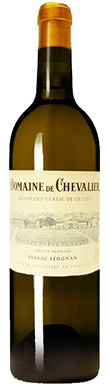

Excellent punch in the nose, lovely complexity, it is fairly closed even now, showing some austerity, with evident citrus, but it opens up and deepens...
1987
Domaine de ChevalierPessac-Léognan

Château Latour-Martillac, Pessac-Léognan, Cru Classé de Graves, Bordeaux, France, 1987
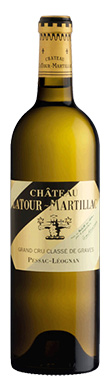
This remains extremely fresh, full of white pepper and verbena notes. There are lovely white flowers behind this and clear citrus. This was the first...
1987
Château Latour-MartillacPessac-Léognan
Château Malartic-Lagravière, Pessac-Léognan, Cru Classé de Graves, Bordeaux, France, 1987
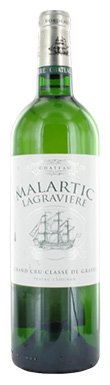
The texture here is extremely silky, almost buttery, with a kick of silky satin. Again markers of an older white in terms of bitter mandarin...
1987
Château Malartic-LagravièrePessac-Léognan
Château Latour-Martillac, Pessac-Léognan, Cru Classé de Graves, Bordeaux, France, 1986
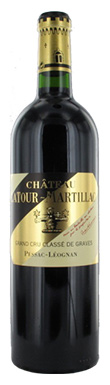
Beautiful deep rich red, this has really kept its structure and colour. Love the soft juiciness. These wines are savoury, balanced, really just a lovely...
1986
Château Latour-MartillacPessac-Léognan
Domaine de Chevalier, Pessac-Léognan, Cru Classé de Graves, Bordeaux, France, 1986
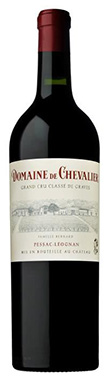
Here the wine has structure but also depth and the silkiest softest tannins laid against the cassis notes, again feel the Cabernet is taking precedence,...
1986
Domaine de ChevalierPessac-Léognan
Château Carbonnieux, Pessac-Léognan, Cru Classé de Graves, Bordeaux, France, 1986
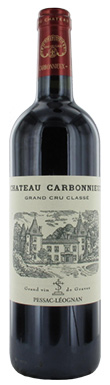
Smoky notes on the nose, gorgeous touches of cold ash - at this point in the wine’s life the Cabernet Sauvignon is taking over. This...
1986
Château CarbonnieuxPessac-Léognan
Château Carbonnieux, Pessac-Léognan, Cru Classé de Graves, Bordeaux, France, 1987
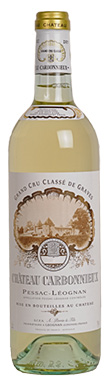
This has round, creamy citrus notes, balanced by a fresh twist in the finish that stretches out the flavours, in fact really an awful lot...
1987
Château CarbonnieuxPessac-Léognan
Château La Louvière, Pessac-Léognan, Bordeaux, France, 1986
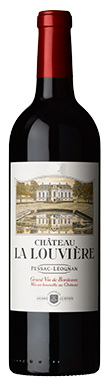
An André Lurton estate, the man who started it all. The ruby colour is soft but still very much in control, with attractive damson fruit...
1986
Château La LouvièrePessac-Léognan
