
Are acacia barrels the future for white wine?


Jane Anson considers the merits of going oak-free and ageing white wine in acacia barrels...
I started off the new year with a tasting that was, I was told, a world first. A line up of 22 wines from seven countries, all white or rosé, dry and sweet, that had been aged in acacia barrels rather than in oak. It was certainly a first for me.
It was organised by Tonnellerie du Sud Ouest (TSO), a cooperage based in Gaillac, in southwest France. It’s an area with a history of using acacia barrels and currently the company sells 80% of its acacia barrel production overseas, with demand growing each year.
Scroll down for Jane Anson’s pick of wines aged in acacia barrels
‘We’ve seen an explosion of interest in acacia recently,’ Baudouin de Montgolfier of TSO tells me. ‘As the trend for less obviously oaked wines grows, producers are looking for ways to maintain mouthfeel without getting toasty, overly spicy or sweet vanilla flavours. Acacia offers a way to do that.’
‘I think of it as a super sub,’ says wine consultant Marc Dworkin, who works with acacia barrels at Château Mihope in Ningxia, China, among other places. ‘It doesn’t work with every style, and doesn’t give the tannic structure for most reds, but it over-performs in certain conditions. It offers texture and mid-palate weight without drowning the wine in the process,’ he explains.
Alternatives to oak have been around for, well, as long as barrels have. Historically producers might have used cherry, mulberry, redwood, chestnut, ash or even pine, depending on what was available locally.
French acacia, known also as black locust (robinia pseudoacacia), is actually native to the United States and was introduced into Europe in the 1600s. Even today it represents a tiny proportion of the French barrel industry, but it has several advantages for producers, not least the fact that it’s slightly cheaper than oak barrels ($470 compared to $650 with coopers Artisan Barrels, for example).
The French acacia forests used by TSO are also used as sources for oak – so mainly in the north and northeast, along the Vosges mountains, in the Jura, Alsace and Franche-Comté.
Unlike oak, acacia trees can be sawed rather than split into staves, because they don’t have the same issue of grain that needs to be followed. The occasional knot in the wood is not such a big deal either, and it grows quicker, reaching a useable size in 80 to 120 years, unlike 200 years for French oak, which makes them a little more sustainable. Although currently there is less of it around, so it’s a little harder to source than oak.
Drawbacks of acacia include colour leeching – I found a number of wines with a rich yellow colour that was a little at odds with expectations for a young dry white, although the Sauvignon Blanc and Riesling seemed to avoid this problem, so perhaps it’s linked to acidity levels. It is also harder for coopers to work with because the toasting level needs to be very carefully controlled and kept extremely light for best results.
Having said that, acacia seems particularly well-suited to the ageing of white wines, mainly because its personality is less marked than oak can be, giving space to the grape variety and a host of other site-specific characteristics.
For a true comparison, it would be necessary to try these samples aged in the same proportions of acacia against oak, whereas we tasted finished wines that had used varying amounts – from 5% to 100% acacia, to a 50/50 mix of acacia and oak. So I’m not claiming this is a scientifically robust study but there did seem to be a number of wines with heightened floral notes, alongside clear citrus. I was less impressed with the acacia barrels that had been well-toasted, the result seemed to be sweet toffee or even bacon, while others had some wet straw character, rather than the smoky, grilled edge of toasted oak.
Overall there were a number of excellent wines and none that you would say were overly dominated by the character of the wood. In Bordeaux right now, Châteaux Carbonnieux, Yquem, La Louvière and Pressac (where this tasting was held) are trialing the impact of acacia, as are several rosé producers in Provence – who are also attracted by the potential for mouthfeel without intrusive flavours – as are Weingut Pfaffl and Nimmervoll, both in Austria.
‘No one wants their wine to seem over-made any more,’ says Dworkin ‘And acacia might just be ready to step into the breach’.
Wines aged in acacia barrels:
See also:
Cooperage: The art of oak ageing
Jefford: The cooper’s tale
Klein Constantia, Vin de Constance, Constantia, South Africa, 2014
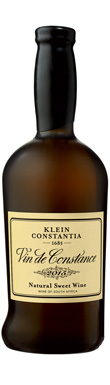

One of the great sweet wines of world, this is utterly delicious with a perfect balance of tension and succulence. Gently-spiced rich lemon meets lime...
2014
Klein Constantia

Klein Constantia, Blocks 361 & 372 Sauvignon Blanc, Constantia, South Africa, 2015
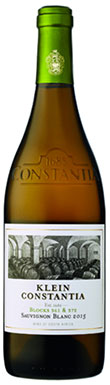
From individual blocks of Sauvignon Blanc, the complexity here is more evident than in the Metis right from the first nose. Great stuff from winemaker...
2015
Klein Constantia
Quivira Vineyards, Wine Creek Ranch Sauvignon Blanc, Sonoma County, Dry Creek Valley, California, USA, 2016
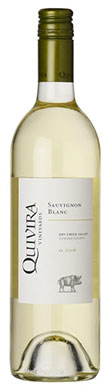
An estate in north Sonoma that has been working with acacia barrels for around 20 years, here ageing its Sauvignon Blanc in 65% new barrels....
2016
Quivira VineyardsSonoma County
Klein Constantia, Metis Sauvignon Blanc, Constantia, South Africa, 2016
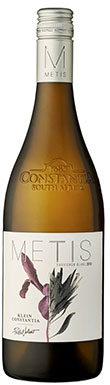
Metis is Klein Constantia’s joint venture project with Sancerre star Pascal Jolivet. This wine adopts a minimalistic winemaking approach which borders on natural winemaking: no...
2016
Klein Constantia
Château de Fieuzal, Pessac-Léognan, Bordeaux, France, 2015
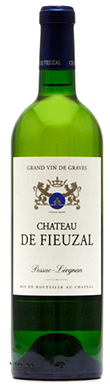
A very attractive mix of fresh citrus with rich apricot running through – one of the 2015s that has managed to scoop up some acidity...
2015
Château de FieuzalPessac-Léognan
Arba Wine, Kazakh Riesling, Assa Valley, Almaty, Kazakhstan, 2014
This is lovely, with clear touches of floral honey, lychee and bouncing acidity. From a fully organic winery with very low sulphur use, at 2,500m...
2014
Arba WineAssa Valley
King Family Vineyards, Loreley, Monticello, Virginia, USA, 2006
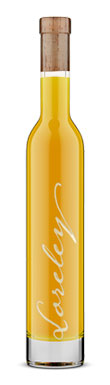
A Vin de Paille from Petit Manseng grown in the Blue Ridge Mountains. It has extremely high aromatics which end slightly abruptly. There’s a lovely...
2006
King Family VineyardsMonticello
Domaine La Cavale, Luberon, Rhône, France, 2017
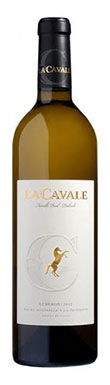
Grenache Blanc can be austere when young but here they have done an excellent job of preserving the varietal character while giving it a rich...
2017
Domaine La CavaleLuberon
Montinore Estate, L'Orange, Willamette Valley, Oregon, USA, 2016
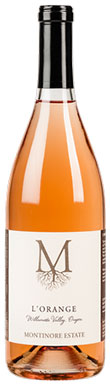
This is an excellent wine: Muscat fermented on its skins, with clean, well-defined flavours of mandarin, citrus and touches of bitter chocolate. Spicy, with good...
2016
Montinore EstateWillamette Valley
Château de Pressac, Rosé de Pressac, Bordeaux, France, 2017
This has lovely juicy raspberry and redcurrant flavours, with good persistency and richness of structure. It holds on tightly through the palate, giving good impact...
2017
Château de Pressac
Domaine Rotier, Gaillac, Southwest France, France, 2016
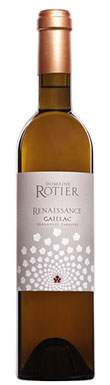
Alain Rotier was one of the first winemakers I visited on moving to France in 2003, and I have always enjoyed the extremely unusual Len...
2016
Domaine RotierGaillac
Marianne Wines, Sauvignon Blanc, Simonsberg, Western Cape, South Africa, 2017
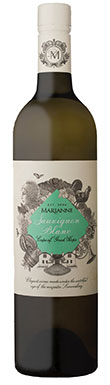
Christian Dauriac, a doctor as well as a Bordeaux vineyard owner, also has this lovely property in Simonsberg, between Paarl, Franschhoek and Stellenbosch. The wine...
2017
Marianne WinesSimonsberg
Montinore Estate, White & Gray, Willamette Valley, Oregon, USA, 2016
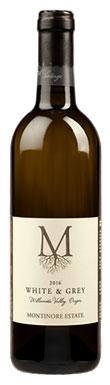
The colour is a little darker than you might expect from the grapes, although it's very good. This is soft and floral, with a slight...
2016
Montinore EstateWillamette Valley
Château Mihopé, Chardonnay, Helan Mountain East, Ningxia, China, 2017
I visited this estate in Ningxia, China, a year or so ago, so I’m happy to see this in the line up. Its French wine...
2017
Château MihopéHelan Mountain East
Buitenverwachting, Maximus, Constantia, South Africa, 2014
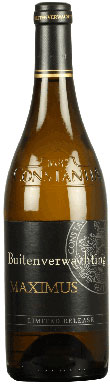
This winery is located on the east-facing slopes of Constantiaberg and originally formed part of the Constantia Estate. The wine has caramel notes on the...
2014
Buitenverwachting
Cave des Grands Crus, Mâconnais, Pouilly-Fuissé, Burgundy, France, 2016
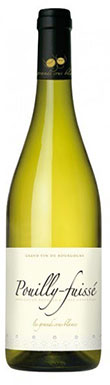
This is good, with a round mouthfeel and a rich lemon and honey character with smoked almond notes. Not huge tension compared to many Chardonnays,...
2016
Cave des Grands CrusMâconnais
Hillsborough Vineyards, Opal, Virginia, USA, 2015
Petit Manseng has become an increasing presence in Virginia over recent years. Here it has been fermented dry but it still maintains a rich, round...
2015
Hillsborough Vineyards
Txomin Etxaniz, TX, Txakolí, de Getaria, Northern Spain, Spain, 2017
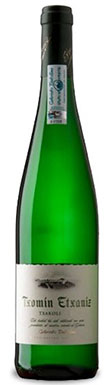
This is from an estate in northwest Spain near Hondarribia in Basque Country. It uses a grape that's naturally high in acidity, balanced here with...
2017
Txomin EtxanizTxakolí
