
Jane Anson: Why it’s an exciting time for Sonoma Cabernet


'The best Cabernet sites in Sonoma are still being discovered,' one winemaker tells Jane Anson during a recent trip through the California region. Read her report below, with a selection of tasting notes and ratings exclusively for Premium subscribers.
I first met Peter Sichel sometime around harvest 2004, in the drawing rooms of Château Fourcas Hosten. Anyone who has had the pleasure of meeting him will appreciate that it turned in to one of the most enjoyable lunches that I have spent in 15 years in Bordeaux.
He doesn’t travel much anymore, at the ripe old age of 96, and anyway he has left Bordeaux winemaking to his large and extended family of cousins and nephews who remain over here, having sold Fourcas Hosten in 2006 to the Momméja brothers of Hermès.
Instead he lives in New York’s Upper West Side, and has done so pretty much full time since the 1960s, after stints in Berlin, Washington and Hong Kong during his CIA years (yes the spy CIA, although as Jancis Robinson memorably put it, Peter Sichel is surely the only man to have been a member of both the Central Intelligence Agency and the Culinary Institute of America).
All this to say that I found something of his warm, engaging welcome, not to mention immediate air of authority, in his daughter Bettina Sichel, who I met while at Vinexpo Sonoma Explorer last week. And maybe something of his unwillingness to follow collective wisdom when it comes to wine.
Peter Sichel, after all, famously turned his family wine brand of Blue Nun into a global phenomenon, not something that you can say about many German brands based around Liebfraumilch, and then in 1971 put a group together to buy Fourcas Hosten in Listrac-Médoc instead of a château in any number of more illustrious neighbouring appellations that might have proved an easier sell.
And while I’m not looking to offend Sonoma (or indeed Listrac) when I say this, it’s pretty likely that for Cabernet Sauvignon, the grape that Bettina Sichel concentrates on at Laurel Glen Vineyard, it would have been an infinitely easier and more profitable sell to head just a few miles further east from Sonoma over the border into Napa.
She was well aware of this. Before arriving in Sonoma Mountain, Sichel had spent several years at Quintessa in Rutherford, Napa, helping to launch the brand as director of sales and marketing. But when she wanted to make her own wine, she looked to the cooler climate of Sonoma, purchasing Laurel Glen from founder Patrick Campbell with a group of eight investors. She is managing partner, with organic specialist Phil Coturri as viticulturalist.
‘I love the richness and power of Cabernets from Napa,’ she told me. ‘But there is an elegance and freshness that I found in Laurel Glen which is classically a reflection of Sonoma growing conditions. I’m interested in wine that works with food, and I’m interested in acidity’.
Now available to Premium subscribers:
Top California Cabernet 2015 wines: A full vintage report by Linda Murphy
‘You can reach the same phenolic ripeness with around one degree less alcohol in Sonoma compared to Napa,’ says Jesse Katz, who worked at Screaming Eagle in Oakville before first moving to Lancaster Estate in Alexander Valley, Sonoma, and now developing his own Devil Proof brand, ‘and there is a greater day-night temperature shift, which is why Cab can taste so different here. I have increasingly shifted more and more over to Sonoma to develop the kind of intensity of flavour that I want while still retaining freshness’.
Tasting Katz’s wines is a clear testament to the success of this strategy, but he’s helped by a track record that attracted investors to his project. You need money to really tease the best out of any soil, and in Sonoma that can remain a barrier. And a lot of the reason for that comes down to grape prices.
In 2016, the price per ton of Cabernet Sauvignon grapes from Napa stood at US$6,829 (with a high for the most prestigious at $59,375). That same ton of grapes from Sonoma clocked in at an average of $2,966 (with a high at $17,340). And whereas Napa Cabs in bottle regularly reach upwards of $200 retail, in Sonoma the vast majority seem to top out at closer to $80, with the notable exceptions of Verité’s La Joie and Kamen Estate.
That’s not to say there are not high ticket wines coming out of Sonoma, but they tend to be Pinots or Chardonnays.
And with Cabernet grape prices rising every year, one of the worries that I heard last week was that the rises were beginning to outpace corresponding rises in final bottle price, and so cutting margins. Inevitably this will become an ever-decreasing circle – less margins means less money to invest in viticulture, and therefore less quality in the final bottle.
It was something that struck me while speaking to Gonzague Lurton at his Trinité Estate in Chalk Hill AVA. Lurton owns Château Durfort Vivens in Margaux, and when he and his wife Clare Villars-Lurton were looking to buy in California, they were convinced that the style of Cabernet they like (fresh, sculpted, farmed organically) would work best in Sonoma.
‘Finding an estate was extremely difficult however,’ he told me. ‘While we were searching for the right spots, all the agents talked about finding a location near to main roads, where footfall would make sales easier. I kept saying, ‘no, it’s about the soil’’.
In the end they got advice from Pierre Seillan, the legendary winemaker (and fellow Bordeaux resident) of Verité, who advised them how well the conditions of Chalk Hill – where Verité is located – were suited to growing Cabernet Sauvignon and Merlot.
‘We started up in 2012, and are extremely happy with the results. But those agents were right in some ways – they clearly understood that without sales it is hard for any winery to exist, and in Sonoma much of that pipeline remains to be through the cellar door.
‘We are estate fruit only for our main wines, but we also buy fruit, and I am now extremely careful about who I buy from, because too many people are still growing for quantity rather than quality. I believe the price difference with Napa, that is right on their doorstep, has a psychological impact. Sonoma seems to have a mindset that their Cabernet Sauvignon just can’t be as good as Napa’s and therefore doesn’t merit as much careful attention in the vines.
‘But the results we are getting in the glass show that’s simply not true. We are only newcomers, but already it’s clear that growers should have much more pride in the incredible potential for Cabernet here.’
‘The best sites for Cabernet Sauvignon in Sonoma are still being discovered,’ Seillan says, safe in the knowledge that he has already bagged a number of them.
‘In Bordeaux we know what the very greatest wines will become, which is why they are so sought after. But in Sonoma we are just starting to understand how exceptional these wines can be. It’s an extremely exciting place to be.’
Some Sonoma Cabernet highlights from Jane Anson’s trip
Vérité, La Joie Cabernet Sauvignon, Sonoma County, California, USA, 2015
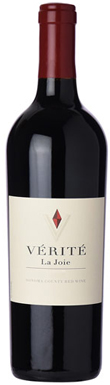

Never any question that this is a wine built with impact and seduction in mind. It’s so cleverly constructed that you almost don’t notice how...
2015
VéritéSonoma County

Vérité, La Joie, Sonoma County, California, USA, 1998
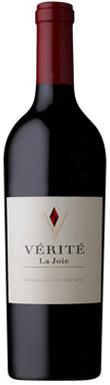
This, the first vintage of this wine, was a tricky year, with El Nino downpours marring the growing season. There's considerable evolution in colour. The...
1998
VéritéSonoma County
Laurel Glen, Estate Cabernet Sauvignon, Sonoma County, Sonoma Mountain, California, USA, 2014
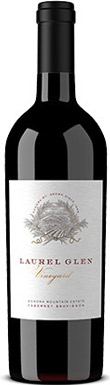
Entirely estate fruit, certified organic since 2014. This is gorgeous, from grapes planted on an east-facing cool spot. There’s no question that the Californian sunshine...
2014
Laurel GlenSonoma County
Trinité Estate, Acaibo, Sonoma County, California, USA, 2015
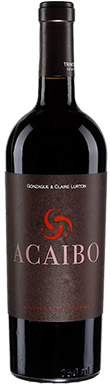
The second year where the Lurtons were able to make a fully estate wine with no bought in grapes, and in their own winery building....
2015
Trinité EstateSonoma County
Laurel Glen, Estate Cabernet Sauvignon, Sonoma County, Sonoma Mountain, California, USA, 2008
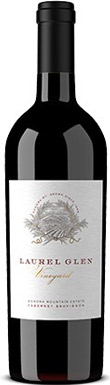
The spiced notes are far more accentuated at 10 years of age, with the herbal garrigue character woven through sweet raspberry and cassis fruit. The...
2008
Laurel GlenSonoma County
