'Some of today’s most successful wine communicators are those who show wine for the joyful thing it is'
When it comes to wine have we all forgotten that we need to lighten up? Kate Lofthouse ponders if a bit more humour would do some good.


Seven pairs of eyes turn to me expectantly as the waiter approaches our table. I’ve spent more than a decade learning about wine, but that doesn’t make this moment any less intimidating: in fact, it might make it worse.
I’m a people pleaser, so choosing for a group is my worst nightmare.
At this table, one friend enjoys a zingy Riesling while another prefers riper fruit, a generous splash of oak and, naturally, the tricky customer to my left ‘just can’t stand white wine’.
And what about the price! ‘We trust your judgement!’ my tablemates chorus, returning to their easy chatter as I sift maniacally through a leather-bound minefield the weight of the Yellow Pages.
My friends wouldn’t ask me to order their dinner for them if I were a food writer, but the wine machine – producers, marketeers, writers like me – has created such a fuss over fermented grape juice that we’ll do anything to absolve ourselves of the responsibility of choosing a glass of wine.
Wine has many ways of tying us in knots, of forcing us to perform a production of confidence and connoisseurship.
There’s the ceremony of being presented with a bottle by an aproned waiter, the requirement to assess it publicly with a foolish swirl, an anxious sniff.
Get our daily fine wine reviews, latest wine ratings, news and travel guides delivered straight to your inbox.
Or the toe-curling panic that follows fine dining’s most loaded question: ‘How do you like the wine?’
Viral humour
It’s no surprise, then, that some of today’s most successful wine communicators are those who show wine for the joyful thing it is – a delicious drink; a celebration of people and geography – rather than focusing on its more serious side.
Tom Gilbey rose to fame when a video of him blind tasting at every mile of the London Marathon went viral; Hannah Crosbie has brought a new generation to wine by riffing on cultural references with deadpan humour; and Alan Carr and Lee Peart recently launched Bottoms Up!, a wine podcast with ‘a touch of havoc’.
Many producers are doing the same. Master of Wine Tim Wildman – who has described himself as ‘the world’s most disruptive MW’ – makes joyful pét-nats and recommends ‘no fruit descriptors, no sniffing and definitely no swirling’.
English producer Folc launched a range of coupe glasses moulded from women’s breasts in a provocative challenge to Champenois tradition; and, according to Gilbey, Aussie giant Jam Shed constantly encourages him to ‘take the mick’ out of them.
An ode to joy
At the more traditional end of the spectrum, Champagne Bollinger has been dabbling in humour for years.
In 2025, it celebrated the 25th anniversary of the Bollinger Everyman Wodehouse Prize for Comic Fiction, which famously names a pig after the winning title each year.
I attended the awards ceremony in December and reading the shortlisted titles reminded me that comedy isn’t just about entertainment.
In Rosanna Pike’s A Little Trickerie, it acts as a counterpoint to abuse and loss; in Fundamentally, Nussaibah Younis uses it to humanise the character of an ISIS bride; and in Kate Greathead’s The Book of George, it exposes the weaknesses that make us human.
It’s this ability to expose that makes comedy such a powerful tool in wine communication.
When Crosbie uses a well-chosen meme to highlight the eccentricities of our industry, or producers such as Wildman encourage us to drink wine ‘just for fun’, it strips away the ceremony and performance that can make wine feel intimidating or exclusionary, reminding us why our ancestors started fermenting grapes in the first place: to have a good time.
Don’t get me wrong, I can be a sucker for wine’s performative side – I read wine lists like books, adore fine dining and have my own small but carefully guarded wine collection.
I also value the way writers, sommeliers and marketeers respect the hard work, risk and skill behind quality-driven bottles.
But in our ever-darkening times, I’d wager an emphasis on joy, playfulness and even a little comedy will capture drinkers’ imaginations – and open wallets – far more readily than the ceremonies of old.
In my glass this month...

With Lost in a Field, Tim Wildman MW hopes to save disappearing old-vine heritage varieties planted in the UK in the last century.
His Frolic 2023 (£23-£35 EW Wines, Grape Britannia, Native Vine) is a sprightly low-intervention pét-nat that blends six varieties from vineyards planted across four English counties.
It’s cloudy coral pink, with scents of meadow flowers, wild strawberry, elderflower and watermelon, and a light dusting of tangy grapefruit sherbet. It’s pure, delicious fun.
Related articles

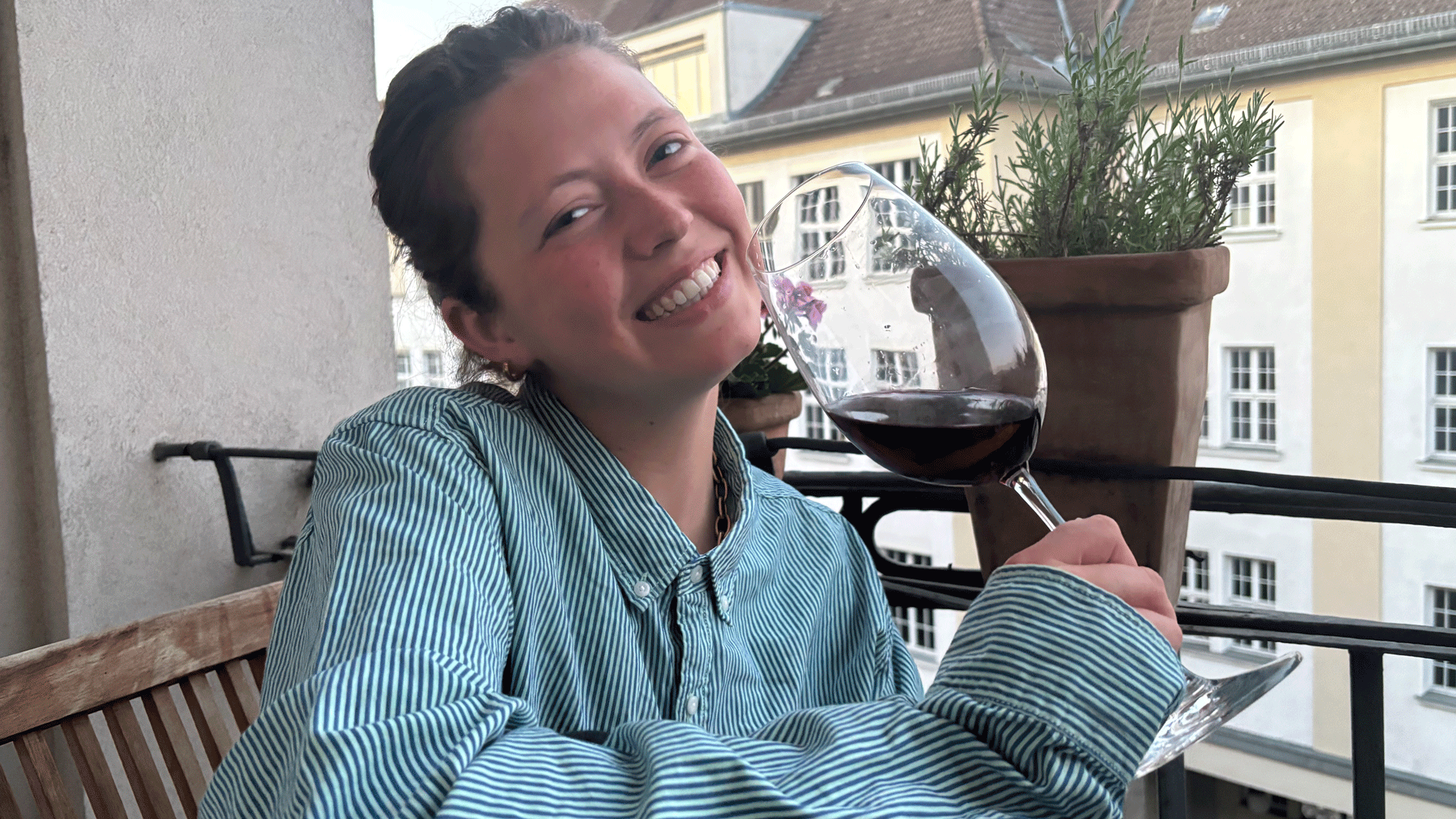


Kate Lofthouse is a writer, translator and wine marking expert.