For many Champagne producers, 2025 was a game-changer. ‘I’ve never seen anything like the 2025 harvest. Everything has shifted – it’s a blank page,’ says Séverine Frerson, cellar master of Perrier-Jouët.
For centuries, northerly Champagne has proven to be as cool and wet as most commercial viticulture has dared tread.
That it grew to become France’s most profitable wine region is down to one thing: the realisation that its tart, low-alcohol and high-acid still wines were capable – via the lengthy transformations of the traditional method – of creating sparkling wines that transcended their climate.
But now that ‘everything has shifted’, how does Champagne stay Champagne? If England’s grapes are increasingly resembling Champagne’s of 30 years ago, is Champagne destined to assume the role of Burgundy, headed for still Pinot Noirs and Chardonnays?
Or can it keep making the sparkling wines for which it’s renowned?
In the face of such potentially fundamental change, how are the Champenois going about securing both the success of the region and their own future?
Shock of the new
Perrier-Jouët cellar master Séverine Frerson
(Image credit: Champagne Perrier-Jouët)
Alternative grape varieties, such as the disease-resistant Piwi Voltis, and heritage varieties such as Petit Meslier and Arbane, grab the headlines when it comes to innovation in terms of climate and sustainability in Champagne.
Decanter newsletter
Get our daily fine wine reviews, latest wine ratings, news and travel guides delivered straight to your inbox.
In 2022, INAO, the body that oversees France’s appellations, approved Voltis for the Champagne AP, making it the first Piwi variety admitted to a French protected designation, although it’s only on a trial basis.
Its use is restricted to a maximum 5% of any estate’s vineyard area and 10% in any blend. INAO will evaluate the results of the trial in 2032. The first plantings took place in 2023 and by May 2026, roughly 10ha had been planted (about 0.03% of Champagne’s total vineyard area).
Petit Meslier and Arbane, meanwhile, are rare varieties known for their high acidity and late ripening. The latter means that harvests can be pushed into cooler autumn conditions, slowing sugar accumulation and helping the berries hold on to their acidity.
In a warming climate, traditional grapes can peak too early, leading to higher alcohol and lower freshness in the resulting wines. Combined plantings of the two varieties amount to less than 0.1% of Champagne’s total vineyard area.
A central question remains, though: do they taste like the Champagne we know and love? At the Comité Champagne’s (CIVC) headquarters, potential new varieties are vinified in test batches.
The objective? To find candidates that don’t stray too far from the typicity of Champagne grapes Pinot Noir, Chardonnay and Meunier, all of which are fairly aromatically restrained.
‘Every year we taste [wines made from] dozens of new varieties in the tasting room,’ says Pierre Naviaux, sustainable development manager at the CIVC.
‘It’s extremely diverse – we get some exotic wines, some that taste like pineapple, some like Muscat, some like Riesling and Gewurztraminer... then a scope of more typical wines closer to what we’re expecting.’
Even so, Naviaux says that ‘new grape varieties are in the toolbox, but they’re not the main tool’.
Massal appeal
(Image credit: Louis Roederer)
Many producers remain sceptical of these new varieties and suggest that it’s more important to focus on Champagne’s key varieties.
At Louis Roederer, for example, cellar master Jean-Baptiste Lécaillon has long argued that the region’s history – especially in Pinot Noir – need not be abandoned.
The house has led the way in collecting, studying and replanting massal selection Pinots (as opposed to commercially produced clones), which are genetically diverse variations taken from existing plots, some of which require longer growing seasons and show greater resilience to heat.
‘We call the programme In Vinifera Aeternitas – meaning “eternity” – a way to say that our grapes have been travelling with us for 10,000 years since domestication,’ says Lécaillon. ‘The vines we have today are survivors of [historical] climate change.’
Launched in 2002, the project has involved making massal selections from the house’s oldest plots of pre-clonal vines, planted before 1960 in what is now Domaine Cristal.
The house enlisted the assistance of Professor Jean-Michel Boursiquot, an ampelograph (someone who identifies and classifies grapevines) from Institut Agro Montpellier, and Lilian Bérillon, a pioneering nursery owner who supplies rare and custom vine material to top-tier wine domains internationally – as well as the house’s own vineyard team of 50-60 people.
Cuttings from the vines that appeared to be the most promising in terms of quality and resilience were replanted in four propagation conservatories.
Today, more than 100 variants are being propagated – mostly Pinot Noir, but also some of Champagne’s six other traditional varieties.
The same work is being carried out on the phylloxera-resistant rootstocks onto which the vines will be grafted. Low genetic diversity in a vineyard means lower resistance to shocks from climate or disease.
‘By planting different genetic material in the same plot, you have a greater resilience because the vines have a slightly different cycle – they are not sensitive at the same moment,’ says Lécaillon.
‘If you have a storm with a mildew attack and only one part of the vineyard is in flower, then you lose only that section.’
A living library
(Image credit: Moët & Chandon)
The project has demonstrated the incredible diversity present among the vines, visible in the morphological diversity of the leaves, but also in characteristics such as the timing of ripening, which can vary by as much as 10-15 days.
Meanwhile, the CIVC is part of Qanopée, a €10 million collaborative project with the Burgundy, Beaujolais and Jura regions that aims to ensure the long-term viability of more than 20 grape varieties, while also safeguarding vine genetic diversity.
The project will enable the pre-multiplication of disease-free vines (establishing mother vines for grafts and rootstocks) in a 4,500m² insect-proof bioclimatic greenhouse located in Oger in Champagne’s Marne department.
Previously conducted in open fields, pre-multiplication has become increasingly vulnerable to sanitary risks and climate-related pressures – hence the move indoors.
And Moët et Chandon’s Essentia project, part of the larger Natura Nostra programme it launched in 2021, also represents a conservatory of vine biodiversity.
Planted in 2022, the 4ha vineyard is designed to act as a ‘living library’ of genetically diverse vines from different grape varieties, including cuttings from old vines.
Bugs and trees
Louis Roederer is using hedgerows and nesting boxes to increase vineyard biodiversity
(Image credit: Louis Roederer)
These precious collections must be secured from threats such as flavescence dorée, a bacterial infection spread by leafhopper bugs.
Not only have warmer temperatures seen the disease spread from its heartland in southern France to more northerly areas, including Champagne, but warmer, earlier springs are leading to the leafhopper’s eggs hatching earlier.
This leads to the bugs growing more quickly, while also favouring the disease itself, the bacteria multiplying faster at higher temperatures.
The fear of flavescence is so present in Champagne’s mindset that tree-planting, originally designed as a general biodiversity- and microclimate-modifying tool, is increasingly seen as a way to recruit birds and bats to manage the risk.
It’s certainly a more attractive solution than the compulsory insecticide treatments imposed on swathes of Champagne vineyards over the last two years to tackle the leafhoppers.
As part of the Natura Nostra programme, Moët et Chandon has planted 20km of ecological corridors in the region, en route to its plan to reach 100km by next year.
The corridors are designed to link existing biodiversity reservoirs. ‘Precisely re-introducing certain species of birds and bats in our plots can be beneficial in regulating insect populations,’ says estate manager Reynald Loiseau.
Getting technical
Moët & Chandon's winemaking facility at Mt Aigu in the Côte des Blancs
(Image credit: Moët & Chandon)
While the planting of trees and hedges, and the development of massal selections will take years, if not decades, to refine, the fight to retain bright acidity and lower sugar levels in hot years is more urgent.
Back at Perrier-Jouët, Frerson explains how the house’s ambitious regenerative viticulture project is about more than just taking care of the land or taking PR-friendly pictures of verdant, flower-filled vineyards.
‘Cover crops act a bit like a parasol at the level of the soil, and we had 0.3 degrees lower alcohol in some plots where we used it,’ she says.
Yet finding a balance between avoiding bare soil and choking the vines with competition is a challenge, especially in dry seasons such as 2025 and 2026.
Climate-proofing wines doesn’t stop once the grapes are harvested, either. Houses, such as Perrier-Jouët, which have previously always completed malolactic fermentation – in which bright, tangy malic acid is converted into softer, rounder lactic acid – are now opting to block the process, in order to retain that brighter acidity.
Of the techniques available in the cellar – including reducing dosage (the small amounts of sugar in solution added before Champagnes are shipped, which has been reducing over time and today is usually less than 8g per litre) or using different yeast strains or ageing times – Frerson believes that stopping wines from going through malolactic fermentation makes the most difference.
The future, though, seems to place yeast, and microbes in general, at the frontier of climate readiness.
At the Robert-Jean de Vogüé Research Centre, owned and operated by Moët Hennessy, we leave the world of soils, birds, bats and insects, and enter a smaller-scale world of biodiversity.
‘Moët et Chandon is the only Champagne company to run its own fermentation from start to finish with its own yeast strain,’ says director Marc Brevot.
The house is even developing new strains of yeast that could potentially deal with climate change headaches such as high alcohol levels and lower nutrient levels.
It’s not just about fermentation, though: Brevot believes that the microbiology studied at the laboratory will provide ‘an answer to soil health, plant health, wine quality, recycling… and even new material creation for the packaging.
Microbial communities have a huge capacity of doing many things, but today we explore very little of it.’
All together now
(Image credit: Moët & Chandon)
So can Champagne remain Champagne into the future? If climate change was just a question of a region becoming warmer and grapes getting too ripe for sparkling wine, then the answer would be no.
However, having tasted sensational wines from the hot 2019 vintage and from 2020, which pushed drought to its limit (and even 2021, which did the opposite), it’s clear Champagne is, in some senses, exactly where it has always been – on the frontier.
The difference is that it’s now not just one frontier; it’s multiple fronts of heat and drought, rainfall and disease, sustainable – and unsustainable – viticulture, of quality-driven change, and comfortable inertia.
But is it approaching the outer limits of sparkling wine production?
Not, thankfully, any time soon, and not least thanks to the diligent and ongoing efforts of the Champenois.
Five wines that represent the future of Champagne
Related articles
Topics
Explore More
Louis Roederer, Starck Brut Nature, Vallée de la Marne, Champagne, France, 2018
My wines
Louis Roederer's Brut Nature acts as the house's climate change laboratory, where co-planted plots of every single variety authorised in Champagne are grown and harvested...
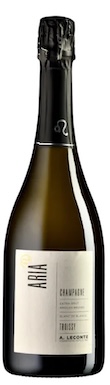
A Leconte, Aria Blanc de Blancs Extra Brut, Vallée de la Marne, Champagne, France NV
My wines
Alexis Leconte used just 5% of the high-acid, refreshing heritage variety Petit Meslier to add some brightness to the ultra-hot and dry 2020 in this...
Tom Hewson writes about Champagne and sparkling wine. He authored the Tim Atkin Champagne Special Report in 2022, featuring over 600 wines and insights from five weeks spent in the region. As well as writing freelance, reviewing and presenting sparkling wines, Tom runs his own newsletter Six Atmospheres, reaching Champagne and sparkling wine enthusiasts all over the world every week.