Get our daily fine wine reviews, latest wine ratings, news and travel guides delivered straight to your inbox.
You are now subscribed
Your newsletter sign-up was successful
An account already exists for this email address, please log in.
Trailblazers of the Willamette Valley: The origins of Oregon wine
An abundance of old-vine plantings hold a legacy that puts character and quality first in Oregon's Willamette Valley. We meet some of the region’s key pioneers
Nancy Ponzi training a vine in her eponymous vineyard during the 1970s
(Image credit: Ponzi Vineyards)
While still young by the standards of the world’s great winemaking areas, here in the Willamette Valley, ‘old vine’ carries a certain gravity.
These aren’t the gnarled centenarians of European wine estates, or the head-trained vines from the late 19th century that one may find in Sonoma, California, but rare, original plantings from the late 1960s and early 1970s.
They’re vines that witnessed the improbable birth of Oregon Pinot Noir and quietly shaped the reputation upon which the Willamette Valley now trades.
The trunks are thick, many of them dripping with moss, no matter the season. The bark peels back in long strips evocative of the surrounding forests of western red cedars.
These sites are a true regional treasure, planted on their own roots, they collectively represent a proverbial thumbing of the nose at the destructive aphid-like pest phylloxera.
Names such as Lett, Coury, Erath, Maresh, Adelsheim and Ponzi, among others, helped to lay down the early roots of Oregon Pinot Noir.
A quiet dialogue with the past plays out each season in clusters that seem to hold the valley’s origin story in every small, dark berry.
Decanter newsletter
Get our daily fine wine reviews, latest wine ratings, news and travel guides delivered straight to your inbox.
This is the story of some of the Willamette Valley’s original Pinot Noir vines – a selection that goes beyond the early epicentre in the Dundee Hills and reflects the regional diversity of the valley today.
The sites whose stories are told here are home to old vines that are still producing some of the region’s most important wines.
The first two plantings in the Willamette Valley happened in the same year and, in fact, at one point, those plots were one vineyard.
The story of the Willamette Valley’s very first vineyards reads like a riddle, as The Eyrie Vineyards’ Jason Lett – son of the Willamette’s original pioneer, David Lett – explains: ‘The date of establishment is tricky, because he planted the vines in 1965 but didn’t move them to the present location until 1966.
'So we give 1965 as the foundation of the enterprise, and the vines at Eyrie are 1965-planted, but the Eyrie Vineyard itself, in Dundee, was established in 1966.’
The other name that gets mentioned alongside David Lett’s is Charles Coury.
If Lett was the first to plant Pinot Noir in the Willamette Valley (and he was), Coury was second.
Lett planted vines at a nursery site near Corvallis, southwest of Salem, on 22 February 1965, according to entries in his personal journal. And then, in April that year, he planted vines for Coury at the same nursery.
Both men then moved their vines north. Lett planted in the hills just south of the town of Dundee, and Coury planted in Forest Grove, west of Portland, at what is now David Hill Vineyards & Winery.
At Eyrie, just shy of four acres (1.6ha) of the old plantings remain, including the iconic South Block planted a couple of years later, in 1968, as well as the first commercial Pinot Gris planting in North America.
And at David Hill, 14 acres (5.6ha) of old vines are still producing, from Pinot Noir to Alsace white varieties.
Foundation and future: Oregon’s old vines
The Willamette Valley in Oregon has achieved global recognition for its Pinot Noir and, increasingly, its Chardonnay.
The valley’s ascent is impressive by any metric, but perhaps most notably, this is a wine region that isn’t quite 60 years old.
If the Willamette Valley has come to be defined by nuance and restraint in its wines, so much of that identity can be traced to the early plantings, as highlighted in this article.
Old vines have helped shape the region’s understanding of itself, offering a template for what Pinot Noir grown here can be as time goes on.
They offer lessons on clone and slope, and an undeniable resilience that still has people daring to plant own-rooted vines today.
These aren’t relics in the traditional sense, but rather working parts of a landscape that’s still very much in the midst of its own evolution.
What they offer is less about age as a marker of prestige and more about continuity.
They are a living throughline that connects the Willamette Valley’s uncertain beginnings to its present position among the world’s great wine regions
Chehalem Mountain Vineyard: 1969
Chehalem Mountain Vineyard
(Image credit: Chehalem Mountain Vineyard)
Dick Erath is best known for the eponymous Erath winery in the Dundee Hills.
There, he partnered with the pioneering Knudsen family in the mid-1970s, but his first vineyard was planted further to the north.
High on a shoulder of the southern edges of the Chehalem Mountains, just across the treeline from Ribbon Ridge AVA (American Viticultural Area) in the northernmost reaches of what is today’s Willamette Valley appellation, Erath planted his first foray into Oregon Pinot Noir.
In 1969, this became the third vineyard planted in the region, when so much of this extensive wooded area still felt like a long shot for fine wine.
Perhaps Erath was already thinking about elevation, exposure and the kind of marginal growing conditions that might coax nuance from the Pinot Noir variety.
The Chehalem Mountain Vineyard was put down on the steep slopes of ancient volcanic soils before notions of appellation boundaries were even conceived of here.
This is a low-yielding site, where the old, gnarled vines today offer an array of clones, from Pommard and Wädenswil to Calera and Dijon, providing a diversity of expression within the vineyard itself.
00 Wines, renowned for its Chardonnay programme (see tasting notes), has taken a particular shine to this old site, and the producer is using the fruit of all of the remaining three acres (1.2ha) of the old-vine 1969 plantings for its single-vineyard Pinot Noir.
‘Working with this heritage fruit is a true honour,’ says 00 founder Chris Hermann. ‘We ferment this Pinot Noir, 100% in Italian terracotta amphorae from Tuscany, after the berries have been destemmed by hand. The fermentation is semi-carbonic.
‘This old-vine wine is aromatic, pretty, lifted and not as concentrated as one would expect from older vines, which makes this block very special. The bunches are very small, with onyx-coloured skins, yet the resulting wine is ethereal and pretty.’
‘Working with this heritage fruit is a true honour’
Chris Hermann, 00 Wines
Maresh Vineyard: 1970
The Red Barn tasting room at Arterberry Maresh in Dundee, southwest of Portland, Oregon
(Image credit: Arterberry Maresh Vineyards)
Perched high in the Dundee Hills, the roots of the Maresh Vineyard go all the way back to 1970, when Jim (Sr) and Loie Maresh planted vines here, at up to about 230m above the valley.
The Maresh family farm had long been established for hazelnuts and prunes, and the decision to plant grapes marked a quiet pivot toward what was then an uncertain future for wine in the region.
‘My grandparents bought this farm in 1959 with no farming experience,’ third-generation grower and winemaker Jim Maresh of Arterberry Maresh in Dundee tells me.
‘It was cherries, prunes and hazelnuts that taught them how to farm. The story they liked to tell was that they were sitting on 200 tons of unsold prunes when Dick Erath came up the driveway.’
Erath told them their property was perfect for Pinot Noir – his earnestness and all those unsold prunes made the choice easy.
‘They jumped right in with a small plot of Pinot Noir at his suggestion in 1970. The fruit did well, and over time a block of fruit trees or hazelnuts would be pulled out, and more vines would be planted.’
Farming at that elevation brought its own challenges: cooler temperatures, exposure to wind and a growing season that demanded adaptability.
But those same conditions would prove critical in shaping the vineyard’s identity, producing fruit marked by balance and a kind of lifted, red-toned character that would become a hallmark of Dundee Hills Pinot Noir.
‘For me, it’s not an outlier for the Dundee Hills,’ says Jim Jr. ‘It’s high-tone, red and pretty. No big tannins, but elegance and refinement. Maresh fruit is really long in terms of holding its acidity in ripe, extended growing seasons. It’s at 750 feet (230m), so it’s high-elevation for the appellation. Maresh is, in some ways, the archetype of the Dundee Hills.’
The original farm was 140 acres (56ha), and today the Arterberry-Maresh estate totals 20 acres (8ha); Jim Jr farms about two acres of the remaining original plantings from the 1970s.
Origin story: Jim Maresh on Oregon’s own-rooted treasures
One of the standout elements of the Willamette Valley is the number of older, ungrafted vine sites you can find tucked away in the foothills of the Coast Range.
‘An own-rooted vine is a completely different animal, in my opinion,’ says winemaker Jim Maresh.
‘It’s stronger, more vigorous, it can set more crop and ripen it adequately. You may see bigger clusters, so you have a lower skin-to-juice ratio. As a result, you have more complexity and elegance in the wines. You don’t need as much new wood because you get so much complexity from the fruit.
‘Those subtle nuances can become covered up by new oak, so it doesn’t necessarily help the wine. In as much as wine gets complexity from the barrel, those are purchased flavours – anyone can get them. But the old vine, that’s complexity you can’t buy – it’s an investment in time, decades that make these wines unique.’
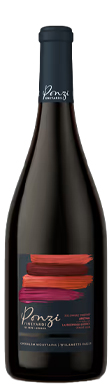
Ponzi Vineyard: 1970
Max Bruening, Ponzi winemaker
(Image credit: Ponzi)
The Ponzi family’s original estate vineyard, on the site of a former strawberry field, was planted in 1970 and sits among the Willamette Valley’s foundational sites, dating back to a time when conviction preceded clarity.
This initial plot, among the first five to be planted, was put down on the valley floor.
‘Though the Ponzis’ first planting proved to be viable in the production of all varieties planted, the family recognised quality could be pushed further,’ says Ponzi winemaker Max Bruening.
‘It wasn’t quite what they were seeking. To date, the Chardonnay (Clone 108 Wente/Davis) remains a staple of Ponzi’s sparkling blanc de blancs production, with a small percentage allocated to our still Chardonnay. Pinot Noir is sourced exclusively for our blanc de noir.’
The Ponzis, along with other members of the Willamette’s pioneering wine scene at the time, were a collaborative bunch.
‘In 1975, as part of the Oregon Winemakers Project, an effort spearheaded by Dick Ponzi, Dick Erath and Oregon State University, plantings were conducted to assess which clones could be viable for the area at that time,’ Bruening explains.
‘They were tasked with finding land, planting a vineyard, growing grapes, assessing the outcome, vinifying, blending, tracking, reporting and repeating.’
This early experimental site eventually became a part of Ponzi’s estate, the two-acre (0.8ha) Abetina Vineyard, which the family formally acquired in 1981.
The 1975 planting includes 12 different clones of own-rooted Pinot Noir and has helped inform the future of the Willamette Valley.
Hyland Vineyard: 1971
Doreen and Vic Kreimeyer in the newly planted Hyland vineyard in 1973
(Image credit: Courtesy of NW Wine Co)
Originally planted in 1971 (and continuing through the late 1990s) on a south-facing bench in the foothills of the Coast Range, the Hyland Vineyard stands as one of the Willamette Valley’s earliest and, to this day, most versatile sites, known as much for its Riesling as for the distinctive clones of Pinot Noir.
Unique at the time, it was planted not by winemakers but growers, a collaborative effort by four families: Kreimeyer, Merkley, Welch and Smith.
Hyland began with an ambitious vision: to plant a large-scale, professionally farmed site that could supply fruit to the region’s fledgling wineries.
A total of 185 acres (74ha) were planted across the windswept knolls of what is now the McMinnville AVA.
The site itself sits exposed to the Van Duzer Corridor, northwest of Salem, where afternoon winds sweep in from the Pacific and cool the vines through the long days of late summer.
Early plantings included a mix of Pinot Noir selections that predated the modern clonal era, perhaps most notably the Coury clone, which has long been a bit mysterious.
Some say its origins lie in Alsace, others Germany, but who really knows?
A living archive
Half a century later, the vineyard reads like a living archive of Oregon’s first generation of viticulture.
Many of the original blocks remain, their thick trunks and modest yields a reminder of an era when nearly everything about farming Pinot Noir in the Willamette Valley was a little bit experimental.
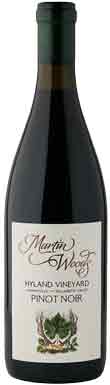
Evan Martin, the winemaker at Martin Woods, near McMinnville city, has delivered the top Pinot Noir from my past vintage reports more than once, and each time it was his Hyland Vineyard bottling.
‘The Hyland Pinot Noir, as I find it, prominently exhibits aromas of forest undergrowth and mossy earth – so coveted by lovers of traditional red Burgundy,’ says Martin.
‘Which is married to delicate florals and red fruit, with a silken palate that lingers seemingly forever.
‘As the vineyard has come of age, the warming trend of the last 30 years has shifted this originally very marginal cool climate to pitch-perfect growing conditions, leading to one of the truly unique ‘grand cru’ expressions of Pinot Noir in Oregon, a Chambolle-Musigny-esque personality that captives with the power of delicacy – defined by the subtle imprint that the wine makes on the sense memory.’
‘The Hyland Pinot Noir exhibits aromas of forest undergrowth and mossy earth – so coveted by lovers of traditional red Burgundy’
00 Wines, Chardonnay, Chehalem Mountain Vineyard, Chehalem Mountains, Willamette Valley, Oregon, USA 2023
My wines
Such aromatic intensity. Dazzling scents of crushed stone, wild mint and a purity of preserved lemons. The palate leans into salty minerality, smoky grilled lemon,...
Brooks, Hyland Vineyard Riesling, McMinnville, Willamette Valley, Oregon, USA 2023
My wines
This wine pops with opulence, made in a spätlese (late harvest) style – an old-vine Oregon take on the German classic. Beguiling sweet peach aromas,...
Martin Woods, Hyland Vineyard Pinot Noir, McMinnville, Willamette Valley, Oregon, USA 2023
My wines
A dazzling Pinot Noir. Brilliantly floral, with spice, a beautiful elegance to the aromatics and a reductive earthiness. Sweet florals, red fruits and wonderful berries...
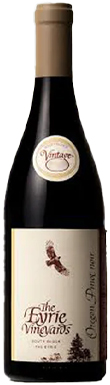
Eyrie Vineyards, South Block Pinot Noir, Dundee Hills, Willamette Valley, Oregon, USA 2021
My wines
From Oregon’s most hallowed vineyard ground, planted in 1968, South Block being 10 rows of David Lett’s original Pinot Noir plantings. Several soils come together...
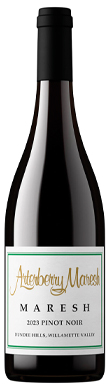
Arterberry Maresh, Maresh Vineyard Pinot Noir, Dundee Hills, Willamette Valley, Oregon, USA 2022
My wines
Mouthfuls of complexity and silken elegance. High-toned red fruits and a forest-driven umami character, pine bough, blood orange and spice. There's a darkness and complexity...
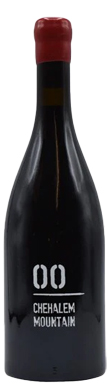
00 Wines, Chehalem Mountain Vineyard Pinot Noir, Chehalem Mountains, Willamette Valley, Oregon, USA 2023
My wines
From some of the oldest vines in the Willamette Valley, planted in 1969. A gorgeous forest character soars, with pine boughs and mint leaves providing...
Clive was Decanter's North America editor from September 2022 to March 2026. On relocating to the US West Coast over 20 years ago, Clive Pursehouse developed a deep appreciation for the wines of the Pacific Northwest, and has been writing about these Oregon and Washington State producers and their wines since 2007. Pursehouse was also the culture editor for Peloton Magazine, where he covered cycling, travel, wine and cuisine.