Get our daily fine wine reviews, latest wine ratings, news and travel guides delivered straight to your inbox.
Decanter newsletter
Get our daily fine wine reviews, latest wine ratings, news and travel guides delivered straight to your inbox.
You are now subscribed
Your newsletter sign-up was successful
An account already exists for this email address, please log in.
Vintage Ports to open this Christmas
Few wines are more worthy of your Christmas table than vintage Ports. Ahead of this year’s festive season, our expert selects some of the vintages that are currently drinking best.
In early 2026, 2024 became the latest in a very long line of standout vintages, going back to the early years of the 19th century, when producers first started ‘declaring’ classic Port vintages.
A ‘declaration’ is something that’s never taken lightly and only happens when the Port producer (or ‘shipper’ to use the accepted term) believes that they have a truly exceptional wine to put their name to.
Made from the very best grapes in relatively small quantities, these wines spend two winters in wood before being assessed for their vintage potential.
This necessitates looking ahead for 20, 30, 40 and more years to be sure that the wine will develop well in bottle. The wines are bottled at around two years of age, unfiltered, and the very finest vintage Ports are capable of lasting for a lifetime or more.
Christmas is a good time to look back and assess the vintage Ports that are now ready for drinking and celebrating with.
Every declared vintage is different, shaped by the weather during the growing season, as well as external factors including socio-economic conditions (there was something of a change in character during the turbulent 1970s).
In recent years, climate change has been a particular challenge on the precipitous slopes of the Douro Valley in the north of Portugal upon which the Port grapes are grown.
Decanter newsletter
Get our daily fine wine reviews, latest wine ratings, news and travel guides delivered straight to your inbox.
Prolonged drought and excessively high temperatures during the summer months (particularly in 2022) have produced wines that were atypical and not generally considered worthy of a classic declaration.
Covid produced its own challenge, when the grapes couldn’t be foot-trodden due to social-distancing regulations.
But there are good years in between declared vintages (such as 2023 and 2020), and these are either bottled under a second label or as single quinta vintage Ports.
Early-drinking jewel
(Image credit: Getty Images / Moment / Gregory Adams)
In 2024, all of the conditions seemed to align for a classic vintage and, somewhat to my amazement, some of the wines can be enjoyed and appreciated now (see below).
The last general vintage declaration had been in 2017, making this the longest gap between classic Port vintages since the 1934-1945 hiatus when World War II intervened.
Adrian Bridge, managing director of the Fladgate Partnership, which includes Taylor’s, Fonseca and Croft, describes 2024 as a year that was ‘good for everybody’ and that ‘sales are proving to be strong’.
Charles Symington, head winemaker for Symington Family Estates (including Cockburn, Dow, Graham and Warre) agrees that ‘it was worth the wait’, summing up 2024 as ‘a classic, old-style year’.
Greater maturity
(Image credit: iStock / Getty Images Plus / StockSeller_ukr)
For vintage years showing greater maturity, you need to go back nearly 20 years to 2007, and then further still.
There are plenty of vintage Ports from great years in the 1950s and 1960s that are still drinking beautifully, provided they’ve been correctly stored, but they’re now difficult to find.
Traditional wine merchants buy vintage Ports early (en primeur) and release them after ageing in their cellars.
The Symington Family has recently taken to releasing small quantities of older vintage Port, held back for 30 or 40 years and drawn directly from private cellars in Vila Nova de Gaia, where the Port trade is based.
Their latest library releases come from the generally declared 1985 vintage. The wines have impeccable provenance, with bottles individually numbered with full details of bottling, recorking and release dates.
How to enjoy vintage Port
Because vintage Ports are bottled without filtration, a natural deposit (or ‘crust’) forms and the wine should be decanted before serving.
Don’t be put off by this. Simply stand your bottle upright a few hours beforehand to allow the crust to slide to the base then pour slowly and evenly to separate the wine from the sediment (which in itself can be a great addition to a stew or gravy!)
Be sure not to serve the wine at too high a temperature: I suggest old-fashioned room temperature of 16ºC to 18ºC. A young Port can be kept in the decanter and can be sampled over two or three days, but older wines are more fragile and ethereal, and should be drunk at a single sitting.
Pour into generously sized glasses leaving room to swirl and savour, just as you would with a red wine.
Drinking any one of the wines from the classic vintages listed below after dinner this Christmas with a hard cheese (a mature Cheddar or stilton) helps to counteract the tannins in younger wines.
A fully mature vintage Port (such as the 1985 and anything older) is best savoured on its own.
Great vintages for drinking now
(Image credit: Getty Images / Moment / www.victoriawlaka.com)
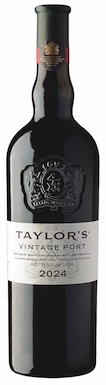
2024
‘A vintage of purity and poise – one that captures the enduring spirit of the Douro in its most refined form,’ says David Guimaraens, head winemaker responsible for Taylor, Fonseca and Croft.
Unlike some recent years, there was nothing extreme about the 2024 growing season apart from a short heat spike in August. Picking began around 11 September and, apart from a small amount of rain at the end of the month, conditions were perfect all the way through to the end of harvest.
When the wines were declared earlier this year, all the shippers showed their enthusiasm for these expressive wines, which display exceptional purity and finesse, so much so that they can be broached already, but the best will keep a good ‘three score years and ten’.
2007
Shaped by a relatively cool summer, these wines are relatively forward and can be drunk before the customary 21 years required before vintage Port reaches adulthood.
August was unusually cool and, at the end of the month, no one was predicting a great vintage. But the harvest (which began late) coincided with more than a month of perfect weather in which the grapes ripened to perfection.
The declaration in early 2009 coincided with the global financial crisis and perhaps this is the reason why this year is rather overlooked and now looks to offer good value for relatively early drinking.
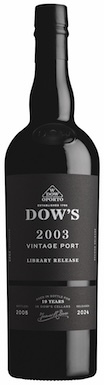
2003
A hot year throughout Europe produced somewhat atypical wines (in Bordeaux, for example), but the Douro is more accustomed to the heat.
At the outset I was somewhat sceptical that this generally declared vintage would turn out to be hot and jammy and, 23 years on, this hasn’t proved to be the case.
The 2003s are undeniably opulent but have the stature, focus and definition required for a great vintage Port.
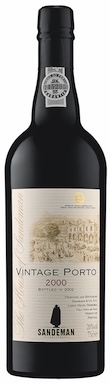
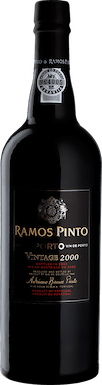
2000
A low-yielding harvest after a variable summer, helped by a burst of heat at the start of September. This landmark year produced rich, concentrated wines for drinking now and over the long term.
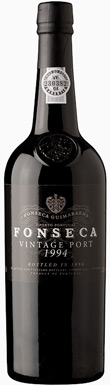
1994
With hindsight, the 1994 vintage marked a new era for vintage Port after some rather chequered declarations in the 1970s and ’80s.
Low yields produced full, fruity wines that masked the inherent structure that has become ever more evident with age in bottle.
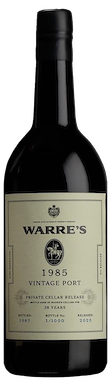
1985
Textbook conditions: a warm, dry summer and near-perfect weather during the harvest produced rich, powerful wines with good ageing potential.
A classic year that threw up a few nasty surprises when some wines turned disappointingly volatile (vinegary) in bottle.
However, earlier this year, the Symingtons released 800 bottles of Dow’s, 200 of Graham’s and 1,000 of Warre’s from their family cellars, all in perfect condition.
Warre's, Vintage Private Cellar Release, Port, Douro Valley, Portugal, 1985
My wines
Still looking youthful in hue though lighter in colour than some 1985s; wonderfully aromatic with dark chocolate concentration and wild mint fragrance and ripeness on...
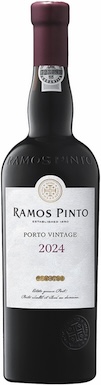
Ramos Pinto, Vintage, Port, Douro Valley, Portugal, 2024
My wines
Combining fruit from two complementary quintas, one in the Cima Corgo the other in the drier Douro Superior, mostly Touriga Nacional and Touriga Francesa, the...
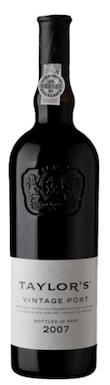
Taylor's, Vintage, Port, Douro Valley, Portugal, 2007
My wines
Still deep and youthful with minty ripeness, lovely cassis and classic floral aromas (‘violets’ said to be the hallmark of Quinta de Vargellas); very pure...
Decanter Magazine, DWWA 2019 Regional Chair for Port & Madeira
Richard Mayson began his career working for The Wine Society, winning the Vintner’s Company Scholarship in 1987 during his time there. Now specialising in the wines of Iberia, especially fortified wines, he owns a vineyard and produces wine in the Alto Alentejo, Portugal, and is the author of four books, including The Wines and Vineyards of Portugal (winner of the André Simon Award 2003) and Port and the Douro. Mayson writes regularly for Decanter and The World of Fine Wine, contributes to the Oxford Companion to Wine and lectures for the WSET diploma and Leith's School of Food and Wine in London. In 1999, he was made a Cavaleiro of the Confraria do Vinho do Porto in recognition of his services to the Port wine trade, and he was an associate editor of Oz Clarke’s Wine Atlas. Mayson runs his own website for fortified wine enthusiasts, portandmadeirapages.com, is currently writing a book on the wines of Madeira.