
Corpinnat navigates new challenges as it comes of age
Established in 2018, this group of sparkling wine producers in Penedès was created to focus on native varieties and estate wines. Now, as it grows it faces the challenge of securing a foothold in the competitive world of quality traditional-method sparkling wines.
In April 2018, a brand new wine association was launched in the historic Catalonian region for the production of traditional-method sparkling wine.
Its name, the awkward ‘Corpinnat’, roughly translates as ‘in the heart of Penedès’. Working discreetly, six leading producers had been planning and defining what was effectively a new Spanish denomination for traditional-method sparkling wine.
Membership has grown from six to 23 with more on the horizon. With current production standing at around 5.5 million bottles a year, the Corpinnat brand has surely now come of age.
The launch was a surprise to the outside world, especially as the association appeared completely ready, with European approval, a very clear set of regulations and its 997km2 area carefully mapped.
According to Corpinnat president Pere Llopart, of Celler Llopart, what prompted the founders was the difficulty selling wine in export.
The group of producers felt that they did not have a way of communicating their superior quality while they remained in DO Cava.
‘We realised we had to do something,’ Llopart says. ‘There was a long cycle of meetings; six bodegas drove the formation of Corpinnat over six years of talks.’
Get our daily fine wine reviews, latest wine ratings, news and travel guides delivered straight to your inbox.
He adds that though they began as six, they never saw themselves as a private club but rather ‘as an agent for transforming the territory of Penedès’.
Almost 10 years on, there are still producers working within DO Cava who feel the break deeply.
‘Frankly, it was an egotistical move’, one has said. ‘We could have stayed together.’
Open to new members
The fifth generation of the Llopart family (from left) Imma, Assumpta, Josep Maria, Pere (also current president of the Corpinnat organisation) and Jesi.
Among the original group of six producers, Llopart’s family sparkling wine business dates back to 1887; Recaredo was founded in 1924; and Gramona is now under the leadership of the family’s fifth and sixth generations.
However, there’s another model for new entrants to Corpinnat. Jessica Madigan and local producer Sergi Canals – who met as students at UC Davis in California – applied to Corpinnat even before their first harvest at Cisteller.
Referring to Ton Mata of Recaredo, who has been one of the key drivers of growth within the group, Canals says: ‘Ton gave us a call and advised us to start the Corpinnat harvest audits there and then.’
With the annual audits completed, they became members before having even released their required 60 month-aged wine.
As younger members of the association, Madigan and Canals are very focused on developing their own approach to traditional methods: picking grapes later, ageing the wine longer on the lees and using the juice from the following year’s harvest as the sugar source for tirage (added to the still base wine to enable the secondary fermentation in the bottle).
Seismic shifts
The courtyard of Juvé & Camps’ winery
If the creation of Corpinnat was a golpe – sounding more convincing in Spanish, it’s a mix of a shock, a gunshot, a coup – then 1 April 2026 was certainly another.
Juvé & Camps, a 2.5-million bottle stalwart producer of Cava, announced it was moving to Corpinnat.
The edifice of Cava seemed about to come tumbling down. Javier Pagés, who served two terms as Cava president up to June this year, had worked persistently to keep the parties together, but with his departure it seemed this might spell the end.
Fourth-generation Meritxell Juvé, CEO, explains her family’s decision was not sudden: ‘We are the main producer of long-aged sparkling wine in Spain and we are committed to brut nature. We only have good words for Cava, and Javier Pagés really tried. But we decided two to three years ago to make the move.’
Juvé admits: ‘Though we were prepared, we did not expect the amount of media attention we’ve received.’
Surely joining Corpinnat will enable Juvé & Camps to put its prices up? ‘Not at all,’ Juvé insists. Certainly her Reserva de la Familia seems rather cheap for a wine that is certified organic, handpicked and bottle-aged.
Her UK importer José Pacheco of C&D Wines agrees with her about holding prices, adding that the UK market is very price sensitive. He doesn’t foresee a Corpinnat-driven price hike, despite Juvé moving up into that prestige category.
There will be more immediate adjustments in the vineyard: they will have to substitute their Pinot Noir and Chardonnay with permitted varieties.
Another fairly recent recruit to the Corpinnat clan, announced in March 2025, is Eduard Viader, also a former DO Cava producer.
Eduard highlights the closeness of the Corpinnat community: ‘Ramón Parera [Celler Pardas] suggested me; Roc Gramona [influential vice-president of the association] invited me to join – I told him it would be an honour.’
He says he felt qualifying for membership was like making it into the Champions League: ‘It’s a real step up for an unknown. I went from being no one among many in Cava to number 14 in Corpinnat, with a vote that counts.’
Viader relishes working with colleagues with similar philosophies, adding that the prestige of Corpinnat and market recognition should enable it to achieve higher pricing for its members.
Their own path
Sergi Canals and Jessica Madigan of Cisteller
Though prominent in the headlines now, Corpinnat was not the first to break away from DO Cava.
The entrepreneurial Pepe Raventós of Raventós i Blanc had been party to the original discussions by the dissenters, but as plans proceeded slowly he left to form his own territory, the Conca del Ríu Anoia, in 2012.
Then in 2014, Clàssic Penedès appeared, defining itself very similarly to what is now Corpinnat, focusing on sparkling wines, organics, terroir, Penedès.
Colet and Albet i Noya are the quality leaders in this, the latter winning DWWA Best in Show awards in 2022 and 2023 with its El Corral Cremat Brut.
While some have left Clàssic Penedès, the latest news is that Mireia Torres, director of Jean Leon wines, is launching a traditional-method sparkling from one of the Torres family’s most successful recuperated ancestral varieties – Forcada – as a brut nature Clàssic Penedès.
Its arrival may make a difference to the profile of Clàssic Penedès. I hope it does, for it has always seemed to be unfairly hiding in plain sight.
This is the contrast with Corpinnat. Ramon Francàs of La Vanguardia newspaper, a long-time commentator on all things wine in Catalonia, observes: ‘The success of Corpinnat is that they took the high ground’ and quickly established a reputation founded on quality.
Undoubtedly this was driven by the personalities involved. Gramona and Recaredo were already established above and beyond any denomination. All of them are expert communicators.
Early days
Eduard Viader, who joined the Corpinnat group in early 2025
The founding fathers gave Corpinnat immediate credibility and status, even if it has taken the trade and wine-loving public time to come to terms with the word ‘Corpinnat’ and all it entails.
However, as it grows, it begins to reflect a diversity of styles. Corpinnat could find this challenging.
Members will find themselves fighting each other for places on wine lists.
Furthermore, while Corpinnat shows dynamic growth, it needs resources to manage and market itself – resources that government support under a Denominación de Origen would provide.
An outspoken critic was not impressed with their original choice of launching as a European Union ‘collective mark’: ‘It meant Corpinnat is a category just the same as “Panettone d’Italia”.’
There remains the distant possibility that Corpinnat could join up with Clàssic Penedès and Pepe Raventós under a potential collective brand such as ‘Espumos Catalanes’.
Of course, there is already a traditional-method sparkling wine category for Catalonia – namely DO Cava, for which 95% of the wines are Catalan.
Corpinnat’s task as it comes of age is to hold onto its place in the ‘Champions League’, retaining its prestige and unicorn status. Not easy.
The Evans pick: Corpinnat wines from 12 top producers
Related articles
Llopart, Original 1887, Corpinnat, Catalonia, Spain, 2014
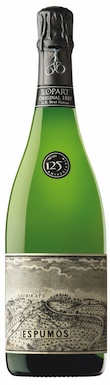
Original 1887 was created to celebrate the Llopart family's long history in vines and wines. That partly explains their loyalty to Montonèc, also known as...
2014
CataloniaSpain
LlopartCorpinnat
AT Roca, Vinyes Velles, Corpinnat, Catalonia, Spain, 2018
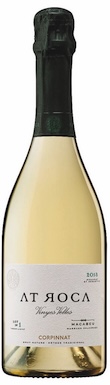
In a land where Xarel.lo seems to be becoming dominant, this is a charming floral, white-peach expression of Macabeo. After eight years, the wine still...
2018
CataloniaSpain
AT RocaCorpinnat
Recaredo, Serral del Vell, Corpinnat, Catalonia, Spain, 2018
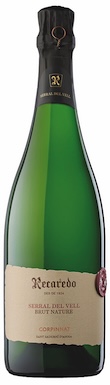
Ton Mata of Recaredo has been one of the drivers of Corpinnat. There's no doubt that it was the quality and reputation of Recaredo, and...
2018
CataloniaSpain
RecaredoCorpinnat
Gramona, Imperial, Corpinnat, Catalonia, Spain, 2019
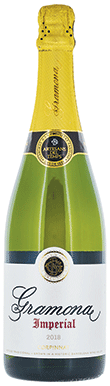
A classic in the distinctive Gramona range, with a dose of 4% Chardonnay in the blend and dosage of 4g/L. A rich style, undoubtedly with...
2019
CataloniaSpain
GramonaCorpinnat
Cisteller, Lucidity, Corpinnat, Catalonia, Spain, 2023
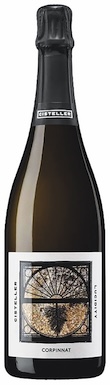
From its name to its typeface, Lucidity shows it plans to take a different path. Its aromas are herbal and smoky, its acidity crisp, with...
2023
CataloniaSpain
CistellerCorpinnat
Pardas, Els Pagesos, Corpinnat, Catalonia, Spain, 2017
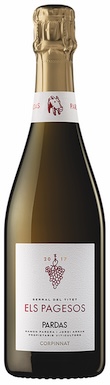
Ramón Parera and Jordi Arnan are experts in taming the wild-child red variety Sumoll. I always seek out the new release of the still Sumoll,...
2017
CataloniaSpain
PardasCorpinnat
Kripta, Barrica, Corpinnat, Catalonia, Spain, 2020
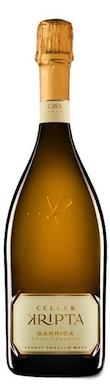
This bottle spells out its six months of barrel ageing right down to the brown bottle and cream label bearing the word Barrica (barrel). It's...
2020
CataloniaSpain
KriptaCorpinnat
Julia Bernet, Barraca dels Coscons, Corpinnat, Catalonia, Spain, 2022
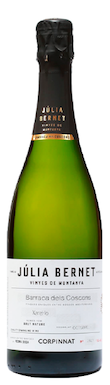
The back label of the bottle proudly declares soms pagesos ('we are farmers'), in contrast to the big business involved in Cava. The wines are...
2022
CataloniaSpain
Julia BernetCorpinnat
Viader, La Llena, Corpinnat, Catalonia, Spain, 2022
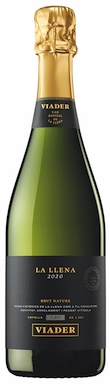
An energetic youngster bursting to reveal itself, this opens with wild herbs and citrus, layered with fine pastry. In the mouth, the mousse gives a...
2022
CataloniaSpain
ViaderCorpinnat
Huguet de Can Feixes, Brut Nature, Corpinnat, Catalonia, Spain, 2021
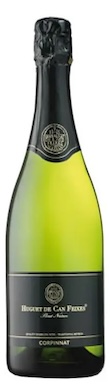
There's a Champagne character to this. Not surprising, since it's traditional-method; but maybe it's knowing there's 10% Pinot Noir that is influencing me. Perhaps. That...
2021
CataloniaSpain
Huguet de Can FeixesCorpinnat
Juvé y Camps, Reserva de la Familia, Corpinnat, Catalonia, Spain, 2022
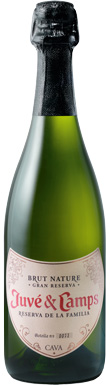
The landmark event of Juvé & Camps joining Corpinnat in April this year, leaving Cava, was a gamechanger. It almost doubled Corpinnat's production overnight, highlighted...
2022
CataloniaSpain
Juvé y CampsCorpinnat
Torné & Bel, Tempus, Corpinnat, Catalonia, Spain, 2021
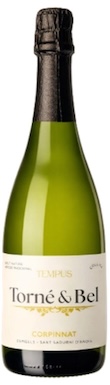
Tempus is Torné & Bel's flagship mature wine: the classic Catalan blend of three grapes, from 50- to 60-year-old vines. Aromas of brioche and hazelnut...
2021
CataloniaSpain
Torné & BelCorpinnat
Llopart, Original 1887, Corpinnat, Catalonia, Spain, 2014

Original 1887 was created to celebrate the Llopart family's long history in vines and wines. That partly explains their loyalty to Montonèc, also known as...
2014
CataloniaSpain
LlopartCorpinnat
AT Roca, Vinyes Velles, Corpinnat, Catalonia, Spain, 2018

In a land where Xarel.lo seems to be becoming dominant, this is a charming floral, white-peach expression of Macabeo. After eight years, the wine still...
2018
CataloniaSpain
AT RocaCorpinnat
Recaredo, Serral del Vell, Corpinnat, Catalonia, Spain, 2018

Ton Mata of Recaredo has been one of the drivers of Corpinnat. There's no doubt that it was the quality and reputation of Recaredo, and...
2018
CataloniaSpain
RecaredoCorpinnat
Gramona, Imperial, Corpinnat, Catalonia, Spain, 2019

A classic in the distinctive Gramona range, with a dose of 4% Chardonnay in the blend and dosage of 4g/L. A rich style, undoubtedly with...
2019
CataloniaSpain
GramonaCorpinnat
Cisteller, Lucidity, Corpinnat, Catalonia, Spain, 2023

From its name to its typeface, Lucidity shows it plans to take a different path. Its aromas are herbal and smoky, its acidity crisp, with...
2023
CataloniaSpain
CistellerCorpinnat
Pardas, Els Pagesos, Corpinnat, Catalonia, Spain, 2017

Ramón Parera and Jordi Arnan are experts in taming the wild-child red variety Sumoll. I always seek out the new release of the still Sumoll,...
2017
CataloniaSpain
PardasCorpinnat
Kripta, Barrica, Corpinnat, Catalonia, Spain, 2020

This bottle spells out its six months of barrel ageing right down to the brown bottle and cream label bearing the word Barrica (barrel). It's...
2020
CataloniaSpain
KriptaCorpinnat
Julia Bernet, Barraca dels Coscons, Corpinnat, Catalonia, Spain, 2022

The back label of the bottle proudly declares soms pagesos ('we are farmers'), in contrast to the big business involved in Cava. The wines are...
2022
CataloniaSpain
Julia BernetCorpinnat
Viader, La Llena, Corpinnat, Catalonia, Spain, 2022

An energetic youngster bursting to reveal itself, this opens with wild herbs and citrus, layered with fine pastry. In the mouth, the mousse gives a...
2022
CataloniaSpain
ViaderCorpinnat
Huguet de Can Feixes, Brut Nature, Corpinnat, Catalonia, Spain, 2021

There's a Champagne character to this. Not surprising, since it's traditional-method; but maybe it's knowing there's 10% Pinot Noir that is influencing me. Perhaps. That...
2021
CataloniaSpain
Huguet de Can FeixesCorpinnat
Juvé y Camps, Reserva de la Familia, Corpinnat, Catalonia, Spain, 2022

The landmark event of Juvé & Camps joining Corpinnat in April this year, leaving Cava, was a gamechanger. It almost doubled Corpinnat's production overnight, highlighted...
2022
CataloniaSpain
Juvé y CampsCorpinnat
Torné & Bel, Tempus, Corpinnat, Catalonia, Spain, 2021

Tempus is Torné & Bel's flagship mature wine: the classic Catalan blend of three grapes, from 50- to 60-year-old vines. Aromas of brioche and hazelnut...
2021
CataloniaSpain
Torné & BelCorpinnat
Sarah Jane Evans MW is an award-winning journalist who began writing about wine (and food, restaurants, and chocolate) in the 1980s. She started drinking Spanish wine - Sherry, to be specific - as a student of classics and social and political sciences at Cambridge University. This started her lifelong love affair with the country’s wines, food and culture, leading to her appointment as a member of the Gran Orden de Caballeros de Vino for services to Spanish wine. In 2006 she became a Master of Wine, writing her dissertation on Sherry and winning the Robert Mondavi Winery Award. Currently vice-chairman of the Institute of Masters of Wine, Evans divides her time between contributing to leading wine magazines and reference books, wine education and judging wines internationally.