Get our daily fine wine reviews, latest wine ratings, news and travel guides delivered straight to your inbox.
You are now subscribed
Your newsletter sign-up was successful
An account already exists for this email address, please log in.
Capital Wines: Why Madrid is Spain's next hot wine spot
Known for its intense cultural scene and nightlife, Madrid has also become a hot destination for foodies. But the Spanish capital is also the epicentre of the rebirth of its exciting neighbouring wine appellations and their indigenous grape varieties.
As I write, it’s August, the peak of summer. The streets are quiet and it’s a great time to snaffle a reservation at one of the few good restaurants that remain open at this time of year. Most of Madrid’s residents escape the heat, preferring the cooler coastline.
For those who remain, the city is stifling, sweltering yet strangely satisfying; tough it out until early September and its softer, gentler hues arrive like a comforting embrace.
The summer of 2026 was harsher than most, with intense heat throughout May (nostalgically still referred to as spring) until the end of August. The normal raucous soundtrack of Madrid was punctured by the constant drone of helicopters and emergency service sirens as the Community of Madrid’s resources rallied to fight the menacing fires that burnt through the Gredos mountains out to the west.
But as the city returns to its normal rhythmic pulse, so too the possibilities that Madrid offers.
A major world capital with an eponymous wine appellation, Vinos de Madrid DO, it often goes unnoticed as one of Spain’s great viticultural regions.
Likewise, the glitter and glamour of San Sebastián’s celebrated restaurants, up on the northern Basque coast, often outshines the litany of Madrid’s outstanding eateries, bars and markets.
‘The city is deceptive,’ writes Luke Stegemann in his May 2025 book Madrid: A New Biography (£12.99 Yale University Press).
Decanter newsletter
Get our daily fine wine reviews, latest wine ratings, news and travel guides delivered straight to your inbox.
‘Madrid’s treasures are broader and deeper, its history more abundant, its culture more nuanced and sophisticated, than might first appear.’
Madrid’s moment
Customers enjoying the ‘huge selection’ of wines at La Caníbal in Madrid
(Image credit: Abel Valdenebro)
The city is awash with creative and accessibly priced restaurants, alongside the comforting (albeit dwindling in number) bar de toda la vida neighbourhood eaterie, serving classic tapas and raciones (sharing plates).
Try Madrid’s famous bocadillo de calamares with its golden pile of oily, salty calamari rings in a roll, or a steaming bowl of callos a la Madrileña, tripe stew, at a taberna castiza, one of the city’s old-school taverns.
But wine is the protagonist in a growing number of lively bars and restaurants. In the Retiro district, albeit they’re on opposite sides of the city’s central park, Laredo and García de la Navarra offer menus focused on beautiful produce accompanied by impressive wine lists that reflect both classic and modern Spanish producers, with some irresistible old vintages to boot.
The Barrio de las Letras, between El Retiro park and the city centre, is home to Ganz, a contemporary, winefocused bistro featuring some of the country’s modern, great wines; while down in nearby Lavapiés neighbourhood, La Caníbal (lacanibal.com) not only offers a huge selection of bottles, but also a constantly changing range of wines on tap.
And in Chamberí, to the north of the centre, Pilar Oltra’s Vinology is a wine bar that specialises in winemaker dinners and curated tasting events, with a gentle nod to her Argentine origins adding flair to the list.
Yolanda Morán owns De Vinos (@devinoslapalma) in Malasaña district, a bar with a traditional facade but a very modern spirit.
Rioja and Ribera sit alongside wines from local Madrid vineyards and small producers around the country, while an eclectic international selection covers regions including Burgundy, Champagne and Italy.
‘I think two things are coming together,’ outlines Morán. ‘Spain is enjoying one of the best periods in its wine history, with an enormous diversity of high-quality wines. And consumers are becoming increasingly curious and knowledgeable. At the same time, visitors to Madrid also want to discover Spain through its wines.’
Into wine country
Juan Andrés Martín Pérez of Rico Nuevo tending his vineyards high in the Alto Alberche valley
(Image credit: Rico Nuevo)
Less than 100km west of the capital, the Sierra de Gredos mountains encompass the high-elevation Alberche valley around Burgohondo (about 830m-850m at its centre) and Cebreros (750m), the warmer Tiétar river valley to the south, with its Mediterranean influence and, further south again, the Tajo river valley as the mountains descend towards the plains of Castilla-La Mancha.
Wines are usually classified as Vinos de Madrid DO (denominación de origen), Cebreros DOP (PDO in English: the EU-level protected designation of origin), Méntrida DOP or Vino de la Tierra de Castilla y León for wines originating in the province of Avila.
Gredos has a long viticultural history but had been largely abandoned through waves of phylloxera – the devastating vine pest that first struck Spain in the late 19th century – and rural depopulation, followed by low grape prices and a market focused on bulk wine, which rendered low-yielding, old vines unviable.
During the 2000s, a handful of mavericks started to recover vineyards, recognising the potential of the Gredos region’s granitic soils.
Alfonso Chacón was one of the first, founding Bodegas Canopy at Camarena in 2003 after recuperating vines in the Sierra de San Vicente, southeast of the Gredos range.
His focus on fresh, elegant and site-driven wines mirrored the work of other pioneers such as Telmo Rodríguez with his Pegaso project and Daniel Ramos, who established his eponymous winery in 2005.
For Daniel Landi, one of the four founders of another maverick with vineyards in the Sierra de Gredos, Comando G, community is key to the development of the region over the past 25 years.
‘When we started, we were four crazy people,’ Landi explains self-effacingly. ‘But now there’s a community of young people and reputable producers who are building a region that has enormous potential. It is a region that can adapt to climate change with its combination of elevation, granite soils and Garnacha, which is suited to the heat.’
For Landi, Gredos is unique. ‘There are people with passion, with wine at the heart of their lives not just as their business, embracing the philosophy of terroir, single parcels and fine and fresh wines.’
The old court
Bodegas Más Que Vinos co-founders and winemakers (from left) Gonzalo Rodríguez, Alexandra Schmedes and Margarita Madrigal
In just over half an hour, the high-speed Avant train carries a constant stream of tourists from Madrid’s Atocha station south to Toledo, once home to the Spanish royal court.
Perched over the river Tajo, its skyline is dominated by the alcázar, a fortress that dates to Roman times, and the cathedral, whose walls inside are adorned with works by El Greco, Velázquez and Goya.
Despite the influx of visitors, Toledo’s vineyards are not quite as well known. Enjoying the influence of the Sierra de Gredos in its north, and the high plains of La Mancha to its south and east, it is planted with the local white Airén variety and Garnacha, as well as Cencibel (Tempranillo), international varieties and rarer, minority grapes.
Most of the wines are classified Méntrida DOP or within the Castilla IGP (protected geographical indication). Margarita Madrigal, winemaker and co-owner of Bodegas Más Que Vinos, has vineyards 40 minutes east of Toledo.
‘Ours are wines of the meseta, from the high plateau of Ocaña at up to 800m,’ she says.
‘They are honest wines that reflect the extreme continental climate, the terroir and the deep roots of the vines.’
Madrigal explains that they focus on local grapes: ‘We work with four native varieties, those best adapted to our climate.’
From Madrid to the meseta
Marc Isart of Cinco Leguas
(Image credit: Abel Valdenebro)
Further southeast of Madrid, the landscape is more open, the climate more decidedly continental and varieties less defined by the granite of Gredos.
Here the Vinos de Madrid DO gives way to Uclés DO and the northern parts of La Mancha DO.
It is home to towns with unmistakably Spanish names like Chinchón and the amusingly named Colmenar de Oreja (‘ear apiary’, translated literally!), where there is a deep-rooted winemaking tradition.
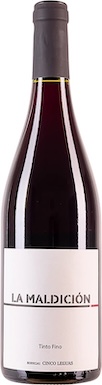
Marc Isart, winemaker-owner of Cinco Leguas, one of the most dynamic producers in this part of the Vinos de Madrid DO, makes modern wines that reflect the history of the region.
‘The area has historically been known for its clarete wines, which were fruity and lively everyday wines with medium structure, blends of red and white grapes,’ he says.
‘But the wines could be structured and capable of ageing when made from Tinto Fino (Tempranillo).’
As in many parts of Spain, producers here embraced international varieties, and in the mid-1990s Cabernet Sauvignon and Merlot were admitted to the DO.
However, there is a renewed focus on Tinto Fino and white Malvar as the local grapes of the region, and winemakers are making more traditional styles with modern precision.
City of wine
A vermouth in the bustle of the Mercado San Miguel or a churros and hot chocolate are great traditions in Madrid, but next time you soak in the magnificent orange and red glow of the setting sun from the various vantage points in the city’s west, think how that same sun also bleeds into the vines that encircle the city.
As the colours give way to night, the cooler air gives the vines time to rest, revive and produce the next great cuvée that you can enjoy at your leisure, right in the heart of the city.
Fire & resilience
(Image credit: Eduardo Parra / Europa Press via Getty Images)
In July 2026, a fire front devoured more than 77,000 hectares in the Sierra de Gredos across the three provinces of Avila, Madrid and Toledo.
According to government sources, almost 60,000 people were evacuated and nearly 30,000 confined to their homes, and there was significant damage to property, wildlife and livestock.
At the heart of the Gredos wine region, growers spent long days and nights defending their villages and vineyards.
In total, 826ha were destroyed, damaged or exposed to flames and heat that may adversely impact the vines. Of these, 626ha are in the Vinos de Madrid DO’s westerly San Martín de Valdeiglesias sub-zone, around 10% of its total vineyard area.
Of the 50 parcels owned by Bernabeleva, whose vineyards and winery are in San Martín, 30 were affected. Potentially 60% of those vines, some 90 years old, have suffered too much damage to recover.
The fire advanced with such ferocity that it also destroyed a large part of the winery and equipment.
Incredibly, the barrel room was spared, as was one of the estate’s most precious vineyards, the 2.8ha, 100-year-old Viña Bonita parcel.
The other 200ha of vines touched by the fires belong to Cebreros DOP, representing around 40% of its vineyards, with 180ha in the Cebreros municipality and another 13ha in neighbouring El Tiemblo.
For Gearóid Lane, co-owner of Bodega El Reventón, the impact of the fires was devastating.
‘We suffered very severe damage to our beautiful, historical vineyard of San Gregorio near El Tiemblo in the Valle de Iruelas,’ he explains. ‘The whole forest in that area was engulfed by flames and our vineyard is right in the heart of it.’
Fortunately for Lane and the Reventón team, their other vineyards, winery and warehouse were unaffected, and most importantly the team emerged safe and sound.
‘We are hopeful that with lots of love, hard work and investment, a fair proportion of the vines can be nursed back to health,’ he says.
And beyond the 2026 harvest? ‘We are more determined than ever to continue on our mission to make fine Garnacha wines in this wonderful region.’
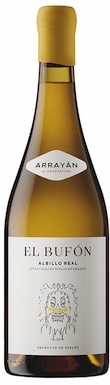
Bodegas Arrayan, El Bufón Albillo Real, Cebreros, Gredos, Spain, 2024
My wines
From the estate’s vineyards in the Sierra de Gredos, this wine is fermented spontaneously and spends eight months in 700L terracotta amphorae. The result is...
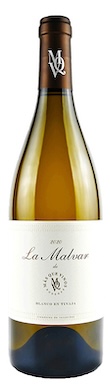
Bodegas Más Que Vinos, La Malvar de Más Que Vinos, Vino de la Tierra de Castilla, Toledo, Spain, 2023
My wines
A distinctive, semi-oxidative expression of local grape Malvar, fermented with 10% whole bunch and aged on its lees in tinaja and barrel this combines pâtisserie...
2023
ToledoSpain
Bodegas Más Que VinosVino de la Tierra de Castilla
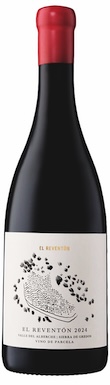
Bodega El Reventón, El Reventón, Cebreros, Gredos, Spain, 2024
My wines
With a lovely sense of place, this Garnacha combines delicacy and serious substance which is derived from vines planted in 1943 in Cebreros. Raspberry and...
Seductive and immediately inviting, this is a blend of Garnacha (80%) and Syrah (20%) that is both harmonious and seamless. Fermented with 70% stems and...
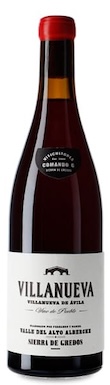
One of Comando G’s village wines, this is whole bunch fermented with indigenous yeast and aged in concrete tank. A finessed and detailed expression of...
Beth Willard is a wine communicator and judge with a particular passion for the wines of Spain. A regular contributor to Decanter and one of the five Co-Chairs of the DWWA, she is also a member of the Gran Orden de Caballeros del Vino.