Get our daily fine wine reviews, latest wine ratings, news and travel guides delivered straight to your inbox.
You are now subscribed
Your newsletter sign-up was successful
An account already exists for this email address, please log in.
Soul of the South: Italy's wild, chaotic and creative southern wines
Italy’s southern regions go their own way, and a renewed energy and confidence in their own identities mean that their many and varied wine styles increasingly stand on their own merit.
My first visit to southern Italy didn’t start well. I was flying from Rome to Palermo in Sicily, and the air conditioning cut out as we ascended. I fell asleep, or passed out, and woke up drenched in sweat.
The airport was undergoing renovations and as I waited in the makeshift baggage-reclaim hall, my eye was caught by some activity.
Some locals had peeled back the flimsy metal of the improvised building to create a direct exit to the real world. They were crouching down and disappearing through it to stand outside, smoking in the hot air as they waited for their cases.
I was in a strange land – one that I didn’t understand and still don’t.
Palermo alone would be too much to grasp, a city where people spend more on their sunglasses than their scooters, where every bar is full at 2am on a Tuesday morning, where old women gather to drink Campari and soda in the afternoon in a way that’s inconceivable in England.
The problem of comparison
Stef and Ciro Biondi
(Image credit: Armando Rotoletti)
Wine is one way into southern Italy – a major success story, but a messy one.
The region makes everything you can think of, from oaked Chardonnay to orange wine, from Sardinia’s Vernaccia di Oristano, aged under a layer of flor yeasts in the barrel, to the lithe, sinewy reds of Nerello Mascalese from Etna.
Decanter newsletter
Get our daily fine wine reviews, latest wine ratings, news and travel guides delivered straight to your inbox.
To some, this looks like chaos; to others, it’s creativity.
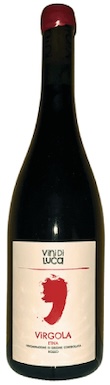
Etna is the closest thing the south has to an ambassador, but even these wines tend to be positioned in relation to the north, the reds being frequently compared to Nebbiolo or called ‘the Barolo of the south’ – an epithet applied to various red wines from Italy’s islands and regions south of Rome (sometimes described as the Mezzogiorno) that prove they can play by northern rules.
The Roman writer Ovid tells us that Zeus imprisoned the titan Typhon under the island of Sicily because he couldn’t kill him. Etna is his mighty head, his splayed limbs reaching out to Messina and Noto, his legs pinned down under present-day Marsala.
The island’s earthquakes and eruptions are Typhon’s attempt to break free of his overlord. Etna, then and now, is chaos managed, destruction contained, catastrophe postponed.
Endlessly fertile despite the barren flows of lava, the ground is a rich, composty brown.
Visiting Ciro and Stef Biondi’s eponymous winery, it’s no surprise to see ancient phalluses unearthed and re-erected in their vineyards, which sit in the fertile tongues between the lava flows.
The misty ground here steams with what seems like Jurassic plenitude. Sicily doesn’t need Etna to justify it, but it has helped, even if the volcano is just one facet of wine here.
Across the island, increasingly brilliant wines are being produced from varieties such as Catarratto, Nero d’Avola and Frappato.
A reputation for greatness
Over the water, Campania (the ‘shin’ of mainland Italy) has been restoring its ancient reputation for greatness.
Falernian, a famed wine of the Roman era, was made here – the 121 BCE vintage was so famous it was still being talked about by Romans 200 years later.
And the vineyards of Pompeii, a town just south of Naples that had more wine bars than modern Hackney, are producing wine once again.
Away from the glittering Amalfi coast, Campania conceals one of Italian wine’s greatest surprises. Irpinia, the land of Taurasi, Greco di Tufo and Fiano di Avellino, is almost comically verdant.
It can get twice as much rain as London, and its fertile soils, rich in volcanic ash, sulphur and much else besides, produce world-class wines.
It’s the long-lived whites that command critical attention, but it’s with the Aglianico grape that southern Italy puts forth its most heroic red wine.
The death or glory grape
Salvatore Molettieri
(Image credit: Salvatore Molettieri)
On the volcanic soils of Campania and Basilicata, Aglianico (in the form of Taurasi DOCG for the former and Aglianico del Vulture DOCG for the latter) delivers wines of Homeric scale: ambitious, grand and elemental.
A visit to Salvatore Molettieri in Taurasi isn’t for the faint-hearted.
He runs his estate with his four sons, who appear to have sprung from his thigh in his image. Aglianico isn’t a crop here, it’s a point of honour.
The purple pasta we eat over lunch is laced with it, and the wines seem to operate on some other timescale of evolution.
They are ferociously dark-fruited and muscular, pungent with coal dust and black carbon ink, spiked with resinous rosemary and medicinal juniper, encased in tannins, energised by acidity.
A great Taurasi or Vulture wine is often too far beyond wine’s polite points of reference, so there’s been an effort to make them more friendly.
I taste these wines and understand them, but they leave me conflicted, like hearing about a dilapidated old building with enormous renovation costs that’s now being torn down to make way for modern flats.
I don’t want to feel sympathy for Aglianico. At its best, it’s blood and glory, more like Islay whisky in sensibility than anything else.
Peated malts such as Lagavulin, once deemed too coarse to drink undiluted, are now one of Scotland’s most distinctive and valuable assets. Perhaps Aglianico will have a similar story.
Cirò reconsidered
If Aglianico is Achilles in a glass, Calabria’s Gaglioppo offers a radically different flavour.
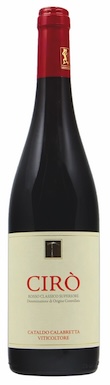
The red grape of Cirò is everything Aglianico isn’t: early maturing, easily dominated by oak, pale in colour, with scents of dried flowers and grated nutmeg.
It has tannins, of course – we’re still in Italy – but it’s a variety that seems to draw on the dried spices of the bazaar and the aromatic woods of the sacristy.
Thanks to a small group of growers who have shown inspiring loyalty to Gaglioppo, Cirò is finding its way forward with remarkable conviction and authenticity, its small Classico zone promoted to DOCG as recently as July 2025.
Here you can find some of Italy’s most palate-expanding whites, reds and rosés: wines that stand on their own terms.
The grammar of granite
Federica Dessolis with her brother Francesco, in Esole’s vineyards in central-east Sardinia
(Image credit: Esole)
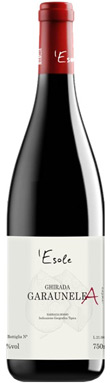
Over on the island of Sardinia, Cannonau has begun to shed the soft-focus cosiness that’s often expected of the variety (elsewhere known as Garnacha or Grenache).
The Mamoiada region in central-east Sardinia, a world away from the glamour of Porto Cervo on the northeastern coast, is craggy, wind-scoured and granite-bound, and the wines carry some of that gravitas with them.
The reds of Barbagia are still finding their voice, but they show that even when the grape is familiar, Italy’s south doesn’t want elocution lessons – its local accent is what makes it distinctive.
A blue-collar grape
Giovanni Aiello
(Image credit: Giovanni Aiello)
And what of Puglia, on Italy’s heel, and its primitive Primitivo?
If you were to ask a wine professional what their favourite grape is, they would probably say Riesling, even if it’s not, but I’m certain that no one has ever said Primitivo.
Much like the Carignan shipped from Tangiers to beef up Burgundy in the 20th century, Primitivo travelled north to darken other regions’ wines.
There was no first-class ticket for this immigrant from Croatia (where it goes by the names Crljenak Kaštelanski or Tribidrag); Primitivo is a worker, somehow uncomfortable and pulling at its collar when served in a Zalto glass.
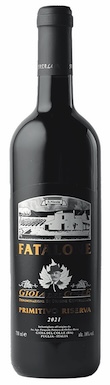
It doesn’t move easily in the aspirational wine world. At Fatalone in Gioia del Colle, Pasquale Petrera’s immaculately tended vineyard is idyllic.
The wine he makes from it is a real Primitivo: rugged, sturdy, heady, full of baked plums and fig jam.
Primitivo isn’t a perfectionist. Its bunches arrive with berries that are raisined, berries that are perfectly ripe, and berries that are green.
Far from being fruity filler for fattening up the deficient wines of the north, Primitivo is a scrappy, difficult variety, one that’s all too easy to stigmatise and ignore.
It’s a variety that’s had a hard life. It has travelled all over the globe on a third-class ticket, but it has seen things in the world that Pinot Noir can’t even imagine.
Changing perspectives
For those who want to tidy up, straighten out or pin down southern Italy, it will always be a frustration.
It has always resisted mastery – and it still does. But where there can’t be mastery, there can be something far better: discovery.
Every native grape variety, every twisted old vine and every family coming back to the land has something to tell us.
There’s no El Dorado here, no piles of gold for vinous Columbuses to quickly plunder and take home, but there are committed winemakers, passionate local cultures and much that’s waiting to be understood, rather than domineered.
You can’t start to rethink southern Italy if your frame of reference is northern Italy or France, or your goal is to bring the wines and places into step with more familiar names.
But if you love the thrill of great Vosne-Romanée, then you have it in you to love the great wines of southern Italy.
If you’ve found your way inside the soul of a great Brunello, you can do it again with Taurasi.
That’s what counts – and it’s all anyone needs in order to understand southern Italy and its wines.
This is undoubtedly southern stuff: rugged, less straightforward, always moving slightly out of focus, elusive but engaging. Sometimes we write that a wine tastes of...
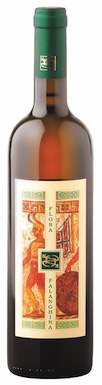
I Pentri, Flora Falanghina, Beneventano, Campania, Italy, 2023
My wines
An old variety but not a particularly esteemed one, Campania’s Falanghina has always been eclipsed by Fiano and Greco, which have garnered a well deserved...
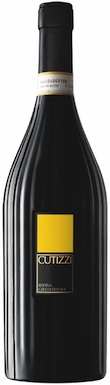
Feudi di San Gregorio, Cutizzi Riserva, Greco di Tufo, Campania, Italy, 2023
My wines
Feudi di San Gregorio is an active and important winery in Campania and although its entry-level wines are solid and made in considerable volume, the...
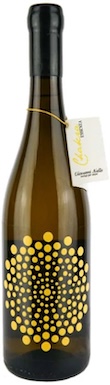
Giovanni Aiello, Chakra Essenza Bianco, Valle d'Itria, Puglia, Italy, 2023
My wines
Giovanni Aiello is a one-man metaphor for the rediscovery of the south. Having trained in northern Italy, California and Australia, he has returned home where...
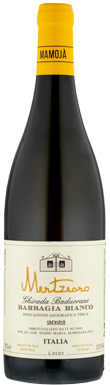
It was as recently as 2004 that Giuseppe Sedilesu made the first varietal Granatza – a variety traditionally blended in with Sardinia's local Cannonau for...
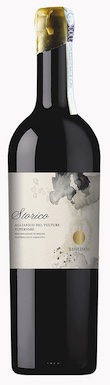
Basilisco, Storico, Aglianico del Vulture, Superiore, Campania, Italy, 2013
My wines
Viviana Malafarina is the reflective, intelligent and deeply perceptive winemaker behind the Basilisco wines. Originally from Liguria, she has traded the oceans of old Genoa...
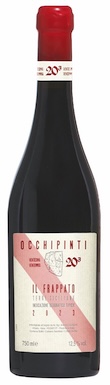
Occhipinti, Il Frappato, Vittoria, Sicily, Italy, 2023
My wines
After a difficult 2022 vintage, the 20th harvest of Il Frappato from Arianna Occhipinti, 2023, is a staggeringly beautiful wine. It’s a stop-and-stare phenomenon: I...
Fatalone, Primitivo Riserva, Gioia del Colle, Puglia, Italy, 2022
My wines
Fatalone is a fifth-generation winery in Gioia del Colle, where the limestone of the Murge hills meets the terra rossa that characterises much of the...
Jason Millar is a freelance writer and consultant specialising in the wines of Italy and South Africa. He has worked in various roles in the UK wine trade since 2011, most recently as company director at London merchant Theatre of Wine from 2018 to 2023. In 2016 he won three scholarships on his way to attaining the WSET Level 4 Diploma, including The Vintners' Scholarship for the top mark of all graduates worldwide.