Prosecco: Still on a high and with a point of difference
Prosecco’s popularity shows no signs of waning: why would it? Buoyed by its unarguable success producers are adopting innovative styles to bring new flavours to fizz lovers everywhere


The combined annual production of Prosecco DOC [exceeding 500 million bottles for the first time in 2020] and Prosecco DOCG [92 million bottles] has long since overtaken that of Champagne, which averages about 300 million bottles shipped annually. And easy accessibility has possibly created a certain over-familiarity and perception of uniformity among consumers. But Prosecco is evolving, offering diverse and exciting new routes into Italy’s most popular sparkling wine, in ways that challenge the stereotypes. As Luca Giavi, director of the Prosecco DOC consorzio says, the mindset needs revising. Today we have to think not of ‘Il Prosecco’, but of the plural ‘I Prosecchi’.
Conegliano Valdobbiadene Superiore DOCG
Bottle-refermented Prosecco – rather than by the commonly used Charmat ‘tank’ method – has long been produced in the DOCG area, but until recently it lacked official recognition. Following a method pre-dating modern vat refermentation, Sui Lieviti (also known as ‘col fondo’) is made by bottling still wine in early spring with its own sugar and fine lees to make a delicate, finely integrated bubbly and a bone-dry, tangy, citrusminerally character. The issue currently engaging producers is the carbonic pressure of this style of wine. Sui Lieviti is for full-on, bubbly ‘spumante’, while traditional wines, with roughly half the atmospheres, are officially ‘frizzante’.
Many producers, including the prominent Loris Follador at Casa Coste Piane and Christian Zanatta at Ca’ dei Zago, the winemaker who most closely represents the artisan tradition, have preferred not to move up into the spumante category on the grounds that the extra creamy texture that comes with it detracts from the character they wish to achieve in the wine. Others, such as Adami, Marsuret and Sorelle Bronca, make the more sophisticated spumante style without losing the slightly rustic authenticity. Both styles work.
If Sui Lieviti is about bubbles, the debate around the new extra brut category is about sugar. Despite the general trend towards ever drier styles, many producers have preferred not to take up the extra brut option and to stay in the comfort zone of the brut style (up to 12g/L residual sugar), where well-judged residual sugar helps to bring out the fruit and give flesh on the palate, without leaving a sensation of sweetness.
Brut wines tend to be more consistent than extra brut, but it could be argued that with their low sugar, the latter are a more direct expression of terroir. It has to be said, however, that not all sites are equally suited to the production of extra brut, and in this context the steep-sloped Rive sub-zones of the DOCG area acquire particular significance. The generally more subtle, delicately floral wines of Valdobbiadene can come across hard and lean in very dry styles, but can also have an exhilaratingly crisp, incisive purity if from, among others, the Rive of Colbertaldo (Miotto), Santo Stefano (Le Colture), Col San Martino (Bortolomiol), Farra di Soligo (Adami; La Farra), and Farrò (Sorelle Bronca). Wines from Ogliano in the Conegliano side of the DOCG (Biancavigna; Borgo Antico), on the other hand, are naturally broader and more structured, which makes for a very successful, rounded style of extra brut.
If bone-dry Prosecco is an invitation to revise expectations, late-bottled and mature vintages pose even more of a challenge to the common perceptions. In 2014, Paolo Bisol from Ruggeri put to one side a 4,000-litre vat and waited… He released the extraordinarily multifaceted Ruggeri, Cinqueanni (£55 The Great Wine Co) in 2019. The experiment proved that Prosecco can evolve finesse and complexity with age. The current vintage of Nino Franco’s outstanding Grave di Stecca Brut is 2015 (£20.32 Lay & Wheeler) and bottles back to 2008 are drinking perfectly (the 2013 is sublime). Also splendid are the 2016s from BiancaVigna, Merotto’s Cuvée del Fondatore, Bortolomiol’s Grande Cuvée del Fondatore and Ruggeri’s Vecchie Viti from 80-year-old vines (2019, £32.99 Valvona & Crolla). Though these may not be easy to find, they offer a glorious dimension to Prosecco that is rarely glimpsed, but which deserves to be cultivated.

Prosecco DOC Rosé
The big news from Prosecco DOC in 2021 was the rollout of Prosecco Rosé – which finally received its official approval in late 2020.
Big is the operative word: the initial release was estimated at about 60 million bottles – a demonstration of the extraordinary productive potential of the zone, which stretches from Treviso in the Veneto across Friuli Venezia Giulia to Trieste on Italy’s eastern border with Slovenia.
Take-up of the Rosé DOC has been immediate, not least because more than half of the current Prosecco DOC producers were already making a generic sparkling rosé prior to the arrival of the new denomination. The task of the Prosecco consorzio, which coordinated the various stages of research that led to the creation of the new DOC, was to establish stylistic consistency and quality standards for this heterogeneous production and pave the way for what is destined to become the Italian pink sparkler. It would make an interesting case study.
Prosecco Rosé is based on a quite strictly defined cuvée of 85%-90% Glera and 10%-15% Pinot Nero (vinified as red wine). There was canvassing for the inclusion of native varieties such as Raboso in the Veneto or Refosco in Friuli Venezia Giulia, but Pinot Nero was the logical choice, since it has been widely grown in both regions since the late 19th century.
Refermentation is by the widely used Charmat method, in tank, and wines must age on the lees for a minimum of 60 days. Declaration of the vintage is mandatory.
Much of the research that went into the formulation of the production norms for Prosecco Rosé revolved around the fundamental issue of colour, with micro-vinification experiments juggling the variables of yield, percentages of the blend and time on lees.
The outcome is a shade of pink which corresponds closest to ‘peach’ on France’s Côtes de Provence scale and also, given the presence of Pinot Nero, recalls a pale Sancerre rosé. In terms of sugar levels, nearly three-quarters of the current production is extra dry (12-17g/L) and most of the rest is brut.
The consorzio’s declared objective is to maintain the charm and immediate appeal of Prosecco, with an extra touch of individuality. The first impression, in this regard, is that the wines hit the spot; the Pinot adds a little structure and a note of red fruit to the gentle floral character of the Glera. At the top end of the extra dry scale, the wines may come over a little sugary for some tastes, but the drier Prosecco Rosé styles add a quintessentially Venetian touch to light fish dishes at a candlelit supper.
A selection of high-scoring Conegliano Valdobbiadene Superiore DOCG and Prosecco DOC Rosé:
Related articles
Prosecco vs Champagne: What’s the difference? Ask Decanter
Best Prosecco under £20: Top picks
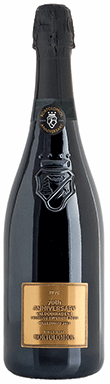
Bortolomiol, Rive di Col San Martino 70th Anniversary, Prosecco, Conegliano-Valdobbiadene Superiore Rive, Veneto, Italy, 2020
94
This is the first vintage of a refined, limited edition sourced from the Rive di Col San Martino, slopes noted for producing fresh, crisp wines with complex aromas. There is lemon and lime, with perhaps a hint of bergamot and a touch of aromatic herbs on the nose. On the palate there's the very fine, creamy texture that comes from lengthy refermentation and ageing on the lees. Elegantly long and dry, with potential to evolve over two to three years.
2020
BortolomiolProsecco
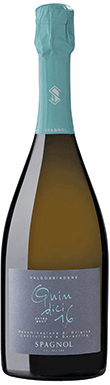
Spagnol, Cold del Sas Quindici16, Prosecco, Conegliano-Valdobbiadene Superiore, Veneto, Italy
94
To get the depth and complex aromas he seeks, Marco Spagnol uses 50% reserve wine from the previous vintage in this cuvée. The current vintages used are 2020/2019. There are pear and Parma violet notes on the nose, and a hint of seaside stones. The palate has length and complexity and the finesse that comes from long lees ageing. A great example of the less immediate, more nuanced style of Prosecco.
SpagnolProsecco
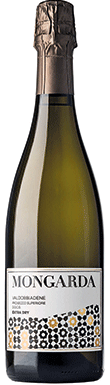
Mongarda, Prosecco, Conegliano-Valdobbiadene Superiore, Veneto, Italy, 2020
94
The Tormena family owns 7.5ha on some of the best sites of the hills of Farra di Soligo, from which the young Martino Tormena makes light, dry wines which are a masterclass in finesse. His Extra Brut has apple peel and green pear on the nose, with floral nuances and a faintly salty background. Fresh, agile and long, it's an immaculate example of everything you ask for from a Prosecco.
2020
MongardaProsecco
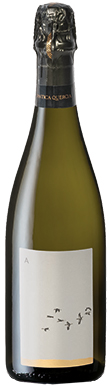
L'Antica Quercia, A Sui Lieviti, Prosecco, Conegliano-Valdobbiadene Superiore, Veneto, Italy, 2019
93
Antica Quercia is a certified organic estate at the eastern end of the DOCG, in the gently rolling hills overlooking the town of Conegliano. This bottle refermented 'A' (for 'artisan') comes from a selection of the best grapes of the vintage and ages a full 12 months on the lees. It has intriguing, mature aromas of acacia honey and ripe pear, while the palate is satisfyingly round despite no residual sugar.
2019
L'Antica QuerciaProsecco
Silvano Follador, Prosecco, Conegliano-Valdobbiadene Superiore, Veneto, Italy, 2020

93
Brother and sister Alberta and Silvano Follador have run this boutique estate since 1999. Organic in the vineyard and minimalist in the cellar, Silvano produces a single wine which in favourable vintages he also makes by the Metodo Classico. His trademarks - rigorously low sugar and minerally intensity - emerge to the full in the clarity of expression of his 2020 vintage. Uncompromising, but a wine of huge personality.
2020
Silvano FolladorProsecco
Sorelle Bronca, Difetto Perfetto Sui Lieviti, Prosecco, Conegliano-Valdobbiadene Superiore, Veneto, Italy, 2019
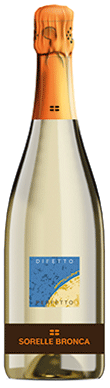
93
A new release from a producer known for its Brut and Extra Brut single-vineyard selections, this 'sur lies' maintains the impeccable standards of the estate. Winemaker Piero Balcon uses a 'pied de cuvée' to restart the fermentation of this beautifully crafted wine, with aromas which range from lemon and lime through savoury herbs to almonds and brioche. Light and creamy on the palate with a long finish; simply delicious.
2019
Sorelle BroncaProsecco
Col Sandago, Costa dei Falchi, Prosecco, Conegliano-Valdobbiadene Superiore, Veneto, Italy, 2020
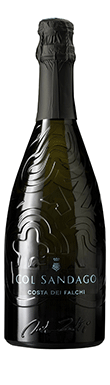
92
Col Sandago sources the grapes for this selection from Conegliano's Rive di Collalto, where the calcareous-clay soils give vines with firm structure and a distinctly minerally character. There is citrus and a hint of aniseed on the nose, and on the palate the concentration that comes from low yields. Bone dry and slightly austere perhaps, but an excellent food wine that would not be daunted by tangy cheeses or mildly spicy curries.
2020
Col SandagoProsecco
Gregoletto, Sui Lieviti, Prosecco, Conegliano-Valdobbiadene Superiore, Veneto, Italy, 2019
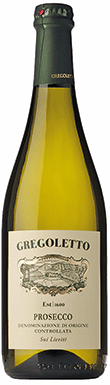
92
By far the biggest producer of the style, the late Luigi Gregoletto maintained the artisan 'sur lies' tradition in the years before it attracted the current international attention. His sons and daughter remain faithful to their heritage with this version of the Gregoletto classic: intense lemon rind and dried apricot with a touch of wet stones on the nose, broad and dry without harshness on the palate. This is the real thing.
2019
GregolettoProsecco
Marsuret, Prosecco, Conegliano-Valdobbiadene Superiore, Veneto, Italy
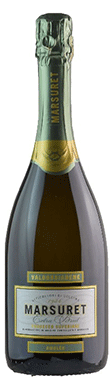
92
Like many growers, until the arrival of the Charmat method the Marsura family produced artisan 'frizzante' by natural bottle refermentation. The technology has changed but the vineyards at Guia, one of Valdobbiadene's most sought after sites, are the same. This Extra Brut is one of the driest of the category. Delicately floral on the nose, the style privileges the structure and intensity on the palate which make it a superb food wine.
MarsuretProsecco
Sanfelleto, Bosco di Fratta, Prosecco, Conegliano-Valdobbiadene Superiore, Veneto, Italy, 2020
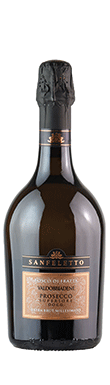
92
This long-established family-owned estate is located in the east of the DOCG zone, at San Pietro di Feletto, where the red ferrous soils give wines with fresh acidity and a distinctly minerally twist. The Bosco di Fratta selection has aromas of white peach and melon with a touch of lilac blossom. The super-fine perlage is woven discreetly on the palate, which has tangy intensity and a long, bone-dry, savoury finish.
2020
SanfelletoProsecco
Santa Margherita, Rive di Refrontolo, Prosecco, Conegliano-Valdobbiadene Superiore Rive, Veneto, Italy, 2020
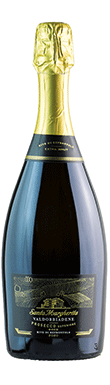
92
Santa Margherita's vineyard selection from the Rive di Refrontolo was previously released as a Brut but now comes as Extra Brut, an indication of the general trend among leading producers to reduce sugar levels. Refermented by the 'Charmat Lungo' method, this has a nose of sour apple and Mediterranean scrub, with great texture on the mid-palate and a long minerally finish. Definitely a food wine to match with risotto or baked fish.
2020
Santa MargheritaProsecco
Adami, Col Fondo, Prosecco, Conegliano-Valdobbiadene Superiore, Veneto, Italy, 2020
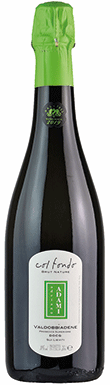
91
The 'Col Fondo' frizzante has always had a place in Franco Adami's versatile range, which goes from the iconic Dry Giardino to the Extra Brut Col Credas. The newly released spumante version of his Col Fondo maintains the house style of pristine elegance with its tight, persistent perlage and subtle aromatic herb character. A rapier-like entry, creamy volume on the palate and a long, firm finish make this the ideal apéritif.
2020
AdamiProsecco
Ruggeri, Saltèr, Prosecco, Conegliano-Valdobbiadene Superiore, Veneto, Italy, 2020
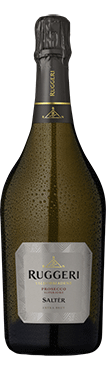
91
Ruggeri was acquired by Rotkappchen-Mumm in 2017, but the vineyard and cellar teams have remained unchanged, as has the rigorously classical house style of the wines at the top of the range. The Extra Brut has precisely defined notes of lemongrass and green apple, with a light touch of bread crust on the nose. Very fine, perfectly integrated perlage gives elegance to the palate which finishes long and bone dry.
2020
RuggeriProsecco
La Farra, Prosecco, Conegliano-Valdobbiadene Superiore, Veneto, Italy, 2020
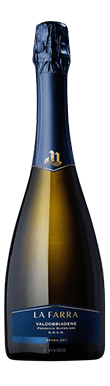
90
Founded by the Nardi family at the end of the 1990s, La Farra was one of the first estates to bottle an Extra Brut. The vineyards, planted 100% to Glera, are located at around 300m on south-facing slopes which favour full aromatic ripeness. Fresh citrus, apple and spring blossom are the key notes of the 2020, together with a very winning grapey quality on the palate. An attractive classic.
2020
La FarraProsecco
Ronfini Leonardo, Cuvèe 5, Prosecco, Conegliano-Valdobbiadene Superiore, Veneto, Italy
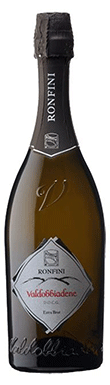
90
Leonardo Ronfini is the third-generation producer at this family-owned estate with vineyards at Farra di Soligo and Col San Martino. For his Cuvée 5 he complements the Glera grape with the local Verdiso, Bianchetta and Glera Lungo, which are rapidly becoming rare in the area. The style is full-on aromatic, with a rich floral character and a toothsome palate at the soft end of Extra Brut. A wine of personality.
Ronfini LeonardoProsecco
Conte Collalto, Prosecco, Treviso, Veneto, Italy, 2020
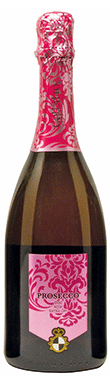
93
Treviso is a very interesting sub-zone of the Prosecco DOC, which is the source of fresh and lively wines that can rival those of the more prestigious DOCG. Collalto makes the point with this sprightly, pale peach tinted Rosé. The nose is precise but not overstated, with notes of pomegranate and sweet violets. The palate has a light and airy quality and a mouthwateringly refreshing zing which make it the perfect aperitif.
2020
Conte CollaltoProsecco
La Tordera, Tor Sé, Prosecco, Veneto, Italy, 2020
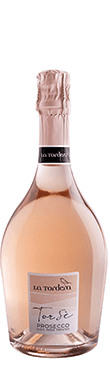
93
This leading Prosecco Superiore estate from Valdobbiadene sources its new Rosé from the hills just outside the DOCG zone. The Glera comes through in the floral and citrus aromas on the nose, complemented by a touch of red cherry and almonds from the Pinot. Dry, but not too much, the finely textured palate has breadth and underlying structure, and finishes with tangy intensity. A deliciously drinkable representative of the denomination.
2020
La TorderaProsecco
Villa Sandi, Il Fresco Rosé, Prosecco, Veneto, Italy, 2020
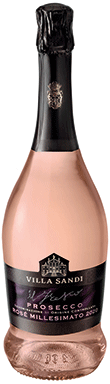
93
The Prosecco Rosé adds to the extensive range of this top Prosecco Superiore producer best known for its award-winning Cartizze. There's the house trademark charm on the nose, where delicately aromatic violets and rose mingle with a whiff of cherry pie, while the palate offers a rich, creamy texture with juicy underlying acidity and salty almonds on the long finish. An irresistible aperitif wine which would also go well with shellfish.
2020
Villa SandiProsecco
Le Rughe, Prosecco, Veneto, Italy, 2020
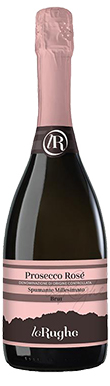
92
This Prosecco Superiore producer based in Conegliano also has a property north of the DOCG zone on 400-metre slopes at the foot of the Dolomites, where the cool, pre-alpine climate gives wines with terse intensity. Delicate pear and violets, with a hint of raspberry, prelude a crisp, dry palate with finely judged perlage and a long, distinctly minerally finish. Refined in a classic international style.
2020
Le RugheProsecco
Masottina, Collezione 96, Prosecco, Veneto, Italy, 2020
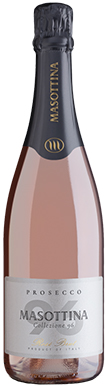
91
This new addition to Massotina's top quality DOCG range is a Rosé with a full-on, up front nose of ripe red fruit, honeysuckle and hibiscus, combining the floral, aromatic notes of Glera with the juicy fruit and lightly tannic influence of Pinot Nero. The palate, at the soft end of the Brut sugar scale, has volume and the finish is long and toothsome. An 'anytime' Rosé to drink chilled (6-8°C).
2020
MasottinaProsecco
