Great orange wines for autumn: 12 to try
Orange wines are the ultimate transitional wines: equally fitting for chilly autumn days or an unexpected Indian summer. We explore their many food pairing and serving possibilities and recommend 12 delicious iterations.


Your wine choices, as your wardrobe’s, are subject to seasonal review. It’s a matter of weather and it’s a matter of mood. So what does the arrival of autumn (and the faint hope of an Indian summer) call for? Versatile wines with character and food-pairing appeal.
Pale rosés give way to their fuller-bodied counterparts, chillable reds make space in the fridge for rich whites and bolder reds sneak in. Cocktail recipes get zesty and spicy, perfect for longer autumn evenings.
Fittingly-coloured orange wines are also perfect autumnal wines. At once refreshing and generous, for these moody days when sun and rain might be out within the same hour. And as the season’s produce starts to fill market stalls these amber-hued wines will give you perfect and versatile food pairing options.
Scroll down for tasting notes and scores of 12 orange wines to try this autumn
How is orange wine made?
An orange wine is made from white grapes fermented in contact with the skins – hence why they are also called skin-contact wines.
The light hue of most commercially available white wine is a result of the separation of the juice from the skins immediately or shortly after the grapes arrive at the cellar, by pressing the bunches. Fermentation happens without the skins thus preventing the extraction of colour, tannins and other polyphenolic compounds.
The length of maceration (the period when skins are left in contact with the juice before, during and after fermentation) determines the colour intensity of an orange wine. Fermentation temperature as well as the vessel used for fermentation and/or ageing also have a role to play.
As mentioned above, maceration extracts tannins and flavours compounds in addition to colour, which is why orange wines tend to have a distinct textural character (often described as grippy), some weight on the palate and, therefore, great food pairing appeal.
It’s sometimes said that orange wines are ‘white wines produced like a red’. However, historically, fermentation on the skins was the rule for all grapes, red and white, namely because these were often grown and fermented together. The concept of single-varietal wine and mono-varietal planting is very recent in the history of wine.
Even when varieties started being planted and vinified separately, wines were rarely light and clear in the glass. Light-hued white wines are a modern invention, only made possible by modern winemaking techniques such as cold settling, sterile filtration, temperature control and routine use of sulphites. Wines used to have a slight hue due to a degree of oxidation if not skin contact.
Millennial revival
As the industrialisation of wine production took hold, orange wines – perceived as less sophisticated, symbols of a less technologically advanced era – lost territory to modern ‘cleaner’ styles. They survived in regions where the wine sector struggled to establish itself as an industry, such as the Balkans, and at the hands of mavericks such as Josko Gravner and Stanko Radikon.
Orange wines were rediscovered at the beginning of the 21st century as part of a backlash against the standardisation of industrially-produced wine and the resulting loss of diversity of grape varieties, styles and traditions.
Orange wine was adopted by the ‘natural wine movement’ as its flagship style and propelled to the international stage as a beacon of resistance to commercially-made wines. Skin-contact became shorthand for low intervention as both producers and consumers increased their awareness of the sustainability implications of mass production.
Countries, like Georgia and Slovenia, where the style had remained firmly in production throughout the 20th century, found a new, enthusiastic audience and encouraged new producers. The vibrant natural wine community in Austria and Italy passionately embraced orange wines, with producers like Gut Oggau, COS, Claus Preisinger and Elisabetta Foradori releasing some of the defining wines of the dawn of the new millennium.
Winemakers in Portugal, Spain and Chile started researching their own regions’ historical iterations of orange wine – especially those produced in clay vessels – while adventurous ‘new world’ winemakers also embraced the style. Even producers in England and Wales are exploring the expressive potential of fermenting white grapes on their skins.
The result was a fresh understanding of the history of many wine regions, of the expressive potential of white varieties, and of how wine styles need to be seen in a spectrum rather than classified as ‘black (or red) or white’.
It’s important not to confuse orange wine and natural wine: the latter is a style while the former is a technique. It follows that not all orange wine is necessarily natural, and vice versa – i.e. skin-contact wine is not necessarily ‘funky’ or low intervention.
While texture and complexity are attributes of all (good) amber-hued wines, they can also be extremely refined. You will find a range of expressions, and both adventurous and classical wine lovers will surely find an orange wine they love. This style is not as divisive as one might think.
Tannins, flavour, texture – perfect food wines
Aromatic complexity, structure and textural character are what make orange wines special. At the crossroads of a red and white wine, they playfully stimulate and challenge the senses. Imagine the freshness and taught acidity of a white wine entwined with the tannic grip and suppleness of a red. What could possibly be better to pair with food?
Many orange wines are perfect companions for cheese platters, smoked fish, root vegetable-based dishes and roasted meat. They usually have a herbal, savoury edge that brings a meal’s flavours to life, supported by gentle tannins and firm acidity.
Best enjoyed only slightly chilled, skin-contact wines have a fresh vibrancy but also a sense of textural warmth, perfect to ease yourself into autumn’s mood. Nothing better than a picnic with a amber-hued bottle alongside the season’s harvest bounty – grapes, pear and Mediterranean citrus – before the winter’s loom sets in.
Great orange wines for autumn – 12 to try:
The wines below have been tasted and rated by Decanter’s editorial team and contributors.
Related articles
- Amphora and clay wines: 20 ancient and modern styles to seek out
- Dark rosé wines for late summer drinking – 15 to try
- The rise of English and Welsh orange wine
Quinta da Lapa, Fernão Pirão, Tejo, Portugal, 2022
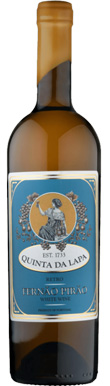
93
Fantastic expression of Fernão Pires, expressive and complex. Great winemaking on show, the three-day maceration adding beautiful texture, intensity and phenolic grip without loss of varietal character. Linden, chamomile and rosemary oil hover over fleshy white peach and Asian pear. Delicious saline lining.
2022
Quinta da Lapa
Cantina Orsogna, Spiritus Terrae, Terre di Chieti, Abruzzo, Italy, 2021
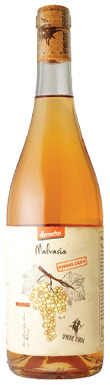

Vivid mid-orange wine with expressive notes of ripe peach, mango, rosewater and orange blossom. The palate is super-fresh and grapey with lots of orange blossom,...
2021
Cantina OrsognaTerre di Chieti

Parajes del Valle, Macabeo Maceración, Manchuela, Spain, 2023
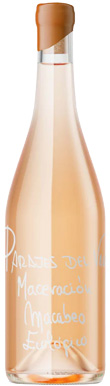
92
Clean, focused and altogether delicious, this is an approachable, well-crafted orange wine that might just convert some sceptics of the style. Candied orange zest, clementine, pink grapefruit and cantaloupe melon mingle on the palate, topped with a touch of basil and crushed mint. The subtle tannic grip has a waxy character that makes the fruit linger with a bitter, Campari-like edge. A great off-beat alternative pairing to festive cheese platters. Yum.
2023
Parajes del Valle
Crvik, Blasius, Dalmatia, Croatia, 2022
Wild yeast-fermented on skins for nine months in a large oak barrel, resulting in a beautifully drinkable orange wine. Enticing aromas of mock orange, nectarine...
2022
Crvik
Zephyr, Agent, Wairau Valley, Marlborough, New Zealand, 2022
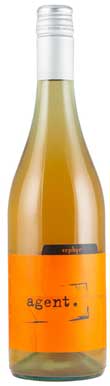
Picked in the Brawn and Kerseley vineyards in Dillons Point and the Alice Mills Vineyard in Rapaura, this blend of Sauvignon Blanc, Riesling and Pinot...
2022
ZephyrWairau Valley
Bodegas Bhilar, Phinca Hapa Blanco, Rioja, Northern Spain, Spain, 2020
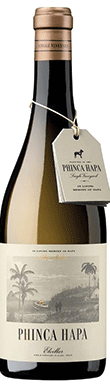
Strictly speaking a white wine, but as it spends two months on its lees it is listed here with the orange wines. This is an...
2020
Bodegas BhilarRioja
Bonny Doon, Le Cigare Orange, Central Coast, California, USA, 2024
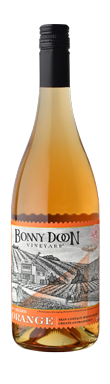
92
<p>Bonny Doon’s winemaker Randall Grahm has triumphed again here (the Bonny Doon red and white at Tesco are also great buys). This mélange of Grenaches Blanc and Noir, Pinot Gris, Orange Muscat and Chenin Blanc is orange wine lite – orange wine for the mainstream, but delicious. The grape varieties were picked and fermented separately and the juice given around 15 days skin contact before blending. Fairly pale in colour for an orange wine, it’s fruit forward with aromas and flavours of peach and apricot, exotic fruit like kumquats, orange peel and soft spice. There’s a hint of pleasant bitterness and a little of the tannic grip that makes orange wine such a good gastronomic wine. Try it with simply grilled lamb chops. Vegan.</p>
2024
Bonny DoonCentral Coast
Vagabond Urban Winery, Solena, Oxfordshire, England, United Kingdom
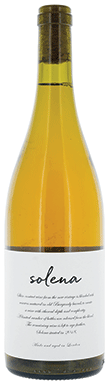
Heady, with lots of oak, burnt orange-/negroni-like flavours, grippy tannins, spicy. Expensive but proper orange wine, clean and characterful. Quite long, with a dusty finish.
Vagabond Urban WineryOxfordshire
Jean Becker, Naturellement Gewürztraminer, Alsace, France, 2022
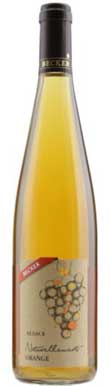
This engaging orange wine from historic Alsace producer Jean Becker is made by fermenting organic Gewürztraminer on its skins with wild yeast. Aromatic nose of...
2022
Jean Becker
Day Wines, Vin de Days l'Orange, Willamette Valley, Oregon, USA, 2023
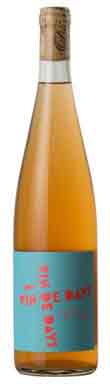
This kitchen sink aromatic white blend from the Willamette Valley has loads of fleshy tropical aromatics. Guava and passionfruit mingle with tingly notes of Belgian...
2023
Day WinesWillamette Valley
Denbies, Orange Solaris, Surrey, England, United Kingdom, 2022
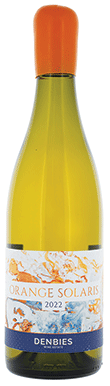
Soft, orange-fruited. Bitter phenolics add structure, Baked apple fruit, blossom notes. Chalky texture. A good example of English orange wine. Fresh, fruity and fairly long,...
2022
DenbiesSurrey
Marks & Spencer, Found Organic Verdil, Valencia, Spain, 2023
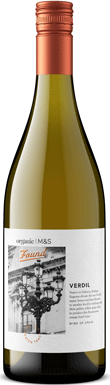
90
The Verdil grape is a new one for me and a welcome discovery. A golden-orange hue thanks to time left on skins and (subliminal or not) it has bright aromas of orange zest along with lemon balm and quince which continue on the textured palate through to a quenching sea-spray finish.
2023
Marks & Spencer
