Top Cava for Christmas: 12 to try
Spain's flagship sparkling wine delivers quality, character and value in equal measure. So if you're looking for Christmas bubbles here are some bottles to buy – at prices to suit every pocket.


There are plenty of sparkling choices if you’re selecting bubbles for the festive season. From Champagne, Crémant and Prosecco to English sparkling wines. But there’s only one type of fizz that combines signature Spanish style with quality and value.
Cava, Spain’s flagship sparkler, offers something for everyone. World-class gran reservas and vintage wines will please fine wine lovers. Meanwhile great-value non-vintage bottles are ideal for bargain-hunters. Many UK retailers offer great value own-label options too.
What’s more, with its own trio of grape varieties, Cava has a gastronomic character that makes it an ideal choice for Christmas meals. Serve it as an aperitif or pair it with a variety of dishes (see below).

How is Cava made?
For a sparkling wine to be classified as Cava it must be made using the traditional method (also known as méthode Champenoise). In this process the second fermentation happens in the bottle.
Cavas must also be made within specific areas approved for Cava DO (Denominación de Origen) production. Unlike other DOs, however, the defined area for Cava production is not contiguous. While most Cava is produced in Catalunya – with the village of Sant Sadurní d’Anoia as its epicentre – it can also be made in other Spanish provinces. These include Aragón, Euskadi, Extremadura, La Rioja, Navarra and València.
Rather than origin, what truly differentiates Cava from other Spanish sparkling wines is production method and regulations.
This scattered geography has caused intense debate within the Cava DO itself in the past. Some producers opposed a system that, in their opinion, should focus more on terroir. As a result some famous names, such as Raventós i Blanc, chose to leave the DO and lobby for region-specific classification. Similarly the Corpinnat group from Penedés is now making wines under a new quality label.
Others chose to push for change from inside the DO, which resulted in a new classification introduced in 2017: Cava de Paraje Calificado. Cava’s top classification, this is for single-vineyard Cava from an exceptional vineyard. To qualify, vines must be at least 10 years old, with lower yields. All wines must be brut, extra brut or brut nature, and bottle-aged on the lees for at least 36 months.
There is also a requirement for full traceability, which means all Cava de Paraje Calificado vineyards must be owned by the winery or contracted on a long-term basis. If all of these criteria are met, the Cava is tasted blind by a panel of independent wine judges and experts. Finally winemakers have to explain to the judging panel what makes their vineyard a unique terroir.

Which grapes are used to make Cava?
Another key part of Cava’s identity is grape varieties. Most renowned traditional-method production areas focus on the Champagne trio: Chardonnay, Pinot Noir and Meunier. However Cava has its own flagship varieties, which impart distinctive aromatic and textural characters.
While Chardonnay and Pinot Noir are also permitted in the Cava DO, the traditional and most commonly used varieties are:
- Macabeu (also called Macabeo or Viura) – Widely grown across Spain as well as in the French Roussillon. Although relatively neutral in flavour, it plays an important role in blends by adding body and texture.
- Xarel·lo – The grape largely responsible for the trademark herbal perfume of the best Cavas. In addition to lime blossom and hay-like aromas it adds acidity and earthiness to blends, therefore being essential to the age-worthiness of top quality Cavas.
- Parellada – Grown almost exclusively in Catalunya, Parellada contributes with fruit aromas, especially green apple and citrus notes. There are single-varietal examples of Cava that use just one of the above, but blends are by far the most common, making the most of the characters imparted by each variety.
For Cava rosado (rosé), Garnacha, Pinot Noir, Mataró (Mourvèdre) and the local Trepat are the most commonly used red grapes. They are often blended with at least one of the flagship whites.
Malvasía, known locally as Subirat Parent, is increasingly used to make Cava dulce (sweet) and semi-dulce (semi-sweet).
Is Cava good value for money?
It’s true that Cava delivers great value: you can pick up reliably good bottles for under £10. But it’s worth investing a bit more money to explore some of the higher quality Cavas. Reserva, gran reserva and Cava de Paraje Calificado (single-vineyard wines) are well worth seeking out.
The fact that Cava is often dismissed in favour of its traditional method sparkling counterparts, especially Champagne, means that great wines are unfairly overlooked. Wine lovers are missing an opportunity to discover a different, specific expression of fizz, produced by very talented winemakers. It’s worth exploring the top Cava producers. All of them make wines with outstanding ageability.
On the flip side, Cava has been somewhat immune to the branding and pricing games which have inflated prices elsewhere. Wine lovers can benefit from a great value-for-money option, across tiers, quality levels and price points. So if you’re looking for a great fizz for the festive season consider Cava; but look at the top, not the lower shelf!
What can you pair Cava with?
Because it’s generally quite dry, with most wines falling in the brut category, Cava is particularly versatile when it comes to food pairing.
It makes a wonderful festive aperitif, no doubt. But try it with a selection of canapés, buttered lobster or a chocolate-based dessert and you won’t be disappointed.
Extra-brut and brut styles of the traditional white blends go well with meat- and fish-based recipes. Rosados will pair better with dairy and/or rich sauces. They’re a good alternative if you are having a vegetarian or vegan Christmas banquet.
If your festive table features more exotic flavours, try pairing Cava semi-dulce with Asian-inspired dishes. It’s also a surprisingly good match for your Christmas cheese selection.
Whichever style you try, here are a few suggestions to get you started…
Top Cavas for Christmas
Recommendations by Decanter’s editorial team.
Wines ordered by score, in descending order.
Related articles
Juvé y Camps, Gran Juvé y Camps, Penedès, Spain, 2016
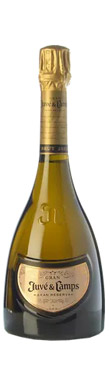

For years Juvé y Camps has been the leading innovator in the quest for top quality and identity in Cava. With this wine they show...
2016
Juvé y Camps

Vins El Cep, Claror, Paratge Qualificat Can Prats Brut Nature, Cava de Paraje, Penedès, Spain, 2015
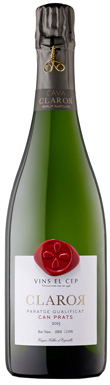
94
An old-vine blend of Xarel-lo, Macabeo and Parellada, aged for 84 months, this shows the rewards of age in its complexity. Aromas call to mind baked apple and cream, with roasted nuts, plus lifted green apple and herbal notes. The rich, expansive, toasty palate is layered with fresh grapefruit, lemon, salted almonds, ripe apricot and lemon tart; crisp, with a dry mineral, slightly saline finish. A Cava to savour, and one of only 10 Cavas awarded the prestigious Paratge classification (made with vines from a single exceptional plot), and the only one that's grown biodynamically.
2015
Vins El CepCava de Paraje
Pere Ventura, Vintage Brut, Penedès, Spain, 2015
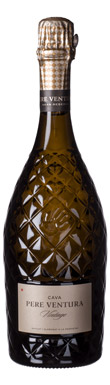
A blend of Xarel-lo and Chardonnay. Vibrant toasty aromas: ripe apple, pastries, preserved lemon. Brisk bubbles. Great intensity on the palate – evolved, complex, toasty,...
2015
Pere Ventura
Juvé y Camps, Reserva de la Familia Gran Reserva Brut Nature, Cava, Penedès, Spain
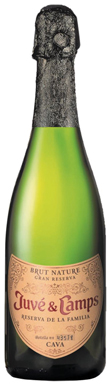
91
Xarel·lo, the king of Catalan white grapes, is the backbone of this consistently excellent non-vintage Cava at 55% of the blend, along with Macabeo (35%) and Parellada (10%). Long ageing (36 months) also plays its part in shaping a family-produced wine that is highly evocative of its place, with subtle garrigue and fennel notes among the yellow plum, apple, toast, lively mousse and fine acidity.
Juvé y CampsCava
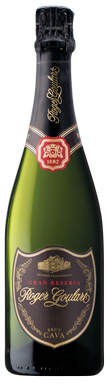
Roger Goulart, Gran Reserva Brut, Cava, Catalonia, Spain, 2017
91
This gran reserva, aged for 48 months, is a blend of the classic Cava grapes: Xarel-lo (60%), Macabeo and Parellada (20% each). Citrus, apple, white peach and yeasty bakery aromas. A rounded and deliciously creamy palate, with tiny, persistent bubbles and notes of ripe lemon, stone fruit, nuts, crème pâtissière and a hint of florality, plus super freshness on the finish. A lovely sparkler for any celebration. Rioja-based CVNE owns Roger Goulart, with its 20ha of vines in Alt Penedès.
2017
Roger GoulartCava
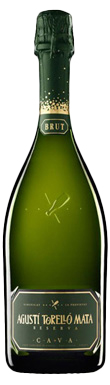
Augustí Torelló Mata, Brut Reserva, Cava, Penedès, Spain, 2019
90
This enjoyable and good value organic Cava is a blend of Macabeo, Parellada and Xarel·lo from vines aged 30-40 years. Subtle aromas of green apple, lemon and fresh pastries. Fine, persistent bubbles on the palate, which is layered with rounded citrus, ripe apple and herbal notes; the creamy lees texture is balanced by crisp acidity for a fresh, lingering finish.
2019
Augustí Torelló MataCava
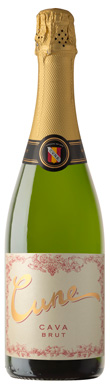
CVNE, Cune Cava Brut NV, Penedès, Spain
90
Established Rioja producer CVNE has spread its wings to Penedès, adding this well-made Cava to its Cune label. Crisp, light and elegant, with fresh citrus aromas. The palate is soft and creamy, with notes of green apple, fresh pear and some honeyed tones. Good persistence and lovely freshness, with a lemon sherbet finish.
CVNE
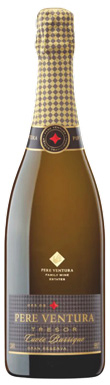
Pere Ventura, Tresor Cuvée Barrique, Gran Reserva Brut, Cava, Penedès, Spain, 2018
90
A good value blend of Xarel-lo and Chardonnay, with a percentage of the latter fermented and aged in used red wine barrels to add structure and complexity. Aged for 36 months, the nose shows rich honeyed and toffee notes, ripe apricot, warm croissant and lemon curd. The palate is very toasty and rounded, with nutty creaminess and biscuit notes balanced by crisp, lemony acidity for a fresh finish.
2018
Pere VenturaCava
Waitrose, No 1 Castillo Perelada Brut, Cava, Penedès, Spain, 2021
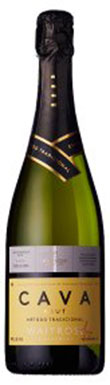
90
Soft and squishy stone fruit on the nose, with ripe pear, honey and jasmine. The palate has notes of pastry, lemon lart and curd, and a mouthfilling, tasty mousse which brings out a much more toasty character.
2021
WaitroseCava
Canals & Munné, Lola Rosé Brut, Penedès, Spain, 2019
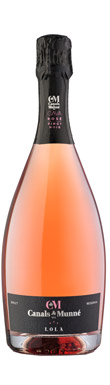
Appealing fruity nose, packed with ripe red berries, with hints of stone fruit and an underlying toastiness. Tart cherries and strawberries on the palate, fresh...
2019
Canals & Munné
Codorníu, Anna Brut NV, Cava, Penedès, Spain
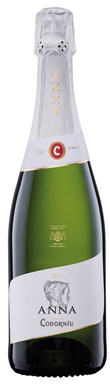
89
Mainly Chardonnay (70%) with traditional Cava grapes – Macabeo, Xarel.lo, Parellada – making up the rest of the blend. Toasty aromas, honeyed, nutty with fresh citrus and tropical touches. Rounded palate with preserved lemon citrus, candied peel, bready notes and salty-savoury hints – like salted butter on sourdough bread. A great value sparkler!
CodorníuCava
Morrisons, The Best Marques de los Rios Cava Brut, Penedès, Spain
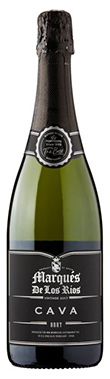
89
Made by Freixenet for Morrisons, the Brut Cava has a bready nose of citrus and fresh green apple, plus a hint of dust. Very foamy; 9 months of ageing on lees gave the wine a buttery mouthfeel of brioche, crisp lemon and green fruits. Moreish and food-friendly, providing great value.
Morrisons
