Sponsored
100 years of Rioja masterclass: DFWE New York 2025
With Rioja at its epicentre, Decanter's New York Fine Wine Encounter served as a celebration of the DOCa's landmark 100th anniversary. The masterclass hosted by Jonathan Eicholz MS and Ines Salpico, Decanter's Regional Editor for Spain, guided attendees on a journey through the region's history, evolution and exciting future.


Outside, the Manhattan skyline was etched vividly against a stormy sky. The vivid colours brought out by the dramatic rains that had fallen hours before, brought an electric energy to the room at Decanter’s Fine Wine Encounter as the 10 wines for our masterclass, celebrating the centenary of the DOCa, were poured by our team.
Vividness, energy and character would be recurring themes throughout 75 minutes of exploration and discovery, covering the complex and rich history of Spain’s oldest denomination of origin.
Scroll down for notes and scores for all Rioja masterclass wines
A personal journey
Jonathan Eicholz MS and I guided attendees through a tasting journey – packed with information but also a great deal of personal insight – across Rioja’s long history, patchwork of terroirs, evolving styles and exciting producers (old and new).
The masterclass was as much about Rioja’s last 100 years of history as the region’s exciting potential and future ahead, forged by an interesting, creative friction between tradition, innovation and historical reinterpretation.
It was impossible not to bring our excitement to the table: it started well before the event itself, when we were, in collaboration with DOCa Rioja, selecting the wines to be tasted at the masterclass.
The final (stellar) line up inevitably left out hundreds of other great examples – many of which could be tasted at the Fine Wine Encounter’s Rioja Bar and dedicated tasting area, with 10 producers in attendance.
But it came together as a coherent, particularly representative snapshot of the best Rioja has to offer and of the diverse facets of its regional identity.

Evolving canon
We started, prompted by the iconic Castillo de Ygay Gran Reserva Especial Blanco, with an overview of the origins of the DOCa.
It’s impossible to understand the latter without delving into the founding ethos of many of the wineries that ‘created’ classical Rioja, ultimately changing the course of Spanish wine as a whole.
Rioja’s ongoing impact on the country’s wine industry and culture is inextricably linked to how Rioja producers were able to hone their styles (individual and regional) while always allowing space for innovation and evolution.
It is these concepts that catalysed the transition from classical to modern to post-modern Rioja (and, I argued, the current transition to post-post-modern), with an interesting overlap of approaches and styles.
The pair formed by La Rioja Alta’s 904 and Remírez de Ganuza’s Reserva helped to understand the changes – in the vineyard and cellar – that supported these transitions, while also underscoring the role played by specific entrepreneurs and winemakers in Rioja’s trajectory and, at times tectonic, shifts.
Creative friction
The understanding of the different stylistic (some would say philosophical) chapters of DOCa Rioja’s history, dovetails with the analysis of the different interpretations of terroir and tradition that they represent.
In recent years, a renewed interest in varieties once frowned upon and in the granularity of Rioja’s complex geology and microclimates, fast-tracked both stylistic and legal changes. A new territorial-based classification – with Viñedo Singular (single vineyard) wines at the top, now sits alongside the longstanding ageing categories (Crianza, Reserva, Gran Reserva).
Two single-vineyard bottlings – Bodegas Ysios’ Finca el Nogal and Palacios Remondo’s Finca La Montesa – helped to contextualise this new framework.
They also triggered an interesting discussion on whether the concurrent classification systems work complementarily, or rather serve a way for producers to assert their specific stance on the direction DOCa Rioja should take (i.e. terroir- vs. style-led).

Beyond Tempranillo
The Garnacha-based La Montesa also cued another of Rioja’s hottest topics at the moment: varieties other than Tempranillo stepping into the spotlight.
Eicholz explained that the supremacy of Tempranillo is in fact a modern development in Rioja.
A renewed interest – by consumers and producers alike – in Mazuelo, Graciano and, foremost, Garnacha has happened in tandem with the rediscovery of old vineyards (many planted to intricate field blends) and the exploration of terroirs in higher-altitude, remote locations.
Meanwhile, this exploration has also added different layers to Rioja’s so-called white revolution, expanding its lexicon well beyond Viura – with Maturana Blanca delivering particularly exciting results.
Looking ahead
We closed the masterclass with an excited look at the future: Rioja’s output is, both Jonathan and I argued, one of the world’ most exciting at the moment, delivering equally interesting classics and genre-defying wines.
These navigate the overlap of tradition and modernity with creative, at times teasing, ease. Luis Cañas’ El Palacio (one of the stand-outs at our Rioja Report 2025) and Vinos en Voz Baja’s Nace La Sierra (a particularly apt bookend to Ygay’s white) served as the perfect example of this fertile interaction of past and future.
And the perfect coda to a session that left attendees wanting more and making a bee line to the Rioja Bar.

DOCa Rioja: Exploring 100 years of excellence
Related articles
Viñedos El Pacto, Jesús Acha, Senda de Haro Blanco, Rioja, Northern Spain, Spain, 2018
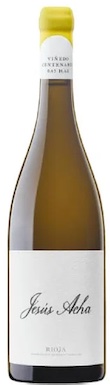
97
Subtle reduction, with struck-match aromas, add complexity to the wine. While it's reminiscent of top Burgundy, I'm hesitant to make that comparison because this is stunning in its own right. The palate is saline with fabulous texture. Mouthfilling, but supported by impressive acidity. This is a fantastic Viura (blended with small amounts of Malvasía, Garnacha Blanca, Jaina and others), reinterpreted for modern times. Senda de Haro is in Cárdenas, Rioja Alta, and is a 0.47ha plot, planted in 1912 on ferrous clay, that was a favourite of local grower Jésus Acha. A six-hour skin maceration precedes spontaneous fermentation then ageing for 18 months in second-use barrels from France and eastern Europe.
2018
Viñedos El PactoRioja
Marques de Murrieta, Castillo de Ygay Gran Reserva Especial Blanco, Rioja, Alta, Northern Spain, Spain, 1986
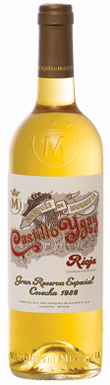
99
A complex, nuanced and sinuous journey through the palate, expertly balancing nutty depth, floral allure and zesty freshness. Intense, well-defined flavours of pickled walnut, linden, wet hay, camomile, preserved lemon, red apple peel, quince and nectarine fill the mouth without ever becoming weighty. Incredible structure – outlined by intense spiciness – and depth. Finishes with luscious honey, pain aux raisins and toasted brioche. 97% Viura and 3% Malvasía, aged for 21 years in 225-litre American oak barrels, then a further 67 months settling in concrete tanks.
1986
Marques de MurrietaRioja
Luis Cañas, El Palacio, Rioja, Alavesa, Northern Spain, Spain, 2020
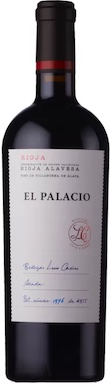
97
This is a lot, but everything is in the right place! 75% Tempranillo, 20% Graciano, 5% Viura, fermented together in a French oak vat, with malolactic fermentation in second-use 500L barrrels and 15 months' ageing also in 500L barrels. Intense red berry and blueberry fruit combine with spicy black pepper to create a layered and complex wine. It speaks to the zone; it is a wine very much from Alavesa (Villabuena de Alava, at about 500m) with direct acidity and impressive spice. Tannins are well managed even if quite grippy now but the wine has lots of life ahead. The oak is high quality and, again, quite obvious but provides all the framing that a wine of this substance requires.
2020
Luis CañasRioja
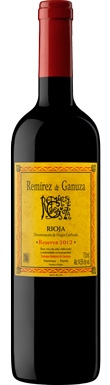
Remírez de Ganuza, Reserva, Rioja, Northern Spain, Spain, 2012
95
Remírez de Ganuza's addition of a pied de cuve of white grapes to its Reserva gives it the lift and juicy florality, underpinning the muscular core of black and blue fruit that have made it its trademark. This 2012 is drinking beautifully now, with a vivid palate, soft yet pulling tannins and a great balance to the fruit, luscious but already showing broody dryness. Lovely on the mid palate, with succulence offset by great acid drive.
2012
Remírez de GanuzaRioja
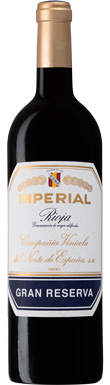
CVNE, Imperial Gran Reserva, Rioja, Northern Spain, Spain, 2009
94
Definition, tension and poise define the 2009 vintage of Imperial tasted 16 years after harvest. The tannins retained a finely-etched liveliness, with a refreshing acid backbone carrying the wine with ease as the tertiary elements begin to gain protagonism. Inviting, and stimulating, tension between elegance and muscle; crunchy fruit and creeping savouriness; briny depth and fragrant nuances.
2009
CVNERioja
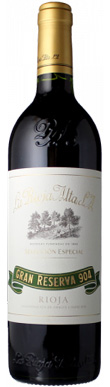
La Rioja Alta, Gran Reserva 904, Rioja, Alta, Northern Spain, Spain, 2015
94
Truly succulent and structured, this has an expressive nose of camphor, vanilla, rose petals and tobacco leaves. These hover over a thick bed of meaty plum, fig and black olive. Cedar, buttered toast and Christmas cake play in the background. Fine and vivid acidity sustains freshness throughout. Lovely spicy layer of cinnamon, nutmeg and white pepper. will benefit from a few more years in bottle to hone its structure and tannins.
2015
La Rioja AltaRioja
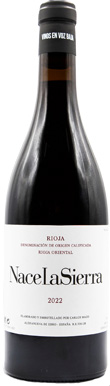
Vinos en Voz Baja, Nace La Sierra, Rioja, Oriental, Northern Spain, Spain, 2023
94
Delightfully crunchy and lively, with a herbal edge lining the red and blue fruit. Wet soil and graphite underpins the palate adding earthy freshness to the zesty pull of pomegranate and blood orange. The tannins are lined with an electric veil of wet stone, cherry leaf and blood orange. Glides through the palate with mouthwatering ease and lingers with a vibrant tail of powdery liquorice and orange zest.
2023
Vinos en Voz BajaRioja
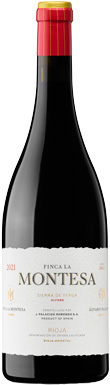
Bodegas Palacios Remondo, Finca La Montesa, Rioja, Oriental, Northern Spain, Spain, 2021
93
Another accomplished vintage of La Montesa with its trademark laidback elegance and inviting zestiness. A rim of bergamot and blood orange zest outlines the mulberry, cherry and blackcurrant fruit, with beautiful floral nuances (violets and dried roses) in the background. Great definition to the tannic framework, with spicy vibrancy. Lively finish, with a tail of cedar, tangerine and pomegranate juice.
2021
Bodegas Palacios RemondoRioja
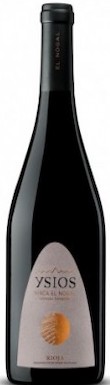
Bodegas Ysios, Finca El Nogal, Rioja, Viñedo Singular, Northern Spain, Spain, 2020
93
Detailed, fragrant nose of sweet ripe cherry, cherry leaf and Parma violets. The tannins have a refreshing mineral grip, with hints of graphite on the edges. Beautiful layers of nutmeg, cardamom, mocha, milk chocolate and red cherry on the palate. The long finish is supported by the elegant, vivid tannic framework.
2020
Bodegas YsiosRioja

-
 Azienda Agricola Cortese: Championing sustainability in the heart of Sicily
Sponsored Content Meet the winemakers using ancient techniques and sustainable practices to create fresh, modern interpretations of Sicilian varieties
-
 Monemvasia Winery – Tsimbidi: bringing an ancient wine into the modern age
Sponsored Content George and Elli Tsimbidi’s winery not only revived one of history's most famous wines but is now breathing fresh life into other native Greek varieties.


-
 We recommend the best of South Africa's red blends
Strength in union...
-
 Riesling wine quiz: Test your knowledge
Can you get a perfect score?...
-
 The nomads: Winemakers who wander
Footloose and fancy-free...
-
 Wines without pedigree: From outsiders to Spanish icons of the future
Conjured and moderated by Fernando Mora MW, the session stood out within Barcelona Wine Week’s programme focused on legacy and lineage. A session to discuss (and taste) the role of mavericks in Spain’s wine renaissance.
-
 It's a rock thing: Meeting Georges Truc, the Rhône’s wine geologist
The soil maestro of the Rhône...
-
 Our expert's surprising revelations after tasting Domaine de la Romanée-Conti's 'exuberant' 2023 vintage
Not just a fruity face...
-
 Yamanashi: Six star wines to try
Wines from the foot of Mt Fuji...
-
 Bo Barrett: The man at Chateau Montelena
The man, the myth, the legend...