
A guide to non-vintage Champagne
A singular house style has always been the calling card of Champagne producers’ non-vintage bottlings, but now it is ‘multi-vintage’ blends and their changing character in successive years that’s beginning to take centre-stage.


Next to Champagne’s rare treasures, the humble term non-vintage doesn’t exactly stir the passions. Defining something by what isn’t there seems a strange approach. Even the French term ‘brut sans année’ (literally, ‘brut without vintage’) sounds a little apologetic. But these are wines that are worth talking about.
Changes are afoot in the region, and it’s time to re-examine Champagne’s entry level. Non-vintage is the bread and butter of Champagne, accounting for some four-fifths of all Champagne sold, according to the most recent figures from the region’s governing body. The term refers to Champagnes made by blending wines from a base year – the most recent harvest – with reserve wines held back from previous years. The wine must spend a minimum 15 months in bottle for the second fermentation and ageing on lees, in contrast to three years for vintage wines.
Scroll down to see notes and scores for 15 non-vintage Champagnes
Consistently inconsistent
The long-held line about non-vintage wines is that this blending process renders them consistent, year after year. In André Simon’s The History of Champagne (1962), the celebrated late author writes: ‘The non-vintage cuvées… are, and are always meant to be, as much as possible the same in type and style, whereas the vintage cuvées of the same firms vary from vintage to vintage.’ Champagne, though, has changed.
‘The idea of non-vintage is consistency in taste,’ explains Jean-Baptiste Lécaillon, cellar master at Louis Roederer, adding that non-vintage was made to ‘correct poor years’ in an era when Champagne frequently struggled to ripen its grapes. ‘I think it’s a mistake… this is making Coca-Cola,’ he says.

Coca-Cola always tastes the same. The problem, though, is that non-vintage Champagne doesn’t; how could it, when climate change has brought even more unpredictability to the region’s wines? Faced with the extreme rain of 2021, when at Bérêche et Fils it was reported ‘June had only eight days of dry weather’, followed by 2022’s prolonged and troubling drought, how could those base vintages be remotely consistent? ‘Non-vintage is the most difficult wine to make,’ confirms Ruinart winemaker Louise Bryden. ‘Every vintage is so different right now that we have to adapt our vinifications every year; it’s the trickiest part of our job.’
One solution is to make more information available to inquisitive drinkers by allowing them to track which base year their non-vintage is coming from. ‘We want to talk with more transparency, so in the last five years we have had a very complete back label and a QR code that lists harvest base, reserve wines, disgorgement – lots of information,’ explains Lanson cellar master Hervé Dantan.
Champagnes Philipponnat and Charles Heidsieck also print their base vintages on the back label (although, slightly confusingly, Charles Heidsieck states ‘Laid in Chalk Cellars’ – always the year after the harvest base), whereas the practice has almost become standard for small, quality-conscious producers.
For some, though, this is not enough. Louis Roederer, and now Lanson, are going a stage further and giving each year’s blend its own unique number on the front label, for all to see. This, then, is the sign of a new mindset in the region: multi-vintage, or MV.
‘Vintage is a positive word,’ says Lécaillon. ‘I use the power of the vintage to make a multi-vintage that has something extra, adding complexity, adding age, generosity, precision.’ It’s not just a rebrand, though; giving each blend its own identity is a liberation from the constraints of non-vintage. ‘I no longer have an obligation to reach the same taste every year. I can take the best of every year,’ he adds. No more worrying, then, that the hot, dry 2022 base won’t taste like the tricky, tense 2021. Instead, an opportunity to celebrate the difference.

At Lanson, Dantan is keen to point out that the Black Label cuvée’s metamorphosis into Le Black Création series – a subtle rebranding that was officially announced with relatively little fanfare this summer – won’t see a dramatic change in the wines themselves: ‘It is a slight evolution, but the style will be the same.’
For Roederer, though, the change from the old Brut Premier to the new Collection series has meant a complete rebuild from the bottom up. Where to start? With the reserves…
Reserve wines
Crucial to all great non- and multi-vintage Champagnes are the reserve wines – these are added to the base vintage at a rate normally between 20% and 50%. Some Champagne houses choose to keep all their reserve wines separated by variety and vintage; some are all in oak, some even aged in magnum format (as at Bollinger). Depth and complexity can be added by using older reserve wines, such as the 40% of up to 20-year-old reserve wine found in Charles Heidsieck’s Brut Réserve, whereas more youthful or smaller additions, such as in Ayala’s Brut Majeur, will emphasise freshness.
Increasingly common in Champagne is the ‘réserve perpétuelle’ – a way of storing reserve wines, sometimes mistakenly referred to as a solera [the multi-layered barrel-ageing system used in Sherry production], whereby each year a single tank has wines from the new harvest added to it, and then wines drawn from it for addition into the blends. The end result is a reserve tank that, as it ages, contains diminishing amounts of every single harvest since the system began: a treasure trove of complexity. For Lécaillon, it is this – rather than the base year – that is the foundation of the Collection series.

Rodolphe Péters, winemaker at Champagne Pierre Péters in Le Mesnil-sur-Oger, highlights one of Champagne’s most distinctive perpetual reserves, which makes up to a remarkable 50% of the entry-level Cuvée de Réserve Blanc de Blancs. ‘Chardonnay from the Côte des Blancs is not a crowd-pleasing wine when it’s young,’ Péters says. ‘I like to keep the crispness, the freshness, the purity, but 50% reserve wine helps to smooth it out, to create a creamy base with a good texture.’
Spotlight on terroir
What about smaller and independent producers without such a library of reserve wines? How do they create a great non-vintage? The emerging estate Pertois-Lebrun in Cramant tells a familiar story: ‘At the beginning we didn’t have many reserve wines – only 25hl,’ explains Antoine Bouret, who manages the estate with his brother Clément. The cellar is small, tucked into what appears to be a medium-sized residential property in the village – no space for rows of reserve tanks, then. Once again a perpetual reserve offers maximum complexity with minimum footprint. ‘We purchased three oak foudres, and now they contain our perpetual reserve, started in 2013,’ says Bouret. Each new non-vintage bottling promises more and more complexity as the reserve grows in age.
In general, with smaller producers looking to showcase specific villages and vineyards, perhaps it makes sense that reserve wines play more of a back-up role than they do for the larger houses. It’s logical, then, that the smaller the footprint of a producer, the more its non-vintage wines are going to vary year on year; depending on your outlook, either a disadvantage, or part of the fun of discovering small Champagne producers.

It’s not only small producers making non-vintage Champagnes from individual terroirs, though; increasingly the Champagne houses are tuning their skills to make super-NVs – wines that focus on particularly interesting terroirs, single grape varieties or styles. Emilien Boutillat, cellar master of Piper-Heidsieck, is debuting the house’s Essentiel Blanc de Noirs in autumn 2023, made from a creative, and at times unusual, selection of Pinot Noir and Meunier vineyards that focus on ‘vibrancy of fruit’, says Boutillat, and it will, naturally, be backed up by a perpetual reserve system. Essentiel Blanc de Noirs will be one of the first regular non-vintage blanc de noirs among the well-known houses, which typically opt only for all-Chardonnay blanc de blancs: ‘It’s still niche, still connoisseur – but I really believe that it can grow,’ he says.
Insider tips
Even with the basic non-vintage wines, one way to boost quality is to trade up to magnums. Not only do the wines age ‘more gracefully’ pre-release, according to Palmer & Co’s François Demouy at the launch in June of its Grands Terroirs 2015 vintage in magnum, but producers tend to age the same wines for longer in magnum than in standard bottle. Charles Heidsieck Brut Réserve is currently released as a 2018 base in 75cl, whereas the current magnum release is still 2016.
The world of non-vintage reaches its most weird and wonderful point, though, with those that are actually covert vintage wines. Sometimes this isn’t really an upgrade, for example with small or young producers bottling entry-level wines made without reserves.
Other times – as noted by Essi Avellan in her book Champagne (AvelVino Media, 2017) – it is. At Palmer & Co in Reims, the current non-vintage blanc de blancs in magnum is, in fact, a single-vintage wine of considerable repute (it won World Champion Classic Blanc de Blancs at the Champagne & Sparkling Wine World Championships in 2022), made entirely from the 2013 vintage, as I learned during a tasting with the producers. A far cry from entry level, and it’s something of a ‘formerly well-kept secret’.

Things get a little more surprising when larger formats actually contain a different wine from that offered in 75cl. During my recent visit, when asked about the formidable quality of his entry-level blanc de blancs grand cru in magnum, a twinkle appeared in the eye of Rodolphe Péters. ‘These are actually vintage – from the cuvée l’Esprit,’ he conceded. Magnums of what appear to be entry-level Cuvée de Réserve Blanc de Blancs actually contain the (much more expensive) vintage wine. Palmer & Co offers the same supersize bonus from jeroboam upwards; an insider’s treat for the intrepid Champagne fan with more than a handful of glasses to fill.
Getting the most from Champagne’s entry-level offerings can involve a little sleuthing. It can also mean accepting that, in the search to refine grape sourcing, increase ageing and build complexity, the good wines have crept upwards in price. Many still think of Champagne territory starting at around £20 a bottle. The truth, unfortunately, is that what £20 will get you in today’s Champagne will be little more than a jumble of cheaply assembled parts and dosage.
The wines presented below, though, come from producers whose wines are anything but a compromise. Wines that celebrate what is there – and not what isn’t.
New approach: Hewson’s characterful 15 non-vintage Champagnes to know
All wines recommended are non-vintage or ‘multi-vintage’ blends
Related articles
- English blanc de blancs: experts’ choice
- Champagne styles explained
- Best Champagne houses to visit and how to contact them
Louis Roederer, Collection 244 Brut, Champagne, France
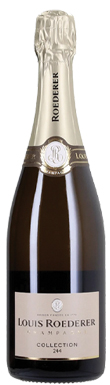

The powerful, ripe side of 2019 is on shown here, with white peach and mandarin flavours held in place by the toasty, savoury citrus oil...
Louis Roederer

Marc Hébrart, Mes Favorites Vieilles Vignes Premier Cru Brut, Champagne, France
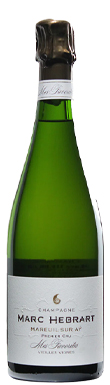
Old vines and low yields seem to give an impression of age and depth in this wine, even if there are no old reserves and...
Marc Hébrart
Philipponnat, Royale Réserve Brut, Champagne, France
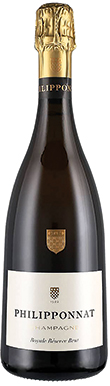
Few producers do Pinot Noir-dominated NV as well as Philipponnat, the latest edition showcasing ripe apricot, orange citrus and pale raspberry fruit backed by precise...
Philipponnat
Veuve Clicquot, Extra Brut Extra Old 3, Champagne, France
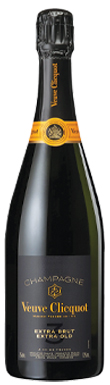
The next step up from Yellow Label, this cuvée is a blend of exclusively reserve wines, from the 1990, 1998, 1999, 2008, 2009, 2012, 2013...
Veuve Clicquot
Billecart-Salmon, Brut Réserve, Champagne, France
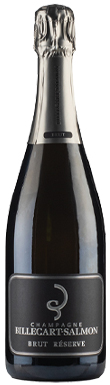
Billecart-Salmon's 2019-based Brut Réserve continues the impressive rebirth of this cuvée, showing more focus, length and sapidity than previous versions. The dosage has dropped to...
Billecart-Salmon
Charles Heidsieck, Brut Reserve, Champagne, France
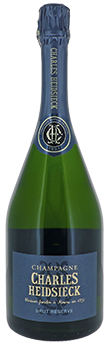
Even in the tricky 2017 vintage, Charles Heidsieck turns out an impeccable NV. The reserves form a serious, appetising core of dried apricot and sourdough...
Charles Heidsieck
Delamotte, Blanc De Blancs Brut, Champagne, France
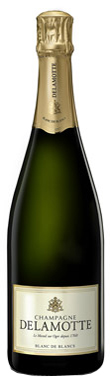
A benchmark entry-level non-vintage blanc de blancs in an effortlessly crisp, refined frame. Beautifully charred citrus, gunflint and sourdough aromas frame a gently persistent palate...
Delamotte
Pierre Péters, Cuvée de Réserve Blanc de Blancs Grand Cru Brut, Champagne, France
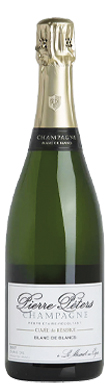
The reserve wines bring a delicious, savoury sense of sourdough richness to fresh clementine, lemon and pale stone fruit, the tension of classic chalky villages...
Pierre Péters
Piper-Heidsieck, Essentiel Blanc de Noirs Extra Brut, Champagne, France
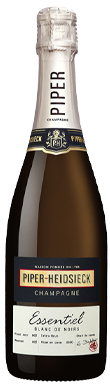
Candied lemon zest aromas, mature golden apples. Slightly smoky with toasted bread, nuts and fragrant berries. Well balanced, leesy and savoury with good acidity, freshness...
Piper-Heidsieck
Taittinger, Prélude Grands Crus Brut, Champagne, France
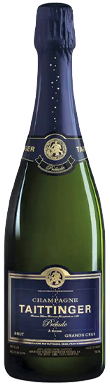
Vintage quality, with five years of ageing on lees. Clean and impeccably-shaped, the latest release of Prélude combines intense lemon oil and fleshy peach Chardonnay...
Taittinger
Drappier, Brut Nature, Champagne, France
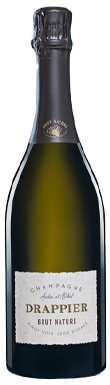
Pouring a pinkish hue, Drappier's Brut Nature is huge fun, saturated with dark cherries, russet apple and dried strawberry fruit, plump and juicy but invigorating...
Drappier
Hugues Godmé, Grands Jardins Blanc de Noirs Brut Nature, Champagne, France
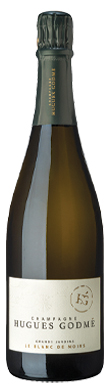
Embodying the focus of the northern Montagne de Reims even in super-ripe 2019, Grands Jardins works in just enough forest floor and dried apple savouriness...
Hugues Godmé
Palmer & Co, Brut Réserve, Champagne, France
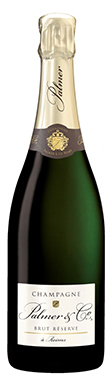
Palmer was one of the few houses who prevailed with its NV based on the tricky 2017 vintage. The house's style of crisp, taut northern...
Palmer & Co
Ayala, Brut Majeur, Champagne, France
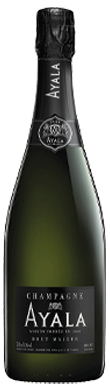
Ayala's recent moves to increase the Chardonnay content and freshness of its entry-level cuvée have worked a treat: it's now a very solid buy. Sunny...
Ayala
Brice, Blanc de Noirs Extra Brut, Champagne, France
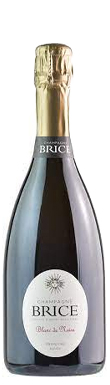
Winemaker Christophe Constant has put together an intriguing blanc de noirs, mixing bright cherry, mint and bay leaf with a subtle creaminess and food-friendly grip....
Brice
