
Gérard Bertrand’s Aigle Royal Chardonnay is one to watch
Drawn from the most prized vines at Gérard Bertrand's Domaine de l’Aigle in Limoux near the Pyrenees, this is a fine white wine with great potential, writes Elizabeth Gabay MW, who recently tasted several vintages.


The wine region of Limoux is best known for its eponymous sparkling wine, either Blanquette de Limoux or Crémant de Limoux, made with Mauzac, Chenin Blanc, Chardonnay and some Pinot Noir, with its first sparkling wine probably produced in 1531, by the monks at the abbey in Saint-Hilaire.
Scroll down to see scores and tasting notes for a seven-wine vertical of Aigle Royal Chardonnay
Located west of the Roussillon, on the eastern end of the mountainous Pyrenees, the climate here is dominated by strong winds; the cool dry Cers wind blowing from the Atlantic and the warm, humid Marin wind from the Mediterranean.
Depending on the location, the influence is more Mediterranean or Atlantic. The vineyards lie at higher altitudes on a mix of clay, sandstone and limestone soils. This terroir combination results in a particularly cool, moist climate coupled with ample sunshine on south-facing slopes.
Domaine de l’Aigle is one of eleven biodynamic estates owned by the Languedoc winemaker and négociant Gérard Bertrand.
Aigle had already developed a reputation under its previous owner, Jean-Louis Denois, when, in the 1990s, he decided to only grow Pinot Noir and Chardonnay.
The quality of these varieties in Limoux was causing considerable interest, with several Burgundian producers beginning to invest in vineyards. Denois sold Domaine de l’Aigle to the Burgundian negociant house Antonin Rodet in 2000.
An investment of five million Francs (€762,195) in the estate and a complete redesign of the cellar followed. The Chardonnays produced were rich buttery Burgundian-style wines.
Although Bertrand was not looking for an estate in Limoux when he heard, in 2006, that Domaine de l’Aigle was for sale, he was nevertheless curious. He fell in love with the beautiful, peaceful estate and its potential for fine wine, and purchased the domaine in 2007.

The 60ha estate (148 acres), as its name (‘of the eagle’) suggests, is the highest of the area at 300m to 500m above sea level.
It sits above the village of Roquetaillade, with steep, south-facing slopes. The highest parcel of vines, known for producing the best Pinot Noir and Chardonnay, is called Aigle Royal.
During this tasting, Bertrand explained that he had needed four to five years to understand the terroir after buying the estate.
As well as the cooling Atlantic influence, the soils here have amongst the highest clay levels of all of Bertrand’s estates, which gives freshness and balance and good water regulation throughout the year.
This coolness gave Bertrand the idea to experiment with some cooler climate varieties such as Syrah, Riesling and Gewurztraminer. The first two were not impressive but Gewürztraminer did better, and has even made it to bottle.
Today, Gewürztraminer makes up 5% of the planted vineyard, alongside Pinot Noir (59%) and Chardonnay (36%).
As he learnt more about the vineyard, Bertrand said his biggest surprise was understanding how the Chardonnay fruit matured, managing both great aromatics and at the same time maintaining high acidity.

To increase the ripe aromatics, the vines are trained using the espalier system to guarantee maximum sun exposure. High density planting is maintained for low yields to give concentrated fruit.
Manual harvesting followed by delicate pneumatic pressing is practised for the freshest juice, which is then cooled and settled before fermentation with indigenous yeast.
Since 2019, all of the Chardonnay grapes have been refrigerated and whole-bunch-pressed the next day for maximum fruit expression. The wine finishes fermentation in 225-litre French oak barrels and a percentage undergoes malolactic fermentation depending on the year.
After fermentation, the wine settles on the lees with regular battonage for seven to eight months until the spring equinox.
With Bertrand’s experience of working with biodynamic viticulture, it was interesting to hear how he has learnt to vary the techniques in his different estates.
Aigle became fully biodynamic in 2012. Bertrand explained that biodynamic viticulture starts to lower pH, creating more acid soils after four to five years.
Treatment specific to Aigle was largely due to the cooler Atlantic influence. He discovered he needed more applications of Horn silica and that the vines responded better to a different array of herbal treatments compared to his other estates. This awareness of the surrounding vegetation has also influenced choices. With more deciduous trees present, Bertrand has chosen to use more oak-bark infusions sprayed on the vines which helps the grapes reach the best phenolic maturity.
Bertrand works differently with each vintage, an essential quality of working with a premium wine. The wines are harvested according to the vintage – for example, picking took place later in the cooler 2014 and earlier in the very hot 2017 season.
Retaining freshness and acidity is vital, with the percentage of malolactic fermentation depending on the year.
The wines show increasing complexity and structure with each vintage from the 2017 vintage onwards; maybe a result of the biodynamic viticulture?
Bertrand has no plans for dramatic changes. However, the team’s work on adapting to each vintage, maximising the varietal character with the balance of fruit, structure and acidity, and on ageing potential, all point to a seriously fine wine with great potential.
See scores and tasting notes for a seven-wine vertical of Aigle Royal Chardonnay
Related content
Gérard Bertrand: Behind the Languedoc labels plus 10 wines tastedMas de Daumas Gassac: producer profileDomaine de Baronarques: inside the Rothschild’s Languedoc estateDomaine Gayda: Behind the labels plus 10 wines tasted
Gérard Bertrand, Aigle Royal Chardonnay, Limoux, Languedoc-Roussillon, France, 2020
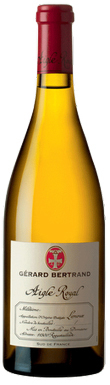

Restrained herbal aromas. On the palate the herbal notes develop a more floral prettiness backed by vibrant white gooseberry acidity - long direct shaped acidity...
2020
Gérard BertrandLimoux

Gérard Bertrand, Aigle Royal Chardonnay, Limoux, Languedoc-Roussillon, France, 2019
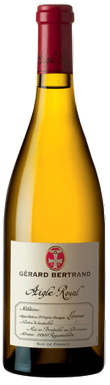
Perfumed slightly floral aromas. On the palate the wine is a fine combination of crisp lemon fruit, white and yellow peach, hints of quince, fresh...
2019
Gérard BertrandLimoux
Gérard Bertrand, Aigle Royal Chardonnay, Limoux, Languedoc-Roussillon, France, 2018
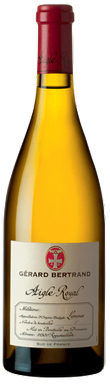
Slightly smokey aromas - oak more evidently toasty, dominating the fruit and giving a slightly tight tannic structure. On the palate there is sweet vanilla,...
2018
Gérard BertrandLimoux
Gérard Bertrand, Aigle Royal Chardonnay, Limoux, Languedoc-Roussillon, France, 2017
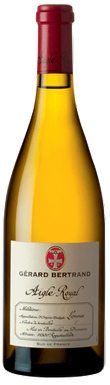
Hot dry vintage, so anticipating a full-bodied weight. Mocha coffee and toasty oak aromas with hints of minty freshness. On the palate there are tight...
2017
Gérard BertrandLimoux
Gérard Bertrand, Aigle Royal Chardonnay, Limoux, Languedoc-Roussillon, France, 2014
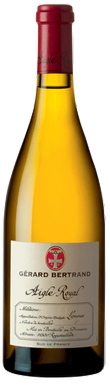
A cooler year. Golden colour suggesting some age and this comes through on the nose with mature butter and butterscotch aromas with hints of quince...
2014
Gérard BertrandLimoux
Gérard Bertrand, Aigle Royal Chardonnay, Limoux, Languedoc-Roussillon, France, 2011
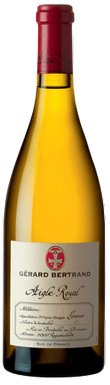
Discrete aromas with hints of herby menthol. On the palate there is a creamy, soft, buttery opulence almost with the classic Chardonnay 'sweet corn' character,...
2011
Gérard BertrandLimoux
Gérard Bertrand, Aigle Royal Chardonnay, Limoux, Languedoc-Roussillon, France, 2010
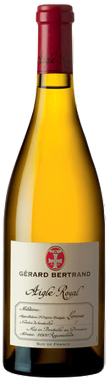
Discrete aromas with hints of herby menthol. On the palate there is a creamy, soft, buttery opulence almost with the classic Chardonnay 'sweet corn' character,...
2010
Gérard BertrandLimoux
