
Anson: Taking advantage of Bordeaux’s ‘off vintages’
Don't dismiss the lighter-framed styles of Bordeaux's so-called 'off vintages', says Jane Anson, who talks about how to approach less powerful years and highlights wines from 1999, 2001 and 2007 that are drinking well today.


Spare a thought for Bordeaux winemakers in the 1880s. Records from local brokers describe the wines as follows;
- 1880 – ‘mediocre quality,’
- 1881 – ‘solid but lacking in charm, ‘
- 1882 – ‘light but elegant’
- 1883 – ‘average yield, light wines’
- 1884 – ‘average quality’
- 1885 – ‘left a mouldy taste in the mouth’
- 1886 – ‘mildew compromised the taste’
Brutal tasting notes, until there was finally a breakthrough in 1887 with the arrival of the copper-based Bordeaux Mixture to treat mildew. That year’s crop was considered ‘clean and healthy, low yield but better quality’.
Underrated Bordeaux: Scroll down for Jane Anson’s tasting notes on ‘off vintages’ to seek out
Even in the 1970s, almost a full century later, those same broker records are pretty dire, with only 1970 and 1978 getting universal acclaim.
Write-ups on the other years included ‘hard to reach full ripeness’ (1972) and ‘hard and unyielding, with little to improve upon ageing’ (1977).
The reason for this is quite clear. Until extremely recently, Bordeaux wine was pretty much entirely at the vagaries of annual weather conditions, with very few vineyard or cellar treatments to intervene when things went wrong.
They were still bringing ice in to cool down the fermentation tanks in 1982, with temperature control only really in place across the entire region by the 1990s.
Today’s winemakers have far more options in their arsenal, and when putting that together with a climate that has (to date) benefitted from a run of generally warmer vintages, you can see why people question whether there is such a thing as an ‘off vintage’ today.
My answer to that would be that there are still, unquestionably, vintages in Bordeaux that are more structured, concentrated and frankly more delicious than others. They are the ones that you absolutely don’t want to miss if you have the time and money to spare.
But we don’t always have a spare 10 or 20 years to cellar every bottle before drinking, and we definitely don’t always have access to a full array of perfectly mature 1980s First Growths lying around our houses.
This is when it pays to know how to get the best out of an ‘off vintage’. Or rather, how to get the best out of a vintage that is lighter-framed, less powerful, and therefore ready to drink sooner.
How to do it
The key is careful climate watching, set against a little knowledge of the more permanent temperature variations of Bordeaux. There are certain things that hold true no matter the individual vintage conditions.
The warmest parts of Bordeaux, for example, lie along the Garonne, Dordogne and the Gironde Estuary, in St-Emilion, Pomerol, Côtes de Bourg, Cadillac Côtes de Bordeaux, Sauternes, Graves, Pessac-Léognan, Margaux, St-Julien, Pauillac and St-Estèphe.
The coolest parts are along the northern and western edges of the Médoc, towards the Landes forest in Listrac and Moulis and western Graves, and over to the far easterly reaches of Blaye, St-Foy, Entre-Deux-Mers and the Libournais.
Factor in differences in topography, with daily temperatures that vary by 1.5°C between different parts of the region, and the same grape variety on the same soil type can reach full ripeness up to four weeks apart depending on the area.
Understanding this can help narrow down the places to look to in specific vintage conditions. To illustrate this more clearly, I have picked three ‘off’ vintages’ as examples, all with different issues.
Bordeaux 1999 vintage
The issue: Warm summer, rainy harvest.
Things started off well in 1999, with a promising early season. Even with a cool July, the warm weather that arrived in August and lasted through to (just about) mid-September might have been enough to carry the day.
But rain was persistent throughout the rest of harvest, and hailstorms added extra issues in St-Emilion, savaging certain vineyards.
Favoured: The warm soils of Pomerol, where the Merlot could be picked ripe before the rain arrived, and a few gravelly soils of the Médoc, with their good drainage and which also escaped hail damage.
Wines to Try:
Château Beychevelle 1999
Vieux Château Certan 1999
Bordeaux 2001 vintage
The Issue: Rainy July, with harvest dry and sunny but cool.
From the start, it was never going to be as sexy as 2000. It lacked those magic ‘00s’, and yet 2001 has turned into the ultimate insider’s vintage, proof that some great years can slip through the net of initial assessments.
After a rainy start to growing season, both May and June had half their usual rainfall and flowering in the vineyards was rapid and even. A rainy July followed, but good weather returned for August and September (including harvest). Temperatures were a full degree cooler than average, however, and this caused many people to underestimate wines that were a little austere in their early days.
Favoured: There is a lot to enjoy from across Bordeaux in this vintage. There were higher acidity levels than in 2000, but wines are fresh, elegant and balanced.
Wines to Try:
Angélus 2001
Palmer 2001
Bordeaux 2007 vintage
The Issue: Rainy summer, sunny and extended harvest
April was unusually hot; it was the warmest month of the growing season until September, but a rainy late May and June meant irregular fruit set. A cold, wet summer then saw obituaries written for the vintage even before a single grape had been harvested.
However, many estates were saved by a warm and sunny extended harvest right through September and October. Although the wines lack the density of the best years, they are deliciously supple and balanced at 13 years old.
Favoured: Left Bank
Wines to Try:
Léoville Barton 2007
Mouton Rothschild 2007
Wines to try: Jane Anson’s tasting notes and scores
You may also like
Anson: How to blind taste Bordeaux winesAnson: Bordeaux 2020 harvest – An insider guideA ‘monumental’ tasting of Petrus, Le Pin and Lafleur 1998 and 1999
Château Beychevelle, St-Julien, 4ème Cru Classé, Bordeaux, France, 1999
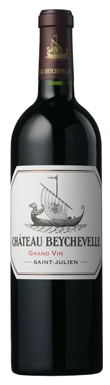

St-Julien was spared the hail storms that occured in early September, unlike St-Émilion, but it still had to deal with the rain that arrived mid-month,...
1999
Château BeychevelleSt-Julien

Vieux Château Certan, Pomerol, Bordeaux, France, 1999
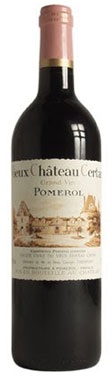
Pomerol was the appellation of the vintage in 1999, and right now is an excellent moment to be drinking this though I would be in...
1999
Vieux Château CertanPomerol
Château Angélus, St-Émilion, 1er Grand Cru Classé A, Bordeaux, France, 2001
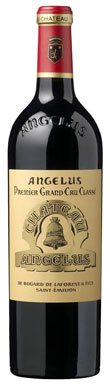
Last tasted by me in 2018, and tasting even better today. High Cabernet Franc levels give a violet and raspberry leaf edge, set against liquorice,...
2001
Château AngélusSt-Émilion
Château Palmer, Margaux, 3ème Cru Classé, Bordeaux, France, 2001
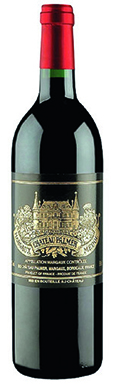
As the 1983 surprised many people for its success compared to 1982, so too is the 2001 Palmer, outgunning the 2000 on many of my...
2001
Château PalmerMargaux
Château Léoville Barton, St-Julien, 2ème Cru Classé, Bordeaux, France, 2007
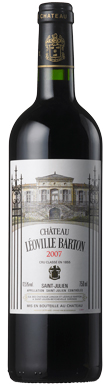
This was really a vintage of the Left Bank, as the weather only got into its stride (apart from an excellently warm April) in September...
2007
Château Léoville BartonSt-Julien
Château Mouton Rothschild, Pauillac, 1er Cru Classé, Bordeaux, France, 2007
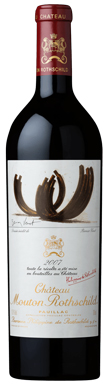
It was during lockdown that I really started to discover how well the 2007 vintage is tasting right now, and it was to celebrate a...
2007
Château Mouton RothschildPauillac
