
Baudains: How Tuscany created Europe’s first DOCs
Richard Baudains examines how one of Tuscany's least effective early modern rulers set the groundwork for some of its most successful wine regions.


Cosimo III de’ Medici (1642-1723) was the penultimate Grand Duke of Tuscany and the least illustrious of the de’ Medici dynasty.
He has gone down in history as a pretty ineffectual ruler, but he was responsible for one piece of legislation which lends a positive note to an otherwise somewhat tarnished reputation.
Cosimo created a precursor of the Italian DOC system which was the first of its kind in Europe, preceding the French AOC – based on the same principles – by over 100 years.
Scroll down for wines from some of Europe’s first DOCs
The first appellations
On 24 September 1716, the Grand Duke published a ‘Bando’ (public announcement) which defined the production areas of four wines – Chianti, Pomino, Carmignano and Vald’Arno di Sopra – and prohibited the use of these names for any wine produced outside the established areas.
A special commission was charged with enforcing the legislation in order to prevent fraudulent trade of the wines cited in the Bando.
The Bando is a remarkable document in many ways. It anticipated the principle of naming wines by their place of origin rather than as a type, which lies at the foundations of European wine law.
It also pre-empted modern methods of defining viticultural areas.
The system of following natural and communal boundaries used in the Bando is exactly that adopted in modern DOC regulations in Italy. It was also, like modern wine legislation, firmly protectionist.
Only the Grand Duchy could produce a wine called ‘Chianti’, for example, and so wines from the neighbouring State of Siena were excluded from the use of the name.
The boundaries of the wine districts cited in the Bando, all of which now have DOC/DOCG status, have shifted over time, but the original descriptions remain as relevant as ever as a fascinating key to their terroirs.
Chianti Classico

Chianti occupied the biggest territory described in Cosimo’s Bando.
Stretching from a point north of the town of Greve to the southern border of the Duchy with the State of Siena, and taking in the villages of the medieval Lega del Chianti of Radda, Gaiole and Castellina and well as citing the hamlet of Panzano which lies above the slopes of the now renowned Conca d’Oro.
Purists would say that Cosimo’s commission got it right. The area falls in the heart of what is now Chianti Classico, arguably the most representative part of the DOCG, with its earthy, firmly structured wines and typical Sangiovese bite.
The boundaries of the denomination now extend beyond those of the Bando, taking in part of the commune of Castelnuovo Berardenga to the south and in part or whole the communes to the west: Poggibonsi, Barberino Val d’Elsa, Tavernelle Val di Pesa and San Casciano Val di Pesa.
But if there is a ‘classico’ zone within the Classico, with the exception of the curious mention of a hill north of Greve, Cosimo’s commission nailed it.
Five of Chianti Classico’s 11 Unità Geografica Aggiuntiva (UGAs) are named in the Bando: Radda, Gaiole, Panzano, Castellina and Greve.
Below you can find a selection of benchmark producers from these villages, all at the top of their game in their current vintages, tasted at the Chianti Classico Consorzio’s annual presentation.
‘What makes Pomino special is its long history with Chardonnay.’
Pomino
Pomino is the area which has undergone the greatest changes to its boundaries. In Cosimo’s Bando, Pomino stretched over an extensive area between the rivers of the Sieve and the Arno, nearly all of which today falls into the DOCG of Chianti Rufina.
The modern Pomino DOC occupies a much smaller area of just over 60ha to the northeast of Rufina, which to all intents and purposes is a Frescobaldi monopole.
Rising on stony slopes to over 700m at the foot of the Appenines, where deciduous woods give way to pine forests, Pomino constitutes a quite unique microcosm in terms of its size and position, but also its wines.
What makes Pomino special is its long history with Chardonnay. The variety was brought to the Castello di Pomino by the then owner, Vittorio degli Albizi, along with
Pinot Blanc, Gris and Noir in the 1850s.
When Vittorio’s sister, Leonia married into the Frescobaldi family, the Florentine family maintained the production and, among other things, picked up a medal at the 1878 Paris Exhibition for a ‘Chablis di Pomino’.
The single-vineyard Benefizio, which was first produced in 1973 and was probably Italy’s first example of a barrel-fermented Chardonnay, continues the tradition.
It is a testimony to Albizi’s foresight in identifying a terroir capable of classic white wines with a freshness, but also an ageing capacity, which was demonstrated in a vertical tasting presented by Frescobaldi in February this year.
Carmignano
At the time when Cosimo issued his Bando, the area designated for the production of Carmignano wine was essentially the property of the Medici.
In fact its boundaries were defined with reference to the walls of the family’s vast hunting reserve, which accounted for most of what today is the commune of Carmignano.
Originally subsumed under the DOC of Chianti Montalbano, Carmignano gained its own independent denomination in 1975, and was upgraded to DOCG in 1990.
The area of 135ha of the modern DOCG is probably virtually the same as that described in Cosimo’s Bando, delimited as it is by the communal boundaries of Carmignano and the tiny neighbouring Poggio a Caiano.
There is continuity also in the wines themselves. Carmignano is the only one of Tuscany’s DOC/Gs which prescribes the use of Cabernet (up to 20% Cabernet Sauvignon and/or Franc) in a blend with Sangiovese.
Cabernet Sauvignon was introduced into Tuscany by Caterina de’ Medici in the 16th century and it is safe to presume that it was used in the wines of Carmignano at the time of Cosimo.
Cabernet ripens well in the warm hills of Montalbano, giving texture and rich dark fruit notes to annata wines and structure to the Riservas, which are among the longest lived of all Tuscany’s Sangiovese-based wines.
Val d‘Arno di Sopra
Cosimo decreed that the wines of Val d’Arno di Sopra should come from an area which stretches for around 50km along the upper valley of the Arno, bordered by the Casentino on the right bank of the river and Monti del Chianti on the left.
Like Carmignano, Cosimo’s Val d’Arno di Sopra was swallowed up in the 1960s by the expansion of the Chianti DOC into satellite zones – in this case the Colli Aretini – and it only gained its independence with the granting of DOC status in 2011.
The DOC deviated from the Bando by limiting the production area to the province of Arezzo, while Cosimo had included part of what is now the province of Firenze, but it maintained significant topographical references by creating sub-zones for the right bank (Pratomagno) and the left bank (Pietraviva).
The most recent update of the DO in 2024 restored Cosimo’s boundaries but removed the sub-zones and replaced them with the new single-vineyard ‘vigna’ menzione.
Production is extremely eclectic, going from top drawer international varietals through a range of native grapes, which alongside the familiar Malvasia, Trebbiano and Sangiovese, include a raft of rarities like the white Orpicchio and the red Barsaglina, Caberlot, Gralima and Pugnitello.
If I had to choose a go-to grape, it would be Sangiovese, which in the Val d’Arno makes wines with distinctive, bright red fruit, sweet floral aromas and silky tannins. But the joy of the Val d’Arno is its diversity.
Below is a selection of wines from the 23 members of the producers’ Consorzio (all of whom are either certified organic or in the process of conversion), tasted at the presentation of the new vintages in February.
Great wines from Tuscany’s earliest recognised regions
Related articles
- Baudains: What links the French president with a wine estate in Veneto?
- Baudains: Five up-and-coming Italian talents to look out for in 2025
- Chianti Classico: Panel tasting results
Castello di Fonterutoli, Chianti Classico, Gran Selezione Castellina, Tuscany, Italy, 2021
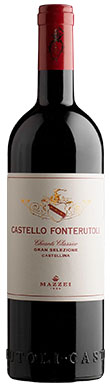

Ripe, dark fruit aromas accompany great depth of flavour, fine natural tannins, and aromatic complexity on the long finish. Mazzei were one of the first...
2021
Castello di FonterutoliChianti Classico

Fontodi, Vigna del Sorbo, Chianti Classico, Gran Selezione Panzano, Tuscany, Italy, 2021
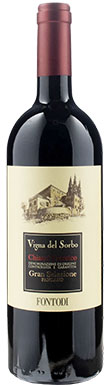
Fontodi’s Vigna del Sorbo is one of the classic sites of the Conca d’Oro, which produces wines with the body and phenolic ripeness associated with...
2021
FontodiChianti Classico
Caparsa, Chianti Classico, Tuscany, Italy, 2021
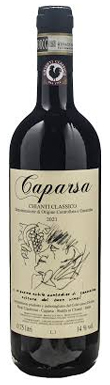
A wine with precise violet and iris scents with hints of blackberry at the back, and a long, juicy palate with a minerally finish. Paolo...
2021
CaparsaChianti Classico
Riecine, Chianti Classico, Tuscany, Italy, 2023
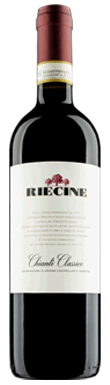
Precise berry fruit aromas and a reactive palate with fine-weave tannins, full of energy. Riecine is renowned for the cult of perfectionism which has been...
2023
RiecineChianti Classico
Querciabella, Riserva, Chianti Classico, Tuscany, Italy, 2021
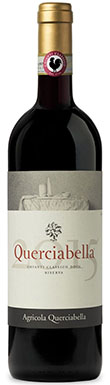
The 2021 vintage has ripe cherry on the nose, typical Greve softness on the palate, and a long and complex fruit and floral finish with...
2021
QuerciabellaChianti Classico
Castello di Pomino, Benefizio Riserva, Pomino, Tuscany, Italy, 2023
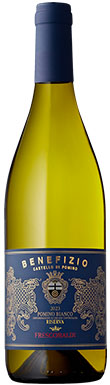
The combination of a cool and rainy spring and warm and dry August and September resulted in a late harvest, which comes through in the...
2023
Castello di PominoPomino
Castello di Pomino, Benefizio Riserva, Pomino, Tuscany, Italy, 2014
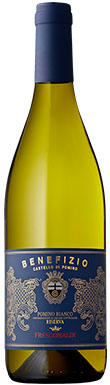
The nose has intense sweet herbs and spice, some bright citrus, and a touch of flinty minerals in the background. The summer began with unusually...
2014
Castello di PominoPomino
Castello di Pomino, Benefizio Riserva, Pomino, Tuscany, Italy, 2009
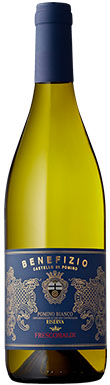
The deeper straw shade shows some evolution, which is apparent too on the delicately nuanced and slightly understated nose. The palate is tight and linear,...
2009
Castello di PominoPomino
Castello di Pomino, Benefizio, Pomino, Tuscany, Italy, 1990
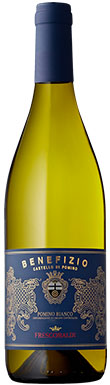
The nose has incredible freshness with some of the sweet herbal aromas of the 2014 and a distinctive smoky mineral background. The palate is slimline...
1990
Castello di PominoPomino
Tenuta di Capezzana, Ugo Contini Bonacossi, Toscana, Tuscany, Italy, 2019
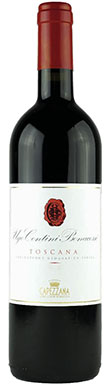
On the nose there is wild berry fruit and delicate spices, with a sensation of warm, damp earth in the background. The palate is long,...
2019
Tenuta di CapezzanaToscana
Fattoria Ambra, Montalbiolo, Carmignano, Riserva, Tuscany, Italy, 2021

One of the oldest estates in Carmignano, Ambra has been in the same family since 1870. The vineyards currently extend over 24ha in some of...
2021
Fattoria AmbraCarmignano
Tenuta di Capezzana, Villa di Capezzana, Carmignano, Tuscany, Italy, 2021

The low yielding 2021 vintage gave a wine of great concentration, with a saturated purple-ruby shade and a distinctly phenolic nose with notes of peat...
2021
Tenuta di CapezzanaCarmignano
Fabrizio Pratesi, Circolo Rosso, Carmignano, Riserva, Tuscany, Italy, 2021
The 2021 is a deep, inky-ruby shade and has aromas of sweet fruit, carob and white pepper. On the palate it is dense and full,...
2021
Fabrizio PratesiCarmignano
Tenute Le Farnete, Carmignano, Tuscany, Italy, 2022
From the hot and dry 2022 vintage, this has a warm and earthy aromas with hints of pepper and charcoal, and a palate with a...
2022
Tenute Le FarneteCarmignano
Tenuta di Capezzana, Villa di Capezzana, Carmignano, Tuscany, Italy, 1925
The first vintage of a wine of this name was 1925, the year before the Contini Bonacossi family bought the Tenuta. Tasting it in its...
1925
Tenuta di CapezzanaCarmignano
Podere Il Carnasciale, Il Caberlot, Toscana, Tuscany, Italy, 2021
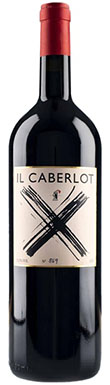
This wine has a head-spinning intensity of sour berry, violet and Mediterranean herb aromas, which carry through onto a vibrant palate that combines depth of...
2021
Podere Il CarnascialeToscana
Petrolo, Bòggina A, Valdarno di Sopra, Tuscany, Italy, 2023
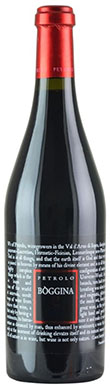
Very pale in the glass and it opens slowly but very precisely on the nose, with pure varietal aromas of mulberry and violets. The palate...
2023
PetroloValdarno di Sopra
Fattoria Fazzuoli, Sortito, Toscana, Tuscany, Italy, 2022
Ripe red cherry aromas introduce a finely balanced palate with grape tannins that are soft and dry, and the finish long and savoury. Federico Fazzuoli...
2022
Fattoria FazzuoliToscana
Il Borro, Petruna in Anfora, Valdarno di Sopra, Tuscany, Italy, 2020

The nose is more floral-spicy than fruit focused, with a savoury phenolic edge. On the palate there is lovely balance, with slightly grainy natural tannins,...
2020
Il BorroValdarno di Sopra
Ejamu, Rabizza, Toscana, Tuscany, Italy, 2021
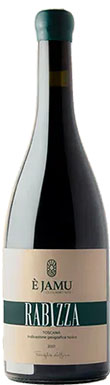
It has the bright red fruit and violet aromas typical of the Valdarno, and a palate with a juicy progression, finely tuned tannins, and a...
2021
EjamuToscana
