
Taming Château Trotanoy: Wines from 1998 to 2018
Jane Anson traces the evolution of this Pomerol classic and offers extensive tasting notes on top vintages, following a masterclass at the Decanter Bordeaux Fine Wine Encounter in London.


Does Château Trotanoy take its name from ‘trop ennui’, meaning the soil is too difficult to work, or ‘trop tannique’, meaning too tannic?
Soil in this part of Pomerol is certainly almost concrete-like in a hot summer and way too sticky in winter rains. But, owner Edouard Moueix is willing to bet on the second description being the real reason.‘Much of our work with this property is about how to tame the tannins,’ he says during a masterclass at Decanter’s Bordeaux Fine Wine Encounter at London’s Landmark hotel.‘They can be brutal if not handled correctly, because these are naturally powerful soils.‘Our technical director, Eric Murisasco, talks about the shape of tannins as key, not the amount of them. And what is clear at Trotanoy is that the right shape only happens if the tannins are sufficiently ripe.’
Trotanoy is the ‘other’ Pomerol. It is less famous than Petrus and yet in many ways a more perfect reflection of what defines the appellation, because its soils are that classic mix of the sticky clays and gravels that make Pomerol wines so unusual.
Trotanoy vineyards
The layout is pretty simple. There are 7.2 hectares of vines split into five plots, with four in a square around the Château and the fifth a short striding distance cross a narrow road.
Four of the five plots have gravel or clay-gravel soils of varying depths. ‘In many places [you’ll find] huge pebbles, almost Côtes du Rhône-like in size,’ says Moueix.
One plot, called Les Argiles, is pure clay.
All are roughly the same size, ensuring each plays its role in the final wine.
How Trotanoy wines have evolved
Getting the balance right between letting the natural power of the soils speak and moderating their ferocity has not always been successful.
As ever, one of the fun things about this kind of vertical is to bring to life the progression at the château over the years.
‘You feel the step-change in the glass as of 2005, but the older vintages show something equally remarkable.’
For the first two vintages tried here, 1998 and 2000, harvesting was fairly simple. The team started on one side of the vineyard and worked its way to the other side, filling up the tanks as they went.
Fruit went into large containers with open sides, leading to some on-the-fly concentration of flavours as grapes were squashed on the way to the cellar and excess juice spilt.
From 2005, things became far more precise. Different parts of each plot were picked at different times, and small sections taken out entirely if they weren’t up to scratch; hence the arrival of the ‘second wine’, Espérance de Trotanoy, from 2009.
Grapes came into the cellar in small baskets from this point, with sorting taking place either in the vineyard or in the cellar, not in between the two.
Any vines that show traces of ESCA trunk disease are also harvested separately and kept out of the main wine, something that I hear about only extremely rarely in Bordeaux.
You feel the step-change in the glass as of 2005, but the older vintages show something equally remarkable about Trotanoy and that is how it softens into elegance with some bottle age.
‘I can remember my grandfather telling me that Trotanoy is a feminine wine, and not understanding what he meant,’ says Moueix. ‘But after 10 years in bottle, suddenly it becomes clear’.
More vineyard tweaks
The fine-tuning continues, with replanting by massal selection and the removal of a small section of Cabernet Franc that is not yielding enough quality.
‘We finally pulled this up after the 2018 vintage, because knew that if it couldn’t get to the right expression in that year, it never would,’ says Moueix.
Other areas have been rescued. One area of old vines that had nearly given up was given a new system of pruning, trellising and drainage. It is now producing some of the best wine of the vineyard, without sacrificing the complexity of older grapes, according to Moueix.
All of this meant that the vertical more than lived up to the high expectations that surrounded it.
Trotanoy 2018 re-visited
As an added bonus, we got to taste the final blend of Trotanoy 2018.
All Moueix estates blend half way through ageing, so the snapshot given during Bordeaux en primeur week is a close reflection of the finished wine, but not exact.
This underlines again why I don’t give 100-point scores to wines before they are bottled.
But there is no doubt that the most recent vintage proves yet again that Trotanoy is one of the finest wines of Bordeaux.
Trotanoy at-a-glance
Vineyard size: 7.2ha, Pomerol
Grape varieties planted: 90% Merlot, 10% Cabernet Franc
Owned by: Moueix family since 1953. Co-owned by Christian, Edouard and their cousin Jean-Antoine.
Winemaking: Fermentation in cement and stainless steel, before ageing in 50% new oak.
Tasting notes and scores for Château Trotanoy wines
Read Jane Anson’s Bordeaux 2018 verdict
Château Trotanoy, Espérance de Trotanoy, Pomerol, Bordeaux, France, 2010
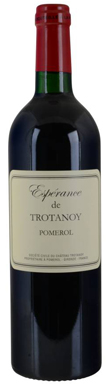

I'll get the bad news out of the way first; this second wine of Trotanoy only began in 2009 and is likely to be stopped...
2010
Château TrotanoyPomerol

Château Trotanoy, Espérance de Trotanoy, Pomerol, Bordeaux, France, 2015
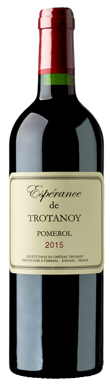
This is lovely - a definite buy for anyone who wants to understand what Trotanoy is about but can't quite stretch to the main wine. It’s...
2015
Château TrotanoyPomerol
Château Trotanoy, Pomerol, Bordeaux, France, 1998
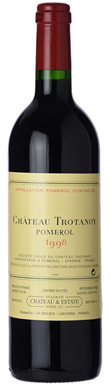
It was a real pleasure to try Trotanoy at 21 years old. The nose here majors on cloves and black pepper spices, and you can...
1998
Château TrotanoyPomerol
Château Trotanoy, Pomerol, Bordeaux, France, 2000
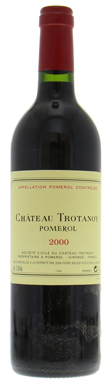
The summer in 2000 was not as warm as 1998 but it was drier, as a result the wine is less opulent. This majors more...
2000
Château TrotanoyPomerol
Château Trotanoy, Pomerol, Bordeaux, France, 2005
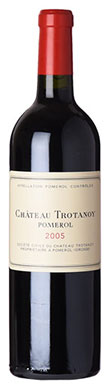
This is from the first great vintage of the new era. By this point in time there were smaller tanks that allowed more accuracy between...
2005
Château TrotanoyPomerol
Château Trotanoy, Pomerol, Bordeaux, France, 2009
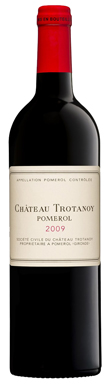
A vintage that Edouard Moueix summed up succinctly by comparing it to a friend that is always ready to please, to the point that you...
2009
Château TrotanoyPomerol
Château Trotanoy, Pomerol, Bordeaux, France, 2010
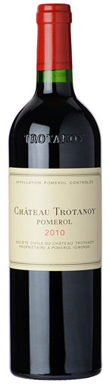
Warm days and cold nights were the signature of 2010, similar in many ways to a typical Californian vintage. This is particularly good for giving...
2010
Château TrotanoyPomerol
Château Trotanoy, Pomerol, Bordeaux, France, 2015
Nose loaded with red fruit and damsons, framed with the savoury edge of coffee and roasted nuts. Absolutely intoxicating, such beautiful purity and elegance. Ethereal....
2015
Château TrotanoyPomerol
Château Trotanoy, Pomerol, Bordeaux, France, 2016
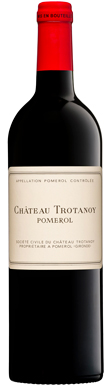
An amazing wine packed full of concentrated, well-measured brambly hedgerow fruits, slate and bitter chocolate. It has a complexity at its centre that builds outwards...
2016
Château TrotanoyPomerol
Château Trotanoy, Pomerol, Bordeaux, France, 2018
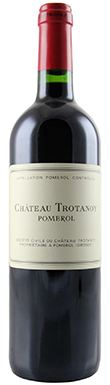
This stood out en primeur and it does again in bottle (I also tasted it in between at a Decanter Fine Wine Encounter), more than...
2018
Château TrotanoyPomerol
