
Anson: Nature vs nurture in Bordeaux wine styles
Jane Anson looks at how vineyard and winemaking decisions have changed the style at three top Bordeaux châteaux in the 21st century, arguing that the romantic idea of terroir as an unchanging slice of earth ignores the reality that it is a managed ecosystem.


What difference do stems, oak barrels, hang time, farming strategies and fermentation temperature actually make to the wine in our glass?
These are not questions that we ask very often in Bordeaux – a region where the image pushed by the châteaux is of tradition, history and continuity, and where vintage is fetishised over winemaker impact.
How Bordeaux wine styles can change: Scroll down for tasting notes of Troplong Mondot, Clerc Milon and Carmes Haut-Brion wines
Even wine consultants, who spend a few days a month at most at an estate, are often accorded greater respect in terms of wine style than the owner, technical director and viticultural team.
A few months ago, I was asked to give the annual André Simon lecture to the International Wine and Food Society, the group that Simon founded in 1933 and now counts 6,500 members worldwide.
As you might expect, what was an in-person talk to a group arriving in Bordeaux in late April evolved into a cameraman arriving at my house in early July to shoot a video that will be distributed online, I believe, next month.
The topic is on terroir in Bordeaux, and whether there even is such a thing at all.
One of the conclusions that I come to (spoiler alert) is that we should be happy to admit that terroir is about more than simply an immutable hunk of earth – more, in other words, than just soils, subsoils and microclimate.
The romantic idea of terroir as an unchanging slice of earth ignores the reality that it is a managed ecosystem – which means somebody is making a host of decisions about what to do with all of the different elements, and taking deliberate actions in viticulture and winemaking that affect the final wine in the glass.
To illustrate this point, I have taken three estates from different parts of Bordeaux that have undergone significant changes over the past 15 years, and compared their wines (or rather their winemaking methods) from 2001 and 2017.
Two of those estates – Châteaux Troplong Mondot and Carmes Haut-Brion – have had changes of owners in that time. The other, Château Clerc Milon, has kept the same owner but had a new winemaking team and a new approach in both vineyard and cellar.
I have picked two vintages that are relatively similar to take at least one variable out of this comparison. I couldn’t go any older than 2017 because that was the year Troplong Mondot ushered in its new style, so I looked to find another vintage that has a similarly sculpted feel to it; 2001.
I could also easily have picked three St-Emilion estates to illustrate the idea of nature or nurture. Pavie, Valandraud, Gracia, Le Dome… all of these wines have scaled back in recent years, keeping their signature but making choices that have discernable impact in the glass and therefore are useful signposts for illustrating the human influence on terroir.
I chose one estate from each of St-Emilion, Pessac-Léognan and Pauillac simply to widen the lens.
Château Troplong Mondot, St-Emilion Premier Grand Cru Classé B
Ownership: In 2017, the Valette-Pariente family sold up to SCOR insurance, which had been shareholders since 2014. It was promoted from Grand Cru Classé to Premier Grand Cru Classé in 2006.
Although associated with the garagiste movement, Troplong Mondot is far from a new estate, and has a history that dates back to the 17th century. It was originally called Pavie Mondot, until it was owned by a Raymond Troplong in the 19th century.
The estate sits on one of the highest points of St-Emilion with its iconic clay-limestone hillock known as the Butte du Mondot, described beautifully by Bernard Ginestet as a camel’s hump for the way that it sticks up above the surrounding limestone plateau.
This is an estate that fully embraced the overwrought, powerful style of late 1990s and 2000s in St-Emilion. I thought it was all about winemaking choices before I visited and started to understand just how strong a personality this site has, but it can still illustrate perfectly the tightrope between nature and nurture that is quality, modern winemaking.
The compacted soil of the butte, with its high percentage of clay, makes the wines powerful and concentrated. This is especially true in hot years, when water stress leads to small berries, something that is underlined by the former practice of severe pruning and green harvesting to lower yields.
Winemaking techniques were then employed to add to this sense of concentration and power.
As the pendulum swung away from that style, changes that were already underway were given a turbo boost with the arrival of Aymeric de Gironde from Cos d’Estournel as director, appointed by new owners SCOR in 2017. There was also a change in consultant, from Michel Rolland to Thomas Duclos.
Harvest dates were brought forward, ageing in new oak was cut from 90% to 65%, blending was brought to the beginning of ageing, there was experimentation with whole-bunch vinification – albeit not more than 10%, and not every year – and temperatures were lowered for the vinification.
Yields were also raised up to 45 hectolitres (hl) per hectare (ha), lowering the ratio of solids to juice and ensuring a fresher feel in the resulting wine.
Carmes Haut-Brion, Pessac-Léognan
Owner: Sold by the Chantecaille-Furt family in 2011 to property developer Patrice Pichet.
With the highest percentage of Cabernet Franc on the Left Bank, Carmes Haut-Brion has shown imagination and innovation in dealing with one of the most pressing issues facing Bordeaux wine, namely the impact of rising temperatures.
As such, it illustrates how winemaking decisions are an integral part of what we understand as terroir.
This is a walled ‘clos’ estate located close to the city centre of Bordeaux (in fact the only one with a 33000 central Bordeaux postcode), close to Haut-Brion and La Mission Haut-Brion. The three estates shared the same owner for much of the 16th century.
The Chantecaille-Furt family arrived in 1840 and stayed until 2011. Daniel Furt was responsible for putting an emphasis on Cabernet Franc, harnessing the potential of the gravel, clay and sandy soils in the vineyard.
The family also introduced organic farming from 2009. It was only in 2011, however, that Cabernet Franc became the dominant grape. Today, plantings stand at 45% Cabernet Franc, 30% Merlot and 25% Cabernet Sauvignon – with some ungrafted vines.
An equally important change came in 2012, with the arrival of director Guillaume Pouthier, who had been working with Michel Chapoutier in the Rhône Valley.
He used his experience in the Rhône to introduce using stems in winemaking from his first vintage – a highly unusual technique in Bordeaux but common in the Rhône.
The 2012 vintage saw just 10% stems, used from the older Cabernet Franc vines, with percentages increasing ever since to 25% in 2013, 40% in 2017 and 55% in 2019.
The process involves two sorting lines to separate the bunches of grapes from the beginning according to the ripeness of their stems. The ‘good’ red or brown stems are selected for use.
Bunches with green stems, in contrast, are put through the usual destemming machine and used simply as berries.
The two – whole bunch and destemmed berries – are then layered back together for the fermentation, put into the vat in a series of around 15cm bands, one on top of the other.
‘In warm vintages I can go right up to 70% for Cabernet Franc and Merlots,’ says Pouthier, ‘but never more than 10-15% in Cabernet Sauvignon, because there is naturally a higher degree of green notes in the stems.
‘You have to be aware to then follow this throughout the process, ensuring gentle infusion rather than pumping over or punching down, to avoid adding too many tannins and any caricature flavours.
‘It’s not a simple choice, but it has the huge benefit of not only giving salinity and definition, but in bringing down potential alcohol levels from the moment of picking, often by 1% or more.’
Château Clerc Milon, Pauillac
Owners: The Rothschild family since 1970, first Baron Philippe then Baroness Philippine and now Philippe Sereys de Rothschild, Camille Sereys de Rothschild and Julien Beaumarchais de Rothschild.
No question that the Rothschilds have invested seriously in this estate since their arrival in 1970. But it remained for several decades in the shadow of Mouton Rothschild, and was looked after by the same technical team, overseen by Jean-Paul Polaert, as Château d’Armailhac.
This shared team continued right up to 2009, and inevitably meant that decisions were taken according to the needs of both properties, rather than simply those of Clerc Milon itself.
More of an issue, perhaps, was that right up until 2006 the wine at Clerc Milon was being made in 225hl tanks.
It meant that even though five red grape varieties were present in the vineyard, only the three major ones – Cabernet Sauvignon, Merlot and Cabernet Franc – were used in the main wine.
The other two, Carménère and Petit Verdot, were not able to be vinified separately and instead were put together with the last-picked Cabernet Sauvignon and co-fermented in the larger vats. If this didn’t make it into the first wine, the juice would be sold as generic Pauillac.
After upgrading the vat room in 2007, the team was able to vinify all grapes separately in smaller vats.
This prompted some experimentation, until the creation of a dedicated team under Jean-Emmanuel Danjoy, who arrived from Opus One in 2009. It was only at this point that Carménère and Petit Verdot made a regular appearance in the main wine and began to shape Clerc Milon’s current personality.
There is texture, colour and spice added by Petit Verdot, and white pepper and florality from Carménère, the latter drawn from some of the oldest vines in Bordeaux, dating back to 1947.
In the vineyard, the main focus was on encouraging greater organic matter and driving the roots deeper – corrective issues that had arisen from extensive use of added fertilisers up until 2009.
Further vineyard work (and purchasing) saw a more coherent approach to rootstocks, clonal and massal selections and plot layouts.
‘The vineyard was divided into 300 plots up until 2009, often tiny in size and spread out,’ says Danjoy.
‘It made them extremely difficult to follow, particularly because they often had different genetic material in similar terroir, so you could have two Merlots next to each other in similar terroir but with different rootstocks, from different parent plants with very different ripening needs.
‘You needed essentially to vinify everything separately and to taste each individual plot – something that without a dedicated team was just not possible.
‘We had many highly successful vintages because this is great terroir, but the difference today is clear, with a richness and precision that has blossomed from a greater attention to detail.’
Tasting notes on Bordeaux 2001 vs 2017: Three case studies
You might also like:
Tasting 20 years of Château Haut-Bailly wines
Bordeaux first growths: How the 2000 vintage tastes now
Ten exciting Bordeaux producers to watch
Château Troplong Mondot, St-Émilion, Grand Cru Classé, Bordeaux, France, 2001
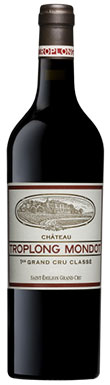

A late harvest year, at a château that was already renowned at that time for harvests that invariably began in October. This has softened considerably...
2001
Château Troplong MondotSt-Émilion

Château Troplong Mondot, St-Émilion, 1er Grand Cru Classé B, Bordeaux, France, 2017
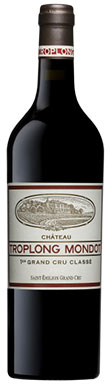
The first year of what has been a major stylistic shift at the property, with a mix of both evident changes - bringing the harvest...
2017
Château Troplong MondotSt-Émilion
Château Les Carmes Haut-Brion, Pessac-Léognan, Bordeaux, France, 2001
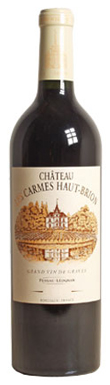
This may be bottle variation, but it feels a little tired although not quite 20 years old. Certainly at its peak, with softened autumnal fruit...
2001
Château Les Carmes Haut-BrionPessac-Léognan
Château Les Carmes Haut-Brion, Pessac-Léognan, Bordeaux, France, 2017
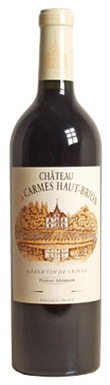
Brilliant wine that continues to impress three years on from the En Primeur tasting, with a creamy but restrained texture, precise black fruits with a...
2017
Château Les Carmes Haut-BrionPessac-Léognan
Château Clerc Milon, Pauillac, 5ème Cru Classé, Bordeaux, France, 2001
This has the charm of an older Pauillac in its structure and menthol-laced finish, and is a lovely, well balanced Cabernet-led wine, with undergrowth, nutmeg...
2001
Château Clerc MilonPauillac
Château Clerc Milon, Pauillac, 5ème Cru Classé, Bordeaux, France, 2017
Gorgeous, perfumed fruit on the nose, rich and glamorous notes of violet, ripe red cherries, bramble, coffee and hints of leather. Robust and muscular, plump...
2017
Château Clerc MilonPauillac
