
Charles Heidsieck masterclass at Decanter’s London Fine Wine Encounter 2022
Decanter's 25th London Fine Wine Encounter went off with the pop of Champagne corks on Saturday 5 November. For the first masterclass of the day, Cyril Brun, cellarmaster at Charles Heidsieck, took guests through the Champagne house's Mis en Cave collection, highlighting the promising potential of ageing non-vintage Champagne.


This masterclass was particularly special, as 2022 marks 200 years since the birth of Charles-Camille Heidsieck, the house’s founder and personality behind the famous name ‘Champagne Charlie’.
Cyril Brun, cellar master since 2015, having previously been a winemaker at Veuve Clicquot, took captivated guests through eight iterations of Charles Heidsieck Brut Réserve NV, with mis en cave dates starting from 2018 and going back to 1989.
What is mis en cave?
Mis en cave means ‘laid in the cellar’, and it indicates the year in which the non-vintage cuvée was laid down in the Charles Heidsieck cellar to age on its lees, pre-disgorgement.
Brun explained that when you see the mis en cave year on the label, ‘you know that the primary ingredients are the grapes from the previous harvest’.
Scroll down to see tasting notes and scores for eight Charles Heidsieck mis en cave bottlings

‘We were a kind of pioneer. But when you are pioneers, sometimes you are a bit too far in advance’.
When Daniel Thibault, cellarmaster at the time, began putting a mis en cave date on the front labels of the non-vintage Brut Réserve cuvée, it was a brilliant but somewhat radical idea, one that wasn’t well understood at the time.
The idea was to give consumers a window into how non-vintage Champagne can change and develop over time.
But ‘it became a nightmare,’ said Brun during the masterclass. It created confusion among consumers, who thought that the mis en cave date implied that it was a vintage Champagne.
In restaurants, ‘this non-vintage wine was being put in the vintage section, so we disappeared from the non-vintage section in many wine lists.’ This of course made it look like the cheapest Champagne in the vintage section, but ‘it was a disaster. Nobody bought the non-vintage any longer’.
The mis en cave date was thus moved to the back label. ‘It was a little less visible, but at least people that were keen on understanding knew where to find the information,’ said Brun.
All the bottles at the masterclass had come directly from the house’s eight kilometres of underground cellars, or crayères, built by the Romans and still used to age many of the wines.
Brun stressed the importance of good cellaring conditions to give these wines the best chance to age gracefully. At 10°C and 94% humidity all year round, you can’t get better cellaring conditions than that. ‘It’s a key element, if you have improper conditions with variable temperatures, you tend to amplify the ageing process,’ said Brun.

More than the sum of its parts
Typically the Charles Heidsieck Brut Réserve NV is made up of roughly 40% Pinot Noir, 40% Chardonnay and 20% Pinot Meunier, and around 50% of reserve wines are used. The dosage is between 9-10g/L. These elements are adapted year on year to ‘reproduce the same footprint and style,’ says Brun.
The Charles way
The mis en cave concept is not the only initiative that the celebrated Champagne house has brought into play. The non-vintage Brut Réserve has gained a stellar reputation in part because of the astonishing proportion of reserve wines in the blend; and not only that – the age of these reserve wines too.
During his presentation, Brun drew attention to the fact that while the majority of non-vintage Champagnes will contain 15%-20% of reserve wines, and young reserve wines at that, ‘at Charles we tend to use a huge amount of reserve wines. Currently it’s 50%.’
‘We consider that in order to get important complexity in our non-vintage, we need to use old reserve wines,’ said Brun. So how old is old?
‘We have a significant amount of reserve wines exceeding 15 years old, in order to really encapsulate the complexity.’ This brings with it a roasted, coffee, mocha profile, a kind of vegetal smokiness, along with what Brun considers to be the most important element for the non-vintage – the texture. ‘In sparkling wines, texture is really important. The style of the mousse, the intensity of the effervescence, will definitely play a major role in the game’.

Subtle changes
The wines tasted in this masterclass were made from base wines spanning 30 years, and beyond a change in cellar master, there were some other important changes that happened during that time.
Bottle shape – Apart from the mis en cave 1989 bottling, all the other wines were bottled in the new shape, which was inspired by the Charles Heidsieck crayères. You may have thought that the bottle shape had no impact on the wine inside, but Brun confirmed that narrowing the diameter of the neck from 28mm to 26mm has affected the oxygen interplay: ‘you are going to be in a more reductive zone’.
Cork – Brun brought in the use of Mytik Diam corks – made from small pieces of real cork but pre-washed to remove traces of TCA – despite the house not generally suffering from many TCA problems. ‘The main idea is that you know the exact composition of your cork, meaning you know how permeable it is to oxygen’. This decision is more about oxygen management than cork taint.
Oak – When he started as cellarmaster, Brun was convinced that the gentle smokiness found in the non-vintage came from oak barrels, and was stunned to discover that none were used. He has now started to introduce a small amount of oak-vinified wines into the blend: ‘My vision for the use of oak is to be below the radar’, giving complexity, smokiness and most importantly silky textural finesse to the wines.

The wines
This masterclass brought the nature of the ageing process under the microscope. ‘You realise that the phenomenon of ageing is not linear,’ said Brun, ‘it’s going to be fast at the beginning, followed by a plateau phase, then accelerating a bit more, followed by another plateau phase.’
Mis en cave 2018, 2017 and 2016
There were indeed noticeable differences between the first three wines in the line up, despite them being so close in age. They each maintained intense lemon, cream and almond notes, but the toasty, smoky aromas became slightly more pronounced with each extra year of age. They were all characterised by cleansing, uplifting acidity and recognisable brightness. It was the texture that seemed to change the most, becoming more creamy and refined with smaller bubbles and a fuller sensation in the mouth.
Mis en cave 2014
It was with this fourth wine that the effects of ageing became even more obvious. ‘We are losing this youthful profile of non-vintage, and we enter into another zone. We are now in a non-vintage profile that will really suit food,’ said Brun. This wine had noticeable richness, with more honeyed, nutty complexity, and buttery, bruised apple characters.
Mis en cave 2013
Likewise, this was which was on the same flavour plateau as the 2014, with yet more fine effervescence.
Mis en cave 2009
The mis en cave 2009 took another large leap; darker in colour, this had only subtle, soft effervescence and a profile much more defined by coffee, roasted hazelnuts and golden raisins.
Mis en cave 2008
The mis en cave 2008, with its deep golden colour, its roasted, mocha, vanilla profile, and its distinctive earthy, mushroom depth, was disgorged in 2015, and was bottled with a natural cork, as opposed to the Mytik corks used on the rest of the wines. Brun stressed that this wine showed bad oxygen management. Disgorged just before he arrived at the house, he believes it probably saw too much oxygen during the disgorgement process, and that the choice of cork allowed too much oxygen ingress. Despite having just one year of extra age, it certainly felt a lot older. ‘Since then we have corrected, we have improved our techniques and procedures’. That being said, it was still a great wine, its earthy, nutty profile a great match for truffles; it’s just not in line with what Brun and the house are trying to achieve with their non-vintage footprint.
Mis en cave 1989
Stepping further back still, almost 20 years, the mis en cave 1989 defies all odds. It’s hard to believe this non-vintage Champagne, designed to be consumed within a few years after release, could still be shining so brightly. Its soft honey, toast and grilled nut tones have taken on more candied fruit, caramel, butterscotch and dried apricot characters. Brun draws parallels with the complexity you get in sweet wines.
‘Some of the best and most complex non-vintage Champagnes on the market’
Through meticulous oxygen management, liberal dosage levels, old reserve wines providing complexity and injections of freshness, and the introduction of subtle oak use to enhance textural finesse, Brun is able to create some of the best and most complex non-vintage Champagnes on the market, with impressive ageability.
Tasting notes and scores for eight Charles Heidsieck mis en cave bottlings:
Related content
Relaunch: Charles Heidsieck Mis en Cave Champagnes
First Taste: Charles Heidsieck’s Champagne Charlie
First taste: Gosset Celebris Blanc de Blancs 2012
Charles Heidsieck, Brut Réserve Mis en Cave 2018, Champagne, France
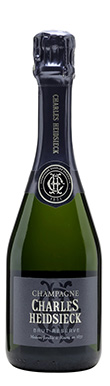

Bright and fresh aromas of lemons and cream, with touches of toasty, leesy complexity underneath. Freshly zested lemons over roasted nuts in the mouth, swept...
Charles Heidsieck

Charles Heidsieck, Brut Réserve Mis en Cave 2017, Champagne, France
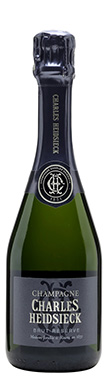
Initially fairly muted on the nose, opening out eventually with an apple and lemon cream character with smoky, toasted nuances. Vanilla bean and lemon pith...
Charles Heidsieck
Charles Heidsieck, Brut Réserve Mis en Cave 2016, Champagne, France
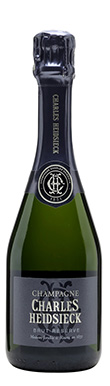
Floral, apple blossom aromas give way to a quietly minty, stony character, almost a little leafy, before a toasted nut and vanilla touch comes sweeping...
Charles Heidsieck
Charles Heidsieck, Brut Réserve Mis en Cave 2014, Champagne, France
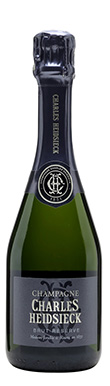
Open and expressive, there's bundles of brioche, crème pâtissière, croissant, and a rich and creamy impression. Buttery, cooked apples indicate some evolution here, but it's...
Charles Heidsieck
Charles Heidsieck, Brut Réserve Mis en Cave 2013, Champagne, France
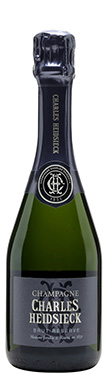
Aromas of warm brioche, grilled peaches and lemon curd flirt with flinty, smoky nuances. The effervescence is subtle, nipped in, refined. Toasted cashews and sweet...
Charles Heidsieck
Charles Heidsieck, Brut Réserve Mis en Cave 2009, Champagne, France
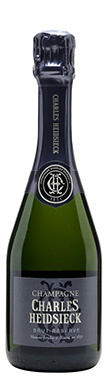
Showing much more development here, with its golden colour and aromas of coffee and roasted hazelnuts. Despite only very subtle bubbles now, it's intense and...
Charles Heidsieck
Charles Heidsieck, Brut Réserve Mis en Cave 2008, Champagne, France
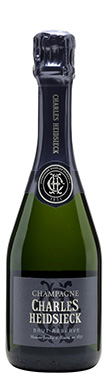
Bright vintage gold colour, showing evolved characters of honey, almond and mocha, with the richness of golden raisins and vanilla. It's creamy and fairly viscous,...
Charles Heidsieck
Charles Heidsieck, Brut Réserve Mis en Cave 1989, Champagne, France
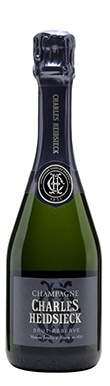
Deep golden colour, this is mostly about tertiary characters now, having moved on from primary fruit to a more dried and candied fruit profile. Honey,...
Charles Heidsieck
