
Château Angélus: producer profile
With high-profile associations including a high-grossing film franchise and various Michelin-starred restaurants, Château Angélus clearly enjoys being in the limelight. But what’s the story behind this acclaimed St-Emilion estate and its distinctive label?


Moneypenny, James Bond, Q. Not a bad trio for your wine to share the screen with in its latest cameo. I’ll try not to give too many spoilers if you haven’t yet seen No Time To Die, but I don’t think it gives too much away to say that Bond can’t resist swiping two generous glasses of Château Angélus (2005, although you don’t see the vintage on screen) for himself and Moneypenny from a bottle that Q had carefully opened for his date later that night.
This is the third Bond film in which Angélus has made an appearance; the 1982 was drunk by Vesper Lynd and Bond on the train to Montenegro in Casino Royale, while the 2005 vintage can be spotted in Spectre.

The association with Bond has taken the already-famous label – pale yellow, distinctive black writing surrounding a golden bell – to an audience of billions worldwide. So far, so clever product placement.
Scroll down to see tasting notes and scores for a selection of Château Angélus wines
But the bell, as with so much of the story of this wine, is not just smart marketing but an authentic symbol of the roots and location of the winery itself. It has been on every Angélus label since the 1945 vintage, and is a reference to the bells that you can hear from this spot – on the northwestern edges of St-Emilion. Here, in the biggest of the communes that surround the town, to its west, there are records of vines growing as far back as the 12th century.
The vines are on south-facing slopes that follow a natural amphitheatre shape, from where you can hear the ringing bells of three neighbouring church towers – belonging to the Mazerat chapel, St-Martin-de-Mazerat church and the main St-Emilion church.
Even the name Angélus is a reference to these bells ringing out the call to the Angelus prayer, which used to punctuate the working day in the morning, noon and evening. There are very few family-owned estates in Bordeaux that have been in the same hands since before the French Revolution. Still fewer that have gone on to become classified châteaux in Bordeaux rankings – on either bank, Left or Right.
And yet Château Angélus has been owned by the Boüard de Laforest family since 1782, when Jean de Boüard de Laforest bought a plot of vines in St-Martin-de-Mazerat. In 1795, Jean’s daughter Catherine married Charles Souffrain de Lavergne, whose family had a plot of vines in the same village, and the couple moved to Mazerat.
The estate at the time was known as Château Mazerat, and continued to be known under that name until the early 20th century, when a neighbouring property, Clos de l’Angélus, was bought by Maurice de Boüard de Laforest, who had inherited the Mazerat estate. The new name was used as an alternative to Mazerat at first, then for the whole estate from 1945.
Today run by eighth-generation Stéphanie de Boüard-Rivoal, Angélus has been a premier grand cru classé A of the St-Emilion ranking since the 2012 vintage.

It’s a property where things have moved fast in recent years – because of its promotion in the ranking, but also due to a host of new viticultural techniques, and stunning new cellars that were built by craftsmen known as the Compagnons du Tour de France, using techniques that date back to the Middle Ages.
It’s also seen a significant expansion in its footprint of vines, today standing at 52ha. This makes Angélus one of the biggest properties in the appellation, although at its heart are the 27ha of classified vines surrounding the main château building.
Château Angélus: the facts
Founded 1782 Owned by Boüard de Laforest family
Director Stéphanie de Boüard-Rivoal
Varieties planted 53% Merlot, 46% Cabernet Franc, 1% Petit Verdot
Estate 52ha: 27ha for 1GCCA Château Angélus; 25ha for second wine Carillon d’Angélus and No3 d’Angélus
Vinification New cellars in St-Magne-de-Castillon
Other The family also owns 20ha in Castillon, used for Tempo d’Angélus (first vintage 2021)
Château Angélus: a timeline
1782 Jean de Boüard de Laforest buys a plot of vines in St-Martinde-Mazerat
1795 Jean’s daughter Catherine Sophie de Boüard de Laforest marries Charles Souffrain de Lavergne, settling in St-Martin-deMazerat, where both families have land
1815 The two families’ land is joined together
1910 Maurice de Boüard inherits the Mazerat property from his aunt Eugénie Souffrain de Lavergne
1922 Maurice buys Clos de l’Angélus from his neighbour
1945 All bottles from the 12ha estate are bottled under the Angélus name for the first time
1955 Angélus is named a GCC in the first St-Emilion classification
1972 Angélus 1959 is served at the Elysée Palace during a visit from HM Queen Elizabeth II
1985 Hubert de Boüard, aged 29, takes over the estate
1996 Promoted to 1GCC
2012 Promoted to 1GCCA
2012 Stéphanie de Bouard Rivoäl takes over as director

Stylistic developments
‘Very few family-owned estates in Bordeaux have been in the same hands since before the French Revolution – still fewer have gone on to become classified châteaux’
In some ways, Angélus has remained extremely stable over the past century.
It was one of the first estates in St-Emilion to use a high percentage of Cabernet Franc, dating right back to the 1920s, for the rather lovely reason that owner Maurice de Boüard de Laforest’s wife was called Elizabeth Bouchet, and Bouchet is an old French synonym for Cabernet Franc.
To honour her, Maurice upped plantings of the grape to 45% of total plantings in the 1920s. Today, its wines continue to have some of the highest proportions of Cabernet Franc in St-Emilion, bringing a distinctive sculpted, floral perfume and fresh structure to the fleshy, creamy and welcoming black fruits that are such a signature of Angélus.
At the same time, the style has unquestionably evolved over the past few decades. Stéphanie’s father, Hubert de Boüard, dates the beginning of these style changes to 1980, when his professor at the oenology research department of the University of Bordeaux, Emile Peynaud, visited the estate. One of France’s most famous oenologists in the 20th century, Peynaud tasted through a range of his student’s wines, and politely murmured his appreciation. But it was only when de Boüard brought out two older vintages from the cellar, the 1953 and 1955, that he really became animated.
‘Young man, there is real potential for this estate,’ de Boüard remembers Peynaud saying. ‘You have something important to do here.’ And ‘it was a message I have never forgotten’, he says. De Boüard had begun working alongside his father, taking over fully in 1985.
He was one of the key winemakers at the time, alongside the likes of Michel Rolland, Christian Moueix and Michel Delon, to experiment with new ways of achieving full ripeness in the grapes. Techniques included green harvesting (dropping fruit before it becomes ripe, halfway through the season, in order to concentrate the fruit left behind), raising the surface of the leaf canopy to expose the grapes to more sunlight, and increasing the density of plantings to increase competition for water and therefore driving roots deeper.
The first sorting tables were introduced at Angélus in 1986, a full decade before many other estates, and the old drainage systems were cleaned up and improved. ‘The biggest impact this had,’ says de Boüard, ‘was on the Cabernet Franc.’ Until this point, both Merlot and Cabernet Franc had been harvested at the same time, but de Boüard found that leaving the Cabernet Franc to reach full ripeness, particularly on the unusual soil where it is planted – with sandy loam topsoil and a dense clay underneath – gave extraordinary power and concentration.
‘This is our signature,’ he says, ‘and it gives the wines the distinction and character that is the expression of a truly great terroir.’

See all Château Angélus tasting notes and scores
Last chance to buy Château Angelus virtual masterclass tickets for Decanter at Home event
Exploring biodiversity
This is an estate where details count. In the vineyard, although many of the changes introduced in the 1980s are no longer the right ones in the era of a warming climate, the obsessional attention to detail is still a marker of the property.
After years of groundwork increasing biodiversity across the property, Angélus has begun the conversion to organic farming, starting with the 2021 vintage. An agroforestry project has also been ongoing for the past six years, with the planting of oak, beech, plum, apple, pear and about 15 other species of trees among the plots of vines.
In the cellars, the wine is fermented in a range of oak and stainless steel vats for the Merlot, and concrete tanks for the Cabernet Franc. Ageing takes place for up to 22 months in a mix of fine-grained French oak barrels – each with different levels of toasting for the Merlot and the Cabernet Franc, and larger-sized oak casks for the Cabernet Franc, introduced over recent vintages to ensure a softer balance of oak to fruit.
Long-term winemaker Emmanuelle Fulchi, who joined Angélus as a trainee in 1990 before returning full-time in 1996, made her last vintage in 2020, with Benjamin Laforêt taking over as technical director for the 2021 vintage alongside Hubert de Boüard de Laforest. He will be overseeing the continued conversion to organics, and the development of the agroforestry project.
Outside the winery
In 2013, Stéphanie de Boüard-Rivoal bought a local restaurant, Logis de la Cadène, on one of the steepest cobblestone streets in the medieval village of St-Emilion. She asked Bocuse-trained chef Alexandre Baumard to come on board, and he went on to earn the restaurant a Michelin star.
Since 2019, the de Boüards have also owned Le Gabriel in Bordeaux city centre, on the Place de la Bourse. The venue comprises a bistro, a cocktail bar and a fine-dining restaurant, L’Observatoire du Gabriel, which, with Baumard at the helm, gained its first Michelin star earlier this year.
‘I was aware of Alexandre’s talent and ambition,’ says de Boüard-Rivoal, ‘and wanted to give him the ability to showcase it on a bigger stage.’ Where that goes from here is not yet certain. ‘The restaurant world has undergone such a difficult few years,’ she says, ‘but we strongly believe in developing the link between food and wine, and placing Angélus at the centre of a virtuous circle in terms of using local produce and supporting local farmers.’
The family intends to create a farm on land between St-Emilion and Bordeaux, where they can grow vegetables and other food for both restaurants, to ensure a short supply chain and to limit their carbon footprint. But above all, the main strategy for the next five years, according to de Boüard-Rivoal, is about consolidation, after 10 years of rapid growth.
‘We are now looking at our internal organisation,’ she says, ‘and how to ensure that all the projects we have started can be reinforced, and strengthened into the future.’
See tasting notes and scores for a selection of Château Angélus wines
Related content
Bordeaux’s Château Angélus stars in new Bond filmAngélus and Cult Wines explore NFT trendChâteau de Millery: a hidden gem in St-EmilionSt-Emilion & Pomerol: Six big name side projects worth knowing
Last chance to buy Château Angelus virtual masterclass tickets for Decanter at Home event
Château Angélus, Carillon d'Angélus, St-Émilion, Bordeaux, France, 2016
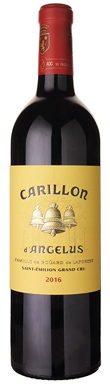

Still young, far more so than the 2015, and you really see Carillon d'Angélus taking a step forward in precision - something that has been...
2016
Château AngélusSt-Émilion

Château Angélus, Carillon d'Angélus, St-Émilion, Bordeaux, France, 2015
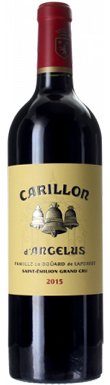
The colour is just beginning to soften around the edges at six years old, although primary raspberry and red cherry fruit are still very much...
2015
Château AngélusSt-Émilion
Château Angélus, St-Émilion, 1er Grand Cru Classé A, Bordeaux, France, 2012
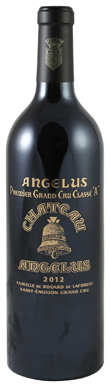
Exotically perfumed, with ripe, lushly textured fruit. A complete and showy example of great, polished modern claret at its best, when the owner was successfully...
2012
Château AngélusSt-Émilion
Château Angélus, St-Émilion, Grand Cru Classé, Bordeaux, France, 2011
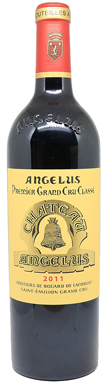
Fine tannins, this is elegant and finessed, with cool blueberry and raspberry fruits, touches of orange peel, rose petal and slate. Well balanced, precise and...
2011
Château AngélusSt-Émilion
Château Angélus, St-Émilion, Grand Cru Classé, Bordeaux, France, 2009
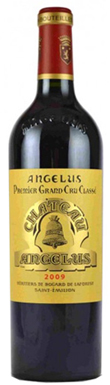
Intense chocolate and turmeric spices hit you right form the first moment. This is richly textured with a palate that is still almost primary fruit...
2009
Château AngélusSt-Émilion
Château Angélus, St-Émilion, Grand Cru Classé, Bordeaux, France, 2007
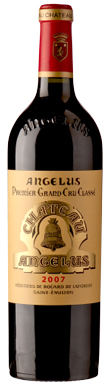
Intense and enticing campfire smoke, this has beautiful rich fruits behind the grilled aromatics, and is open and just about ready to begin drinking. A...
2007
Château AngélusSt-Émilion
Château Angélus, St-Émilion, Grand Cru Classé, Bordeaux, France, 2001
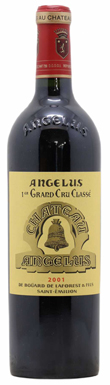
Easily one of the most impressive Bordeaux 2001s that you can find. Full of liquorice, lashings of textured chocolate shavings, smoked earth and black truffle...
2001
Château AngélusSt-Émilion
Château Angélus, St-Émilion, Grand Cru Classé, Bordeaux, France, 1989
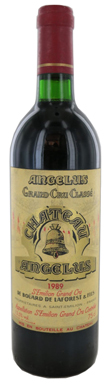
Even at 32 years old the tannins are dense, even chewy, still so much power. Here you get pure black truffle, along with olive paste,...
1989
Château AngélusSt-Émilion
