
Tasting Château Couhins-Lurton wines from 2008 to 2018
It's an exciting time for this Pessac-Léognan estate, says Jane Anson, who tastes its wines back to the 2008 vintage and interviews Jacques Lurton about taking on the legacy of his late father, André.


When André Lurton passed away in May 2019, he left one of the most significant vineyard holdings in Bordeaux, with over 600 hectares of vines across much of southern Bordeaux, 10 châteaux – including Château Couhins-Lurton – and 125 permanent staff in the vineyards alone.
It was a serious achievement for a man who took over his father’s 50ha estate in Entre-deux-Mers in 1953 only to lose the vines to frost three years later. He later grew that estate, Château Bonnet, into one Bordeaux’s biggest wine brands.
However, the heart of the company’s ambitions lay in Pesac-Léognan, an appellation that may never have existed if it hadn’t been for Lurton’s own lobbying.
Scroll down to see Jane Anson’s Château Couhins-Lurton tasting notes
The focus was particularly placed on Château La Louvière, an estate with a history that dates back to the early 1300s. A listed historical monument, La Louvière became André Lurton’s de facto headquarters.
‘La Louvière was always the focus for my father, because it is such a beautiful estate and a great place to focus on for wine tourism,’ Jacques Lurton told me last week, as we spoke via a Zoom interview even though our houses are just 10 miles apart in Bordeaux.
‘But it meant that our best quality Pessac-Léognan estate, Couhins-Lurton, has been lying a little dormant.’
Jacques Lurton returned to the family business last year as president, after a hugely successful career as a winemaker and wine consultant across France, Italy, Spain, Portugal, California and South Africa, first with his brother François and then on his own.
I’ve also loved the wines that he’s been making at estates like The Islander on Australia’s Kangaroo Island, as well as his approach as a consultant; focusing on organic and biodynamic farming, but always with a tonne of common sense.
So it’s a little bittersweet that this new role has meant that he’s resigned all of his consultancies in recognition of the scale of work involved in heading up a company of this size in Bordeaux, particularly one that had lost a little direction over the past few years.
For a group so instrumental to the history of Pessac-Léognan, it had become uncomfortably clear that there was a gap at the top when André Lurton began stepping back from day-to-day work as he approached his 90s. Credit Agricole arrived as a minority shareholder in 2012, and there was lack of a clear line of succession among Lurton’s seven children.
Jacques Lurton is now filling this gap.
‘By July 2019 I had stepped back from all other commitments and was ready to focus entirely on the family company;’ he said.
‘The only consultancy I have kept is an unofficial one with my brother Gonzague at Durfort-Vivens in Margaux’.
This focus has also been made easier, albeit painfully so, by the devastating bush fires in Australia in December 2019 and January 2020, which burned his entire vineyard on Kangaroo Island, along with the winemaking facilities and most of his equipment.
‘The only thing that remains is the wine cellar,’ said Lurton. ‘It’s been tough, but in some ways it provided another break with my life before. I try to look positively on things.’
The Islander brand will continue, and the team has cut the vines down to just 10cm to see if any regrow. For now, the wine is being made on the mainland from neighbours’ fruit, with just the cellar door open at the winery. All of which must have given a sense of equanimity when a second disaster followed in the form of Covid-19.
‘It’s certainly changed our plans a little here, as it has with everyone,’ he said. ‘We are lucky because our vineyard staff at Vignobles André Lurton are in-house.
‘We don’t outsource the work, and so have been better able to cope with the lockdown, but there is no doubt that certain planned investments will be put back.
This would be the case ‘everywhere except Couhins-Lurton, because the work there is too important to wait’, he added.
‘And besides, it’s necessary for the morale of the team that we have something to focus on after the difficulties of the past few months.’
Couhins-Lurton is a wine that stands out in the appellation, and this new focus is long overdue in my opinion.
It’s one of only a handful of estates that are classified as Cru Classé de Graves for its white wine, and is a 100% Sauvignon Blanc that shows how nuanced and complex that particular grape variety can be on the right soils.
The estate, owned by André Lurton since 1972, had originally been classified simply as Château Couhins, but it was granted the right to keep its ranking when one section of the vineyard was split off to become Couhins-Lurton. The original Château Couhins is also still in existence, today owned by France’s agricultural research institute, INRA.
Lurton bought the château building also, which was lived-in by the previous owners, the Gasquetons of Calon Ségur, until the mid 1980s. It has since been left in pretty much alone. Renovations have only made to the walls and roof, but nothing inside.
‘This meant that we were not able to be members of the Union de Grands Crus de Bordeaux (UGCB),’ said Lurton, ‘because there were no reception facilities, and it meant that even though we had a classified white wine, we lost a lot of visibility.’
The plans to correct this shows neatly how Bordeaux works at the top end; first to become members of the UGCB and so take part in its global tastings, and also to put sales of the estate through the négociant system of the Place de Bordeaux, rather than through Lurton’s in-house – and successful – sales network.
‘It has been part of the DNA of André Lurton to do everything in-house, to be self-sufficient through our own sales team,’ said Lurton. ‘That is of course a great strength right now with the issues of Covid-19, but for Couhins-Lurton, I believe we need to harness the power of the négociant system to increase the profile and value of a property that has not been exposed to the light for some years.’
Strategy aside, I’m personally excited about Lurton’s arrival in terms of the wines themselves. I’ve long been impressed with the Couhins-Lurton wines, but have found generally the Lurton Pessacs to be playing things a little safe.
A decision six years ago to halt bottling under screwcap also seemed to be to be playing to the traditionalists.
‘Having 100% Sauvignon Blanc on the limestone soils of Couhins-Lurton gives us enormous potential for quality,’ said Lurton.
‘It’s an extremely reactive grape, where even half a day makes a different during harvest in terms of style. We have natural high acidities and no water stress on our soils but need careful handling to avoid razorblade sharpness.
‘I have been looking to bring a little more sweetness by leaving the grapes for longer before harvest to give extra mouthfeel without diminishing ageing potential. We are also introducing amphorae for part of the ageing, and moving away from barrels towards 500-litre casks.
‘We will also have a new bottling line from 2020 that will allow a luxury screwcap to be reintroduced for a small part of the whites production.’
The house style for the reds seems less clearly defined than for the whites, something that was fairly obvious in this vertical tasting.
Maybe this is not entirely surprising, because Couhins-Lurton made only white wine until a plot of red grapes was added in 1988. But, it is something that stands out for me compared to the consistent personality of the whites.
The red grapes today are in the majority, with an impressive plot of 20ha on quality land close to Smith Haut Lafitte. And it is here that Lurton’s experience in the New World of winemaking can most usefully come into play.
‘From consulting at Duhart-Vivens with my brother,’ he said. ‘The quality of the Merlots there with their classicism and finesse has been very impressive. I would like to underline this, but also focus on fruit integrity and aromatics.
‘In Bordeaux winemakers tend to talk about complexity and structure, and less about fruit and aromatics, something that is given more importance in Australia and elsewhere. It is something that I would like to redress.
‘We have an extremely talented team with Anne Neuville, who joined us from Château de Fieuzal, and managing director Pascal le Faucheur. My job is simply to give direction and focus, and to help us look outwards.’
The Lurton estates
- In Pessac-Léognan: Couhins-Lurton, La Louvière, Cruzeau, Rochemorin, Quantin.
- Bonnet in AOC Bordeaux, Entre-deux-Mers.
- Barbe Blanche in Lussac-St-Emilion.
Jane Anson’s tasting notes and scores for Château Couhins-Lurton wines
You may also like:
Tasting Phélan Ségur: A gem in St-Estèphe
Margaux: Tasting 11 years of Cantenac Brown
From the archive: 30 years of Pessac-Léognan wines
Château Couhins-Lurton, Pessac-Léognan, Bordeaux, France, 2018
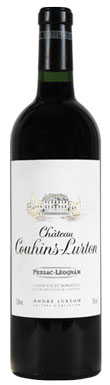

Dense with lots of promise, roasted meat, mineral slate, and clove spice, very perfumed. Herbal, black tea, cocoa and dark fruit palate with integrated tannins,...
2018
Château Couhins-LurtonPessac-Léognan

Château Couhins-Lurton, Pessac-Léognan, Bordeaux, France, 2017
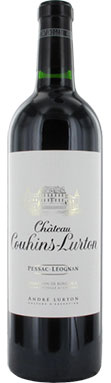
Just three years old but already showing poise and character and plenty of juicy black fruits. You could drink now to make the most this...
2017
Château Couhins-LurtonPessac-Léognan
Château Couhins-Lurton, Pessac-Léognan, Bordeaux, France, 2016
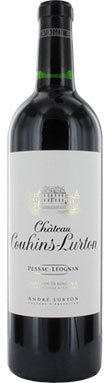
Evolved aromatics, from tobacco and cedar to nuances of leather and spice with hints of ripe black cherry and blackberry notes. Harmonious, with refreshing acidity...
2016
Château Couhins-LurtonPessac-Léognan
Château Couhins-Lurton, Pessac-Léognan, Bordeaux, France, 2015
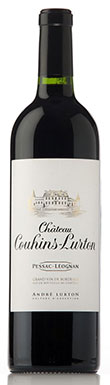
93
Silky tannins, plenty of raspberry and black cherry fruits, touches of smoked oak and fresh acidity that gives this good shape through the palate. This is still young but it is hugely promising, reflecting the quality of the vintage and of the estate's location. You will find more concentrated 2015s but this is accessible and finely tuned, and again has lovely Pessac elegance and balance.
2015
Château Couhins-LurtonPessac-Léognan
Château Couhins-Lurton, Pessac-Léognan, Bordeaux, France, 2014
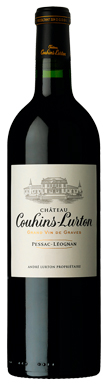
Tightly knitted, this has broad shoulders and firm tannins, and needs another few years. It's enjoyable, and there is dense black fruit here that will...
2014
Château Couhins-LurtonPessac-Léognan
Château Couhins-Lurton, Pessac-Léognan, Bordeaux, France, 2012
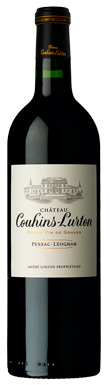
This 2012 has more generosity than the 2011, and is showing better at this stage. Soft fleshy brambly fruit, gentle spice with menthol freshness running...
2012
Château Couhins-LurtonPessac-Léognan
Château Couhins-Lurton, Pessac-Léognan, Bordeaux, France, 2011
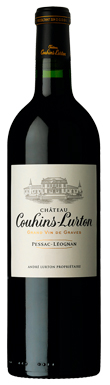
A touch of reduction on the first nose, this needs time and has slightly awkward tight tannins right now. There is clear blackberry and redcurrant...
2011
Château Couhins-LurtonPessac-Léognan
Château Couhins-Lurton, Pessac-Léognan, Bordeaux, France, 2010
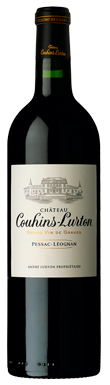
Deeper, richer and more confident in colour than the 2009, this clearly shows that this vintage has higher acidities and has allowed the Merlot of...
2010
Château Couhins-LurtonPessac-Léognan
Château Couhins-Lurton, Pessac-Léognan, Bordeaux, France, 2009
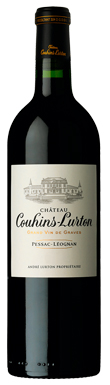
Softened ruby red around the edge, this is a little more evolved than I might have expected for such an exceptional vintage. Lovely plummy fruit...
2009
Château Couhins-LurtonPessac-Léognan
Château Couhins-Lurton, Pessac-Léognan, Bordeaux, France, 2008
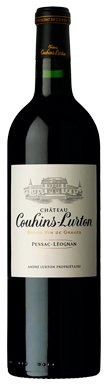
Couhins-Lurton is only classified in white (it wasn't producing red at the time of the ranking), but this is an excellent wine. At the tertiary...
2008
Château Couhins-LurtonPessac-Léognan
Château Couhins-Lurton, Pessac-Léognan, Cru Classé de Graves, Bordeaux, France, 2018
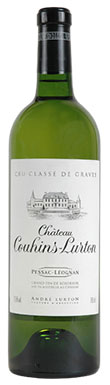
This is excellent - cut through and spliced in terms of its acidity with some white pepper notes, citrus zest and lemon. Power and minerality...
2018
Château Couhins-LurtonPessac-Léognan
Château Couhins-Lurton, Pessac-Léognan, Cru Classé de Graves, Bordeaux, France, 2017
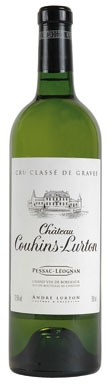
Closed right now but with clear potential. I love the flinty gunsmoke character alongside plenty of tension that softens and expands through the mid palate...
2017
Château Couhins-LurtonPessac-Léognan
Château Couhins-Lurton, Pessac-Léognan, Cru Classé de Graves, Bordeaux, France, 2016
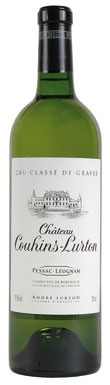
Powerfully aromatic with grapefruit, lemon verbena and grassy tones. Classy oak and ripe fruit on the palate supported by a tangy acidity.
2016
Château Couhins-LurtonPessac-Léognan
Château Couhins-Lurton, Pessac-Léognan, Cru Classé de Graves, Bordeaux, France, 2015
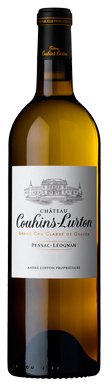
Similar in style to the Château La Louvière although the oak is not quite as well integrated at this stage. The wine has full body,...
2015
Château Couhins-LurtonPessac-Léognan
Château Couhins-Lurton, Pessac-Léognan, Cru Classé de Graves, Bordeaux, France, 2014
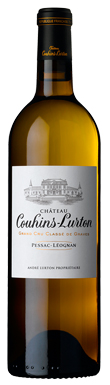
High Sauvignon aromatics, along with rich mid-palate depth and lingering stone fruit and citrus flavours that have grip and slate texture. It's very classy white...
2014
Château Couhins-LurtonPessac-Léognan
Château Couhins-Lurton, Pessac-Léognan, Cru Classé de Graves, Bordeaux, France, 2013
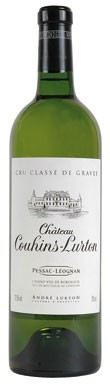
92
You can tell this is from a quality vintage, there is power and concentration, confit lemon and lime blossom. Colour is dark gold, a little more evolved than I expected with honeysuckle edges suggesting that the flavours also starting to evolve, but this is great quality all the same.
2013
Château Couhins-LurtonPessac-Léognan
Château Couhins-Lurton, Pessac-Léognan, Cru Classé de Graves, Bordeaux, France, 2012
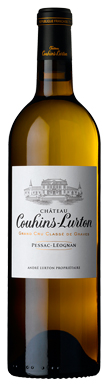
A delicious white wine with depth and character, not quite the pep of citrus and lime zest as the 2012, a slightly more gourmet take...
2012
Château Couhins-LurtonPessac-Léognan
Château Couhins-Lurton, Pessac-Léognan, Cru Classé de Graves, Bordeaux, France, 2011
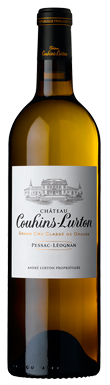
This was bottled under screwcap, something that must surely play in part in how incredibly young and fresh it tastes. Easily could mistake it for...
2011
Château Couhins-LurtonPessac-Léognan
Château Couhins-Lurton, Pessac-Léognan, Cru Classé de Graves, Bordeaux, France, 2010
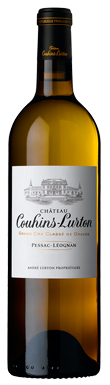
The colour and aromatics of this 2010 are still fresh, it could almost be a three year old wine. Touches of lemon confit, as with...
2010
Château Couhins-LurtonPessac-Léognan
Château Couhins-Lurton, Pessac-Léognan, Cru Classé de Graves, Bordeaux, France, 2009
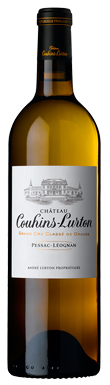
Rich deep golden colour, almost canary yellow. This has so many signatures of an older Pessac white - it's extremely savoury with touches of saffron...
2009
Château Couhins-LurtonPessac-Léognan
Château Couhins-Lurton, Pessac-Léognan, Cru Classé de Graves, Bordeaux, France, 2008
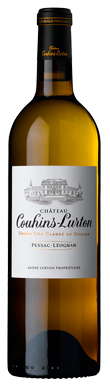
The last year under screwcap, and again this feels fresh and juicy. The colour has deepened over the past decade to a pale spun gold,...
2008
Château Couhins-LurtonPessac-Léognan
