
Château Palmer wines: The ‘5’ and ‘0’ vintages from 1990 to 2015
Jane Anson reports on this vaunted estate's biodynamic strategy and new release plan, before revisiting some of the key vintages of the past 30 years, including 1990, 2005 and 2010.


Palmer is an 1855 third growth that has not been afraid to reinvent itself in recent years; something that makes a vertical tasting spanning 30 years particularly interesting.
Moreover, we are looking here at Château Palmer wines over five-year intervals, covering the Palmer 2015, 2010, 2005, 2000, 1995 and 1990 vintages, which neatly showcases the impact of ageing on a classified Margaux.
Scroll down to see Jane Anson’s Palmer tasting notes and scores
It’s an estate that has always been both deeply entrenched in the heart of Margaux, and yet something of an outlier.
That’s not just because it is today one of only a handful of fully certified organic and biodynamic châteaux in the appellation.
Palmer also bucks the rules of the Médoc by planting its Merlot grapes (which form a higher proportion of the vineyard than many in Margaux) on some of its best gravel outcrops, helping explain the velvety tannins and seductive fruits that are such a marker of the wine.
And, as of this September, it is due to become the second 1855 classified growth, after Latour, to explicitly set out a new sales strategy.
While Latour left the en primeur system in 2012, Palmer is keeping 50% of sales through en primeur but will also annually release older vintages at the 10-year mark from now on, starting with the Château Palmer 2010.
I would expect this to be agenda-setting for other classified châteaux, shedding light on why en primeur release quantities have been shrinking across the big Bordeaux estates. Indeed, this September we are due to see Latour 2009, Palmer 2010 and older vintages (as yet unknown) of Léoville Las Cases all released through the Place de Bordeaux.
Palmer’s ownership structure is also unusual, because it is one of only a handful of estates that remains in the hands of an English family, or rather an English-French-Dutch consortium in the form of the Sichel and Mahler-Besse families, two active merchant houses who have owned Palmer since 1938 – with more than 70 family shareholders between them.
Château Palmer fact file:
Total plantings: 55 hectares (ha)
Grape varieties: 47% Merlot, 47% Cabernet Sauvignon, 6% Petit Verdot.
Certification: Biodynamic since 2017.
Around 10 years ago, I drove to a now-unassuming suburban street outside of the city of Bath, looking at what was once the site of a mansion (long since demolished) belonging to Charles Palmer, the man who gave Château Palmer its name.
He was an English military commander who was a member of the 10th Hussars working as Aide de Camp to King George IV, fought against Napoleon in the Peninsula Wars and ended up buying Palmer in 1815. It was previously known as Château de Gasq.
The story of the purchase is now legendary, although as it was first told by a renowned gossip, Captain Gronow, in his memoirs of the Peninsula Wars, and so may be less than 100% accurate.
Gronow tells of Palmer travelling in a coach, then called a diligence, from Lyons to Paris (‘a journey then requiring some three days’), where he met a charming widow who ‘told a tale that not only had a wonderful effect upon his susceptible heart, but upon his amply-filled purse.
‘She said her husband, who had been the proprietor of one of the finest estates in the neighbourhood of Bordeaux, was just dead, and that she was [to] sell the property, that it might be divided, according to the laws of France, amongst the family.
‘Owing however to the absolute necessity of forcing a sale, that which was worth an enormous sum would realise one quarter only of its value. She described the property was one admirably fitted for the production of wine that it was, in fact, the next estate to Chateau Lafitte, and would prove a fortune to any capitalist.
‘The fascinations of the lady, and the temptation of enormous gain to the speculator, impelled the gallant general officer to offer his services to relieve her of her embarrassment; so by the time the diligence arrived in Paris he had become the proprietor of a fine domain.’
Palmer obviously got over the disappointment of his new property not being ‘the next estate to Château Lafitte’.
He did did much to enlarge the property by buying up local plots of vines, but proved a less than successful businessman, and ended his life in debt, with the estate sold in 1843 at a considerable loss. There are suggestions that the financial implications of this point to why Palmer was named a 3rd Growth in the 1855 Classification, rather than climbing higher in the ranking.
Ten years later, the Pereire banking brothers from Paris became owners, just three days after Nathaniel Rothschild bought what would become Mouton Rothschild in Pauillac, together marking the arrival of financial giants in the Médoc.
Today there is no question that Palmer sits at the highest level of 1855 quality, with wines that, as this tasting showed, age slowly and carefully, adding layers of complexity as they go. And since 2010, the conversion to organics and biodynamics has helped shape its modern identity.
‘Before biodynamics, I had always been taught to think about science, agronomy and oenology (in the winemaking process),’ says estate director Thomas Duroux.
‘But now we step back and look at the needs of our soils, what trees would be best to grow in the vineyard, which birds to encourage to deal with vineyard insects – even the swamp land down by the Garonne river is important to keep bugs away.
‘We graze up to 200 sheep across the winter months of October to March, keeping them on the cover crops between the rows of the vines. We have had chickens since 2014, and cows since 2015, making exceptional compost. It’s all about balance and understanding the bigger picture.’
The approach adds layers of precision and finesse, drawing out the floral character of the wine that has always been evident in Palmer, and that in this vertical is particularly clear in the older vintages.
The scores themselves tell you how consistently Palmer performs, and it will be absolutely fascinating to watch how today’s young vintages develop now that Palmer is farmed biodynamically with lower levels of sulphur used in winemaking and ageing. My expectations are set high.
See Jane Anson’s Palmer tasting notes and scores
You may also like
Pomerol vertical: Château La CabanneMouton Rothschild interview: MD Philippe Dhalluin to retireBordeaux 2019 wines: Our en primeur verdict
Château Palmer, Margaux, 3ème Cru Classé, Bordeaux, France, 2015
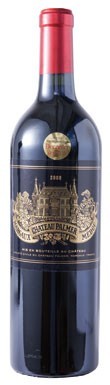

Six months from the last time I tasted this wine and it is a little more closed than it was, as the 2015s begin to...
2015
Château PalmerMargaux

Château Palmer, Margaux, 3ème Cru Classé, Bordeaux, France, 2010
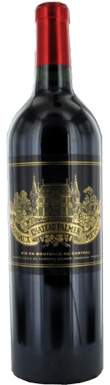
One of the great years of Bordeaux now at 10 years old and showing why this is such an unusual vintage in terms of the...
2010
Château PalmerMargaux
Château Palmer, Margaux, 3ème Cru Classé, Bordeaux, France, 2005
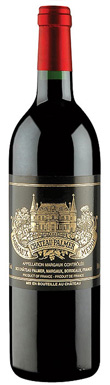
A heady, exuberant wine. Very expressive and chockablock full of violets and swathes of flowers. Shows great Margaux typicity. The elegance gives way to an...
2005
Château PalmerMargaux
Château Palmer, Margaux, 3ème Cru Classé, Bordeaux, France, 2000
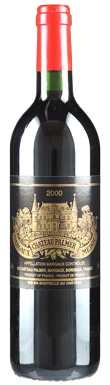
Now at 20 years old, and absolutely singing, after a sometimes frustratingly slow start to its life. The tannins are ripe but rich and still...
2000
Château PalmerMargaux
Château Palmer, Margaux, 3ème Cru Classé, Bordeaux, France, 1995
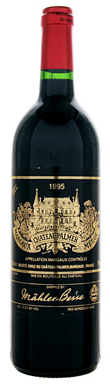
The wild strawberry sweetness and curling floral aromatics of a great older Margaux is starting to creep in at this point, along with clear white...
1995
Château PalmerMargaux
Château Palmer, Margaux, 3ème Cru Classé, Bordeaux, France, 1990
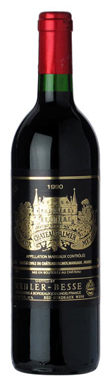
The last in a series of three stellar vintages with the 1988-1989-1990, with this one delivering concentrated wines in its early years that took their...
1990
Château PalmerMargaux
