
Château Pichon Baron: vertical tasting from 2000-2020
Yohan Castaing visits Pauillac second grand cru classé estate Château Pichon Baron, one of the crown jewels of the Bordeaux classified growths, for an exceptional 21-vintage vertical tasting.


‘I think it’s time for a vertical tasting of Château Pichon Baron,’ said Christian Seely, managing director of AXA Millésimes, the company that owns this crown jewel of the Bordeaux classified growths.
He made this announcement to me in perfect French but with a just a hint in his voice of that understated British humor many feel is indispensable to any native of Great Britain.
Scroll down to see tasting notes & scores for every Château Pichon Baron wine from 2000-2020
This was an invitation impossible to refuse, especially since this property is such a legendary estate in the region.
History of the estate
Its origins date back to 1689 when Pierre Desmezures de Rauzan bought some parcels of vines near Château Latour to create what he then called Enclos Rauzan. These vines were part of the dowry of his daughter Therese for her marriage to Baron Jacques Pichon de Longueville in 1694, who then founded the estate that same year.
In 1850, the property was divided in two. One part remained the property of Baron Raoul Pichon de Longueville and formed what we call today Château Pichon Baron, while the other part went to his three sisters to form Château Pichon Longueville Comtesse de Lalande, or Pichon Comtesse for short.
In 1851, the baron ordered the construction of the Renaissance-style castle that is still an eye-catching landmark today with its witch-hat turrets. In 1933, the Pichon de Longueville family sold the estate to the Bouteiller family who owned it for nearly 50 years.
In 1987, AXA Millésimes bought the estate with the ambition of restoring the reputation of its wines, whose luster had dimmed. The estate was managed by Jean-Michel Cazes, owner of nearby Château Lynch-Bages, until 2000, when Christian Seely took charge.
The estate in Christian Seely’s hands
English by birth, Christian’s father, James Seely, was the author of a remarkable book about Bordeaux wines on which Christian collaborated in the modest role of chauffeur and research assistant.
Prior to that, he had studied literature at the University of Cambridge, but somehow the combination of letters and wine labels led to him being recruited in 1993 by AXA Millésimes, subsidiary of the French insurance group that owned several wine estates, to manage their new Portuguese investment: the iconic Quinta do Noval in the Douro Valley.
In 2000, he was promoted to the position of managing director of AXA Millésimes.
Since then, Christian Seely has brought about both a stylistic evolution and a qualitative leap for the wines he had come to know and appreciate alongside his father.
To do so, he worked closely with his technical teams and in particular with Jean-René Matignon, the recently retired technical director of Pichon Baron, whose successor is Pierre Montégut.
Together they set out on their quest for excellence by implementing a more contemporary approach to viticulture and wine production and sought a better understanding of the estate’s terroirs to achieve greater precision for the match between soils and grape varieties.
This led to a reduction in the amount of Cabernet Franc in the vineyard, in favour of Cabernet Sauvignon, but Seely also made the crucial decision to source the grapes for the main wine only from the historic core of the 73ha vineyard, a 20ha parcel of old vines located just opposite Château Latour.
This understandably led to a considerable drop in production levels for the grand vin itself. It was a factor in the stylistic evolution seen since Seely arrived to take charge, clearly evidenced by this vertical tasting.
The evolution of style
Where the stylistic evolution of Pichon Baron is most evident is the trend toward wines that were less dense and oaky at a time when that very style was so desired.
This is a sign of Seely’s forward thinking, as we now know that such wines do not often go the distance after one or two decades, or at least not with the elegance that we expect of them.
Seely and his team have endowed the wines of Pichon Baron with more liveliness thanks to finely etched tannins as well as judicious acidity, providing both an appealing juiciness when young and remarkable aging capacity.
The overt oakiness of some past vintages, especially those from hot, ripe years, has vanished.
‘We have to make wines for contemporary consumers, and they ask us for wines that can be enjoyed when young and yet last for a long time,’ he explained during the tasting.
Today, Pichon Baron has become one of the great references of Bordeaux with its own singular style, one that even embraces a degree of delicacy and airiness that contrasts greatly with the sterner and more formidable substance of the past.
Tasting Pichon Baron 2000-2020
The 2016 and 2019 vintages are two superlative incarnations of Seely’s ambition for the estate, presenting wines of stunning purity and aromatic precision but also endowed with the vivacity, depth, and persistence on the palate that we expect of pedigree Cabernet Sauvignon wines.
This exceptional vertical tasting provided convincing testimony of Seely’s ambition.
It seems evident that the period starting in 2000 – a vintage when Jean-Michel Cazes was still in charge of the harvest and vinification before Seely took over for the crucial blending stage – and including 2004, was a necessary time of adaptation.
From 2005 onwards, the new style of Pichon Baron began to emerge, as the wines became less oaky and had a finer tannic structure that was more vertical than horizontal in nature.
With the 2007 vintage, the change toward a more seductive style is even more evident, although the oak influence seems more apparent at this stage.
The following three vintages – 2008, 2009 and 2010 – bring the pedigree of this classified growth into greater focus.
Then comes the impressive trilogy of challenging Bordeaux vintages of 2011, 2012 and 2013, which clearly demonstrate the estate’s technical mastery.
The crystalline delicacy and freshness of 2014 points the way to the current style, so beautifully exemplified by both 2016 and 2019, which will surely remain beacons of Pichon Baron at its finest, ones that will shine over the next two to five decades.
See tasting notes and scores for Château Pichon Baron wines from 2000-2020:
Related content:
AXA Millésimes appoints new technical director of Pichon Baron
Laurent Perrier Grand Siècle: vertical tasting
Domaine de L’Arlot vertical: four climats from 2015 – 2019
Château Pichon Baron, Pauillac, 2ème Cru Classé, Bordeaux, France, 2000
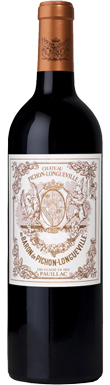

On the nose, graphite notes combine with black fruit including prunes, which highlight its solar character, but a minty and floral freshness adds aromatic lift...
2000
Château Pichon BaronPauillac

Château Pichon Baron, Pauillac, 2ème Cru Classé, Bordeaux, France, 2001
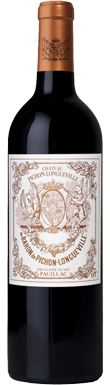
Enticing nose with a mix of fresh fruits, spices, and graphite as well as a captivating floral component adding interest. Impressive depth on a palate...
2001
Château Pichon BaronPauillac
Château Pichon Baron, Pauillac, 2ème Cru Classé, Bordeaux, France, 2002
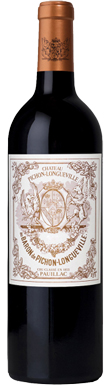
Black fruits and cherry interlaced with pleasant notes of mint, anise, and truffles. On the palate, the fine, precise tannic structure seems quite delicate but...
2002
Château Pichon BaronPauillac
Château Pichon Baron, Pauillac, 2ème Cru Classé, Bordeaux, France, 2003
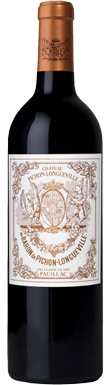
Not surprisingly for such a hot vintage, the wine has a degree of solar expression, but it also presents freshness and elegance, and has no...
2003
Château Pichon BaronPauillac
Château Pichon Baron, Pauillac, 2ème Cru Classé, Bordeaux, France, 2004
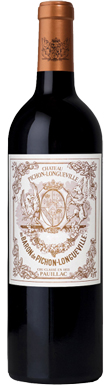
Pichon Baron 2004 impresses by its youthful energy and a floral bouquet brimming with black fruit including cherry. Aeration reveals a delightful minty freshness. A...
2004
Château Pichon BaronPauillac
Château Pichon Baron, Pauillac, 2ème Cru Classé, Bordeaux, France, 2005
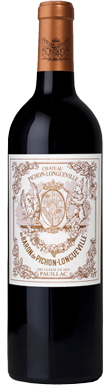
This 2005 stands out for its powerful mineral-infused expression, beginning with a deep, dense, complex bouquet mixing elements of graphite and fresh fruit as well...
2005
Château Pichon BaronPauillac
Château Pichon Baron, Pauillac, 2ème Cru Classé, Bordeaux, France, 2006
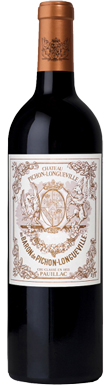
A rather solar expression suffuses the complex nose mingling notes of prunes, spices, and forest floor. This is not the most structured wine of this...
2006
Château Pichon BaronPauillac
Château Pichon Baron, Pauillac, 2ème Cru Classé, Bordeaux, France, 2007
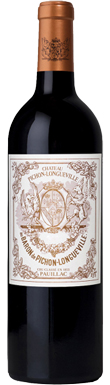
This is the first wine of this vertical tasting in which the barrel aging is aromatically apparent, but that is not to its disadvantage. Nose...
2007
Château Pichon BaronPauillac
Château Pichon Baron, Pauillac, 2ème Cru Classé, Bordeaux, France, 2010
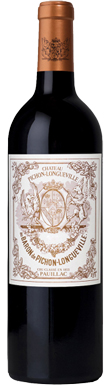
Cool blue and black fruits, crayon and floral scents. Bright, fleshy and round at first but quite serious and then lean where the fruit quickly...
2010
Château Pichon BaronPauillac
Château Pichon Baron, Pauillac, 2ème Cru Classé, Bordeaux, France, 2011
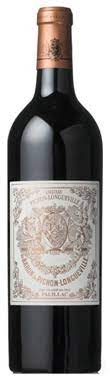
Juicy black fruits, including cherry, blackcurrant, and blueberry with an undercurrent of graphite. Medium body but an enticingly juicy and surprisingly creamy-textured mouthfeel in the...
2011
Château Pichon BaronPauillac
Château Pichon Baron, Pauillac, 2ème Cru Classé, Bordeaux, France, 2013
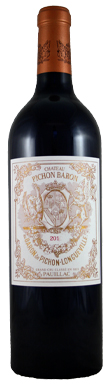
92
Pichon-Baron is never shy and retiring, and this is no exception. The nose has developed a savoury tone alongside its blackcurrant and liquorice aromas. It's compact, dense and imposing, with no sign of evolution. Robust and even chunky, it does lack some finesse but it's a typically assertive Pauillac with considerable staying power and length.
2013
Château Pichon BaronPauillac
Château Pichon Baron, Pauillac, 2ème Cru Classé, Bordeaux, France, 2015
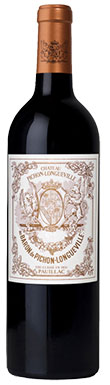
Yet another nose with standout freshness, even delicacy, but still quite youthful, mingling black fruit, spices, and spring flowers. A bit massive and still tightly...
2015
Château Pichon BaronPauillac
Château Pichon Baron, Pauillac, 2ème Cru Classé, Bordeaux, France, 2016
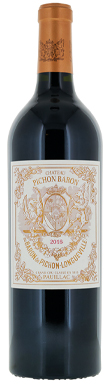
This prestigious Pauillac second growth, owned by insurance company AXA Millésimes, has become known for its structured, ageworthy wines since major investments began in the...
2016
Château Pichon BaronPauillac
Château Pichon Baron, Pauillac, 2ème Cru Classé, Bordeaux, France, 2017
Now part of the AXA Millésimes group, Pichon Baron was founded in the late 17th century. Its grand vin is sourced from the very oldest...
2017
Château Pichon BaronPauillac
Château Pichon Baron, Pauillac, 2ème Cru Classé, Bordeaux, France, 2018
Generous aromatics of dark berry fruit, caramel, and spice are clear indicators of a warm vintage, but there are also floral notes and no heaviness...
2018
Château Pichon BaronPauillac
Château Pichon Baron, Pauillac, 2ème Cru Classé, Bordeaux, France, 2019
At the moment, Pichon Baron is outmuscling it's neighbour across the road. Intense, concentrated and inky dark-currant fruit on the palate with pronounced lead-pencil/mineral notes....
2019
Château Pichon BaronPauillac
Château Pichon Baron, Pauillac, 2ème Cru Classé, Bordeaux, France, 2020
Gentle and delicately aromatic but rich too, full of coffee, mocha, dark chocolate, caramel and medicinal herbs - mint and aniseed with a combination of...
2020
Château Pichon BaronPauillac
