
Château Rocheyron: The St-Emilion project of Pingus founder Peter Sisseck
Andy Howard MW reports from a masterclass of Château Rocheyron wines and hears from co-owner Peter Sisseck, of Pingus fame, about plans for this under-the-radar St-Emilion estate.


St-Emilion undoubtedly contains some established superstar châteaux, with Cheval Blanc, Ausone, Pavie and Angélus sitting atop the Classification pyramid.
Several other estates have become uber-fashionable in recent years, often as a result of revitalised management and major investment. Canon, Figeac and Belair-Monange, for example, are now amongst the hottest properties in this part of Bordeaux.
So, a small estate purchased in 2010, with a low-profile name and classified as a ‘mere’ St-Emilion Grand Cru, may not set the pulses racing.
However, further investigation is required when one realises that the co-owner is Peter Sisseck, of Pingus fame, and that the other partner involved is Lalique chairman Silvio Denz, owner of nearby Château Faugères and also of Lafaurie-Peyraguey in Sauternes.
Sisseck held a masterclass for sommeliers and press on 14 November, at importer Corney & Barrow, to give more insight on Château Rocheyron.
Scroll down for Andy Howard MW’s Rocheyron vertical tasting notes and scores
Sisseck returns to his Bordeaux roots
Sisseck, a native of Denmark like his uncle Peter Vinding-Diers, cut his teeth as a winemaker in Bordeaux. After a stay at Château Rahoul in 1983-84, he also worked at Simi in California with Zelma Long.
After more time with Vinding-Diers at Château Landiras, Sisseck took a new direction in 1990 and became the technical director of Hacienda Monasterio in Ribera del Duero, where he developed a love for the area and a fascination with the Tempranillo grape.
He then purchased five hectares of land and created his own estate – Pingus – with the first vintage in 1995 instantly achieving world-wide fame. Pingus remains one of Spain’s most iconic, and expensive, wines.
Why St-Emilion?
It’s not surprising that Sisseck has returned to Bordeaux after a 20-year absence, but perhaps more unusual is the St-Emilion location.
At the masterclass, Sisseck reminisced over the wines that had a huge impact on him when he was a young winemaker, noting ‘1982 was such an important vintage in changing the wine world. One of my first barrel samples was 1982 Mouton Rothschild – it had a big effect on me’.
Sisseck also recalls the 1982 Pichon-Longueville Comtesse de Lalande and how he subsequently regarded this wine as one of his ‘reference points’.
So, an estate in Pauillac might have been a more obvious option.
Cost and availability of prime land may well have frustrated him on the Left Bank. But, Sisseck’s fascination with terroir made Roheyron an appealing option in St-Emilion.
The Rocheyron vineyard
Purchased in 2010, it’s a small estate of 8.45 hectares, with 70% of the vineyard planted to Merlot and 30% to Cabernet Franc.
The estate is sited on the renowned limestone plateau, next to Château Laroque and close to Valandraud, Faugères and Fleur Cardinale.
Sisseck highlighted the importance of the limestone around St-Christophe-des-Bardes, which gives cooler soils, encouraging later ripening.
This late developing character saved the vineyard during the devastating spring frosts of 1956, which destroyed many warmer sites, with more advanced growth.
The Cabernet Franc vines at Rocheyron were probably planted in the 1930s and Sisseck said that he was still very pleased with their contribution to the blend.
He plans to increase Cabernet Franc from 30% to 40% of the total vineyard by grafting over existing Merlot.
A change of style
Despite Sisseck’s reputation as one of the garragistes when launching Pingus – and Rocheyron’s proximity to garragiste pioneer Valandraud – his objective with the new project is for a very different style.
He said that he does not favour super-ripe grapes and eschews hefty use of new oak or higher alcohol.
The tasting confirmed that Rocheyron is very different to many of the supercharged St-Emilions – light on its feet, not excessively deep or extracted, and with deft use of oak.
Sisseck said that the advantages of the terroir were highlighted with the 2019 vintage. ‘[It was] a great example, with no water blockage in the driest periods. The deep roots guarded against high temperatures whilst limestone is a great humidity regulator.’
Biodynamics in action
Having learned about biodynamics whilst in Ribera del Duero, Sisseck is working to the same principles at Rocheyron.
He observed with some delight that they had been accepted into the French biodynamic association, a feat ‘very difficult to achieve if you’re from Bordeaux’.
This approach was successful even with the mildew and weather challenges in 2018 that saw Château Palmer yields drop to 11hl/ha and Pontet Canet to 10hl/ha. Rocheyron still delivered 30hl/ha in that vintage, close to the yield which Sisseck considers optimal.
The 2016 vintage stood out in this tasting
This tasting looked at 2012, 2014, 2015, 2016 and 2017 vintages, plus a barrel sample of 2018.
Rocheyron’s first vintage was 2010, but that is not considered a favourite by Sisseck, despite the strong reputation of the vintage overall. The estate did not produce a ‘first wine’ in 2013.
All wines tasted here were marked by purity and precision on the palate, a lightness of touch, floral characters and subtle use of oak.
The quality of the 2016 vintage stood out but, even in the more challenging 2017, the quality of Rocheyron has continued to improve apace.
Clearly this is work in progress but, given the drive, determination and success that Sisseck has had in the past, the future for Rocheyron looks highly promising. This is certainly a property to watch.
See Andy Howard MW’s Rocheyron vertical tasting notes and scores
You may also like
Anson: Top five Bordeaux vintages ready to drink nowBordeaux’s wild side: Top biodynamic and organic producers to look forAnson: Bordeaux 2000 comes aroundBordeaux second wines: 30 to try
Château Rocheyron, St-Émilion, Grand Cru, Bordeaux, France, 2012
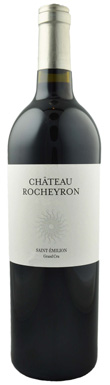

<p>Described by winemaker Peter Sisseck as a 'challenging vintage', this has developed nicely and is drinking well now. On the nose there are obvious signs...
2012
Château RocheyronSt-Émilion

Château Rocheyron, St-Émilion, Grand Cru, Bordeaux, France, 2014
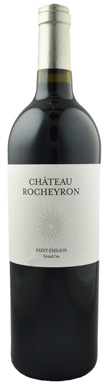
In 2014 Rocheyron was 100% Merlot, as Peter Sisseck didn't feel that the Cabernet Franc added anything to the blend. This is quite closed and...
2014
Château RocheyronSt-Émilion
Château Rocheyron, St-Émilion, Grand Cru, Bordeaux, France, 2015
Undoubtedly a fine, elegant and balanced Saint-Emilion, produced in a very good vintage where a number of properties embraced high alcohol and hefty oak. Peter...
2015
Château RocheyronSt-Émilion
Château Rocheyron, St-Émilion, Grand Cru, Bordeaux, France, 2016
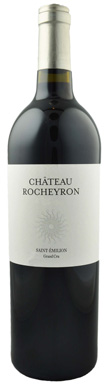
<p>Winemaker Peter Sisseck feels there was a lot of similarity vintage-wise between the 2010 and 2016, yet the younger wine is far superior. There was...
2016
Château RocheyronSt-Émilion
Château Rocheyron, St-Émilion, Grand Cru, Bordeaux, France, 2017
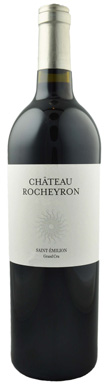
Impressive for 2017 - a vintage overshadowed by 2016/2018. Cool, intense nose with a touch of menthol; deep and impenetrable colour and crisp, dark berry...
2017
Château RocheyronSt-Émilion
Château Rocheyron, St-Émilion, Grand Cru, Bordeaux, France, 2018
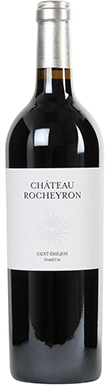
A barrel sample and a little bit harder to judge compared to the bottled wines at this point. Jane Anson (Decanter's Bordeaux correspondent) rated this...
2018
Château RocheyronSt-Émilion
