Tasting Cheval Blanc 1939 & 1950
Sarah Jane Evans MW reports on an extraordinary tasting at Berry Bros & Rudd headquarters in London, prompted by a limited release of Cheval Blanc 1939 from a négociant cellar...
Get our daily fine wine reviews, latest wine ratings, news and travel guides delivered straight to your inbox.
You are now subscribed
Your newsletter sign-up was successful
It’s not often the chance arises to taste an 80-year-old bottle of Château Cheval Blanc but a recent evening hosted by Berry Bros & Rudd’s fine wine buying director, Max Lalondrelle, offered just that.
The tasting, led by the estate’s technical director, Pierre-Olivier Clouet, showcased Cheval Blanc 2011, 2005, 1950 and 1939, as well as one red and one white wine of Petit Cheval, from 2014 and 2016 respectively, plus the 2012 vintage from sister estate Château Quinault L’Enclos. An introduction to Cheval Blanc’s distinguishing features highlighted four specific qualities. First, the estate is not on St-Emilion’s limestone plateau but lies on an approximate mix of 40% clay, 40% gravel and 20% sand, blended to different degrees across the vineyards.
Second is the dominance of Cabernet Franc, which is at about 60%.
Scroll down for Sarah Jane Evans MW’s tasting notes and scores
Third, the 39ha property has 53 plots of vines that are treated as ‘mini vineyards’. The team handles them separately all the way through the winemaking process, keeping each one separate until blending. ‘This diversity explains our complexity,’ Clouet said.
Fourth, Clouet stressed the intense focus on quality alongside ‘identity’ and ‘typicity’. He said, ‘We play with climate to produce the best Cheval Blanc in a given year.’
He said that the estate believes it is making the same wines as 200 years ago, the only difference being that today the team has technology to help them do so, enabling them to work in more ‘pixelated detail’.
Clouet, who was born in Normandy, joined Cheval Blanc in 2008 and is an articulate and engaging ambassador for the wines.
Get our daily fine wine reviews, latest wine ratings, news and travel guides delivered straight to your inbox.
How did he get to join one of the most famous wineries in the world? Disarmingly, he says, because he wrote to estate manager Pierre Lurton.
He came for work experience and effectively never left. He reflects that Lurton was probably looking for a new vision, someone not totally imbued in the traditions of Bordeaux.
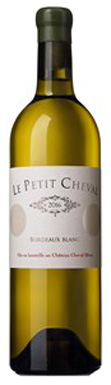
The tasting began with Le Petit Cheval Blanc 2016. It’s a label that was born more than a decade ago when co-owner Albert Frère – who died in 2018 – asked Pierre Lurton for a white wine.
They grafted over half a hectare in the La Tour du Pin vineyard opposite, what was formerly La Tour du Pin Figeac.
‘The first year was challenging as we had no experience. Producing a white wine is much more difficult than red, [because] you have to manage the oxygen and the oak,’ Clouet said.
The initial wine was ‘good, not exceptional’, but it was agreed that a Cheval Blanc white had to have complexity, freshness and ageing potential. The result was that the team held on to each vintage from 2009, and launched in 2014.
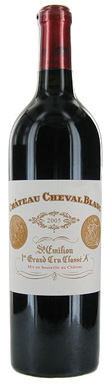
The still youthful Cheval Blanc 2011 offered round, generous fruit while the 2005 is glorious. It’s more settled, with alluring aromatics and an exceptionally smooth palate.
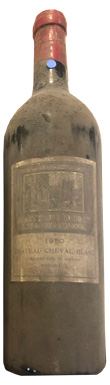
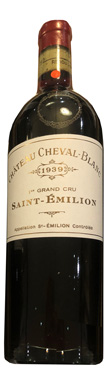
The older vintages offered obviously different characteristics and the 1950 had an intense palate with vibrant character. It was plump and fleshy, a wine that has aged well but hasn’t finished yet. The 1939 had a silky-smooth palate and remarkably long finish.
The presence of old vintages on the table led to a discussion about bottling practices.
For instance, until a law change in the 1970s, Berry Bros & Rudd would have been bottling Cheval Blanc from cask. That means the Cheval Blanc 1950 here was bottled by Berry Bros.
Regarding the 1939 vintage, Clouet added that the wartime wines had exceptionally long elevage, or ageing before bottling, that frequently extended to three or four years.
As the conversation moved on, Clouet was also frank about the high prices of first growths, and the fact that they have excluded consumers from the experience of enjoying ‘a bottle of 2009 for Sunday lunch’.
He said that there were issues for the team, too. ‘If you’re a first growth you believe that you are superb. We need to challenge ourselves,’ he said, adding that the purchase of Château Quinault L’Enclos in 2008 was a fresh challenge for the team.
A first vintage of Château Quinault L’Enclos under the new owner was not properly released until 2012. There was no 2013, because of hail.
Quinault L’Enclos switched to organic farming in 2009 and had accreditation approved in 2012.
Cheval Blanc isn’t certified but Clouet said that ‘on the estate we have pigs, chickens and a vegetable garden, and we brew our own beer. We are not organic but we are looking for the right way.’
Cheval Blanc, of course, deserves its place as one of the greats and what was interesting in this tasting was a thread of continuity that ran from 1939 through to the present freshness of the 2011.
Alcohol levels have naturally risen, but the wines remain supremely controlled, with a very distinct sense of place – a terroir wine no doubt.
My tasting notes point to 15-25 years of ageing potential in the young wines. Given the 1950 has some 70 years already, it’s hard to define a limit.
When it comes to drinking pleasure with a great wine, there’s never one particular moment.
See Sarah Jane Evans MW’s tasting notes and scores
You may also like
Château Rocheyron: The St-Emilion project of Pingus founder Peter SisseckFinding value in St-EmilionChâteau Quintus: A St-Emilion estate to watchSt-Emilion: 10 grands crus classés to watch
Château Cheval Blanc, Le Petit Cheval Blanc, St-Émilion, Bordeaux, France, 2016

<p>The third vintage release of Cheval Blanc’s white. All Sauvignon Blanc, but with no green aspects. Aromatically lively, with citrus and flint on the nose....
2016
BordeauxFrance
Château Cheval BlancSt-Émilion
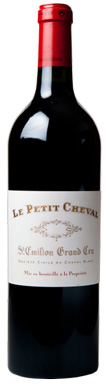
Château Cheval Blanc, Le Petit Cheval Rouge, St-Émilion, Bordeaux, France, 2014

<p>Perfumed with complex aromatics of dark plums, fennel, with leather and smoke. Silky, supple entry. Counterpoint between bright morello cherry and redcurrant freshness, sweet spices,...
2014
BordeauxFrance
Château Cheval BlancSt-Émilion
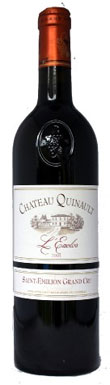
Château Quinault L'Enclos, St-Émilion, Grand Cru, Bordeaux, France, 2012

<p>Change in style under new ownership (Cheval Blanc) now more evident. Less extracted but full, round and fresh. Fine tannins.</p>
2012
BordeauxFrance
Château Quinault L'EnclosSt-Émilion
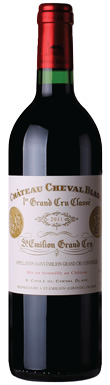
Château Cheval Blanc, St-Émilion, 1er Grand Cru Classé A, Bordeaux, France, 2011

Still very youthful a decade on, with fresh notes of raspberry rising above the black fruit core. Nuances of cedar and a touch of violet...
2011
BordeauxFrance
Château Cheval BlancSt-Émilion
Château Cheval Blanc, St-Émilion, 1er Grand Cru Classé A, Bordeaux, France, 2005

Cheval Blanc often needs twenty or more years to show the totally intoxicating Cabernet Franc perfume. A powerful wine encased in a velvet glove of...
2005
BordeauxFrance
Château Cheval BlancSt-Émilion
Château Cheval Blanc, St-Émilion, 1er Grand Cru Classé A, Bordeaux, France, 1950

Good intensity on the nose with some volatility and mushroomy character. The palate is equally intense, with a vibrant character, plump and fleshy, and good...
1950
BordeauxFrance
Château Cheval BlancSt-Émilion
Château Cheval Blanc, St-Émilion, 1er Grand Cru Classé A, Bordeaux, France, 1939

Released by a négociant. The wine was to be shipped to the USA, but had to returned to Bordeaux because of the risk of submarines....
1939
BordeauxFrance
Château Cheval BlancSt-Émilion

Sarah Jane Evans MW is an award-winning journalist who began writing about wine (and food, restaurants, and chocolate) in the 1980s. She started drinking Spanish wine - Sherry, to be specific - as a student of classics and social and political sciences at Cambridge University. This started her lifelong love affair with the country’s wines, food and culture, leading to her appointment as a member of the Gran Orden de Caballeros de Vino for services to Spanish wine. In 2006 she became a Master of Wine, writing her dissertation on Sherry and winning the Robert Mondavi Winery Award. Currently vice-chairman of the Institute of Masters of Wine, Evans divides her time between contributing to leading wine magazines and reference books, wine education and judging wines internationally.