
Composition: A Willamette Valley project from DRC’s Bertrand de Villaine and Katrina Rank
Composition the partnership between Bertrand de Villaine of Domaine de la Romanée-Conti and American winemaker Katrina Rank, aims to express the singular terroir of the Willamette Valley in two bottles, a single vineyard Chardonnay and Pinot Noir.


‘It all started in a class I was taking in Burgundy in 2016,’ says winemaker Katrina Rank about her winemaking partnership with de Villaine: Composition.
On that day in Burgundy, Rank had asked Bertrand de Villaine if he’d ever considered making wine from Oregon’s Willamette Valley, a proven sweet spot for Pinot Noir and Chardonnay.
As it turned out, de Villaine, part of the family that owns and runs the most famous domaine in Burgundy – Domaine de la Romanée-Conti – had first fallen in love with wine not in Burgundy as one might expect, but in Willamette.
Scroll down for tasting notes and scores of the Composition 2022 vintage
‘

de Villaine and Rank in the Composition barrel room. Credit: Composition
A French icon’s Oregon roots
In 1995, a young Bertrand de Villaine was a college business student who accepted a one-semester exchange programme at Linfield University in McMinnville, Oregon.
‘In fact, I had the chance to meet many people in Oregon when I was there as a student in the mid-nineties,’ de Villaine recalls. ‘These were some of the winemakers who are now recognised for the quality of what they have helped establish.’
‘People like David Adelsheim,’ he continues. ‘These people started working there in the 1970s, 1980s, and 1990s. It was not long after Drouhin had started producing wine there when I arrived.’
‘I’m not a prophet,’ de Villaine explains, ‘but I just saw these people doing so much at such a pivotal time for that region. These were really the founders who were doing the difficult work. Work which was done here in Burgundy thousands of years ago.’
‘Of course, this was my first wine training, to be honest, because, at that time, I was not even thinking of being part of the wine industry,’ de Villaine admits.
His experience with David Adelsheim as a young student in the Willamette Valley was pivotal. ‘I always say that it was the place that planted the seed, the idea of wine in me. It’s sincere because I didn’t have any connection with wine at that moment except meeting some winemakers in Oregon.’

The headstrong American
Katrina Rank came to Napa Valley in 1999 and studied art before eventually transitioning to an oenology and wine curriculum. Rank started making wines in the Chalone AVA in Monterey, California, which had been founded by winemaker Dick Graff in the 1960s .
Graff’s Pinot Noirs and Chardonnays showed the way forward for fine Burgundian varieties in California. When Rank’s winemaking career began in earnest, the persistent state of drought in California was casting that promise into doubt.
Rank began to cast her eyes northwards to other cool climate regions where she could get the results she wanted.
‘By the time I started making wine there [in California], the drought was almost in its fifth or sixth year. And so, I already had eyes on Oregon and moving the operation,’ Rank says.
Meeting in Burgundy
The meeting of Rank and de Villaine was pure serendipity. As it happened, de Villaine – like many Burgundians before him – had already begun to ponder the possibility of an Oregon project when Rank popped up with her suggestion.
‘There was the seed of an idea that had been around for a long time, but meeting Katrina was the catalyst for an Oregon project to become a reality,’ says de Villaine.
‘The happenstance of Bertrand mentioning that he and his wife were considering doing something in the Willamette Valley was undeniable,’ Rank says. ‘It was something where they were scratching at the surface, not necessarily realising the possibility of actually making it happen. I said, look, “it’s all right there”.’
‘We met up a couple of months later in Oregon in 2016,’ Rank reveals. ‘Before we met, I had spent a good amount of time on our sourcing and researching vineyards because that was a focus of what we would be doing. And so that by the time Bertrand arrived, I had already brought it down to about three after going through about 15 vineyards.’

Composing the wines
There was a cultural push and pull to the project. ‘It was my American, “let’s make it happen”,’ says Rank, ‘to Bertrand’s, “let’s slow down a little bit, Katrina. It’s not a race”.’
‘I wanted to see it all,’ says Rank, ‘I wanted to look from top to bottom, and Oregon has so much growth potential. Initially, we sourced from one vineyard for our Chardonnay and Pinot Noir. That was Winter’s Hill, which Bertrand felt very comfortable with, given the Drouhin family’s relationship with that site.’
‘Since the 2021 vintage,’ Rank continued, ‘we source from two other vineyards, and we’re delighted with how the wines have turned out.’
The Chardonnay comes from a single vineyard in the Eola-Amity Hills, older dry-farmed and biodynamic vines. The Pinot Noir comes from one of Oregon’s legacy sites in the Chehalem Mountain appellation, which is confusingly named Chehalem Mountain Vineyard.
Dick Erath planted it during the founding of the Willamette Valley, and it remains planted on its own-roots and biodynamically farmed.
Despite the distance, the language barriers and the odd philosophical difference, the foundations are universally agreed upon when it comes to making great wine.
‘We try to do what we both understand,’ de Villaine says. ‘The combination of soils and weather, the terroir; this is really the framework that we must work within.’
Rank was heavily involved in the winemaking when the brand launched in 2016, but the baton has been passed to Thomas Savre of Lingua Franca, who has the duo’s complete confidence.
The wines themselves are wonderfully composed. Elegance and site come to the fore in two wines, each expressing some of the Willamette Valley’s best-matched sites for their respective varieties.
The stellar 2022 wines from Composition
Related articles
- Chardonnay from Oregon’s Dundee Hills
- Oregon’s 00 Wines: Producer profile and 18 wines to try
- Oregon’s Willamette Valley is a special place for Riesling
Composition, Chardonnay, Willamette Valley, Eola-Amity Hills, Oregon, USA, 2022
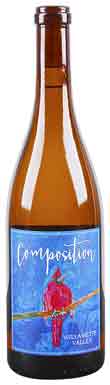

Elegance is personified in this Composition Chardonnay sourced from a single vineyard, a south-facing ridge in the southern Eola Amity Hills. Both biodynamic and dry...
2022
CompositionWillamette Valley

Composition, Pinot Noir, Willamette Valley, Chehalem Mountains, Oregon, USA, 2022
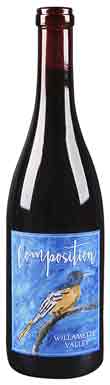
This Pinot Noir is from a unique plot in the Chehalem Mountains appellation in the Valley's north end. The dry-farmed, biodynamic site is one of...
2022
CompositionWillamette Valley
