
Covenant: California kosher fine wine producer profile and 10 wines tasted
Established in 2003 by Napa Valley vintners Jeff Morgan and Leslie Rudd, Covenant was originally conceived to produce top-notch kosher Napa Valley Cabernet Sauvignon.
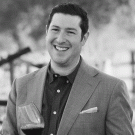

Covenant founding winemaker Jeff Morgan, 70, is both driven and eccentric. He favours the underdog. Take rosé, for instance. Morgan played an outsized role in jump-starting the rosé renaissance in America more than 20 years ago – long before it was fashionable.
Not only did Morgan co-found SoloRosa, the first American winery dedicated solely to dry rosé, but in 2005, he penned the first English language book on the subject as well (Rosé, A Guide to the World’s Most Versatile Wine, Chronicle Books).
Scroll down to see tasting notes and scores for ten Covenant wines tasted
In 2003, high-end kosher wine seemed like a long shot. But Covenant was among the first wineries to demonstrate that fine wine made with native yeast and organic grapes and without fining or filtration can also be kosher. It was a novel concept at the time.
Today, you can find Covenant’s wines on such stellar wine lists as The French Laundry in Napa Valley and in wine shops and restaurants around the world.

Musician turns wine writer
‘I spent much of the 1970s living and working in France as a musician,’ Morgan recalls. That’s where the native New Yorker first discovered ‘serious food and wine.’ In 1987, Morgan had an extended engagement at Monte Carlo’s Grand Casino, working for the late Prince Rainier of Monaco.
‘I realised at some point that I was more interested in the wines I was drinking after the gig than the music I was playing on the bandstand.’ (Morgan was, and remains, an accomplished saxophonist.)
He came to a simple conclusion: ‘I make music, so I will make wine, too.’ In 1988, after returning to the U.S., Morgan found work at a small vineyard and winery on Long Island, New York, where he learned winemaking basics.
However, his creative nature led him to wine writing, and he was able to freelance for such publications as The New York Times and Elle magazine. In 1995, Morgan was named West Coast editor for Wine Spectator, where he continued to work until 1999.
Crafting kosher wine
‘Writing was terrific’, Morgan says. ‘But I missed winemaking.’ In 2000, he moved his family to Napa Valley. There he founded SoloRosa with winemaking partner Daniel Moore. Two years later, he tasted a bottle of excellent Israeli wine (Domaine du Castel) with Napa vintner Leslie Rudd and Castel owner Eli Ben Zaken.
The Israeli wine wasn’t kosher at the time, but Morgan and Rudd wrongfully assumed it was. And they grew determined to produce an equally good kosher Napa Valley Cabernet. ‘It’s an irony that is not lost on me,’ Morgan says with a smile. ‘I guess sometimes ignorance can truly be bliss. That bottle of Castel changed my life.’
Working with a wealthy partner like Rudd gave Jeff the freedom to make more expensive wines like Napa Valley Cabernet. Wines which he could not afford to produce prior to founding Covenant. The original Cabernet grape source was Larkmead Vineyard in Calistoga, and then Rudd Vineyards in Oakville and on Mount Veeder.
Rudd’s participation also opened up a world of diverse terroir and potential vineyard sources throughout California and eventually in Israel.

How is kosher wine made?
The word ‘kosher’ originates from Hebrew ‘רכש (kashér)’, which translates to ‘suitable’ under the ‘kashrut’. The ‘kashrut’ is a body of Jewish laws that, among other things, stipulate the suitability of food.
- The winemaking for kosher wines is not necessarily different from how most winemakers approach the process with a few essential caveats.
- All the winemaking must be done by Sabbath-observant Jews.
- Equally important are the fining and filtration methods used in the wine’s production. Wines that are unfiltered and unfined would be eligible for kosher consideration – depending on who made them.
- A kosher wine that uses fining agents must only use egg whites, or non-organic, mineral fining agents like bentonite clay and charcoal. Organic materials like isinglass (made from sturgeon bladder, a non-kosher fish) as well as gelatin products that often contain pork render a wine non-kosher.
Making wine from the ground up
‘I started as a grape grower in New York, and that’s helped me feel comfortable in vineyards everywhere’, Morgan explains. ‘My first boss, winemaker Larry Perrine at Channing Daughters in Sag Harbor, NY, was originally a soil scientist. Larry helped me acquire a basic understanding of viticulture’.
But Morgan credits his friend and mentor, California winemaker David Ramey, for helping elevate his winemaking skills. ‘When I founded Covenant, Dave was Leslie Rudd’s winemaker, and I had no idea how to craft serious Napa Valley Cabernet. Dave showed me how’, Morgan explains.
‘And for many years, he helped me with a lot of my other wines, too. He taught me the value of native yeast fermentation and how to make viable wines without filtration.’ Morgan grows emotional talking about Ramey. ‘To be honest, if I’m making good wine today, it’s thanks to David Ramey’.
Morgan and Rudd travelled to Israel for a visit in 2011 ‘just to look around’, Morgan says. With its red rocky soils peppered with chalky, white limestone, the Galilee region reminded him of France’s Rhône Valley. ‘I felt compelled to make wine in the land of my ancestors’, he recalls.
‘Israel is a place where winemaking predates anything found in Europe’. And so, Covenant Israel was born. The first release was a 2013 Syrah sourced from a biodynamic vineyard there called Tzivon.
Sadly, in 2018, Leslie Rudd succumbed to cancer. The Morgans now have a new partner, Geoff Rochwarger, who lives in Israel.
Covenant: The facts
Year founded: 2003
Owned by: Jeff & Jodie Morgan/Geoff Rochwarger
Annual production: 8,000 cases
Key California vineyards: Bengier, Mahoney, Mounts, Scopus, Moaveni, Rooster, Mettler, Bien Nacido, Robert Rae
Key wines: Of the 20 different wines produced, the key bottlings are Napa Valley Cabernet, Sonoma Chardonnay, Carneros Pinot Noir, Sonoma County Sauvignon Blanc, Lake County Sauvignon Blanc, Central Coast Syrah, Dry Creek Valley Red Rhone Blend, Lake County Sauvignon Blanc, Lodi Roussanne, Lodi Viognier, Lodi Zinfandel, Lodi Chardonnay, Lodi Cabernet Sauvignon, California rosé, California sparkling wine.

Berkeley-bound as an urban winery
Covenant became an urban winery in 2014 when co-owners Jeff and Jodie Morgan moved 50 miles southeast of Napa Valley to build a winery in Berkeley, California. Second-generation Zoe Morgan-Koelewijn is now helping her parents manage the family-owned facility.
Morgan’s California winery in Berkeley is built in what was once a large auto repair shop. ‘I guess we are literally garagistes,’ he laughs.
In its twentieth year of operation, Covenant has expanded its range of varietal wines to include California appellations stretching from Santa Barbara to Lake County. Morgan has also made wines in Israel since 2013.
Keeping kosher
Morgan bristles at the question. ‘I’ve been making kosher wine for two decades, and I still have a devil of a time explaining that the kosher part has absolutely nothing to do with winemaking, wine style or a wine’s taste.’
‘There is no kosher winemaking method,’ he says with the patience of someone who is asked the same question a hundred thousand times.
‘All that’s required is a symbolic gesture stipulating the wine be touched or handled by Sabbath-observant Jews.’
‘There is no boiling or other nefarious methodology required. Covenant wines are native yeast fermented, unfined, and typically unfiltered. If I made a non-kosher Covenant, I would make it exactly the same way I make the kosher version’. He pauses for a moment to chuckle and adds, ‘Except that we could work on Saturday.’

Ten Covenant wines tasted
Related articles
- American Zinfandel on Zinfandel Day
- Sonoma County AVAs: Overview and 10 wines to try
- Signorello Estate: Meeting winemaker Priyanka French plus four current releases tasted
Covenant, Blanc de Blancs, California, USA, 2021
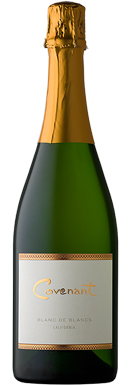

Lovely green apple, buttered brioche, gorgeously frothy mousse, turning tart tatin and poached pear with pastry notes and a clean mineral finish. Native yeast fermented,...
2021
Covenant

Covenant, Solomon Blanc, Sonoma County, California, USA, 2022

A real knockout from Jeff Morgan. 100% Sauvignon Blanc is aged 10 months in 40% new French oak. It is an aromatic wonder with bright...
2022
CovenantSonoma County
Covenant, Lavan Chardonnay, Sonoma County, Sonoma Mountain, California, USA, 2022
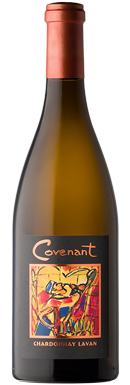
What a great effort by winemaker Jeff Morgan, one of the hardest-working winemakers in all of California. He's sourced an exceptional site on Sonoma Mountain...
2022
CovenantSonoma County
Covenant, Mensch Roussanne, Lodi, California, USA, 2022
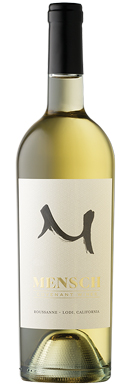
The Mensch Roussanne shows alluring fruit aromatics of white flowers, citrus peel, and a touch of sweet honey. Plush, medium- to full-bodied, with fleshy orchard...
2022
CovenantLodi
Covenant, Solomon Lot 70, Napa Valley, California, USA, 2021
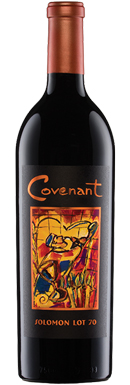
The flagship wine of Berkeley-based Covenant Winery, Solomon Lot 70, is an elegantly fashioned and beautifully precise Cabernet Sauvignon from Napa Valley. Attractive dusty minerals...
2021
CovenantNapa Valley
Covenant, Cabernet Sauvignon, Napa Valley, California, USA, 2021
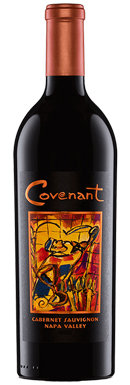
This 100% Cabernet Sauvignon was sourced from sites in Rutherford and Carneros. Native yeast fermentation, aged 18 months in 50% new French oak, only the...
2021
CovenantNapa Valley
Covenant, Bien Nacido Vineyard Syrah, Santa Barbara County, Santa Maria Valley, California, USA, 2021
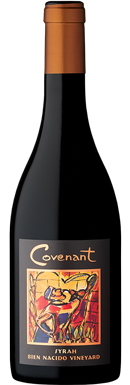
In 2020, when wildfires engulfed the primary fruit source for Covenant's Syrah, miraculously, winemaker Jeff Morgan was able to source grapes from one of the...
2021
CovenantSanta Barbara County
Covenant, Landsman Cabernet Franc, Sonoma County, Dry Creek Valley, California, USA, 2021
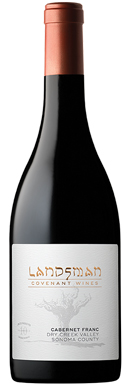
The Landsman Cabernet Franc from Dry Creek Valley in Sonoma leads with redcurrant fruit, dusty minerals, and dried rose petal aromas. Satiny, plush raspberry and...
2021
CovenantSonoma County
Covenant, Landsman Robert Rae Vineyard Syrah, Santa Barbara County, Santa Rita Hills, California, USA, 2021
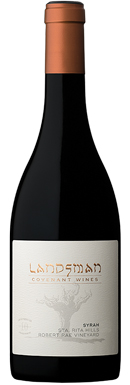
This 100% Syrah from the certified-organic Robert Rae Vineyard in the Sta. Rita Hills appellation is teeming with blackberry and perfumed red floral notes. Fleshy...
2021
CovenantSanta Barbara County
Covenant, Landsman Pinot Noir, Carneros, California, USA, 2021
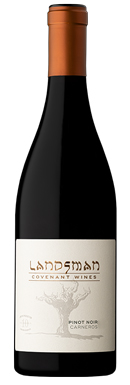
An elegant rendition of Los Carneros Pinot Noir. Fragrant cranberry fruit aromas mingle with espresso bean notes, and the palate is layered with cherry, raspberry...
2021
CovenantCarneros
