
The Greek grape varieties you should be drinking
Jason Millar takes a look at some of Greece’s star native grape varieties – that aren't Assyrtiko or Xinomavro – nurtured by a rich history and diverse terroirs.


Greece’s native grape varieties burst onto the wine scene in the late 20th and early 21st centuries. Assyrtiko and Xinomavro, like Achilles and Hector, are the heroes that dominate this vinous drama, but the cast of characters is much longer.
From the foothills of Thessaly to the volcanic Aegean, Crete’s limestone slopes and the airy plateaus of the Peloponnese, it is estimated that there are currently around 200 significant native varieties, and there are dozens, possibly hundreds, more waiting to be identified across the country.
Scroll down for Jason’s pick of 12 wines made from indigenous Greek grapes
1. Malagousia
It began with Malagousia, which arrived at Domaine Porto Carras in Macedonia thanks to Professor Vassilis Logothetis of the University of Thessaloniki, who rescued and cultivated it as part of an experimental plot in the 1970s.
Evangelos Gerovassiliou, then winemaker at Carras, tasted it and realised it could be more than a blending variety. He propagated it and vinified it as a varietal wine at Carras before establishing his own eponymous winery, which is now famous for benchmark examples.
Peachy, spicy and herbal, Malagousia quickly spread across Greece, and today remains one of the top Greek varieties – excellent on its own, or blended with other varieties such as Assyrtiko, and aged in steel or oak.
Malagousia extended the horizons of winemaking. Suddenly, Greek winemakers were encouraged to look in their own vineyards, seeking the next indigenous hero, rather than planting Merlot or Chardonnay.
2. Moschofilero
Moschofilero, an aromatic speciality of the Mantinia plateau in the northern Peloponnese, was the next variety to emulate the success of Malagousia.
It is one of Greece’s most joyous grapes with its aromas of lemon zest and roses, and no one understands it better than Leonidas Nassiakos, the former winemaker at Semeli, who founded Novus Winery in 2020 to focus on Moschofilero.
‘Moschofilero changed the mindset of Greek consumers in the early 1990s by being the first wine to be ordered by the name of the variety,’ he recalls. ‘Until then, wines in Greece were white, rosé, red or retsina.’

3. Robola
Another promising variety is Robola, a speciality of Cephalonia in the western Ionian Islands, with a very different character to Moschofilero. Where the latter is perfumed, Robola is stony.
If there’s a delicacy to Moschofilero, there’s a muscularity to Robola. It remains one of the most promising native varieties for top-quality wine and is perhaps the closest Greece has to the understated drive and mineral grip of good Chablis.
4. Savatiano
Back in central Greece, vineyards are dominated by Savatiano. Once of Greece’s most planted white grapes for the production of cheap taverna wine and retsina, Savatiano has been tarred – or should we say resinated – by association.
It was also popular because it withstood colossal yields of around 250hl/ha. Under such conditions, it unsurprisingly gained a reputation for neutrality.
When not worked to exhaustion, it can impress. Producers like Papagiannakos, Akriotou and Mylonas in Attica have demonstrated its potential to make quality wines in a range of styles with character and ageing potential.
Stamatis Mylonas, an early believer whose Savatiano took home a DWWA Gold medal in 2014, is enthusiastic about the future.
‘Despite its enormous winemaking history, Savatiano is just starting to draw the attention of the wine world as the next big Greek variety,’ he says.
‘I believe there’s still much more to come, and I’m pleased to see more and more excellent wines being made.’
5. Agiorgitiko
Greece’s most planted red variety, the tongue-twisting Agiorgitiko (ah-yor-YEE-tee-ko), is far easier to enjoy than it is to say.
A speciality of high-altitude Nemea, a PDO designation in the Peloponnese to look out for, its vibrantly fruity profile, deep colour and velvety tannins make it a more immediately appealing red for most wine drinkers than the more austere Xinomavro from appellations like Naoussa in Macedonia.
In style, Nemea (Agiorgitiko) is to Naoussa (Xinomavro) what Bolgheri is to Barolo, or Bordeaux is to Burgundy.
Agiorgitiko comes in a range of styles, from early-drinking wines that can be chilled to more age-worthy and intense bottlings reminiscent of St Emilion or top Argentine Malbec.
Pioneers such as Papaioannou, Skouras and Gaia continue to push the boundaries of what this hugely promising variety can offer.

Limniona and Limnio
Then there’s Limniona, another variety with huge quality potential but much more limited plantings. Revived in 2000 by Zafeirakis and a flagship future red variety for Thessaly, it is hard to generalise about it because volumes are small, but the quality potential has been unquestionable.
The story continues on the islands. Limnio, not to be confused with Limniona, is an ancient grape and the oldest referenced variety in the world, having been mentioned by Aristotle and Hesiod (who called it ‘Lemnia’).
It comes from the island of Limnos, where producers like Lefteris Anagnostou of Ekho (ēkhô) are determined to bring it to wider attention, but today this variety occupies only 10% of the island’s vineyards and finds greater success in northern Greece.
On the island of Paros, Monemvasia (white) and Mandilaria (red) are reasserting their traditional status, where they are co-fermented to produce supple, spicy red wines with some of the silkiness of wines such as Emmanuel Reynaud’s Château Rayas and Château des Tours.

Stirrings on Crete
Then there’s Crete, Greece’s largest island and ideally suited to quality viticulture. Three local men, all called Nikos, have had a decisive influence on the swing towards native varieties here.
Nikos Douloufakis pioneered Vidiano, Crete’s most promising white grape. ‘Think of a Mediterranean white with the elegance of Viognier and the structure of Assyrtiko,’ he says.
‘It’s dry, full of peach and citrus fruit aromas, with a hint of salinity and a smooth, long finish.’ No one does it better.
Another Nikos – Karavitakis – is convinced that Kotsifali, a grape traditionally used only in blends, has the potential to make outstanding varietal wines.
‘When made well, it has a noble character often found in top-class wines,’ he says, comparing it to Burgundy and top Garnacha from Spain. ‘The whole region needs to understand the beauty and power of Kotsifali.’
Finally, Nikos Lyrarakis resurrected the almost extinct Dafni variety, which now forms the basis of one of Crete’s most distinctive single-vineyard wines.
The hard work to recuperate the indigenous heritage of Greece’s vineyards in the last 30 years continues to bear fruit.
‘We are very lucky to have so many native varieties across Greece,’ Lefteris Anagnostou says. ‘It’s a privilege to work with them. But there is still much work required to discover more of this heritage and to promote it.’
Not all of these varieties will match the impact of Assyrtiko or Xinomavro, but some may surpass them in time.
For those who’ve already discovered how good contemporary Greek wine can be, that’s an exciting thought – and a compelling reason to continue to explore its native heroes.
12 Indigenous Greek grapes to try
Related articles
- Oeno P: Paris Sigalas pushes Assyrtiko to greater heights
- Delicious Greek white wines beyond Assyrtiko
- What does Assyrtiko taste of?
Anatolikos Vineyards, Malagousia, Thrace, Greece, 2023
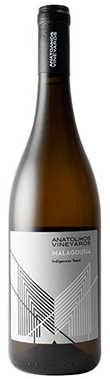

A relatively new winery in Thrace, Anatolikos is organically certified and this Malagousia is fermented with wild yeasts and bottled unfined and unfiltered. This is...
2023
Anatolikos Vineyards

Novus, A Priori, Mantinia, Peloponnese, Greece, 2024
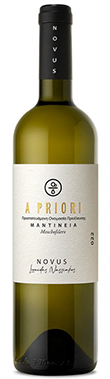
Leonidas Nassiakos is a master of Moschofilero, one of Greece’s most distinctive varieties, particularly when grown on the high plateau of Mantinia in the northern...
2024
NovusMantinia
Sarris Winery, Robola, Kefalonia, Epirus & Ionian Islands, Greece, 2024
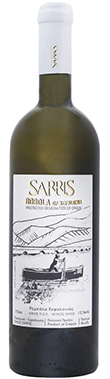
Panos Sarris’ eponymous winery is located in south-west Cephalonia. A former sommelier, Sarris established the winery in 2016 with just a few barrels of wine....
2024
Sarris WineryKefalonia
Nikos Douloufakis, Dafinios Vidiano, Crete, Greece, 2024
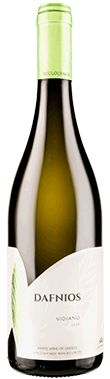
Douloufakis was the estate that resuscitated Vidiano from a scant 10 hectares at the turn of the 20th century. The estate now farms a total...
2024
Nikos Douloufakis
Mylonas, Cuvee Vouno, Attiki, Central Greece, Greece, 2021
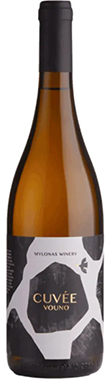
Mylonas have been taking Savatiano seriously for decades and are one of its most stalwart champions. From 60-year-old bush vine fruit grown in a single...
2021
MylonasAttiki
Lyrarakis, Psarades Dafni, Crete, Greece, 2024
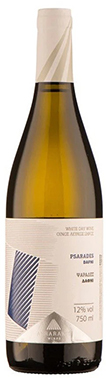
Rescued from near extinction by Lyrarakis, who planted Dafni in the high-altitude Psarades vineyard in the early 1990s, this variety takes its name from the...
2024
Lyrarakis
Monemvasia, Tsimbidi Kydonitsa, Lakonia, Peloponnese, Greece, 2024
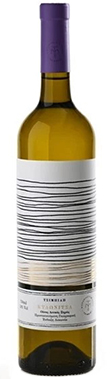
Is it a coincidence that the ancient Spartans came from a part of Greece that produces the uncompromising Kydonitsa? Here in Laconia, in the south-eastern...
2024
MonemvasiaLakonia
Dougos, Meth'imon L Limniona, Thessaly, Greece, 2023
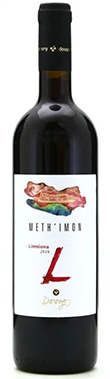
The Limniona grape comes from Thessaly, land of the centaurs, and was rescued in the early 21st century by Christos Zafeirakis. This comes from a...
2023
Dougos
Karavitakis, Kotsifali Livades, Crete, Greece, 2023
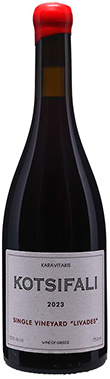
Nikos Karavitakis has poured his heart into Kotsifali. With a dedicated team, he continues to refine the estate’s wines from this variety, vintage after vintage....
2023
Karavitakis
Paros Farming Community, Seiradi Cuvee Topos R, Aegean Islands, Greece, 2022
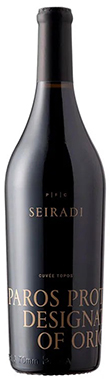
The Paros Farming Community is a traditional island co-operative that has been reconceived by Dimitris Mansolas and Maria Tamiolaki with the panache and visual flair...
2022
Paros Farming Community
Ekhô, Red, Lemnos, Aegean Islands, Greece, 2023
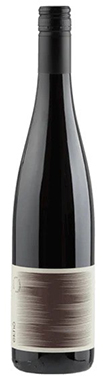
Lefteris Anagnostou used to make the wines at Karamolegos on Santorini and now runs the Ekho project to produce wines from old-vine parcels of native...
2023
EkhôLemnos
Gaia, Estate Red, Nemea, Peloponnese, Greece, 2021
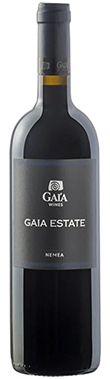
A name that now needs little introduction, Gaia has risen to become one of the most successful Greek wineries in the space of 30 years....
2021
GaiaNemea
