
Interview and tasting with L’Eglise Clinet owner
Jane Anson meets and tastes with Denis Durantou, owner and winemaker at star Pomerol estate Château L’Eglise Clinet, plus Les Cruzelles in Lalande-de-Pomerol and Montlandrie in Côtes de Castillon.


Read Jane's interview, published in Decanter magazine's June 2018 issue, plus new tasting notes only available to Premium members.
There aren’t many Bordeaux châteaux that are still flying the flag for a low-key entrance, but it comes as no surprise that Château L’Eglise Clinet is one of them.
Scroll down to see the tasting notes
This is a man whose family has owned land in Pomerol since 1785 but who grew up elsewhere in France and only took over the family estate in 1982, aged 26, after completing his studies in economics at the prestigious Sciences Po university in Paris.
You can still see the original plot by the oak tree that sits near Pomerol’s church (giving the estate its name) and today forms one of the four blocks that comprise L’Eglise Clinet’s 4.5ha.It’s half-gravel, half-clay and planted to 80% Merlot and 20% Cabernet Franc.
Durantou – neat unobtrusive glasses, casually well dressed, a silver-haired Adrien-Brody-meets-Harvard-professor – seems oblivious to the usual Bordeaux rules. None of the Durantou wines have an outside consultant (although he does use the Rolland laboratory in Pomerol for testing).
He doesn’t travel much to meet customers or hold international tastings, so doesn’t have the Air Miles and the Platinum Amex held by most of the star winemakers of the region. ‘A chef should stay in the kitchen,’ he asserts.
And he spent most of the blockbuster Robert Parker years of the 1980s and 1990s out of the limelight – perhaps, he suggests, because he kept his levels of new oak down to between 20% and 30% until the mid-1990s.
All this may explain why L’Eglise Clinet built its reputation without the help of the usual network of Bordeaux merchants, who only really started taking notice once it gained recognition from outsiders – notably collectors in the UK and Germany. The négociants came after the prices began climbing.

In search of terroir
We are discussing this as we walk and drive between his different properties, because I want to better understand the one thing that for me truly sets Durantou apart from his peers in Bordeaux (Baptiste Guinaudeau at Lafleur and a handful of others aside).
It’s his maniacal attention to terroir – and the fact that this approach holds true across his properties in Lalande-de-Pomerol and Castillon Côtes de Bordeaux, as well as the flagship on the famed Pomerol plateau.
He is characteristically blunt about why this is important to him. ‘Grand cru doesn’t mean anything any more in Bordeaux. The word “château” doesn’t mean anything any more.
‘What lasts is the lieu-dit (vineyard plot) and the terroir, and this is what we need to defend, like in Burgundy. Napa is moving towards this, Barolo also – promoting this link between wine and its terroir. Yet we seem to be going the other way.
‘Today châteaux seem more interested in brand extensions, putting their name on wines that come from other parts of the region and are even made by other winemakers. They are all running after international brands, but this destroys the idea of appellations.
‘What will guard our reputation against the competition from international wine regions? A sense of place, together with vintage, blending, oak ageing – these are the skills of Bordeaux, the real signatures of this region. If we don’t defend them, then we can’t expect anyone else to.’
This belief is no doubt why he is keen to preserve the vineyard size of L’Eglise Clinet, which has been unchanged for the past 100 years and lies in one single stretch around the estate, on clay and gravel terroir.
This is also true for Les Cruzelles in Lalande-de-Pomerol (‘if we were in Burgundy it would be called a monopole, as I have the entirety of the 0.5ha plot’) and its neighbour La Chenade.
Back in Pomerol itself, La Petite Eglise is in a separate spot of sandier soils, a 400m walk from the main château (this time over two plots, about two-thirds of which are about to be pulled up for replanting), and on land that was used until 1975 for grazing their vineyard horse Pompon.
Durantou at a glance
Born: In Perigueux in the Dordogne, with three brothers and one sister. His father was a civil servant and the family moved every three years, mainly around France but also spent four years in South America
Professional training: Studied politics and economics at Sciences Po, then winemaking at the University of Bordeaux
Career: At 16 he spent one year working in a restaurant, and also worked summer jobs helping in vineyards in St-Emilion. During his wine studies, he shadowed Pierre Lasserre, the manager at L’Eglise Clinet, before taking over
Estates and wines produced: Château L’Eglise Clinet and La Petite Eglise (Pomerol), Les Cruzelles and La Chenade (Lalande-de-Pomerol), Château Montlandrie (Castillon), Château Saintayme (St-Emilion, rented vines)
Family: Wife Marie Reilhac is an artist. They have three daughters: Constance and Noémie work with their father, while Alix lives in Japan
Hobbies: Gardening, cooking, art and music
Attention to detail
There are no horses ploughing the vines at L’Eglise today, but everything is done with an obsessive attention to detail. The first thing I was given on arrival was the terroir maps of all of his estates, carefully annotated with soils and sub-soils, grape plantings, rootstocks, orientation of rows and direction of slopes.
In the vineyard, careful pruning early in the season takes precedence over green harvesting in summer, and different canopy heights are used depending on terroir and vintage.
Durantou is almost finished with a long programme of replanting to ensure that all vines are between 7,000 and 8,000 vines per hectare, and on the right rootstocks (they were planted to the vigorous S04 rootstock, as was so much of Bordeaux in the 1970s, but he now uses 3309 across Pomerol and Lalande, with the addition of 420A in Castillon where there is more limestone).
‘Looking back, those first 10 years working without lots of new oak probably helped me,’ he says.
‘Maybe it was a mistake commercially, but it meant that I got to know my terroirs without extra layers of flavour, and woke me up to the possibilities.’
He was also helped by starting a small négociant business in the 1990s, which allowed him to taste widely across different terroirs, and to champion smaller ones (and, occasionally, to buy them, as this was how he came across Château Les Cruzelles, which he bought in 1999, and Château Montlandrie, purchased in 2009).
He also makes a wine in St-Emilion, but doesn’t own there. ‘Why would you want to make a wine in an appellation that doesn’t concentrate on the taste but on the politics?’ is how he puts it.
‘I believe in translating terroir as honestly as possible,’ he says, ‘and always try to keep that in mind when I make a wine, or buy an estate. Every property I buy is with a geological map in hand.’

Merlot man
Over the past 30 years, he has carried out massal selection with four different vine nurseries, testing for viruses each time and carrying out hundreds of micro-vinifications.
His most recent massal selections are at Château Montlandrie in Castillon with old-vine Cabernet Franc from L’Eglise Clinet and Cabernet Sauvignon ‘taken from an extremely prestigious Left Bank’. At all of his estates, however, Merlot remains dominant.
‘Global warming has not killed Merlot if you chose the right rootstocks,’ he says. ‘I worry about its aromatic envelope if you do not.’
It’s here, at Montlandrie in Castillon, that you start to see a more outward-looking, almost expansive side to Durantou.
Where L’Eglise Clinet, Les Cruzelles and La Chenade are easy to miss if you drive past, Montlandrie is almost exuberant by contrast.
Perfectly pointed limestone walls adorn one side of the estate, a new 1,200-metre-squared winery is nearly finished, extensive gardens are being planted and there are even plans for an amphitheatre to host musical events starting from summer 2018, together with an artist’s house for the visiting musicians.
His daughter Noémie will be in charge of arranging the productions and booking the artists, but there seems little doubt that he’s allowing himself to relax a more here, and to bring together his other passions of architecture, food and music.
Durantou is authentic, measured, and undoubtedly doesn’t suffer fools gladly (I’d like to bet there’s no slacking off if you work for him) but he’s also extremely good company. You can taste it in every glass of L’Eglise Clinet: it’s a monumental yet nuanced, textured and layered wine that can take your breath away.
But it’s through Durantou’s smaller wines that you start to understand just how much he cares about flavour, and about looking for the best in every piece of land that he works with. And it’s this that turns him from being a meticulous and exacting winemaker into a truly interesting one.
Ratings for L’Eglise Clinet, Les Cruzelles and Montlandrie:
The following wines were tasted by Jane Anson for this feature:
L’Eglise Clinet 2015 and 2005; Les Cruzelles 2015 and 2011; Montlandrie 2016 and 2014. We have also included Jane’s 2017 en primeur notes on the three estates, plus her primeur 2016 notes on L’Eglise Clinet and Les Cruzelles.
Jane Anson is a Decanter contributing editor, Bordeaux correspondent and author of the book Bordeaux Legends
New for Premium members: Read Jane Anson’s full Bordeaux 2017 vintage overview
Château L'Eglise-Clinet, Pomerol, Bordeaux, France, 2015
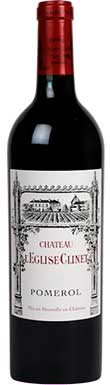

The things that differentiate the good from the truly great are layers and persistence. And here, Durantou manages not just layers, but new flavours that...
2015
Château L'Eglise-ClinetPomerol

Château L'Eglise-Clinet, Pomerol, Bordeaux, France, 2005
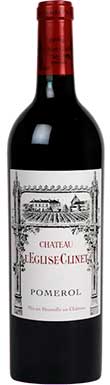
Right from the first nose you find yourself melting into the glass. Layers of complex aromatics prevent you from taking a sip too soon, just...
2005
Château L'Eglise-ClinetPomerol
Château L'Eglise-Clinet, Pomerol, Bordeaux, France, 2017
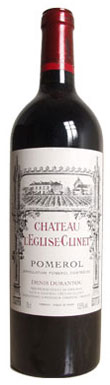
For me, this is one of the successes of the vintage in Pomerol, although not fully escaping the roadblocks of 2017. There is a real...
2017
Château L'Eglise-ClinetPomerol
Château L'Eglise-Clinet, Pomerol, Bordeaux, France, 2016
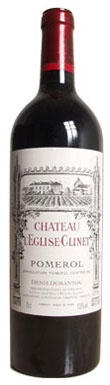
We are now levitating somewhere above the rest of Denis Durantou's excellent range. Typical of the incredibly deft and precise way of working that is...
2016
Château L'Eglise-ClinetPomerol
Château Les Cruzelles, Lalande-de-Pomerol, Bordeaux, France, 2015
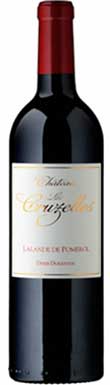
Merlot with 10% Cabernet Franc from clay-gravel soils. As consistent as ever this year. Spicy, dark fruit nose which continues on the palate. Super grain...
2015
Château Les CruzellesLalande-de-Pomerol
Château Les Cruzelles, Lalande-de-Pomerol, Bordeaux, France, 2011
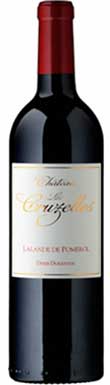
The colour is still firm, with complex aromatics on the nose. Soft, with melted tannins and some caramel notes that are lilting, fresh and open....
2011
Château Les CruzellesLalande-de-Pomerol
Château Les Cruzelles, Lalande-de-Pomerol, Bordeaux, France, 2016
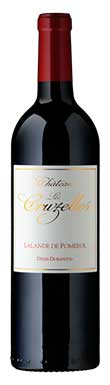
Another success from Denis Durantou. How many times does this man need to prove that he can deliver in every vintage? His wines are just...
2016
Château Les CruzellesLalande-de-Pomerol
Château Les Cruzelles, Lalande-de-Pomerol, Bordeaux, France, 2017
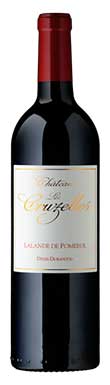
This has plenty of distinct strands of flavour – some real stuffing to the rich red fruits, persistent tannins infused with freshness. The Merlot was...
2017
Château Les CruzellesLalande-de-Pomerol
Château Montlandrie, Castillon Côtes de Bordeaux, Bordeaux, France, 2014
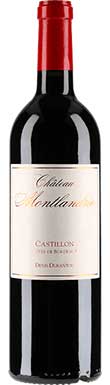
Impressively aromatic floral and cassis notes on the attack, with a little touch of austerity from the Cabernet Sauvignon, which is still very present. The...
2014
Château MontlandrieCastillon Côtes de Bordeaux
Château Montlandrie, Castillon Côtes de Bordeaux, Bordeaux, France, 2016
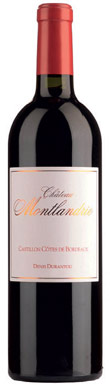
<p>Dark and bold, with plenty of fruit extract. Full, intense, lots of drive; powerful, well-managed tannins. A condensed package, merits another year in bottle.</p>
2016
Château MontlandrieCastillon Côtes de Bordeaux
Château Montlandrie, Castillon Côtes de Bordeaux, Bordeaux, France, 2017
This has great aromatics right off the bat and a creaminess to the fruit. Yet there’s still freshness delivered by menthol notes on the finish,...
2017
Château MontlandrieCastillon Côtes de Bordeaux
