
English still wine revival plus eight bottles worth seeking out
As producers quickly adapt to the shifting climate, there is a transformation afoot in the world of non-sparkling English wine. Hopes for the future are high, with innovative new varieties, styles and techniques.


The sun was blazing down as we wandered through various vineyards in Kent. We then joined several tables of happy souls enjoying a balmy terrace lunch al fresco. Was this the height of summer in the garden of England? Far from it – this was early October, with harvest in full swing all around us.
It was a fitting end to what has been one of the driest, ripest and earliest UK vintages of the modern era. There is palpable excitement in the eyes of producers everywhere as they enthuse about the quality and flavour intensity of the fruit, and the high hopes for their wines this year.
Scroll down for Susie Barrie’s selection of eight English still wines to try
What’s also clear is that English wines are changing before our eyes.
As someone who has paid close attention to the evolution of English and Welsh wine over recent decades, I’d go so far as to declare this a new era. It’s the beginning of the third act of a play that began more than half a century ago with still wines and has, in some ways, come full circle. Back in the mid-to-late 20th century, English wine was all about still whites. At the time they were largely made from Germanic varieties, which were suited to our marginal climate. These were light, floral and uncomplicated wines that were rarely tasted beyond the cellar door, and almost never internationally.
Then, from the late 1980s, came the shift to traditional-method sparkling wines. Since the start of the new millennium, these have proved more successful than anyone could have possibly foreseen. We’re talking characterful, stylish, award-winning fizz that has become the UK’s calling card the world over.
But now, with our climate warming even further, change is afoot once again. The move is firmly in the direction of still wine, but on a completely different level to anything we’ve seen before.
English still wine: the facts
Although it’s only recently that actual figures for still wine production have been separated from sparkling in any meaningful way for English wine, this is a short summary of the figures that are currently available.
• From 2017 to 2021, the proportion of still wine production in the UK has remained constant, accounting for about one third of both production and sales
• In 2021, 2.86m bottles of UK still wine were produced
• In terms of style, in 2021, the split of still wine production was 68% white, 17% rosé, 14% red
• In the WineGB Awards 2022, 52% of all awards went to still wines
• Still wines from the UK won one Platinum and two Gold Medals at the 2022 Decanter World Wine Awards
Sources: WineGB; Wine Standards
Seeing red

Perhaps it’s a testament to the perceived potential for high-quality English still wines that a recent research project was undertaken by viti-climatologist Dr Alistair Nesbitt of Vinescapes, along with the University of East Anglia, the London School of Economics and forecasting company Weatherquest.
The research focused on the potential for expanding production of still Pinot Noir in the UK over the next 20 years. With growing season temperatures projected to increase by up to 1.5°C in the main wine-growing regions, and harvests on a par with the dry and hot 2018 becoming far more frequent, Nesbitt says: ‘In some locations, I do believe still red Pinot Noir will take over from sparkling wines.’ He goes on to say that although warming temperatures signal ‘a serious challenge to the world wine map as we know it’, he also admits that ‘we’re in an almost perverse situation where we’re looking at climate change as an opportunity in the UK, and all the evidence points to a huge land area that has potential for vine-growing that is really high quality’.
In the past, concerns have existed as to whether UK still wines, especially still reds, would ever be consistently good enough to appeal to an international market, and therefore whether there was any commercial sense in focusing on them. That’s clearly no longer the case, with Adam Williams, sales director for Balfour Winery in west Kent, stating: ‘I think there’s huge potential for English still wines; I really think they’ll become bigger than sparkling. Norway would take ten times the Pinot Noir we sell to them if we had it.’
Open to innovation

Charlie Holland, chief winemaker and CEO at Gusbourne, also in Kent, similarly talks of currently using the still Pinot Noir to sell its sparkling: ‘When restaurants ask, “Can I have a case of your Pinot?”, we say yes, if you put our sparkling brut on [your list] by the glass. If you’d told me I’d be doing that 15 years ago, I’d have said you were bonkers.’
Although Pinot Noir is a key focus within Dr Nesbitt’s study, it’s Chardonnay that remains England’s strongest suit for still wines. The wines it produces here are every bit as good as those made from Pinot Noir, and it’s easier to make top-quality Chardonnay consistently than it is Pinot. There are already wonderful Chardonnays being made in a variety of styles, and Nesbitt’s research found similar potential for expanding the Chardonnay vineyard area as it did for Pinot Noir.
What’s perhaps most exciting, though, and the reason we all need to rediscover English still wines, is the sheer range of styles on offer, and the level of experimentation happening wherever you look. At Tillingham, near Rye in East Sussex, winemaker Ben Walgate is known for pushing the boundaries with his field blends, low sulphur additions and use of qvevri containers. Walgate describes England as being ‘the wild west of winemaking – it’s frontier country and there’s room for a lot of innovation’. This is echoed by Holland, who states: ‘We’re not bound by the shackles of AP rules like France, which is great.’
Winemakers such as Sergio Verrillo of Blackbook urban winery (in Battersea, south London), Adrian Pike of Westwell (near Ashford, Kent), Guillaume Lagger of The Wharie Experience (near Lymington, Hampshire) and others are, like Walgate, making low-intervention wines that offer a fantastically flavoursome counterpoint to England’s more conventionally made still wines. Equally, we’re seeing some traditional, long-established producers such as Denbies (Dorking, Surrey) and Three Choirs (Gloucestershire) making orange and amber wines to sit alongside classic styles. The pace of change is impressive.
Need to adapt
The lack of regulation in the UK that Holland alludes to isn’t only good for innovation, though – it’s a vital element in future-proofing viticulture against extreme climate variability. This includes greater risk of spring frosts, heavy rain at flowering, and generally more extreme weather events that constitute the problematic flipside of climate change. As Nesbitt points out: ‘Conditions are going to continue to change in the UK and we need to be climate-agile.’ He goes on to warn against the UK locking itself into a system of inflexible regulation that wouldn’t allow for adaptation when needed.
On a more positive note, given the sheer number of exciting English still wines currently available, I found it almost impossible to narrow down my recommendations to just eight wines. I’d encourage you to try whatever English still wine you can get your hands on. And when those 2022 wines hit the shelves, you’ll want to be at the front of the queue.
English wines: know your vintages
2022 A warm, ripe, early harvest with virtually no disease pressure, which will potentially produce superb still wines. Exceptionally dry conditions allied to a poor vintage in 2021 slightly reduced yields in most cases, but the concentration and breadth of flavour in the grapes is, at this early stage, very exciting.
2021 A pretty dreadful vintage on the whole, that was cool, wet, late and required more work in the winery to turn high-acid grapes into good still wines. Most are relatively light in style and rarely impressive.
2020 Described as ‘an absolute banger’ by Ben Walgate at Tillingham, 2020 was a smaller harvest due to spring frosts, but generally with very good ripening. It’s no surprise to me that all of my recommendations but one came from this terrific recent vintage. Especially good for Chardonnay.
2019 A mixed but generally promising year until the heavens opened in mid-September and led to a wet and disappointing harvest. Smaller than 2018, it also required more skill from the winemaker to produce decent still wines, though the best have good concentration.
2018 A wonderfully warm, dry vintage that resulted in a bumper crop of 13.1 million bottles of UK wine, 31% of which were still. Due to high yields, it’s a vintage that in several cases produced better sparkling than still wines, which can lack focus and concentration. That said, in the right hands, Pinot Noir in particular was transformed into some of the best still red the UK had ever seen.
Promising grapes: the future for English still wines?
Chardonnay
The UK’s most widely planted grape and arguably the most promising for still wine production. Chapel Down and Gusbourne led the way, but today world-class examples are also being made by Blackbook, Danbury Ridge (Essex), Lyme Bay (Devon), Simpsons (east Kent) and many more. The beauty of English Chardonnay is that it can be everything from crisp, steely and Chablis-esque, to rich, nutty and intensely savoury, yet always with a streak of spine-tingling acidity – a characteristic ever more prized as global temperatures continue to rise.
Pinot Noir
The name on everyone’s lips right now, it seems the wine world just can’t get enough of English Pinot Noir. With the ‘watershed’ 2018 vintage, English Pinot turned a corner, proving that in a warm year it could produce more than just light, sappy, red-berried reds. Today the range of styles is fascinating and it’s only going to get broader as more producers take advantage of the warming climate and plant for still reds.
Meunier
Although Meunier has been used almost exclusively for sparkling blends in the UK to date, it performs exceptionally well here and many producers have started dabbling in still wine production, too, both red and white. Balfour’s The Red Miller 2018 (£39.99 Grape Britannia) and Gusbourne’s Pinot Meunier 2020 are successful recent red examples, while Simpsons produces its pink-hued ‘white’ Derringstone (£23 simpsonswine.com), and Westwell also plans to make a white version from 2022.
Bacchus
Love it or hate it – and some do seem to– Bacchus is certainly not a one-trick pony. Producing everything from tangy, herbal, green-fruited styles to full and spicy, orange pith and roasted nut versions, the possibilities are seemingly endless. Chapel Down has led the way with oaked Bacchus from its Kit’s Coty vineyard (2019, £30 chapeldown.com).
Ortega
Giving good crop yields and high sugar levels, Ortega is a highly versatile white capable of producing both dry and botrytised sweet wines. It’s a favourite with Adrian Pike of Westwell (2021, £17.50 westwellwines.com), who makes several successful styles including skin contact and amphora, while Denbies in Surrey has made luscious sweet wines with this variety.
Pinot Gris & Pinot Blanc
Pinot Gris has already shown great promise in the UK, and Bolney’s current 2019 vintage (£19.99 Majestic) is one of the best I’ve tasted, with lovely bruised red apple fruit and a rich, honeyed palate. Stopham in East Sussex has been making great examples of both these varieties for some time (Pinot Gris 2018 and Pinot Blanc 2021, both £16 stophamvineyard.co.uk), while Ben Walgate at Tillingham partially fermented in qvevri and barrels for his offbeat and impressive take on Pinot Blanc in 2018.
Gamay
If you ask a range of UK winemakers what they’ve just planted or would like to plant, the answer is frequently ‘Gamay’. The aim? To produce the UK’s answer to cru Beaujolais. Fergus Elias at Balfour, for example, planted four acres (1.6ha) in 2021 and says ‘I want to be making Morgon’, while Charlie Holland of Gusbourne also has it in his sights, though he admits to reservations about its commercial appeal.
PIWI grape varieties
PIWIs are essentially disease-resistant hybrids that are seen by many as the future if viticulturists want to reduce chemical interventions and move towards more regenerative, sustainable and organic viticulture in the UK. At the moment it’s early days and few are convinced that the flavour profiles are good enough to warrant planting. That said, Sergio Verrillo at Blackbook made a brilliantly edgy red blend in 2021 that includes both Pinotin and Sauvignac.
Revisiting English still wines: Barrie’s eight to try
Related articles
- Best English wines to try this autumn
- English and Welsh wine sales soar thanks to surging direct-to-consumer channel
- Historic cottage with English vineyard listed for sale
Danbury Ridge, Chardonnay, Essex, England, United Kingdom, 2020
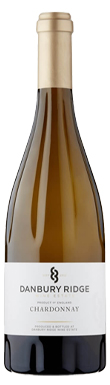

If Essex is the place to be, Danbury Ridge is showing us all why. This is quite simply one of the finest and most accomplished...
2020
Danbury RidgeEssex

Lyme Bay Winery, Martin’s Lane Estate Chardonnay, Essex, England, United Kingdom, 2020
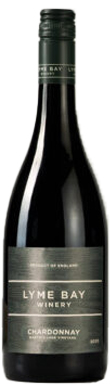
Although Lyme Bay is located in Devon, the fruit for this stunning Chardonnay comes from the Crouch Valley in Essex, a popular choice when it...
2020
Lyme Bay WineryEssex
Castlewood Vineyard, Devon Minnow (Magnum), Devon, England, United Kingdom, 2020
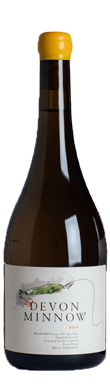
<p>I first tasted Devon Minnow at the opening of The Pig at Bridge Place, just outside Canterbury in Kent, and was blown away. The brainchild...
2020
Castlewood VineyardDevon
Chapel Down, Kit’s Coty Chardonnay, Kent, England, United Kingdom, 2019

Chapel Down’s single-vineyard Kit’s Coty was one of the first to put English still Chardonnay on the world wine map, and it has remained a...
2019
Chapel DownKent
Balfour Winery, Winemaker’s Collection Gatehouse Pinot Noir, Kent, England, United Kingdom, 2020
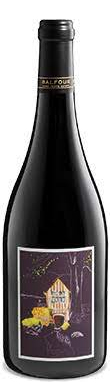
Kicking off a range of four very different English Pinot Noirs, the Gatehouse is the most characterful and bold of the bunch. The fruit is...
2020
Balfour WineryKent
Danbury Ridge, Pinot Noir, Kent, England, United Kingdom, 2020
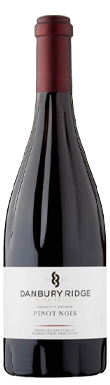
Richly fragrant with ripe plum fruit aromas, this is another terrific wine from the hands of winemaker Liam Idzikowski at Danbury Ridge. Smooth and silky...
2020
Danbury RidgeKent
Gusbourne Estate, Pinot Noir, Kent, England, United Kingdom, 2020
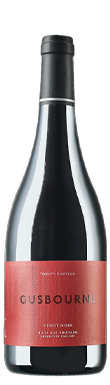
If Chapel Down’s Kit’s Coty put English Chardonnay on the world wine map, Charlie Holland’s Boot Hill Vineyard Pinot Noir arguably did the same for...
2020
Gusbourne EstateKent
Wiston Estate, The Twenty Six Pinot Noir, West Sussex, England, United Kingdom, 2020
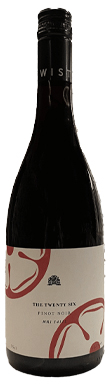
A new, limited-edition wine from Wiston and the first ever red from the estate. The name refers to the fact that it was made from...
2020
Wiston EstateWest Sussex
