
Exploring Sonoma County’s coolest vineyards plus top wines from each
Unlike its inland neighbour Napa, many of Sonoma County’s AVA vineyards benefit from the coastal conditions, being near to the Pacific ocean. We take a closer look at three of them and discover that it is different to be cool – and cool to be different.


While much of California’s Sonoma County is warm all year round, the maritime climate of its coastal wine-growing regions is a viticultural sweet spot, combining cool, even temperatures, cold winds and fog. A Pacific marine layer cools down those appellations closest to the coast each morning, lingering in some places before burning off in the midday sun. Cold ocean air funnels its way inland from the coast through corridors, resulting in high winds that affect grape-growing conditions.
Scroll down to see a selection of Sonoma County’s top cool-climate wines
The AVAs (American Viticultural Areas) acknowledged as the most heavily influenced by coastal conditions are West Sonoma Coast, Petaluma Gap and – moving inland a little – the Green Valley of Russian River Valley. While they are by no means the only regions in Sonoma County where cool-weather vineyard sites can be found, they are the AVAs that focus almost exclusively on the cool-climate, Burgundian varieties of Chardonnay and Pinot Noir.
Beyond temperatures
Other than a cool climate, there are other factors that impact grape ripening in Sonoma County. The first thing to note is that ‘cool’ does not just mean temperature. While it certainly plays a starring role, you can’t base ripeness solely on heat or degree-day accumulation. Geological and topographical factors, as well as slope aspect, can significantly impact ripeness, while elements such as sunlight and wind are essential to the fruit’s maturation. ‘Wind, in particular, has a few noteworthy effects,’ says Brian Maloney of DeLoach Vineyards in Russian River Valley. ‘At high enough wind speeds, photosynthesis shuts down so the vine can conserve water and avoid dehydration. Wind can also delay a shift in flavours from vegetal to ripe and seems to induce a longer growth cycle.’
Maloney says aspect, exposure and air drainage are also interrelated and just as important as temperature in terms of wine quality. The Sebastopol Hills is the coolest sub-region of the Green Valley of Russian River Valley AVA, in which DeLoach has two vineyards: Pennacchio and Maboroshi. Maloney says they demonstrate the importance of these factors clearly.
‘The vineyards are close to each other. But there’s a small creek by the Maboroshi Vineyard in a low spot along a ridgeline which acts as a natural spillway for the cold, damp air making its way inland from the Pacific through the Petaluma Gap.’ This ‘small but significant difference’ in aspect and exposure results, he says, in the Maboroshi Vineyard fruit needing more time on the vine than Pennacchio. ‘This gives rise to a more aromatic and lush flavour profile due to the additional environmental stressors and longer maturation period. In essence, these other factors act like the treble and bass to the overall volume, which is temperature. They can accentuate or compensate for too much or too little heat and provide the nuances that contribute to the distinctive differences between wines grown in sites with similar temperature conditions.’
West Sonoma Coast
Home to about 30 wineries and 50 vineyards, the West Sonoma Coast AVA – with its three sub-regions of Fort Ross-Seaview AVA, Annapolis and Freestone-Occidental – is defined by its proximity to the Pacific ocean and cooler marine-coastal climate and growing conditions.
Its picturesque coastal ridge vineyards, perched atop the Andreas fault line, have widely varying elevations, from 122m to 549m, with Pinot Noir, Chardonnay and Syrah the main grapes planted. Protected sites at higher altitudes, like Fort Ross, enjoy more direct sunlight and less wind. Those closer to the gusty Pacific, such as Annapolis and Gualala, are colder and see more fog. Diurnal temperatures are more extreme in West Sonoma Coast than further inland, ensuring slower, longer and more consistent ripening, and resulting in grapes that reach phenolic ripeness at lower sugar levels. In general, wines have brighter acidity, more moderate alcohol levels and purer flavours than those from warmer sites further inland.
Notable sites Peay Vineyards’ plots in Annapolis, Walala Vineyard in Gualala, Dutton Ranch’s Freestone Hill Vineyard in the far southeast, and the BA Thieriot Vineyard and Littorai’s The Haven, both in Occidental.
West Sonoma wines to seek out:
Fort Ross, Estate Chardonnay, West Sonoma Coast 2020
Three Sticks, Walala Vineyard Pinot Noir, West Sonoma Coast 2020
Peay Vineyards, Scallop Shelf Estate Pinot Noir, West Sonoma Coast 2019
Fort Ross, Bicentennial Pinot Noir, Fort-Ross Seaview, West Sonoma Coast 2018
Petaluma Gap

The Petaluma Gap AVA covers 80,937ha, but only about 1,821ha is under vine. The appellation is partially within the Sonoma Coast AVA and encompassed by the larger North Coast AVA. Pinot Noir and Chardonnay are the key varieties, with Pinot Noir accounting for 75% of plantings.
Whereas surrounding areas are protected from Pacific breezes and fog by the 30km stretch of rolling hills that run from Bodega Bay in the north to Tomales Bay in the south, a gap in this coastal range means vineyards here get the full force of these cool, windy conditions. Additionally, the elevation of this coastal range never goes much above 240m, setting it apart from the region’s more mountainous areas.
‘The wind that blows off the Pacific and rattles the Gap every afternoon is critically important to the terroir and essence of Gap wines,’ says winemaker Kerith Overstreet of Bruliam Wines. ‘First, the wind keeps the grapes cool, so Petaluma Gap grapes maintain their acidity. At the same time, Gap wines get plenty of warmth from afternoon sunshine.’
This combination of greater wind exposure and sunshine helps thicken the grape skins. Petaluma Gap Pinot Noirs tend to be more robust, fuller-bodied and slightly higher in alcohol than those from cooler West Sonoma Coast and Green Valley. Notable sites Gap’s Crown, Chileno Valley, Azaya Ranch and Sangiacomo Roberts Road Vineyard.
Picks of Petaluma Gap
Dutton Goldfield, Chileno Valley Riesling, Petaluma Gap 2019
Gary Farrell, Terrade Promissio Vineyard Pinot Noir, Petaluma Gap 2018
Keller Estate, La Cruz Pinot Noir, Petaluma Gap 2018
Bruliam, Sangiacamo Vineyards Pinot Noir, Petaluma Gap 2018
Green Valley of Russian River Valley

Approved as an AVA in 1983, Green Valley is in the southwest of the Russian River Valley AVA. Though one of the smaller AVAs in Sonoma, there are more than 100 growers and 1,457ha under vine.
Green Valley is defined by its access to the cool coastal air and fog that travel north from the coast through the Petaluma Gap, as well as its high concentration of Goldridge soils. The region enjoys long, cool mornings as the first place in the Russian River Valley to get the morning fog and the last place where it burns off.
Vineyards here get plenty of sunlight but less direct sun, as well as fewer temperature extremes than surrounding regions. Consequently, grapes enjoy a longer, slower ripening period. The cooler average temperatures (between 11°C and 30°C in peak growing season) mean fruit retains plenty of acidity and produces wines with lower alcohol levels. Pinot Noirs are generally bright and aromatic, with lifted floral notes and plenty of red fruit. Notable sites Heintz Vineyard, Hallberg Vineyard, Maboroshi Vineyard, and the estate vineyards of DuMOL and Freeman.
Star wines of Green Valley
Williams Selyem, Heintz Vineyard Chardonnay, Green Valley of Russian River Valley 2019
DuMOL, Estate Vineyard Chardonnay, Green Valley of Russian River Valley 2020
Gary Farrell, Hallberg Vineyard Pinot Noir, Green Valley of Russian River Valley 2018
DeLoach Vineyards, Maboroshi Vineyard Pinot Noir, Sebastopol Hills, Russian River Valley 2019
Brooke Herron’s pick of cool-climate Sonoma County wines
Related articles
- Gourmet winery tasting experiences in Napa and Sonoma
- California 2022 harvest variable but quality predictions high
- West Sonoma Coast and top Pinots and Chardonnays to try
Williams Selyem, Heintz Vineyard Chardonnay, Sonoma County, Green Valley of Russian River Valley, California, USA, 2019
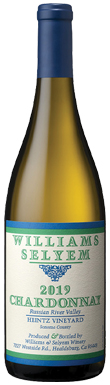

This elegant Chardonnay straddles the boundary of the Green Valley and Sonoma Coast AVAs. A brilliant, lifted wine that displays bright lemon and vanilla bean...
2019
Williams SelyemSonoma County

Dutton-Goldfield, Chileno Valley Riesling, Sonoma County, Petaluma Gap, California, USA, 2019
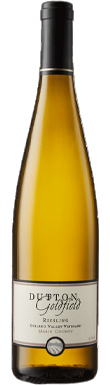
Located on the colder, foggier Marin County side of the Petaluma Gap, this Chileno Valley Riesling is lean and tense, with muted notes of waxed...
2019
Dutton-GoldfieldSonoma County
Fort Ross Vineyard, Estate Chardonnay, West Sonoma Coast, California, USA, 2020
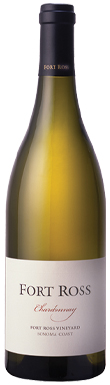
A blend of Chardonnay from the winery’s three estate Fort-Ross Seaview vineyards. Palate and nose show concentrated aromas and flavours of pear, lychee and Madagascar...
2020
Fort Ross VineyardWest Sonoma Coast
DuMOL, Estate Chardonnay, Sonoma County, Green Valley of Russian River Valley, California, USA, 2020
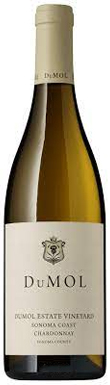
lanted on a hillside ridgetop at 150m, Kearney Vineyard is a uniquely protected, foggy site. The soils are iron-rich Altamont (a mix of sand and...
2020
DuMOLSonoma County
Gary Farrell, Hallberg Vineyard Pinot Noir, Sonoma County, Green Valley of Russian River Valley, California, USA, 2018
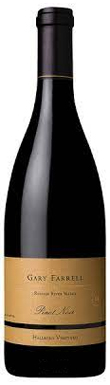
2018 saw cooler temperatures and a longer-than-average growing season, making for a fresh, vibrant Pinot Noir with bright red fruit and juicy black cherries on...
2018
Gary FarrellSonoma County
Three Sticks, Walala Vineyard Pinot Noir, West Sonoma Coast, California, USA, 2020
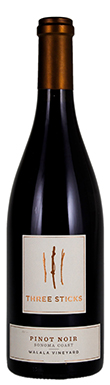
Produced from grapes grown in a high-elevation coastal vineyard site (400m-500m), this Pinot Noir exhibits bright red and dried fruit aromas. The palate leads to...
2020
Three SticksWest Sonoma Coast
DeLoach, Maboroshi Vineyard Pinot Noir, Sebastopol Hills, Sonoma County, Russian River Valley, California, USA, 2019
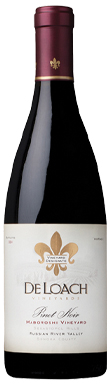
A ripe, juicy Pinot Noir. The grapes grown here have longer hang times and have developed slightly thicker skins due to the high winds in...
2019
DeLoachSonoma County
Gary Farrell, Terra de Promissio Vineyard Pinot Noir, Sonoma County, Petaluma Gap, California, USA, 2018
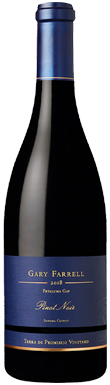
The aromatics are bright and fruit-forward, with notes of cassis, black cherries, nutmeg, cardamom and currant. On the palate, it has a vibrant acidity, juicy...
2018
Gary FarrellSonoma County
Keller Estate, La Cruz Pinot Noir, Sonoma County, Petaluma Gap, California, USA, 2018
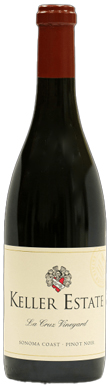
Situated in one of the more protected, lower-lying estate vineyards on the ancient seabed of the San Pablo Bay, La Cruz is defined by its...
2018
Keller EstateSonoma County
Peay Vineyards, Scallop Shelf Estate Pinot Noir, West Sonoma Coast, California, USA, 2019
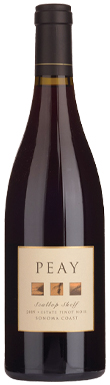
A blend of three different blocks from the winery’s hilltop vineyard (200m-250m) in the Annapolis sub-region. The vineyard sits above a river, just 6km from...
2019
Peay VineyardsWest Sonoma Coast
Fort Ross Vineyard, Bicentennial Pinot Noir, Fort Ross-Seaview, California, USA, 2018
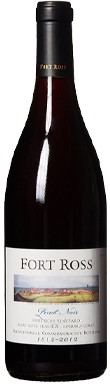
A blend from three estate vineyards – which include lower-lying vineyards that are more protected and get less direct afternoon sun as well as highelevation...
2018
Fort Ross VineyardFort Ross-Seaview
Bruliam, Sangiacamo Vineyards Pinot Noir, Sonoma County, Petaluma Gap, California, USA, 2018
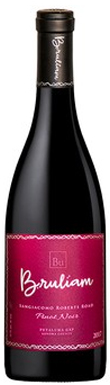
Low-lying Sangiacomo Roberts Road is one of the first vineyards the fog hits in the morning, where it sits and lingers before rolling out to...
2018
BruliamSonoma County
