
Investment: fine wine sales outlook for 2023
The fine wine market may experience a year of consolidation, after a strong performance in 2022, but opinions are mixed.


A fine wine price boom in recent years may give way to a more sedate market atmosphere in 2023, but with several possible tailwinds to consider.
Fine wine reinforced its reputation as an alternative asset with a strong 2022 performance. Prices rose by 13% in the face of equity market turmoil, according to Bordeaux Index.
‘The pace of growth definitely slowed in the second half of the year,’ said Matthew O’Connell, CEO of Bordeaux Index’s LiveTrade trading platform. Yet, he added, annual growth above 10% is considered better than average.
Indices for key regions showed strong gains, based on Bordeaux Index executed transaction data:
- Burgundy – up 30%
- Champagne – up 23%
- Italy–up 15%
- Bordeaux – up 9%
- USA (mainly California) – up 8.3%
The Liv-ex 1000 index also rose by 13% in 2022, though it dipped slightly in November and December.
Market sentiment ‘feels soft’ going into 2023, said Justin Gibbs, Liv-ex deputy chairman and exchange director. He cited macroeconomic headwinds, although he also noted the fine wine market’s relative stability versus mainstream equities.
In a recent survey, 21% of Liv-ex trade members were ‘quite pessimistic’ about the market’s direction in 2023, with 34% ‘neutral’. However, 38% of respondents said they were ‘quite optimistic’, with 5% ‘very optimistic’.
Gibbs added: ‘The broader market has been on the up since 2015, so we’ve had a seven-year bull market. So you can argue that prices have actually run a long way, and any market needs to pause or pull back a bit.’ In US$ currency terms, some price adjustment has already happened, he added.
Liv-ex said the bid-to-offer ratio on its marketplace fell to 0.37 in December 2022, versus 1.86 a year earlier. A ratio above 0.5 ‘tends to indicate an uptrend in the market’, it said.
Jamie Ritchie, worldwide chairman of Sotheby’s Wine & Spirits, said he thought top-end prices may flatten out or regress a little bit, but that buyer demand remains strong.
‘Consumers still need wines to drink,’ added Ritchie, and anything that’s got any maturity and is somewhat affordable to drink, the market is very strong for it. So we don’t anticipate prices coming down around those areas. And we still see strong demand for Champagne, too.’
Flat pricing is ‘perfectly good’ for the market and provides stable and consistent conditions for buying and selling, he said, adding: ‘I’m very bullish about the fine wine and rare spirits market over the longer term.’
O’Connell said the wine market’s pattern tends to be periods of consolidation and growth. He said 2023 may prove to be a consolidation period, but he identified three key tailwinds with the potential to improve the outlook (see box, below).
Three possible market tailwinds in 2023
China reopening: Pent-up fine wine demand may be released if China continues to open up following Covid restrictions, and this could particularly help Bordeaux, O’Connell said. But the timing is uncertain. ‘I think the unlocking of China might take a bit of time,’ said Gibbs at Liv-ex.
Burgundy and climate: Small Burgundy 2021 release volumes (see Burgundy 2021 en primeur report and top-scoring wines for more on the vintage) may tighten market supplies and reinforce a perception that climate change is creating smaller vintages, more often. ‘I do think part of the gain in Burgundy last year was people thinking, “this stuff is in short supply and it’s only dwindling further”,’ O’Connell said.
Bordeaux value: Price appreciation in some other regions could put the value offered by top-end Bordeaux in sharper focus. O’Connell said he thinks fine wine buyers ‘will start to focus on this relative value in Bordeaux’.
Monitor: latest sales activity
Top Burgundy and Champagne led 2022 in terms of price gains, and the adjacent chart data based on executed transactions at Bordeaux Index highlights some top performers.
Yet the merchant’s data shows key labels in other major regions also saw stronger price momentum than the overall market last year. While Bordeaux prices rose by 9% on average in 2022, Petrus and Figeac strongly outperformed this level of growth, for example.
Beyond fine wine, Bordeaux Index reported whisky prices up by 16% on average last year. Scotch whiskies Springbank and Macallan rose by 42% and 20% respectively, while Japan’s Karuizawa and Yamazaki increased in price by 29% and 19%, it said.
On the auction scene, Zachys said a Hong Kong sale in December ‘saw global demand for [Burgundy’s] Domaine Leroy continue to defy the wider market sentiments’. Top Domaine Leroy lot in the sale was 12 bottles of Clos de Vougeot 1996, with a final price of HK$473,100 (£49,699), including buyer’s premium (pre-sale estimate range: HK$380,000-$550,000). A 12-bottle case of the same wine from the 1997 vintage sold for HK$348,600 (estimate: HK$280,000-$420,000).
Tasted & rated for Decanter Premium
Taittinger, Comtes de Champagne, Champagne 2012
‘From the very first whiff, this expresses energy, depth and complexity,’ wrote Yohan Castaing, rating the latest Comtes de Champagne vintage release at 95 points. ‘Aeration reinforces this impression, while also revealing scents of orchard fruit, like apricot, but also exotic fruit, as well as hazelnut and delicate autolytic notes, pastry in particular.’ The wine was priced at £850 (6x75cl in bond) via Bordeaux Index, below the 2008 vintage price but above Comtes 2006. Separately, Castaing also gave 95pts to a new, 100% Pinot Noir Champagne from Bollinger, La Côte aux Enfants 2012.
The Bordeaux Index view
Fine wine & spirits specialist Bordeaux Index kindly sponsors this section of Decanter, and provides its view on the market here every issue. It can be found at bordeauxindex.com
2022 represented another strong year for the wine market, with price gains of about 15% overall and particularly significant rises in Burgundy and Champagne prices as those regions saw a continuation of the momentum from the last quarter of 2021.
Despite a broadly challenging macroeconomic environment, we believe there could be further price rises in 2023. Beyond the likely insulation from these macro pressures of the high net worth buyer base for wine, we see three potential tailwinds within the market.
Firstly, the re-opening of China from Covid restrictions should cause a significant uptick in trade activity across wine regions; secondly, an increasing focus on lower ongoing supply from climate change pressures could fuel blue-chip Burgundy prices (especially given the tiny 2021 vintage); and finally we see the relative value in Bordeaux as now being at a point where price gains seem likely.

Related articles
- Investing in Champagne: Will the surge top out?
- Investing in Californian wine: top Napa labels still reign
- Investing in Burgundy: Rarity value keeps market moving
Taittinger, Comtes de Champagne, Champagne, France, 2012
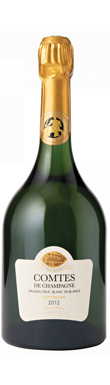

From the very first whiff, this expresses energy, depth and complexity. Aeration reinforces this impression, while also revealing scents of orchard fruit, like apricot, but...
2012
Taittinger

