
Frescobaldi wine: 30th-generation winemaking
With more than 700 years of winemaking experience in Tuscany, the Frescobaldis are one of Italy's most celebrated wine dynasties. James Button reports on the family's past and present and tastes a selection of Frescobaldi wines.


The Frescobaldi family has a glorious, almost mythological history. The Florentine banking dynasty par excellence, its centuries of wheeling and dealing weave in tales of king’s debts, deals with Renaissance artists, and an architectural legacy.
The family can trace its roots in Tuscany back to at least 1056 in Val di Pesa, when it founded Tenuta Castiglioni, which is still one of the family’s estates to this day.
Scroll down to see tasting notes and scores for 12 Frescobaldi wines
The Frescobaldis subsequently moved to Florence where, in 1252 Lamberto Frescobaldi, the current Lamberto’s namesake and ancestor, built the first bridge over the Arno river in order to access his lands from the centre of Florence. Originally in wood, its stone replacement is today known as the Ponte Santa Trinita.
The family wielded huge influence thanks to its position as one of the first and foremost Florentine banking families.
For a while, the family’s reach stretched as far afield as England, where the Frescobaldis set up an outpost to lend money to English nobles. But it was when the family bankrolled Edward I and Edward II’s wars in Wales and Jerusalem to the tune of £150,000 that the Frescobaldis found themselves in an envious position.
In return for the sizeable loans, the family was given control of the mint and customs, and bestowed huge tracts of land. The family was even honoured with the title of ‘Treasurers to the English Crown’.
Rising to prominence rather rapidly left a bad taste in the mouth of the members of England’s aristocracy, and the Frescobaldis ended up fleeing the country. Centuries later, the family would have another encounter with an English monarch, counting Henry VIII among its many prestigious wine clients.

Frescobaldi wines – a new era
The Frescobaldis wisely invested much of their growing wealth in land, expanding existing estates and acquiring new ones.
Their first foray into winemaking was at the beginning of the 14th century, producing wine from their base at Tenuta Castiglioni. The result of this steady, centuries-long expansion and acquisition policy – something that Lamberto Frescobaldi continues to this day – is that the Frescobaldis have a large portfolio of estates, split between family properties and independent estates.
In the former category are Castello Nipozzano, Tenuta CastelGiocondo, Castello Pomino, Tenuta Ammiraglia, Tenuta Castiglioni, Rèmole, and Tenuta Perano.
In the latter category are Ornellaia, Masseto, Danzante, Tenuta Luce delle Vite, and Attems in Friuli, the only estate outside of Tuscany.
There is also the Gorgona project, a collaboration with the authorities on Europe’s only penal colony.
Lamberto confesses to two passions outside of wine. ‘I love powder!’ he exclaims, referring to his visits to Castello Pomino where he can enjoy a few off-piste runs on its neighbouring hills in the winter. And in the summer, he indulges in his love of motorbikes by making his estate visits on two wheels. ‘I took my racing permit again recently. My last race was in 2014,’ he tells me.
President of the Frescobaldi Group since 2013, Lamberto is the 30th generation of the Frescobaldi dynasty. He is responsible for all agricultural and viticultural products, as well as acquisitions.
The company employs over 500 employees in total but, importantly, Lamberto insists on allowing each winery to maintain independence rather than inserting a pre-selected cellar team, although his crack team of technical director Nicolò d’Afflitto and vineyard manager Michele Brandi consult with each winery.
This autonomy, he claims, is vital to retain each estate’s individual character and avoid a homogenous style across the portfolio.
Gorgona
Gorgona, the smallest of Tuscany’s seven islands, has been a prison island since 1869. In 2012, the Italian Penitentiary Department of Livorno contacted over 100 Tuscan wineries in an effort to find a sponsor.
A joint project to make wine from a 0.8-hectare (two-acre) vineyard on the island was proposed, part of the prisoners’ rehabilitation programme.
Lamberto was the only person to respond. Although the numbers didn’t stack up financially, he threw himself into the project, visiting the island every month. ‘When you are there, you are there for them – there is no cellphone signal. You are devoted to them,’ explains Lamberto.
‘I remember a guy came up and said to me, “I hope you won’t be cross with me but I had an interview, and I told them I was a prison inmate and I work for Frescobaldi, and I got the job.” And I said, “You’ve done the right thing.” He was in charge of the wine cellar.
I said, “Look, I’ll be back in ten days and I want the cellar to be so clean and shiny I’ll need to put my shades on. “I have a permit to go home,” he said, “but I’m going to cancel.”‘ This was clearly a touching moment for Lamberto, when a prisoner who had been given leave chose to stay to fulfil his duties in the cellar.
Frescobaldi has since employed several Gorgona prisoners upon their release.
Restaurants
Frescobaldi’s two restaurants, in Florence and Mayfair, have developed a reputation for their in-depth wine lists. Heavily impacted by Covid-related closures, they are now open again.
‘It’s a tough job, really tough,’ says Lamberto of the two restaurants during the pandemic. But he hints that there are plans afoot to open a third restaurant – an indication of his confidence despite the critical condition of the hospitality sector at present.
‘We are always looking for the best ingredients and have been raising our own cattle. We have a pig farm, chickens, ducks, we try to do something unique and special as we do with our wines.’
Top picks: 12 Frescobaldi wines
You may also like:
Tenuta di Arceno: chasing perfection
Castello Banfi: producer profile plus 14 wines tasted
Isole e Olena: producer profile and latest releases tasted
Frescobaldi, Leonia Brut, Pomino, Tuscany, Italy, 2016

A blend of Chardonnay and Pinot Noir - some of the base wines fermented in oak - matured on its lees in bottle for 32...
2016
FrescobaldiPomino

Frescobaldi, Leonia Rosé, Pomino, Tuscany, Italy, 2016
Some of the base wines for Leonia Rosé were fermented in oak before assemblage. Aged in the bottle on its lees for at least 36...
2016
FrescobaldiPomino
Frescobaldi, Castello Pomino, Pomino, Tuscany, Italy, 2020
From vines grown at up to 700m, surrounded by woodland, this blend of predominantly Chardonnay and Pinot Blanc (small amounts of unspecified varieties are added)...
2020
FrescobaldiPomino
Frescobaldi, Tenuta Ammiraglia Aurea Gran Rosé, Toscana, Tuscany, Italy, 2018
This second vintage of Aurea (this new wine launched with the 2017 vintage), a blend of oak-aged Syrah and Vermentino grown in the coastal Maremma...
2018
FrescobaldiToscana
Frescobaldi, Tenuta Ammiraglia Alìe Rosé, Toscana, Tuscany, Italy, 2020
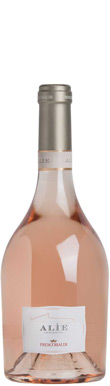
Named after an Ancient Greek sea nymph, Alìe is another of Tenuta Ammiraglia's expressions of Syrah and Vermentino combined. While Aurea Gran Rosé is raised...
2020
FrescobaldiToscana
Frescobaldi, Castelgiocondo Ripe Al Convento Riserva, Brunello di Montalcino, Tuscany, Italy, 2015
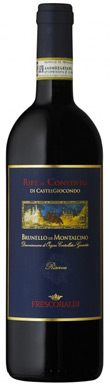
Situated southwest of Montalcino at an altitude of around 300 metres, Castelgiocondo was one of the earliest producers of Brunello. The estate's Ripe al Convento...
2015
FrescobaldiBrunello di Montalcino
Frescobaldi, Castello Nipozzano Mormoreto, Toscana, Tuscany, Italy, 2017
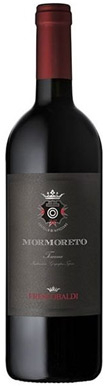
This blend of Cabernet Sauvignon, Cabernet Franc, Sangiovese and Petit Verdot from the Mormoreto vineyard is Nipozzano's top wine. Matured for 24 months in French...
2017
FrescobaldiToscana
Frescobaldi, Giramonte Di Castiglioni, Toscana, Tuscany, Italy, 2017
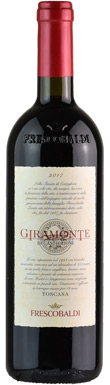
Tenuta Castiglioni has been in the hands of the Frescobaldi family since the 11th century. Located in the Val di Pesa on clay and limestone...
2017
FrescobaldiToscana
Frescobaldi, Tenuta Perano Riserva, Chianti Classico, Tuscany, Italy, 2016
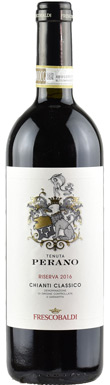
This Riserva, from the highly regarded 2016 vintage, has spent 24 months in Slavonian oak barrels plus further time in bottle. Rich, ripe aromas of...
2016
FrescobaldiChianti Classico
Frescobaldi, Nipozzano Riserva, Chianti, Rufina, Tuscany, Italy, 2017
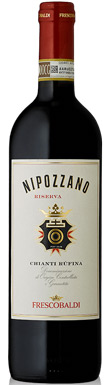
Nipozzano's Riserva Chianti Rufina is matured in barriques then bottle. From the notoriously hot, dry 2017 vintage, it has a subtle aroma of fresh red...
2017
FrescobaldiChianti
Frescobaldi, Tenuta Perano, Chianti Classico, Tuscany, Italy, 2018
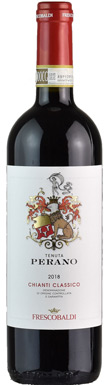
Located in Gaiole in Chianti, Tenuta Perano's vineyards occupy a natural amphitheatre of steep slopes at 500 metres above sea level. This Chianti Classico is...
2018
FrescobaldiChianti Classico
