
From Pauillac to Stellenbosch: Celebrating May-Eliane de Lencquesaing at 100
In 1978, in a notary’s office in Bordeaux, May-Eliane de Lencquesaing’s life changed dramatically. Drawing lots with her siblings for their father’s estate, she inherited Château Pichon Longueville Comtesse de Lalande in Pauillac. It began a five-decade journey in wine that none could have predicted, one that carries on today with her South African estate, Glenelly.


Born in 1925, May-Eliane de Lencquesaing grew up in Bordeaux’s Médoc region, daughter of Edouard-François Miailhe and Victoria-Charlotte Desbarats.
Her family ties to wine ran deep. Her father and uncle revived her grandfather’s brokerage business after World War I, investing in the region when confidence and sales were low.
They bought and ran Bordeaux estates including Château Palmer, Château Ducru-Beaucaillou and Château Pichon Longueville Comtesse de Lalande.
‘I grew up among the vines – I learned by listening to my father and uncle,’ May-Eliane recalls. ‘I have loved everything about grapes and wine since I was a child. It’s in my blood.’
Scroll down to see notes and scores for 12 superb wines from Glenelly
Family influence

Her Bordeaux was one scarred by the vine-root louse phylloxera, two world wars and low demand.
‘I understood not just the wines but the climatic problems and economic uncertainties as well. I knew difficult times – for the wines and the markets.’
In the 1940s, May-Eliane’s university studies were cut short by her father, who decided she should work in the family office in Bordeaux city, where she learned business, teamwork and management.
An admired yet authoritarian figure, her father was to prove a key influence in her life, although her paternal uncle Louis – more relaxed, less controlling – and her four grandparents also shaped her early interests, between them instilling a love of soils and a passion for conversation, music and literature that would stay with her all her life.
In early May 1948, May-Eliane was introduced to Captain Hervé de Lencquesaing, and her father arranged for them to be married just six weeks later.
She left Bordeaux aged 23 for a life as an army wife, seemingly never to return to the gravel croupes, bustling chais and stately châteaux of her youth.
Return to Pichon Comtesse

Her years with Captain de Lencquesaing were eventful beyond wine, and included time in the USA which she enjoyed immensely, finding great warmth and intelligence in the post-war Midwest.
He retired as a general in 1974, and they were ready for a settled life in Pas-de-Calais in northern France, where May-Eliane was engaged in local politics.
But there was still the issue of her father’s estate.
After nearly 20 years in probate (he died in 1959, aged 61), the inheritance included châteaux, a Champagne house, real estate in Paris and tracts of Landes woodland.
‘The most iconic lot, Château Pichon Longueville Comtesse de Lalande in Pauillac, fell to me through the luck of the draw,’ May-Eliane recalls. ‘It was precisely what I had hoped to avoid, knowing the responsibility it entailed.’
It was far from her only challenge. ‘I was the first woman,’ she says. ‘There was no one else.’
Corinne Mentzelopoulos had not yet joined Château Margaux; Philippine de Rothschild would not arrive at Château Mouton Rothschild for another decade.
The Médoc wine world was profoundly hostile to the idea of a woman in charge. ‘I had to rely not on truthful men but on the men who lied to me the least,’ she recalls. Her experience in French politics helped, however.
‘In their eyes, I knew nothing. When I joined their conversations, they would stop talking. But when they realised I wasn’t going away, they had no choice but to accept me.’
Work ethic

May-Eliane recognised the need to study modern winemaking if she was to earn respect in the Médoc, and aged 53, she enrolled at Bordeaux University, studying under Professors Emile Peynaud and Pascal Ribéreau-Gayon.
‘I was in Pichon, leaving at 6am for classes, returning at 6pm to work on the administration,’ she says.
Her wines enjoyed great commercial and critical success, from the inaugural 1978 onwards, and she engaged in an intense programme of travel and tasting. ‘I was the one presenting the wines, pulling the cork. It was important that I was there,’ she insists.
But away from her husband and family, she struggled.
‘I was anxious and terribly lonely. My children did not understand my work at all. They thought I was having fun, living in a beautiful château, having dinner parties. My family did not support me; neither did my neighbours in Bordeaux.’
Eventually, General de Lencquesaing joined her in the Médoc, and Pichon Comtesse became a key property in the story of Bordeaux’s renewal in the 1980s.
She was hands-on and in charge of every detail, bringing to bear the fortitude and attention to detail of an army wife with the work ethic and business acuity of her father and uncle.
‘I knew how the flowering had been, and the budding and the maturation. I was never in Arcachon [on the nearby coast] in the summer like everyone else.’ She soon gained the epithet La Générale.
In this busy period she was the recipient of many honours and awards, and at the age of 69 was chosen as the 1994 Decanter Woman of the Year (since renamed the Decanter Hall of Fame award).
No one could have known then that, a decade later, she would be embarking on a new project on the other side of the world, or that she would subsequently be celebrating the conclusion of the 2025 harvest with her winemaking team at Glenelly, in Stellenbosch, at the age of 100.
Uprooting

By the early 2000s, despite its success, the future of Château Pichon Comtesse was uncertain.
The family’s jewel since 1925 (by chance, the same year as May-Eliane’s birth), it was to be sold in a move that surprised many.
‘It was a very difficult decision,’ she says. ‘My son Hughes could have taken it on, but he and his wife decided to stay in Paris. My daughter Violaine had an excellent palate but did not have a relationship with the workers.’
May-Eliane’s respect for her staff at Pichon was a crucial aspect of her time there.
‘If I have been successful it is because I always had a strong relationship with the workers. I would fly back from Chicago or Los Angeles and I would see them in the pouring rain in the vineyard, soaking wet and covered in mud.
‘I was full of admiration. “Thank you for doing the work you do,” I told them, “I’m going to tell you about the work I have been doing.” We talked. I knew them, I knew their families.’
Pichon Comtesse was finally sold to the Roederer Champagne group in 2006, and subsequently May-Eliane was able to devote herself to the development of the Glenelly estate in South Africa, which she had purchased in 2003.
Prior to this, May-Eliane’s first venture beyond Bordeaux had been a collaboration with Washington state’s Château Ste Michelle in the 1990s, though she withdrew from the proposed arrangement when the parent company demanded a fixed annual production volume in the contract.
Glenelly, Mandela & the Huguenots

As president of the International Wine & Spirit Competition (IWSC) in the 1990s, May-Eliane met many South African winemakers who were winning trophies with their Bordeaux blends, and Nelson Mandela’s victory in the nation’s 1994 presidential elections deeply moved her.
Her successor at the IWSC, Anton Rupert, a major name in South African wine, urged her to consider the Cape for her new project, pointing out its French Huguenot roots.
‘I told him I couldn’t start planting a vineyard at my age. He said, “Do it in honour of Mandela.” So I did.’
She chose Glenelly in Stellenbosch’s Simonsberg zone (pictured, above), drawn to its decomposed granite soils, varied slopes and reliable water supply – a foresight that proved crucial given the challenges of drought in the Cape winelands.
Though it had previously been planted with vines, Glenelly was a fruit farm when she bought it, and this allowed her to start from scratch with the knowledge she had gained in Bordeaux.
She hired young winemaker Luke O’Cuinneagain as cellar master and (much to his surprise) retained long-time agronomist Heinrich Louw, whose deep understanding of the estate she knew would prove invaluable.
Now living in Switzerland, May-Eliane still travels to Glenelly for several months each year. With her grandchildren helping in its running, it’s likely to remain in family hands.
In 2022, Dirk van Zyl took over as cellar master, maintaining important winemaking tenets such as wild yeast fermentation, while taking the bold move to pick not on the basis of technical analysis, but on the taste of the berries in the vineyard.
‘Heinrich is doing everything right in the vineyards in terms of sustainability, cover crops and so on,’ May-Eliane notes, ‘but if we are going to find more finesse in the wines, it will be through Dirk.’
A century into an exceptional life, May-Eliane de Lencquesaing continues to question and refine. Even now, her work is defined as much by what might still be possible as by what she has already achieved.
At 100, she’s still looking to the future.
See Jason’s pick from Glenelly’s admirable portfolio
Related articles
- South Africa Cape red Pinotage blends: Panel tasting results
- South African Chardonnay: Panel tasting results
- South Africa newsletter: Sign up today
Glenelly, Estate Reserve Chardonnay, Stellenbosch, South Africa, 2023
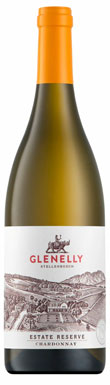

The cool 2023 vintage has delivered a more fruit-driven Chardonnay than usual, with winemaker Dirk van Zyl choosing to mature it for six months in...
2023
Glenelly

Glenelly, Estate Reserve Chardonnay, Stellenbosch, South Africa, 2022
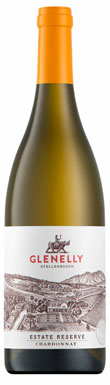
A warmer vintage and a more typical example of the Glenelly Chardonnay than the 2023, it shows a judicious balance between elevage in wood (10-11...
2022
Glenelly
Glenelly, Lady May, Stellenbosch, South Africa, 2017
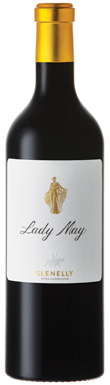
The 2017 Lady May is one of the best vintages produced here. The blend recalls the 2009 in proportion with a strong foundation of 90%...
2017
Glenelly
Glenelly, Lady May, Stellenbosch, South Africa, 2020
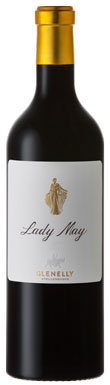
The Covid vintage of Lady May is one of the most striking, with a brisk, energetic character that revolves around delineated blackberry and dark cherry...
2020
Glenelly
Glenelly, Lady May, Stellenbosch, South Africa, 2015
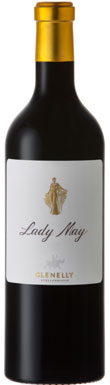
Exuberantly perfumed and still packed with vibrant fruit, winemaker Dirk van Zyl describes this as ‘the vintage that brought the spotlight onto Lady May'. A...
2015
Glenelly
Glenelly, Lady May, Stellenbosch, South Africa, 2009
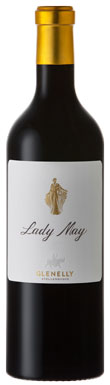
Only the second vintage of Lady May, named in honour of May-Eliane de Lencquesaing, this is 90% Cabernet Sauvignon with 10% Petit Verdot, aged for...
2009
Glenelly
Glenelly, Lady May, Stellenbosch, South Africa, 2019
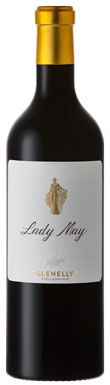
A blend of 75% Cabernet Sauvignon, 10% Cabernet Franc, 10% Merlot and 5% Petit Verdot, the 2019 is a wine that bears the hallmarks of...
2019
Glenelly
Glenelly, Estate Reserve Red, Stellenbosch, South Africa, 2017
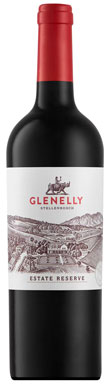
An impressive wine from a lauded Cape vintage, Glenelly's Estate Reserve punches well above its price point in 2017. A blend of around two-thirds Cabernet...
2017
Glenelly
Glenelly, Lady May, Stellenbosch, South Africa, 2011
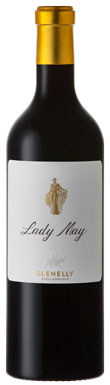
A cooler vintage, which is reflected in the more red-fruited character on show here, with a delicately herbal note of parsley and tea leaf coming...
2011
Glenelly
Glenelly, Lady May, Stellenbosch, South Africa, 2010
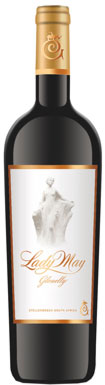
The same blend as 2009, this is markedly more mature with some developed notes of liquorice and cured meats complemented by expressive aromatics of dried...
2010
Glenelly
Glenelly, Estate Reserve Red, Stellenbosch, South Africa, 2018

The crippling South African droughts broke after this vintage, but they have left their cumulative mark on the 2018. There was less Cabernet than usual...
2018
Glenelly
Glenelly, Lady May, Stellenbosch, South Africa, 2016
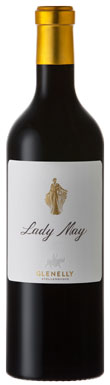
Smaller berries were a feature in 2016, the first of a trio of drought vintages to hit South Africa, and there is a definite concentration...
2016
Glenelly
