
Gérard Bertrand: Behind the Languedoc labels plus 10 wines tasted
With 16 estates among the most prestigious crus of the Languedoc, and over 30 years of quality winemaking experience, it’s no surprise Gérard Bertrand is known locally as the ‘King’ of the region. Georgina Hindle took part in a recent virtual tasting to discover the history and philosophy behind the label…

Although officially joining the family business in 1987, putting Gérard Bertrand in his 34th vintage today, his story began taking part in his first vintage in 1975 with his father Georges.
‘My father was a pioneer,’ Gérard said, ‘he was one of the first to believe the potential of the region and to try and reveal the terroir’.
Scroll down for the Gérard Bertrand tasting notes and scores
Gérard credits Georges, who died in an accident in 1987, for coaching him and teaching him to become an expert in the art of blending.
He also praises two ‘exciting men’ for helping him on the journey; Pétrus winemaker Jean-Claude Berrouet, who Gérard said was his ‘master for ageing wine’, and father-son consultant team Marc and Mathieu Dubernet, with the former being called ‘one of the prime movers in the renaissance of Southern French winemaking over the last three decades’ by Andrew Jefford.
After five years at the helm in 1992, the Gérard Bertrand wine company and brand were born. Today it exports wines from the south of France to more than 170 countries with an annual turnover of more than $145m in 2019, offices in Dallas and Shanghai, and teams totalling 320 people scattered across the globe in Russia, Africa, Asia and Latin America.
The portfolio of estates spread from the high altitude vineyards of the Pyrenees to the volcanic soils of the Terrasses du Larzac and coastal sites overlooking the Mediterranean.
A diverse array of terroirs and grape varieties can be found among the total 850-hectare holdings – all of which are farmed biodynamically, either already certified or in the process of conversion, a core brand principle and philosophy.
Biodynamics
‘I am very clear about what we want to achieve and biodynamics is a part of that’ Gérard said. ‘The role of the winegrower is to maintain biodiversity and give each vine the force and energy it needs, so it can deliver the best of itself, and grow in good health without the use of any chemical products.’
The team follows the biodynamic protocol based on Rudolf Steiner’s theories and Maria Thun’s astral calendar which determines the agricultural energy of each day according to the influence of the moon, stars and cosmos.
They look for ‘excellence in the vineyards’ and steer clear of fertilizers or pesticides, instead preferring to prepare their own natural treatments which are not only better for the environment and the vines, but also to ‘reinforce the taste of place’ and give each wine its ‘signature characteristics’.
A herbal infusion of stinging nettles, for instance, aims to reduce the effects of hydric stress and improve sap flow, dandelion to protect against fungi, and yarrow to mitigate the effects of excessive heat through its cooling properties. They also like to ensure consistently low yields and wait for full phenolic maturity before harvesting.
One of several biodynamic experiments carried out over the years revealed an acidity increase of 50% over five years for their Cigalus range. ‘It was spectacular, now we have more acidity in this place than Burgundy,’ Gérard said.
Estate portfolio
Château de la Soujeole, AOP Malepère
Château Laville Bertrou, AOP Minervois-La-Livinière
Château L’Hospitalet, AOP La Clape
Cigalus, IGP Aude Hauterive
Clos D’Ora, AOP Minervois-La-Livinière
Domaine de L’Aigle, AOP Limoux, IGP Haute Vallée de l’Aude
Château de Villemajou, AOP Corbières-Boutenac
Domaine de L’Estagnère, IGP Cité de Carcassonne
Château des Karantes, AOP La Clape
Château de Tarailhan, AOP La Clape
Château Aigues Vives, AOP Corbières
Cap Insula, AOP La Clape
Château des Deux Rocs, AOP Languedoc-Cabrières
Clos du Temple, AOP Languedoc-Cabrières
Château de Celeyran, AOP La Clape
The virtual tasting, entitled The Ultimate French Wine Experience, showcased 10 wines across the range with descriptions given regarding each wine’s history, aroma and taste profile and food pairing recommendation.
Clos du Temple, 2019
A new wine for the company, launched in 2019, so now in its second vintage. The goal was to create a ‘grand cru rosé in the Languedoc’ and one that has the ‘ageing potential of a white wine’.
The result of many years searching for the best site to create an ‘iconic’ rosé style, grapes come from seven different plots (all harvested and vinified separately) among 8ha of vines planted on the hillsides of the Cabrières commune. Here there is a contact zone of schist and limestone with the terroir said to have been described by King Louis XIV as the best place for rosé in the whole of France. ‘I fell in love with the beauty of the terroir, it inspired me,’ Gérard said.
The wine has been designed to mirror a temple both in grape composition and bottle shape; the foundations being Grenache, the columns Cinsault, the walls Syrah, the architecture Mourvèdre and the roof Viognier.
Aged mostly in oak barrels to reinforce structure and develop depth and complexity with 15-20% in cement vats for freshness and minerality. It is a super-premium bottling, priced around £170/$190.
Château L’Hospitalet, white 2019 and red 2018
‘Even in my most beautiful dream I never expected to own this estate’ said Gérard, who considered it to be ‘iconic’ and already too-well established with a hotel and restaurant and sizeable holdings. ‘I had to convince my bank, and didn’t sleep for more than six months, but I survived and it changed my life’.
Overlooking the Mediterranean, in the heart of the protected nature reserve of La Clape, this estate creates both a red and white grand vin as well as being the company’s ‘destination’ to celebrate the Mediterranean Art de Vivre with a tasting room, workshop spaces, art shops as well as the setting of the annual jazz and truffle festivals.
Around 85ha of vines are planted on distinctive mineral-rich soils, surrounded by 1,000ha of garrigue, and benefit from one of the sunniest locations in France.
Due to the proximity of the sea, the region also experiences salinity in the air which gives a similar aromatic character in the resulting wines.
The white is comprised of Grenache Blanc, indigenous and late-ripening Bourboulenc with Vermentino and Viognier. The potential ageing of the 2019 Gérard puts at 10-15 years.
The red is made from the best barrels of each varietal; Syrah, Grenache and Mourvèdre (10-20%). Grapes are picked by hand and transported to the winery in wooden tubes within the hour before being sorted, de-stemmed and transferred separately into temperature-controlled vats for 20-25 days maceration. With the arrival of winter, the wine is transferred into new 225l casks for 12-16months ageing. The red is priced around £34/$40.
‘This is still a baby,’ said Gérard, ‘I am very proud about this wine’.
Château La Sauvageonne, white 2018 and red 2017
Located in Terrasses du Larzac, this is a region of extremes with hot days and cold nights, partly due to the effects of the altitude (150-350m) and from currents of cold air that descend from the Larzac plateau.
The area is surrounded by volcanoes giving a unique terroir of red, black and purple mineral-rich soils, as well as schist soils, which both impart an aromatic minerality and precise textural element in the wines.
The estate, situated at 300m in altitude, has been certified biodynamic since 2014 and is what Gérard believes has positively affected the acidity levels in these wines. ‘It took a few years to see the change but once you stop using potassium you reinforce the acidity and lower the pH’.
A red and white grand vin is produced, both of which are made using the best barrels of each varietal. The white is comprised of Grenache Blanc, Vermentino, Viognier and Roussanne and the red; old-vine Grenache (what Gérard calls ‘the driver’), Syrah and Mourvèdre with a touch (5-10%) of Carignan.
Gérard revealed that for the first few vintages in 2011, 12 and 13 the team focused on Syrah which he ‘liked but didn’t love’. The focus then switched to Grenache from 2014 which now always represents between 50-60% of the blend depending on the vintage.
Gérard said 2018, in particular, was an ‘exceptional vintage’ for both reds and whites benefitting from near-perfect weather conditions during the summer and harvest. The red is available for around £21/$25.
Cigalus, white 2019 and red 2018
The birthplace of the biodynamic adventure for Gérard and where he lives with his family.
Domaine de Cigalus is situated in a secluded valley of the Corbières, in the terroir of Frontfroide or cold springs. The environmental conditions, despite often reaching temperatures of 42°C in the summer, allow for great freedom of plantings supporting both the earliest and latest harvesting grapes – many of which are international varieties, resulting in truly atypical wines.
For the white, Gérard’s idea was to make a blend of Chardonnay, Sauvignon Blanc and Viognier ‘because nobody had done it in the past’. He said ‘it was exciting to get the structure, acidity and aromas’ from each grape respectively.
‘Making this blend is always exciting but difficult to try and blend all of them and deliver the best message of the vintage’ he said.
The red is more ‘fun’ blending both traditional and international varieties including; Merlot, Cabernet Franc, Cabernet Sauvignon, Caladoc (Grenache and Malbec cross), Syrah, Mourvèdre and Carignan
Since many of the grapes had already been planted by the previous owner when the estate was bought in 1995 Gérard decided to ‘follow the same path’.
‘It was amazing for me to blend both types of grapes and it has become our signature’ he said.
The ageing potential was also highlighted for this wine, something Gérard follows carefully, and uses a back stock of more than 10,000 bottles to monitor over the years.
Château de Villemajou, 2016
A special estate for Gérard where he experienced his first harvest and a place where he and his father shared a passion for wine, having been purchased by Georges in 1967.
The estate covers 130ha in the sub-appellation of Boutenac, the first special cru in Corbières to be officially recognised by the INAO in 2005. The terroir is characterised by its soils comprised of round pebbles (silex) and blocks of limestone once swept down from the Pyrenees, forming the perfect setting for very old Carignan vines (between 80-120 years old) as well as Syrah, Grenache and Mourvèdre.
‘This wine really has a sense of place’ Gérard says and with the 2016 vintage experiencing a hot summer and favourable harvest conditions ‘will age for a long time’.
Château de la Soujeole, 2017
The estate was purchased in 2002 with vineyards planted in the west of the Languedoc, in the Malepère appellation (meaning stone in French) just fifteen minutes from the city of Carcassonne.
For Gérard, this is the ‘kingdom of Cabernet Franc in the south of France’ where the influences of the south-west oceanic climate meet the Mediterranean climate offering both cool but humid conditions favoured by the grape.
Manual harvests here are generally much later, often into the end of October with the focus on Cabernet alongside Malbec and Merlot, all of which are double sorted in the plot and in the cellar. Each plot and each grape is vinified separately then matured in French oak for 12 months.
The character of this wine is different to many of the other wines in the range, missing the garrigue, wild herbal element offered in other Languedoc appellations and instead offering fresh, juicy and concentrated blue-fruit flavours alongside oak spice and dark cocoa.
Clos d’Ora, 2017
A discovery for Gérard in 1997 but a dream not realised until the first harvest in 2012 having spent 17 years planning and preparing.
He undertook vast re-plantings of garrigue as well as Grenache and Mourvèdre, in order to have the four main Languedoc varieties (with Syrah and Carignan), and to get the ‘spirit’ of La Livinièrre, as well as totally rebuilding and renovating the estate properties and cellar.
‘This place inspired me and was important for me to create an iconic, multidimensional red wine from the south of France which delivers a message of peace, love and harmony’.
Vineyards are planted on a unique geological fault, a contact zone between limestone and marl soils making Syrah the backbone (60-65%), Grenache the power (15-20%), Mourvèdre the spicy velvet and Carignan the freshness. Horses and mules are used to plough the vineyards and work on the vines is guided ‘by intuition, feeling and a connection to nature’.
Each varietal and parcel is macerated in separate batches in an unlined thermoregulated pre-cast concrete vat with differing degrees of destemming and pressing per variety. Ageing is in French oak barrels for 12 months and blending is done in grape percentage order.
The 2017 vintage had a dry, mild winter with a windy and sunny ripening period and was spared yield loss from a devastating hailstone in June that affected other areas in the region.
It is deep and dense, with menthol and smoked elements alongside concentrated fruit and enveloping texture. A wine to age further or decant at least an hour before drinking. Priced around £170/$190.
Despite such a large portfolio, Gérard is meticulous at every stage from plantings to harvest, vinification, ageing and bottling.
He remembers some advice from his father telling him: ‘The wine world is 1,001 details, and if you miss one you have a small problem, and if you miss two you have a big problem’.
The range showcases the wonderful breadth of styles on offer in the Languedoc, across a range of price points and drinkability time frames. In addition, the company purposefully keeps back between 15-20% of each wine each vintage so consumers can secure back vintages and ex-cellar bottles easily.
See the Gérard Bertrand tasting notes and scores
You may also like
Languedoc gems: 24 Minervois-La Livinière wines tastedRegional profile: St-Chinian plus 59 wines tastedDiversity and innovation in southwest France: Foncalieu plus six wines tastedMaison Ventenac: Forging a new Languedoc identity
Gérard Bertrand, Clos du Temple, Cabrières, Languedoc-Roussillon, France, 2019
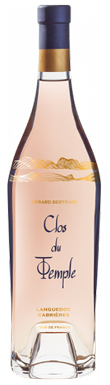

Since its debut, this vintage has had intense dark fruit concentration running through its inner core. This is a serious wine with notes of damsons...
2019
Gérard BertrandCabrières

Gérard Bertrand, Château L'Hospitalet Grand Vin Blanc, La Clape, Languedoc-Roussillon, France, 2019
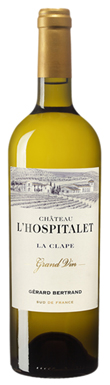
Delicate aromas of almonds and marzipan lead onto a ripe palate with a glycerol texture, waxy white flowers, almond butter and sweet, nutty pears. Fresh...
2019
Gérard BertrandLa Clape
Gérard Bertrand, Château la Sauvageonne Grand Vin Blanc, Languedoc, Languedoc-Roussillon, France, 2018
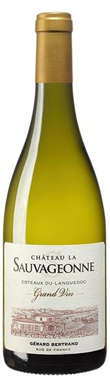
Acacia notes on the nose, alongside ripe pears and green apples. The palate is juicy and mouthwatering with nectarine rind, lemon zest and grapefruit -...
2018
Gérard BertrandLanguedoc
Gérard Bertrand, Cigalus Blanc, Aude Hauterive IGP, Languedoc-Roussillon, France, 2019
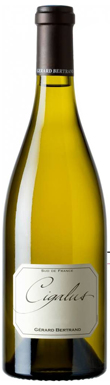
This has a wonderful almond and vanilla tinged nose, offsetting the grapefruit and peach fruit aromas. The palate is juicy with good, zesty lemon acidity....
2019
Gérard BertrandAude Hauterive IGP
Gérard Bertrand, Château la Sauvageonne Grand Vin Rouge, Terrasses du Larzac, Languedoc-Roussillon, France, 2017
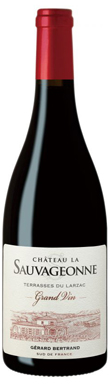
Richly scented nose, heady and inviting. Violet-tinged red cherry notes on the nose alongside blackcurrants and blueberries. The texture immediately stands-out, fine but gripping tannins...
2017
Gérard BertrandTerrasses du Larzac
Gérard Bertrand, Cigalus Rouge, Pays d'Oc, Languedoc-Roussillon, France, 2018
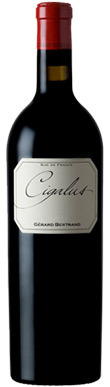
Deep ruby red in the glass with intense blackcurrant aromas on the nose alongside wild herbal elements of garrigue. The palate is silky but with...
2018
Gérard BertrandPays d'Oc
Gérard Bertrand, Château de Villemajou, Corbieres, Boutenac, Languedoc-Roussillon, France, 2016
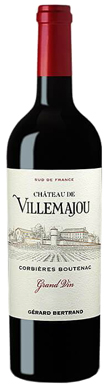
Deep blue purple colour in the glass with sweet blackcurrant and black cherry aromas on the nose. The palate is smooth but succulent and almost...
2016
Gérard BertrandCorbieres
Gérard Bertrand, Château de la Soujeole, Malepère, Languedoc-Roussillon, France, 2017
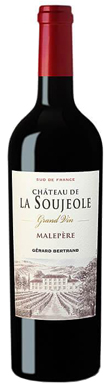
A fresher, leaner style here with cool blue fruit flavours alongside red cherries and pomegranate aromas on the nose. This is juicy and ripe, bold...
2017
Gérard BertrandMalepère
Gérard Bertrand, Château L'Hospitalet Grand Vin Rouge, La Clape, Languedoc-Roussillon, France, 2018
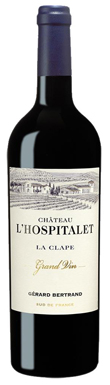
Faintly floral and fruit forward this has a really expressive nose - full of life and charm. Cherries, blackcurrants and blueberries combine on the palate,...
2018
Gérard BertrandLa Clape
Gérard Bertrand, Clos d'Ora, Minervois, La Livinière, Languedoc-Roussillon, France, 2017
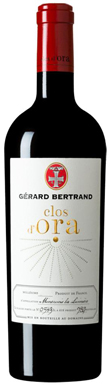
A deep, dense. spicy and smoke-edged nose here, there's menthol elements as well as red cherries, dark chocolate and tobacco. A lovely texture on the...
2017
Gérard BertrandMinervois