
Giant Steps: producer profile and latest releases tasted
Giant Steps is one of the leading producers of cool-climate Pinot Noir and Chardonnay in Australia’s Yarra Valley. Winemaker Steve Flamsteed chats with Tina Gellie about some of the estate’s key vineyards and latest releases, and what he has planned for the future.

Giant Steps founder Phil Sexton began his career as a brewmaster, first at Perth’s Swan Brewery, then co-founding both Matilda Bay and Little Creatures. The move into wine came through Devil’s Lair in Margaret River, which he founded in 1981.
After selling Devil’s Lair to Treasury Wine Estates in 1996, he arrived in Victoria’s Yarra Valley in 1997 ready for a new challenge. Buying land next to Yarra Yering and Coldstream Hills, he planted the Sexton Vineyard, and the first vintage of Giant Steps was released in 2001.
Scroll down for tasting notes of five new releases of Giant Steps Chardonnay and Pinot Noir
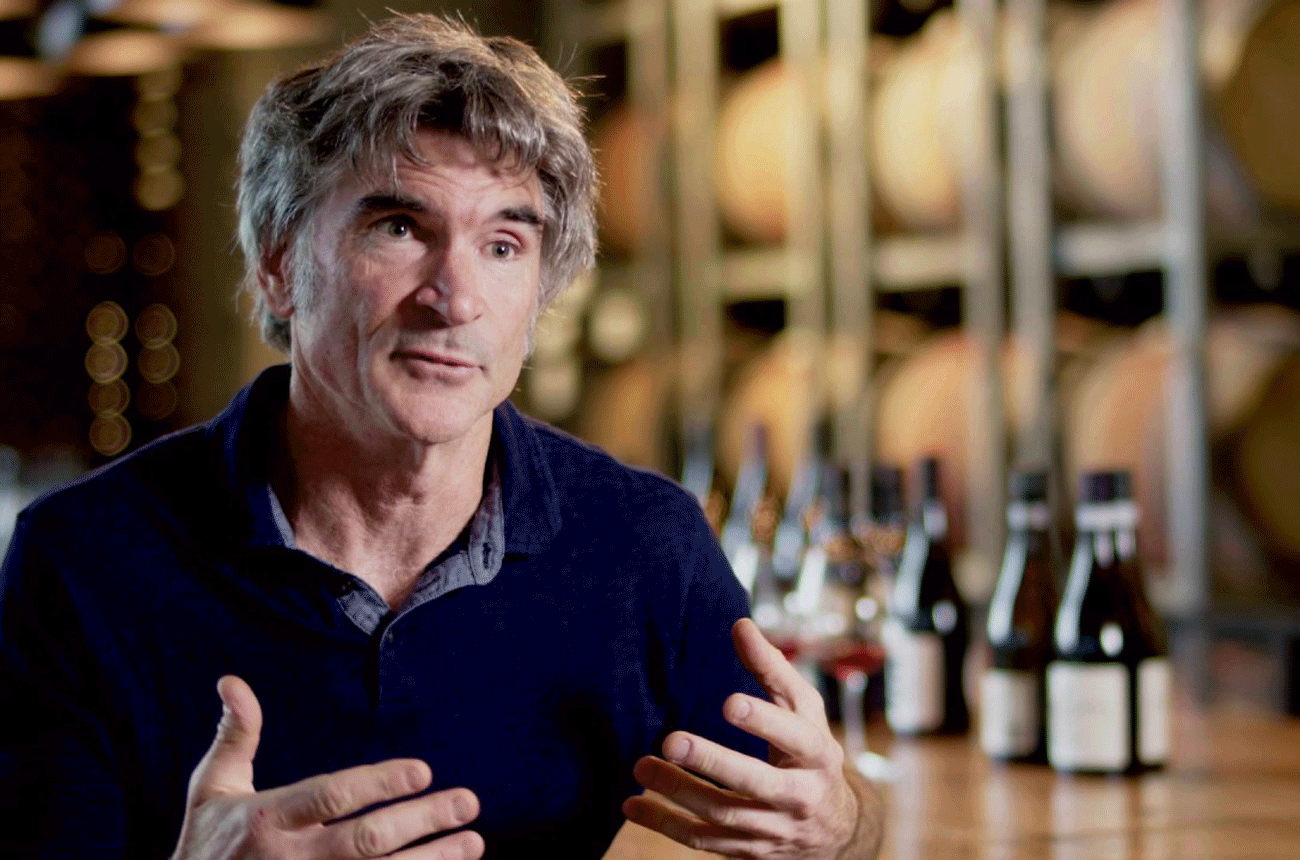
Meanwhile, Steve Flamsteed was juggling several potential professions. Following work as a circus performer, cheesemaker and chef in London and France, he ended up back in Australia to study winemaking at the University of Adelaide’s Roseworthy College. All because of a stint picking grapes in Beaujolais.
‘I didn’t even like wine much but I loved the process of seeing how it went from grape to glass,’ he explains.
Through his love of beer, Flamsteed had heard of Sexton and met him at a Pinot Noir workshop in 2003. ‘I told him I wanted to work with him – and four weeks later I was!’
The pair created the ‘lifestyle brand’ Innocent Bystander in 2004, which was sold to Brown Brothers in 2016. Thanks mainly to the sweet, fizzy, low-alcohol Moscato (‘our cash cow’, says Flamsteed) it created the revenue needed to build up Giant Steps.
In 2020, the California-based multinational wine company Jackson Family Wines bought Giant Steps for an undisclosed sum. One of the biggest wine producers in the US, it owns 40 wineries in seven countries, including Yangarra Estate and Hickinbotham Clarendon Vineyard in South Australia’s McLaren Vale.
Single-vineyard wines and the Yarra Valley range
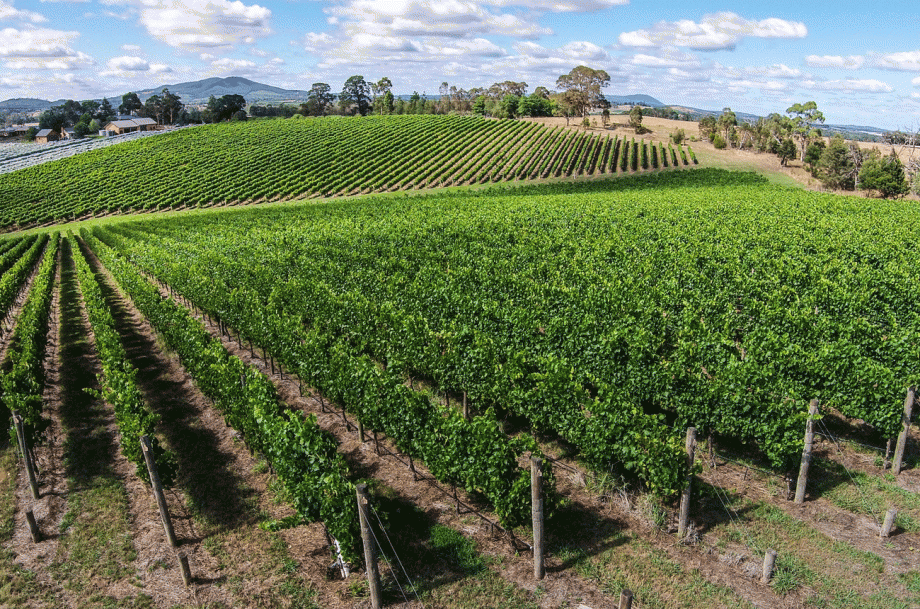
Giant Steps works with six vineyards over 70ha: the estate-owned Sexton (30ha, planted 1997) and Applejack (12.5ha, 1997), plus four that the winery has long-term relationships with: Tarraford (8.5ha, 1988), Gruyere Farm (1.6ha, 1995), Wombat Creek (16ha, 1988) and Primavera (12ha, 2001).
‘We deliberately have several sites across the Yarra at different aspects, altitudes and soils,’ says Flamsteed. ‘But the initial intention wasn’t to create single-vineyard wines, it was a way for us to be risk averse; to protect against challenging vintages.’
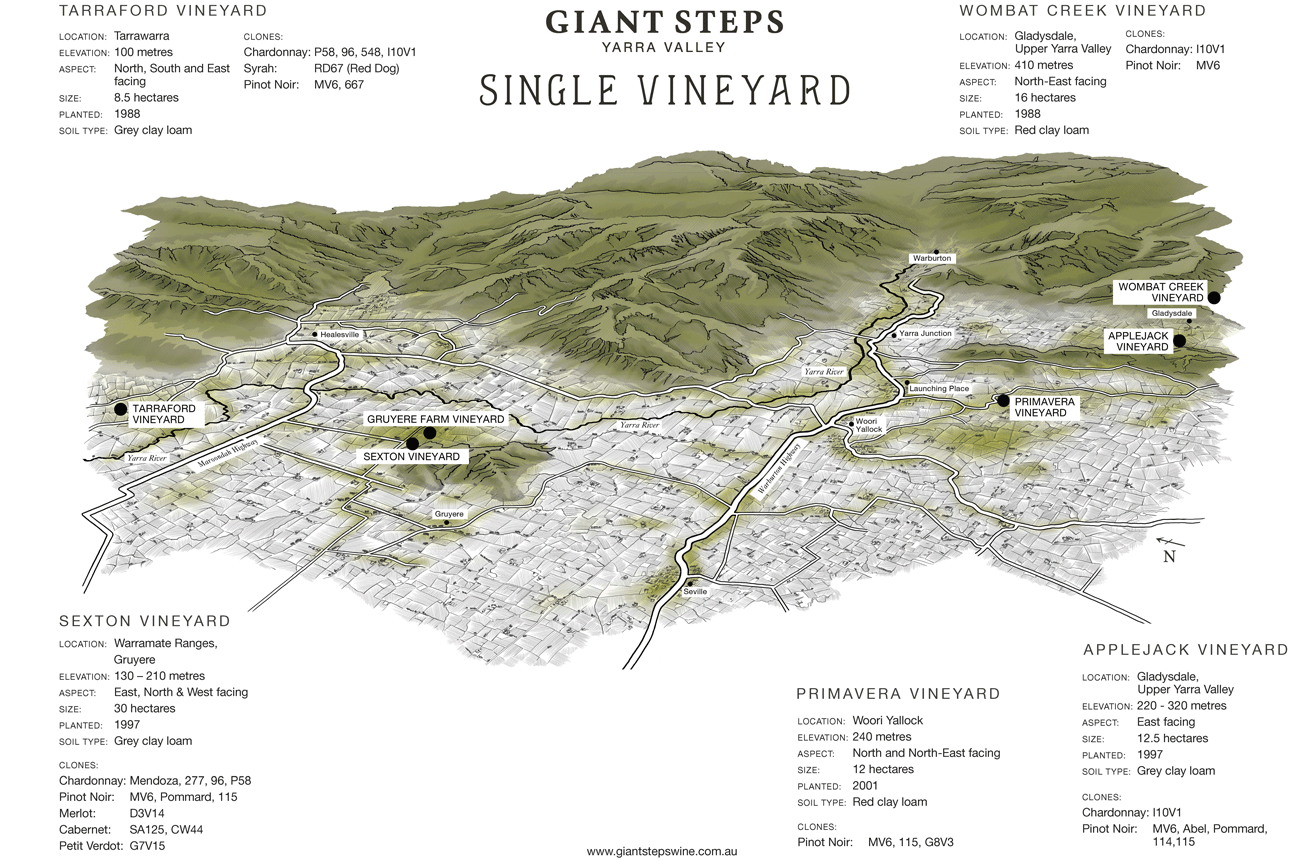
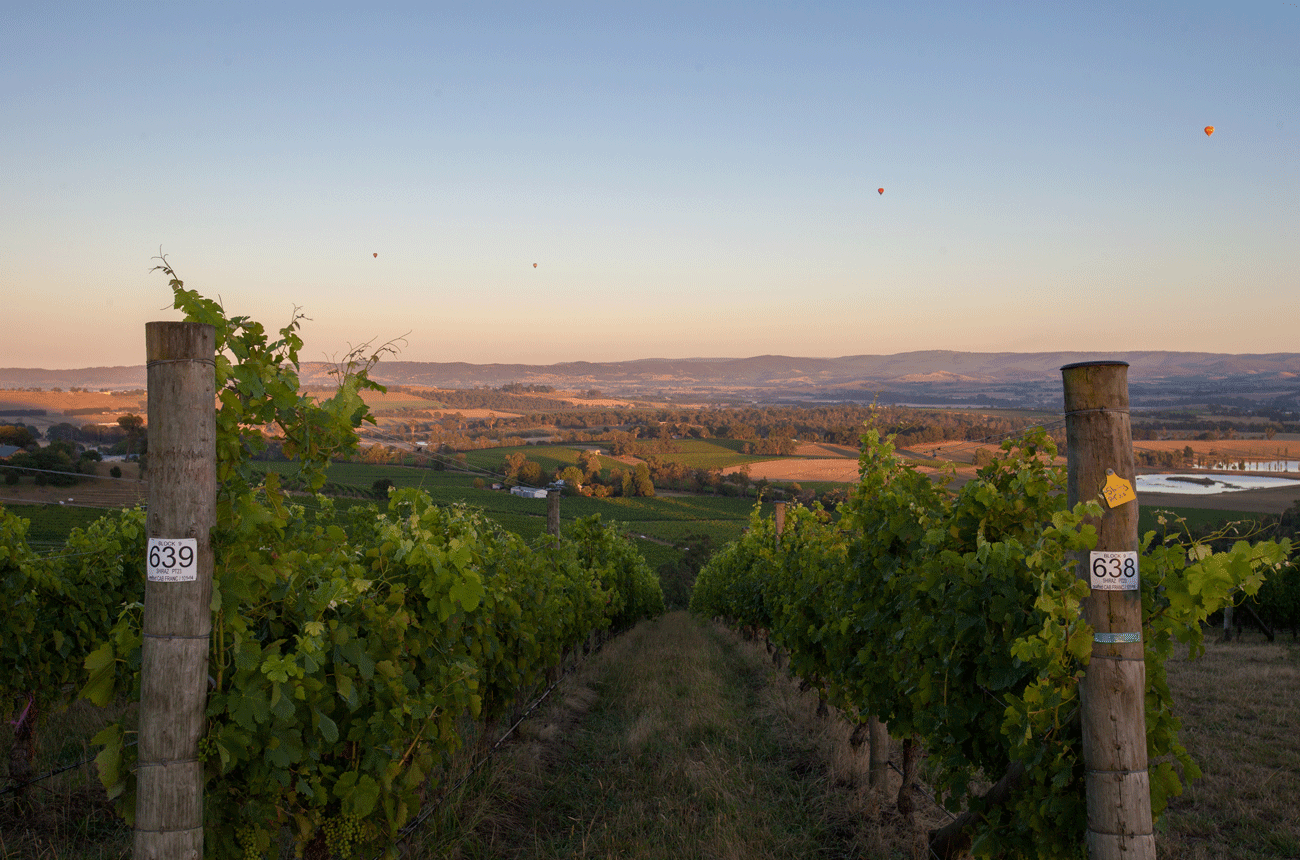
‘Sexton and Tarraford are the great vineyards in cool vintages, while Applejack, Wombat Creek and Primavera are better in hot vintages,’ he explains. ‘The single-vineyard wines have great individual personalities but it’s great to have a footprint in each. Regardless of the vintage conditions we know we can make wines.’
After tasting about 10 parcels of Chardonnay and Pinot Noir from each vineyard three times over, they then determine which wines will be made as single-vineyard wines. The parcels that just miss out are blended into the Yarra Valley range, and the rest is sold as bulk wine.
The Yarra Valley wines see less new oak – about 10% compared to 20% to 25% for the single-vineyard wines – and are released three to six months earlier. Flamsteed sees the range as an everyday or ‘bistro’ wine, or for by-the-glass pours. ‘The single-vineyard wines are for intellectuals, collectors and more serious wine buffs,’ he says.
‘Benchmark’ Yarra Valley Chardonnay
Sexton, Tarraford, Wombat Creek and Applejack are the current 2019 single-vineyard Chardonnay releases, along with the 2020 Yarra Valley Chardonnay.
‘It’s the best Yarra Valley Chardonnay we’ve ever made,’ exclaims Flamsteed. ‘Lots of lemon-curd richness and punchy minerality with a ski-jump kick of acidity on the finish.’
‘But our accountant hates us,’ he adds, saying that the crop was only a third of a normal harvest, thanks to the cool conditions and reduced fruit set.
‘To get this quality, there’s lots of manual labour in the vineyard: handpicking, strict selecting and then sorting. For Chardonnay, we use whole-bunch pressed fruit, wild yeasts and free-run juice only, which is gravity fed to neutral 500-litre French oak puncheons.
‘Sometimes we give them a stir to finish the fermentation but it’s normally not needed, and occasionally we use Champagne yeasts. If the wine naturally wants to go through malolactic fermentation we let it happen – about 20% did in the 2020 Yarra Chardonnay – but we don’t force anything.’
While the 2019 single-vineyard wines are not yet available in the UK or US, the 2018s are, and Flamsteed is particularly pleased with the Sexton Vineyard Chardonnay from this warmer vintage.
‘It was really yummy on release,’ he says. ‘The wine looked great off the bottling line and I’ll be interested to see how it ages. It has a secondary hazelnut complexity but still has that fine lemon-curd acidity, which is benchmark Yarra.
‘There’s almost a lavender note too, which I think is a combination of the Gin Gin clone in the Sexton Vineyard, which gives the Chardonnay a really unique waxy quality.’
Pinot Noir and the Applejack Vineyard
Unlike the Chardonnays, the 2019 single-vineyard Pinot Noirs are already available in the UK and US – in this vintage the Sexton, Primavera and Applejack.
And it’s Applejack that Flamsteed singles out as being world-class. ‘It’s one of Australia’s greatest Pinot Noir vineyards,’ he asserts.
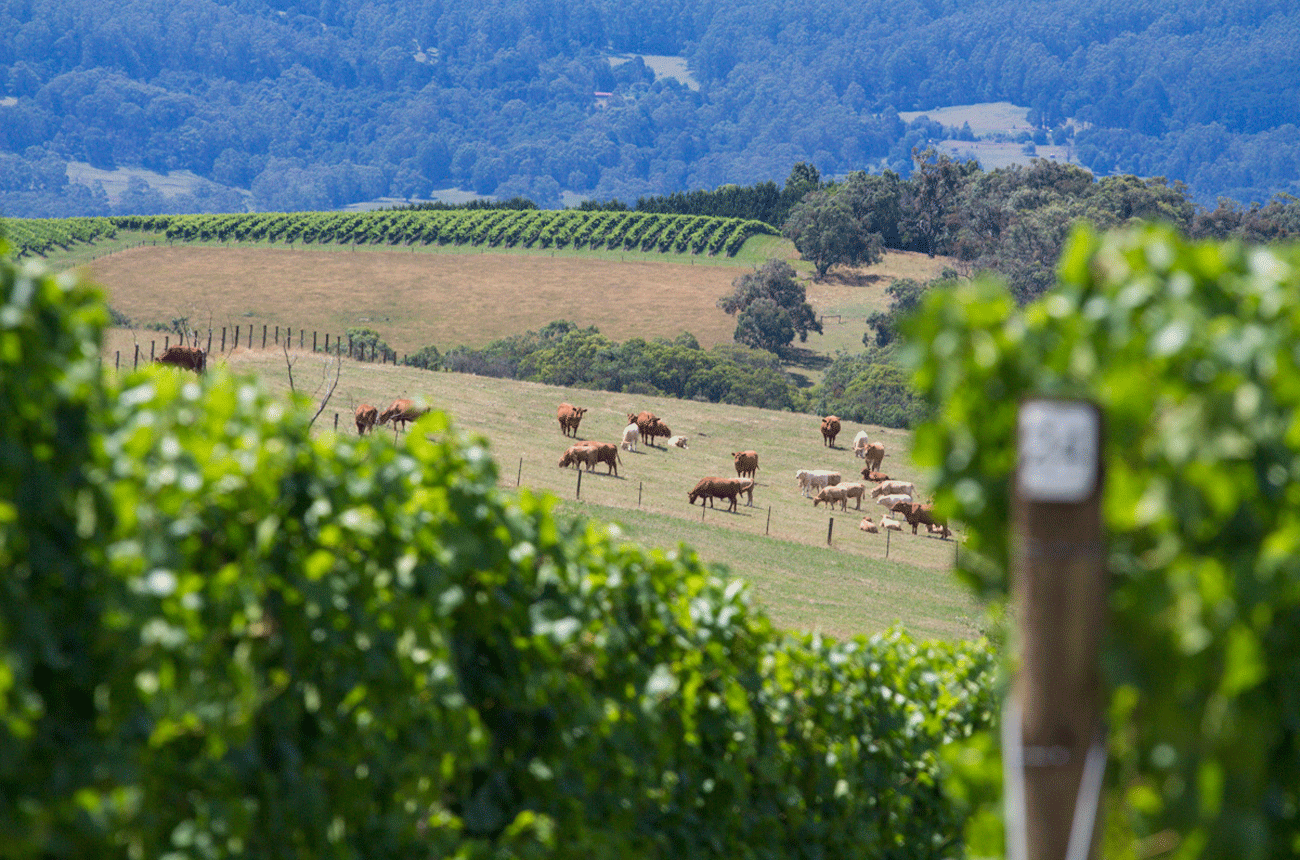
‘It’s 12.5ha planted north-east-facing down a hill at 4,000 vines/ha, surrounded by temperate rainforests at the top of the slope at 320m. And very cool climate. The massive diurnal temperature difference extends the growing season by two weeks from our other Pinot vineyards.’
Flamsteed says he separately vinifies some 20 parcels each vintage, almost all of which makes it into the final blend. ‘It’s very much the whole is the sum of the parts: clones, altitude, aspect.’
Noted viticulturalist Ray Guerin planted Applejack in 1997 ‘as a kind of retirement project’ says Flamsteed. ‘He worked for Hardy’s for 18 years, and when I worked there too we bought his grapes, so I knew the quality.
‘When I joined Giant Steps, I told Phil we had to get some of Ray’s Applejack Pinot for Innocent Bystander. The stuff was so good, we did a single-vineyard selection for Giant Steps. Phil thought it was that good, he bought the vineyard from Ray in 2013.’
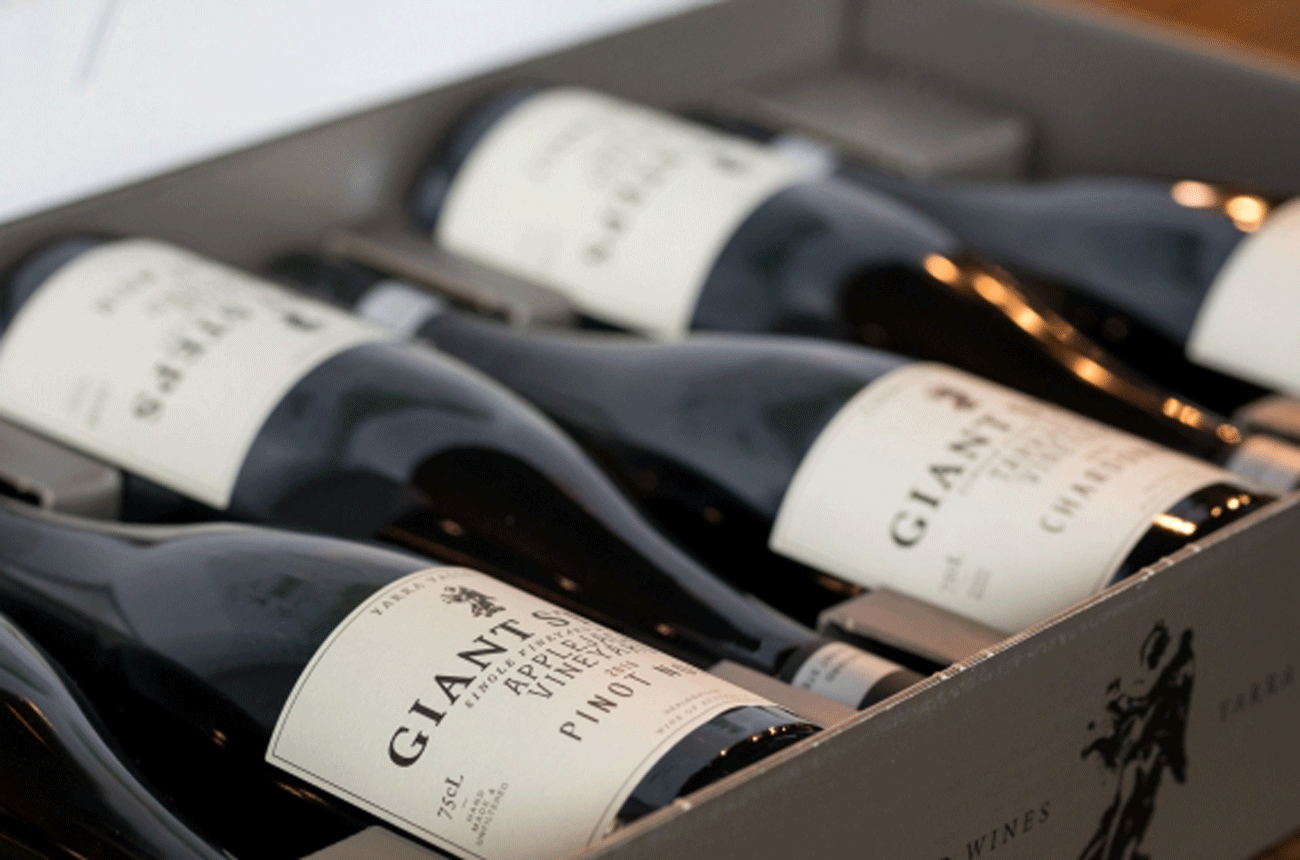
Vinification for Pinot at Giant Steps follows a similar hands-off approach as the Chardonnay – but don’t call it ‘low intervention’.
‘People who talk about low-intervention Pinot Noir winemaking are bullshitting you,’ says Flamsteed.
‘Pinot Noir is the most high-maintenance grape there is. In the vineyard, it likes the sun, but not too much; not too hot but not too cold; and just enough rain. It takes a lot of thought and hard work. So you don’t want to undo all that in the cellar.
‘I favour whole-bunch ferment if the stems are good enough,’ he explains. ‘The Yarra is low in tannins, so whole-bunch fermentation gives a glycerol mouthfeel, perfume and much more bramble fruit instead of tannins.
‘And no crushing or plunging the cap. We keep the berry intact the whole way through. It’s less carbonic maceration than is done in Beaujolais, but there are some elements there – lots of practices that I’ve learned over the years!’
He says not fining or filtering, and bottling by gravity, helps to retain Pinot Noir’s ‘delicate body and soul’. ‘Yarra Valley Pinot is fragile and at the last part of the winemaking process it is at its most fragile and susceptible to oxidation.
‘So it feels counterintuitive to me to fine and filter. If you have to extract something at the end of making a wine, then you’ve made it wrong.’
Looking ahead
While Giant Steps is not certified organic or biodynamic, Flamsteed is committed to adopting more practices throughout the vineyards.
‘About five years ago I dabbled in biodynamics in the Tarraford Vineyard as we had lots of mildew,’ he says. ‘We’ve now removed pesticides altogether and are removing herbicides, using biological sprays not systemic sprays.
‘Yes, it does mean more tilling and growing cover crops, and I’d say we need three more years to get it properly going, but then we will work towards organic certification. And maybe biodynamic certification too. It will take 10 years to get there, but we’re on our way.’
Along the way, he’d like to do more blends with the Rhône grapes planted on their various vineyards. ‘We have some amazing sites for Grenache, Syrah and Carignan in bony, north-facing soils. And Cinsault!
‘And I’d like to talk Phil into Mencía and Gamay,’ he continues. ‘I love Gamay, thanks to my time in Beaujolais. It’s honest. And it ages well – people don’t realise that. The best can last for decades, like Burgundy.’
Can Giant Steps wines last too? While he says 15-year-old wines are still drinking well, he finds it a shame that most Australians open wines too young – as soon as a new vintage is released – missing out on the joys of mature Pinot and Chardonnay.
But more important, he says, is the age of the vineyards, all now 20 to 25 years old. ‘The next 10 years will be the best 10 years for us,’ he asserts. ‘It takes time to get to know your vineyards and our viticulturalist has now got his head around them. I’ve been at Giant Steps 17 years and I’m still learning!
‘Over time, Sexton will become more Sexton-like and we’ll continue to understand it better. It’s only just hitting its stride now, so imagine what it will be like in 50 years! Our vineyards will outlive all of us; we’re just the guardians, to pass it on to the next person to take care of them.’
Steve Flamsteed of Giant Steps: a few producers I admire
Stéphane Tissot [biodynamic producer from Arbois in the French region of Jura] – he’s one of the best producers in the whole world.
Taras Ochota [from Ochota Barrels in the Adelaide Hills] was one of Australian wine’s great minds and the wine world’s great losses. He brought together the concepts of natural wine and conventional wine.
In the Yarra I love the wines of Timo Meyer, David Bicknell of Oakridge Wines and Franco D’Anna of Hoddles Creek Estate. When you look at the price-quality comparison of Australia’s cool-climate Chardonnays against premier cru white Burgundy, Yarra Valley wines really do stack up.
In Western Australia I like Xanadu, Vasse Felix, Deep Woods, Flametree and of course Leeuwin Estate [Flamsteed worked there 1999-2002].
Tasmania is the great frontier for Pinot Noir and Chardonnay. Tolpuddle Vineyard showed us the way – that if you’re serious, you’ve got to get to the Coal River Valley [Giant Steps makes its Fatal Shore Pinot Noir from here].
Giant Steps: tasting the latest releases of Chardonnay and Pinot Noir
You might also like…
Moorooduc Estate: producer profile
Cool-climate Australian Chardonnay: panel tasting results
Australian Pinot Noir: panel tasting results
Giant Steps, Sexton Vineyard Chardonnay, Yarra Valley, Victoria, Australia, 2018

The 30ha estate-owned Sexton Vineyard, planted by Giant Steps founder Phil Sexton in 1997, is the pinnacle of the single-vineyard Chardonnays produced each year, and...
2018
Giant StepsYarra Valley

Giant Steps, Chardonnay, Yarra Valley, Victoria, Australia, 2020
Giant Steps' Yarra Valley Chardonnay is a blend of various parcels that just miss out on being part of the single-vineyard wines. In this vintage...
2020
Giant StepsYarra Valley
Giant Steps, Applejack Vineyard Pinot Noir, Yarra Valley, Victoria, Australia, 2019
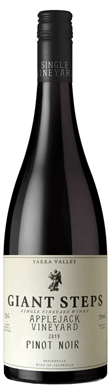
The 12.5ha Applejack Vineyard, planted in 1997 (and bought by Giant Steps in 2013), is the apple of winemaker Steve Flamsteed's eye when it comes...
2019
Giant StepsYarra Valley
Giant Steps, Pinot Noir, Yarra Valley, Victoria, Australia, 2020
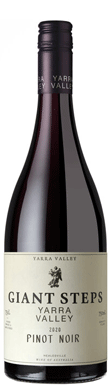
A show of complementary elements in perfect balance: crisp red cherry and cranberry fruit for crunchiness; orange zest for a fresh lift; cocoa nibs for...
2020
Giant StepsYarra Valley
Giant Steps, Pinot Noir, Victoria, Australia, 2019
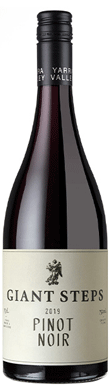
A challenging vintage impacted yields, meaning much of the fruit went into the single-vineyard wines. Consequently, winemaker Steve Flamsteed made the decision to blend in...
2019
Giant Steps
