
Grosset: producer profile and Riesling vertical
David Sly lifts the veil on Grosset, the pioneering Clare Valley producer that, four decades on, remains unwavering in its commitment to making world-class Riesling – a goal that’s led its founder to embrace biodynamics, blockchain projects and more.
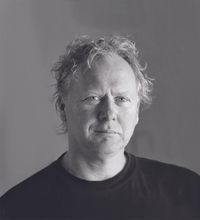

The single-minded pursuit of purity in Riesling expression is Jeffrey Grosset’s obsession, although it’s not manic energy that fuels his relentless engine.
The quietly spoken, self-effacing Clare winemaker’s intrinsic nature is to be contemplative and analytical rather than demonstrative. It means that even on the 40th anniversary of the founding of his wine company, devoted primarily to making elite Riesling, his relentless focus on quality keeps him questioning every aspect of winemaking and production – and how he could possibly make it better.
Scroll down for David Sly’s scores and tasting notes from a recent Grosset vertical
The 40-year journey has scaled dizzy heights for a man who came into wine with scant resources and no vinous pedigree, save for the life-altering experience of trying a classic Leo Buring Riesling at the age of 15 and realising immediately that emulating such an exquisite wine would constitute his life’s work.
Grosset has never questioned whether his wine epiphany as a 15-year-old was a delusion. His commitment to the goal has always been, and remains, absolute. And it was this dedication that made him International Riesling Winemaker of the Year in 1998.
The early years
A 1981 photograph of Grosset, taken in the winery he had just created from a former dairy and butter factory in Auburn, a southern gateway town to the Clare Valley in South Australia, illustrates how far a winemaker can travel with an uncompromising perfectionist streak.
The earnest, beardy 26-year-old with stringy hair and a rock-hard stare had only four big steel storage tanks wrapped in improvised insulation blankets in the big, barren shed. But even then, he already had a clear purpose and ambition.
‘In my view, you don’t make any compromises at any point – or else why bother at all?’ offers Grosset, before admitting with a solemn nod that this absolute commitment has been to his personal detriment. ‘Yes, my wife and family will attest to that. Devotion to achieve my absolute best in wine has always come first.’
Grosset wines at a glance
Founded 1981
Owner and chief winemaker Jeffrey Grosset
Production 132,000 bottles annually (25% allocated for export); 70% of production is devoted to Riesling
Vineyards 21ha of Clare Valley estate vineyards, plus Chardonnay and Pinot Noir sourced from 3ha of Adelaide Hills vineyards
Grosset wines: a timeline
1981 26-year-old Jeffrey Grosset buys a former Auburn dairy and uses Clare Valley fruit to make his first wines: dry Watervale and Polish Hill Rieslings, a late-harvest Riesling and Cabernet Sauvignon
1986 Grosset buys land and plants his Gaia vineyard with 2ha of Cabernets Sauvignon and Franc. At 560m, it’s the highest vineyard in the Clare Valley
1996 He plants the 8ha Polish Hill vineyard to Riesling and Cabernet Sauvignon
1998 Grosset is voted International Riesling Winemaker of the Year at the Riesling Summit II held in Hamburg, Germany
2000 He plants the new 6ha Springvale vineyard to Riesling
2000 Grosset drives the Clare Valley screwcap initiative
2012 He releases the first vintage of Alea Riesling from Rockwood vineyard
2014 All of Grosset’s vineyards achieve organic certification
2019 He installs a A$500,00(£275,000) bottling line at the Auburn winery
2020 Grosset leads the world’s largest blockchain technology trial to verify the provenance of bottled wine
What prompted all this?
It was the love of something pure that struck Grosset from the time his electrician father brought a bottle of wine home from a friend who worked at the Leo Buring winery and shared it over dinner with the family.
Soon, Grosset started working during school holidays at a winery bottling room, spending his earnings on wine for cellaring – which he stored in a disused fireplace.
At 16, he began studying oenology and agricultural science at Roseworthy College, South Australia’s prestigious winemaking academy.
By 21, he was working as a qualified winemaker; at 26, he was a head winemaker at Lindeman’s massive Karadoc winery in Mildura – and then he decided it was time to go his own way, driven by the goal of making exemplary Riesling.

‘I grew to love the characteristics of that wine, and I harboured a frustration that Riesling wasn’t acknowledged. I couldn’t understand why. Once I focused on Riesling, many people seemed amazed. Some thought I was some sort of a maverick. I certainly didn’t pursue this as a strategy to chase a niche interest. I made the wines I loved.
In the early years, a UK wine critic asked me why I specialised in an unloved grape variety, and that really took me aback. Sorry? What do you mean? Just look at the wines!’
A crucial attribute of Grosset’s initial release in 1981 was two Rieslings from different Clare Valley locations – the revered Watervale district, with its distinctive lemon- lime characteristics, and the stony, austere Polish Hill River region that showed additional richness and texture.
It was an unheard-of commercial decision at that time. ‘I saw such distinctive attributes in the fruit from each site that I saw no point blending them together. I wanted people to see them side-by-side, so I bottled them separately.’ It started a new serious conversation about Riesling in Australia.
See all Decanter’s tating notes and scores for Grosset wines
The way of the vine
The pursuit of excellence soon took Grosset beyond his winery and into the vineyard, understanding that he needed to invest in planting and tending his own vines to fully realise his winemaking vision.
Curiously, he first planted Cabernet Sauvignon on the high-elevation Gaia site in 1986, while he continued to buy Riesling fruit from other growers. A decade later, he knew exactly what he wanted. He planted three Riesling clones on 8ha at Polish Hill River and then 6ha at Springvale, a site adjacent to, and slightly more elevated than, the region’s famed Watervale district.
‘As soon as my wine brand got momentum, I wanted to plant vines,’ explains Grosset, who adopted organic viticulture principles two years after establishing his vineyards, achieving full organic certification in 2014, and biodynamic certification in 2019. ‘There’s a limit to what you can achieve by giving directions to an independent grower. I wanted to go above and beyond that. I wanted to do everything on my terms.’
Grosset has been applauded as an early adopter of sustainable practices, but he admits it was less about making an environmental statement and more a case of chasing purity in his wines. ‘I have to admit that caring for the environment wasn’t my motive at all. It was all a question of how could I make a better wine. Would it be more pure if I removed more chemical influence in the vineyard, and then completely eliminated it? That was the driving factor. Organics was a means to give me exactly what I wanted in the fruit.’
Embracing organic viticulture from the early 2000s wasn’t an easy path to follow. ‘I had to prove the merits of the system to myself, because there was no one else doing it here. Many people thought I was crazy, saying that I’d get rampant diseases and weeds and uneven crops. I had to ignore them, pay close attention to the soil and vine health and just get on with it.’
Striving for greatness
The restless need to do better has also seen Grosset champion innovation and improvement through change, first exemplified in 2000 by choosing only screwcap closures in tandem with 12 other Clare Valley Riesling producers.
He’s now driving blockchain technology trials to identify the absolute provenance of his wines and thwart counterfeits. ‘I have always been concerned about the image and perception of Australian wines on the world stage,’ says Grosset. ‘That’s why I’ve thrown my support into these projects.’
Fastidious focus on detail has ensured a long winning streak for Grosset, with at least six successive vintages all showing outstanding characteristics. He opts for better soil and vine management to ensure greater consistency of fruit quality, rather than finding vintages subjected to wild mood swings or uncontrollable dips and peaks. ‘With knowledge and experience comes greater control,’ says Grosset.
Still, winemakers must decide whether to pursue purity over complexity.
Grosset’s instinct is to follow purity – yet an exception to the rule is manifest in the 2020 vintage Alea off-dry Riesling. The shifting profile of this wine style over its eight vintages stems from an idea that formed after tasting fruit as it ripened in his Rockwood vineyard. He saw something other than the typical Watervale lemon-over-lime character.
‘There was something more fleshy, more European rather than typically Clare Valley,’ he says. He wondered how to best express this site, and pursued an off-dry style. But it is only now, after the addition of 50% pressings for the 2020 vintage (a practice he eschews in his other Rieslings) that he believes Alea has hit the mark he originally envisaged.
Not everyone is yet a fan of this off-dry style – hard comparisons are made to the bone-dry Polish Hill River and Springvale Rieslings – but Grosset insists that Alea has its place among elite Rieslings.
Indeed, over the years, Grosset has steeled himself to criticism, steadfastly retaining belief in his vision. It’s necessary, he says, if you’re to succeed at the highest level. ‘You are exposed when you’re chasing that level of purity. Your belief and commitment has to be absolute. I’ve never deviated from that focus, which is to do the very best that I can – or else I don’t deserve to be successful.’
Grosset doesn’t equate success with fanfare, even on the worthy occasion of his winery’s 40th anniversary. He’s simply celebrating with the outstanding – though minuscule – release of his 2020 vintage Rieslings.
At 66 years of age, Grosset says there is much still to achieve, and he bristles at queries about a succession plan. The stony look of that earnest young man returns. ‘I haven’t finished making wine yet. Not by a long shot.’
Clare Valley classics: Sly’s Grosset Riesling vertical
You may also like:
Austrian dry Riesling: Expert’s choice
Yalumba: producer profile and latest releases tasted
Shaw + Smith: Latest releases and future plans
Grosset, Polish Hill Riesling, Clare Valley, Polish Hill River Valley, South Australia, Australia, 2020
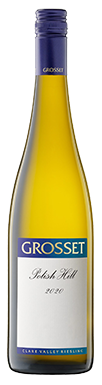

The clean, fresh aromas of just-picked citrus fruits belie the enormous power of lime juice and rich lemon pith that immediately fills the front palate...
2020
GrossetClare Valley

Grosset, Springvale Riesling, Clare Valley, Watervale, South Australia, Australia, 2020
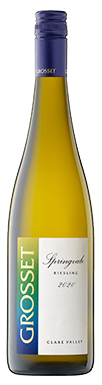
From the first gentle whiff of pretty citrus blossoms, this exhibits a fragile, filigree beauty akin to fine porcelain. Starting with a waft of lemon...
2020
GrossetClare Valley
Grosset, Alea Riesling, Clare Valley, South Australia, Australia, 2020
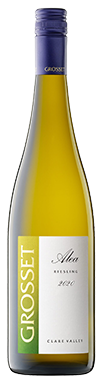
Showing perfect balance of flavour and texture, this represents a landmark change for an Australian off-dry Riesling style. A hint of fruit sweetness is carried...
2020
GrossetClare Valley
Grosset, Polish Hill Riesling, Clare Valley, Polish Hill River Valley, South Australia, Australia, 2019
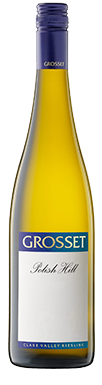
More intense than many young Polish Hill Rieslings, this 2019 retains great poise and shape within its rich frame. Floral notes abound – violets and...
2019
GrossetClare Valley
Grosset, Springvale Riesling, Clare Valley, Watervale, South Australia, Australia, 2019
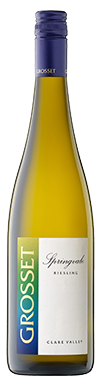
A low-yielding harvest in 2019 ensured potent concentration of both aromas and flavours, without veering away from the clean citrus purity that is a Springvale...
2019
GrossetClare Valley
Grosset, Alea Riesling, Clare Valley, South Australia, Australia, 2019

Capturing a sweeter stylistic expression without ever getting broad, this 2019 Alea has powerful aromatics that are reflected in its flavour profile, which shows enticing...
2019
GrossetClare Valley
Grosset, Polish Hill Riesling, Clare Valley, Polish Hill River Valley, South Australia, Australia, 2018
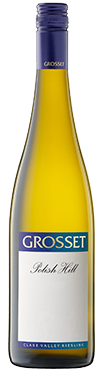
A full, rich nose – with lavender, fresh herb and bright, zesty lime – suggests power, yet the palate opens to a more gentle weave...
2018
GrossetClare Valley
Grosset, Springvale Riesling, Clare Valley, Watervale, South Australia, Australia, 2018
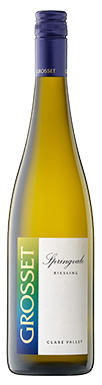
Purity personified in Riesling that speaks confidently about site, with pretty fresh citrus expertly coiled around a slender but firm acid spine. The floral perfume...
2018
GrossetClare Valley
Grosset, Alea Riesling, Clare Valley, South Australia, Australia, 2018
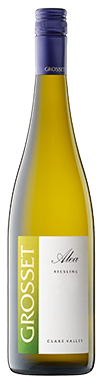
The long, attractive whiff of lemon blossom defines an expressive wine with a surprisingly outgoing personality. The volume is turned up – more fruit sweetness...
2018
GrossetClare Valley
Grosset, Alea Riesling, Clare Valley, South Australia, Australia, 2017
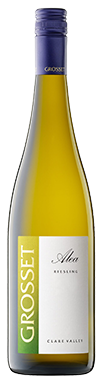
An easy meld of lemon pith, lime juice and lemongrass is showing great composure as it begins to mature. Initially intense, concentrated flavours have relaxed...
2017
GrossetClare Valley
